 Bellingham
 Roofing on Blaine's Coastline Is Its Own Challenge
Blaine sits right on the water at the northwest corner of Whatcom County, a few minutes from the Canadian border. That location is part of what makes it a great place to live, and it's also exactly why roofs here take a different kind of beating than roofs twenty miles inland. Salt-laden air off the coast accelerates corrosion on exposed metal. Wind-driven rain off the water doesn't fall straight down — it gets pushed sideways into laps, flashing, and vent seams that were never designed to handle water moving horizontally. And the long, wet, low-sun stretch of fall through spring gives moss and algae months to get established on anything north-facing or shaded.
None of that means Blaine roofs are doomed to constant problems. It means a repair has to account for the actual conditions the roof lives in, not just patch the spot that's leaking today. That's the approach we bring to every roof repair call in Blaine.
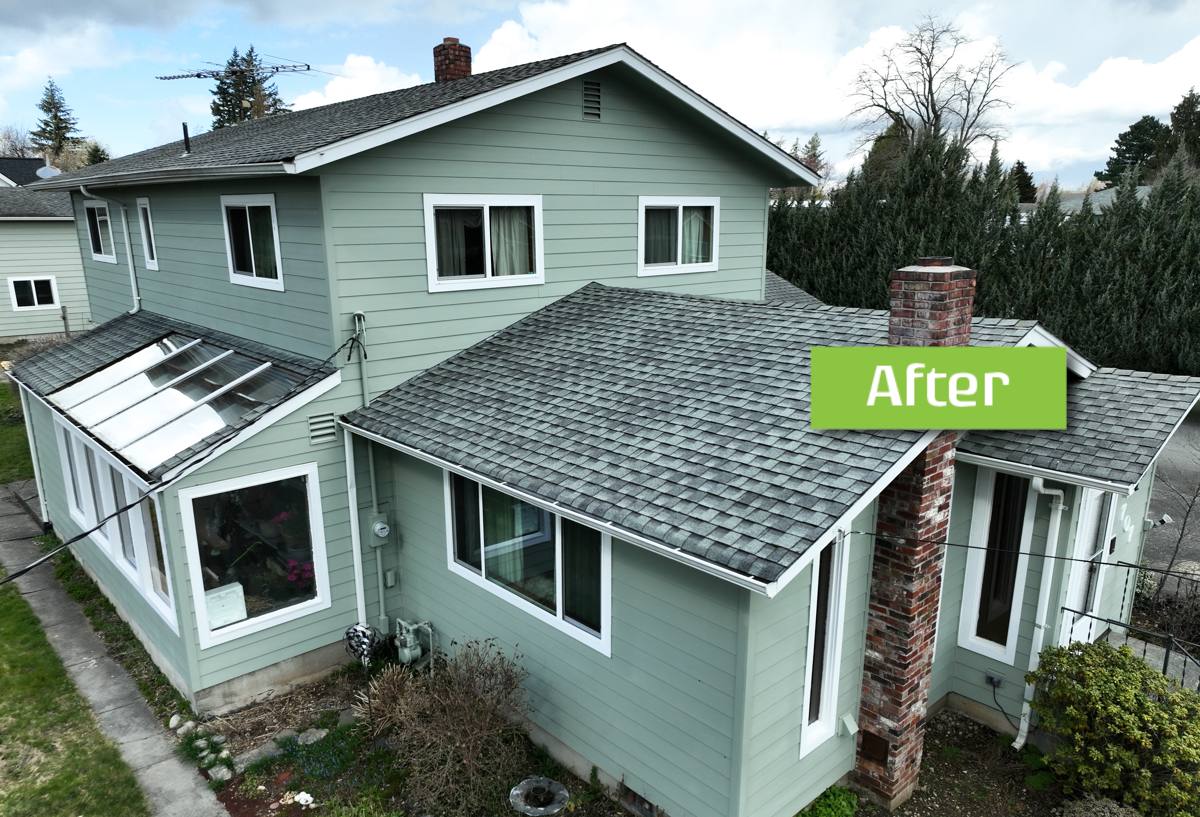
What We Actually See on Blaine Roofs
Most of the repair calls we run in this area fall into a handful of recurring categories. Knowing what we're looking for before we're on the roof is part of doing the job right the first time.
Moss and Organic Growth
Moss doesn't just look bad — it holds moisture against the roofing material, lifts shingle edges as it grows, and works its way under laps over time. On shaded or north-facing slopes near the coast, moss can establish itself within a couple of wet seasons if it's never been treated.
Flashing and Metal Corrosion
Salt air is hard on any exposed metal — step flashing, valley metal, vent boots, drip edge. Corrosion often shows up first as small pinholes or rust streaks well before a homeowner notices an actual leak. Once flashing fails, water finds its way behind siding and into the roof deck, which turns a small metal repair into a bigger structural one.
Wind-Driven Rain Intrusion
Storms coming off the water push rain sideways into vents, chimney flashing, skylight curbs, and anywhere two roof planes meet. Homes that get direct exposure to coastal wind need extra attention at every penetration point, because standard install details that work fine inland can leak here.
Gutter and Drainage Failures
Clogged or undersized gutters back water up under the shingle edge, especially during the region's heavier fall and winter storms. This is one of the most common causes of "mystery" ceiling stains that homeowners assume is a roof leak but is actually a drainage problem.
What a Correct Repair Actually Involves
A roof repair that holds up on the coast isn't just about covering the spot where water is showing up inside the house. Water almost always travels before it drips — the stain on the ceiling can be several feet from where it's actually entering the roof. A proper repair starts with tracing the path, not just treating the symptom.
- Locating the actual entry point, which often means checking flashing, vents, and valleys uphill from the visible damage, not just the spot directly above the stain
- Checking the roof deck underneath for soft spots, rot, or delamination before any new material goes down
- Matching materials and fastening methods to what's already on the roof, so the repair blends in and performs the same way the surrounding roofing does
- Re-flashing or replacing corroded metal rather than just sealing over it with caulk or roof cement, which is a short-term fix at best
- Confirming ventilation isn't part of the problem — trapped moisture under the deck can mimic or worsen a leak that looks like it's coming from outside
Sealant-only repairs are common in this industry because they're fast and cheap. They also tend to fail within a season or two, especially where wind-driven rain and temperature swings work the sealant loose. We treat sealant as a supporting material, not the repair itself.
Repair or Replace? How We Make That Call
Not every roof problem in Blaine needs a full replacement, and not every leak is fixable with a patch. We look at the roof's overall condition, not just the immediate complaint, before recommending either path.
| Signs Repair Is the Right Call | Signs Replacement Should Be Considered |
|---|---|
| Leak is isolated to one flashing point, vent, or valley | Multiple, unrelated leak points across different roof sections |
| Roofing material is within its expected service life | Shingles are curling, cracking, or losing granules broadly, not just in one spot |
| Roof deck underneath is solid and dry | Deck shows soft spots, rot, or sagging in more than one area |
| Moss or algae is present but hasn't caused structural lifting | Moss has been established for years and has visibly displaced shingles |
| Damage is from a single identifiable event (storm, fallen branch) | Roof is at or past its manufacturer-rated lifespan |
We'll tell you honestly which category your roof falls into. If a repair is the right and more cost-effective answer, that's what we'll recommend — a coastal climate is hard enough on roofs without paying for work that isn't needed yet.
Our Process for a Blaine Roof Repair
- Roof and attic inspection. We look at the roofing surface, flashing, vents, and gutters, and check the attic or roof deck from underneath when accessible, since interior signs often tell us more than the exterior does.
- Honest diagnosis. We explain what's actually causing the problem, in plain terms, before any work starts — not a vague "there's a leak somewhere up there."
- Written scope and estimate. You'll know what's being repaired, with what materials, and what it costs before we're on the roof.
- The repair itself. Deck repair if needed, correct flashing and fastening, material matched to the existing roof, and proper sealing at penetrations.
- Cleanup and walk-through. We clear debris and old material, and walk you through what was done and what to watch for going forward.
Materials and Methods We Rely On
Coastal exposure changes which materials make sense for a repair, not just how the roof looks when it's done.
Corrosion-Resistant Flashing
For repair work near the water, we favor flashing and fasteners rated for coastal exposure over standard-grade metal. It costs a little more upfront and holds up considerably longer against salt air, which matters most at valleys, chimneys, and any place two roof planes meet.
Proper Underlayment at Repair Points
Any time we open up a section of roof, that's an opportunity to upgrade the underlayment underneath — particularly self-adhering membrane at valleys, eaves, and penetrations, which gives extra protection against wind-driven rain that standard felt doesn't provide.
Moss Treatment as Part of the Repair
Where moss contributed to the failure, we treat and remove growth as part of the job rather than repairing around it. Leaving moss in place next to a fresh repair just sets up the same failure again in a few years.
What Roof Repair Costs Depend On
Every roof repair is different, so we won't quote a number without seeing the roof. What we can tell you is which factors move the price, so there are no surprises.
| Cost Factor | Why It Matters |
|---|---|
| Roof pitch and accessibility | Steep or hard-to-access roofs take longer and require more safety setup |
| Extent of deck damage | Rotted or soft decking under the roofing material has to be replaced before new material goes down |
| Number and type of penetrations | Each vent, skylight, or chimney flashing point adds labor and material |
| Material match | Matching an older roof's exact shingle color or profile can be harder to source than a newer roof |
| Moss or growth removal | Heavy, long-established growth takes more time to clear safely than light surface moss |
Broadly, small, isolated flashing or vent repairs tend to be a modest cost, while repairs involving deck replacement or multiple problem areas run higher. We'll break the estimate down by these factors so you understand exactly what you're paying for.
Why a Local Crew Matters for a Repair Like This
A roofing crew that works Blaine regularly already knows what this stretch of coastline does to a roof — the moss patterns on shaded slopes, the flashing that corrodes first in salt air, the storm direction that tends to drive rain into a particular side of the house. That's not something a crew coming from outside the county picks up on the first visit.
Being local also means we're available if a repair needs a follow-up check after the next heavy storm, and we're not disappearing to the next region once the invoice is paid. As a Bellingham-based crew working throughout Whatcom County, Blaine is part of our regular service area, not a special trip.
Keeping a Repaired Roof in Good Shape
A good repair buys you time, but a little regular attention keeps you from needing another one sooner than you should.
- Clear gutters at least twice a year, more often if you're under trees, so water can't back up under the shingle edge
- Look at north-facing and shaded slopes each fall for early moss growth, before it spreads
- Trim back branches that overhang the roof — they drop debris that holds moisture and gives moss a foothold
- Check attic insulation and ventilation if you notice ice or heavy condensation in winter, since trapped moisture stresses the roof from underneath
- After any major windstorm, do a visual check from the ground for lifted or missing shingles
If you're dealing with a leak, a stain on the ceiling, missing shingles after a storm, or just want an honest read on a roof's condition before it becomes a bigger problem, we're happy to take a look. Reach out for a free, no-pressure estimate — the form below gets you straight to our local crew.