 Bellingham
 Roofing in Blaine's Marine Climate
Blaine sits right on the water at the northern edge of Whatcom County, and that location shapes what a roof has to deal with year after year. Salt-laden air moves in off the bay, wind-driven rain comes at roofs sideways instead of straight down, and the shaded, damp stretches of fall through spring give moss and algae plenty of time to take hold. None of this is unique to any one house in Blaine — it's the baseline every roof here is working against, whether it's a single-story rambler a few blocks from the water or a home set back on a wooded lot.
A roof replacement done right in this area isn't just about swapping old shingles for new ones. It's about building in the details — ventilation, underlayment, flashing, material choice — that determine whether the next roof lasts 20-plus years or starts showing problems in year eight.
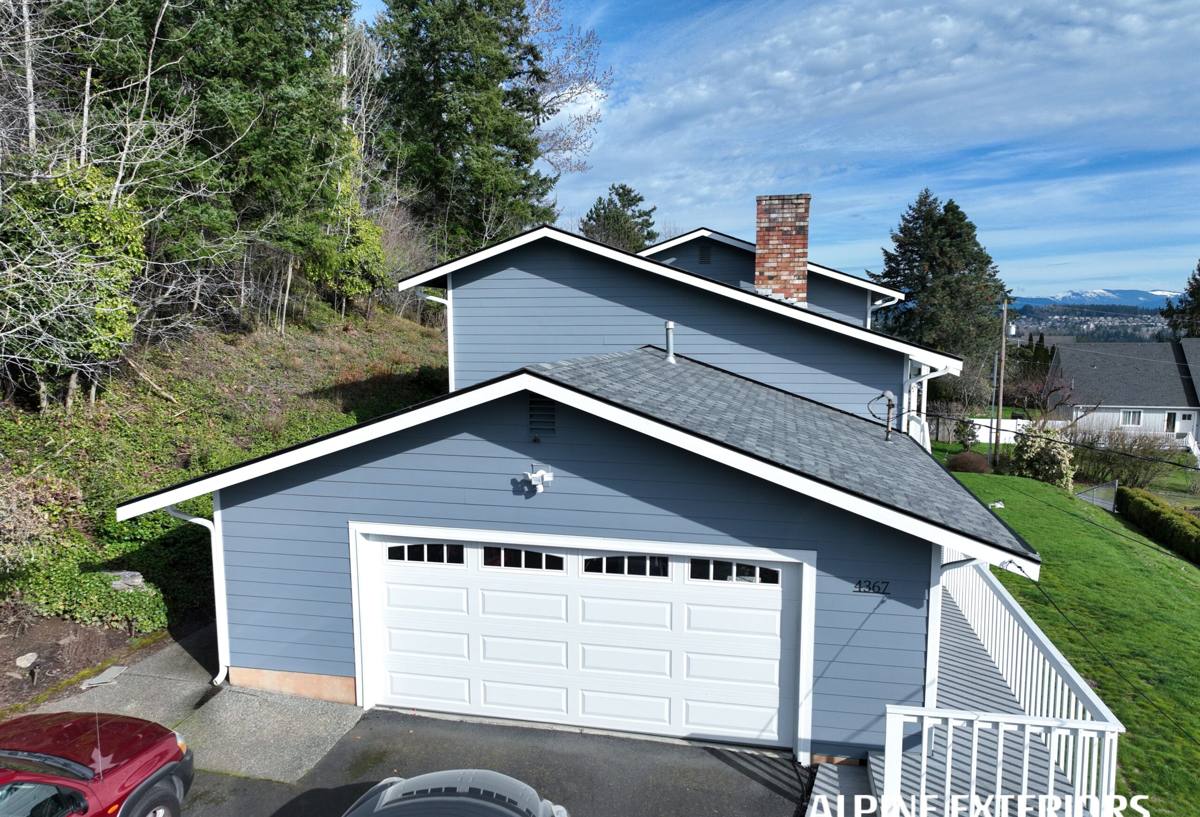
What Salt Air, Driving Rain, and Moss Actually Do to a Roof
Salt Air
Airborne salt is corrosive to exposed metal. Nails, flashing, vent caps, and any fasteners that aren't rated for coastal exposure can start to rust years before they would inland. Once a fastener corrodes, it loses holding power, and that's when you start seeing lifted shingles or leaks around flashing points.
Driving Rain
Wind off the water doesn't just drop rain straight down — it pushes it sideways and up under shingle edges, into vent openings, and around chimney and skylight flashing. A roof system that works fine in a calmer inland location can leak in Blaine simply because the water is being forced in at angles the original installation wasn't built to handle.
Moss Season
Whatcom County's wet, mild winters and shaded roof sections (north-facing slopes, areas under trees) create ideal conditions for moss and algae. Moss holds moisture against the roof surface far longer than the roof was designed to tolerate, works its way under shingle tabs as it grows, and gradually lifts and separates roofing material from the deck below. Left unchecked for a few seasons, it's one of the more common reasons we see roofs fail early in this area.
Signs a Blaine Home Needs Replacement, Not Repair
Not every problem calls for a full replacement — but a few signs usually mean the roof has reached the end of its useful life rather than needing a patch:
- Granule loss heavy enough that shingles look bald or patchy in sections
- Moss or algae growth that returns within a season or two of cleaning
- Soft spots or sagging when walked on, suggesting deck damage underneath
- Multiple leak points instead of one isolated area
- Shingles curling, cracking, or losing their seal at the edges
- The roof is at or past its material's expected service life (roughly 18-25 years for most asphalt shingle roofs in this climate)
- Previous repairs are stacking up and becoming a recurring cost
If a roof only has isolated damage — a section of flashing, a handful of storm-damaged shingles — repair is usually the honest recommendation. We'll tell you that directly rather than pushing a full replacement that isn't needed yet.
What a Correct Roof Replacement Involves
A roof replacement is only as good as what happens underneath the new material. In a coastal environment like Blaine, a handful of steps matter more than they would in a drier, inland location:
Full Tear-Off and Deck Inspection
We remove the old roofing down to the deck rather than layering over it. That's the only way to actually see the plywood or OSB underneath — years of trapped moisture from moss or slow leaks can soften or rot decking, and that damaged material needs to be replaced before anything new goes down.
Underlayment Built for Wind-Driven Rain
A synthetic underlayment with strong water resistance, plus self-adhering ice-and-water membrane at vulnerable points — eaves, valleys, around penetrations — gives the roof a second line of defense when wind pushes rain up under the shingle layer.
Flashing That Matches the Exposure
Flashing around chimneys, skylights, vents, and roof-to-wall transitions gets upgraded to corrosion-resistant material and installed with attention to how water actually moves across the roof in a storm, not just how it looks on a calm day.
Ventilation Correction
Poor attic ventilation traps moisture, which speeds up moss growth and can shorten shingle life from the underside. Where the existing ventilation is inadequate, we address intake and exhaust balance as part of the replacement rather than leaving it as-is.
Fastener and Metal Selection
Given the salt exposure, we use fasteners and flashing metals suited to a marine environment rather than standard-grade materials that corrode faster this close to the water.
Roofing Material Options for Blaine Homes
Most homeowners are choosing between asphalt composition shingles and metal roofing, with some interest in synthetic shake products designed to resist moss better than traditional wood shakes. Here's how they generally compare for a coastal Whatcom County property:
| Material | Moss/Moisture Resistance | Salt Air Durability | Typical Lifespan | Relative Cost |
|---|---|---|---|---|
| Architectural asphalt shingle | Good with proper ventilation; needs periodic cleaning | Good — corrosion-resistant fasteners recommended | 25-30 years | $ |
| 3-tab asphalt shingle | Fair; more prone to moss lift over time | Fair | 15-20 years | $ |
| Standing seam metal | Excellent — sheds moisture, little for moss to grip | Very good with coastal-rated coatings | 40-50+ years | $$$ |
| Synthetic shake/slate | Very good; resists the moisture retention that wood shake allows | Good | 30-50 years | $$-$$$ |
We don't install traditional cedar shake on coastal roofs as a general practice. It's a maintenance-heavy product in a wet, shaded climate — the moisture retention that makes it attractive also makes it one of the harder materials to keep moss-free here, and the upkeep and warranty trade-offs usually don't make sense for the exposure Blaine homes see. Synthetic shake products give a similar look with far less of that burden.
Our Roof Replacement Process
- On-site inspection — we look at the current roof, attic ventilation, and any problem areas before recommending replacement over repair
- Material and scope walkthrough — options explained honestly, including trade-offs, so the decision fits your home and budget
- Written estimate — clear scope, materials, and timeline, no vague allowances
- Tear-off and deck inspection — old material removed, deck checked and repaired where needed
- Underlayment, flashing, and ventilation work — the layers that determine how the roof performs in wind and rain
- New roofing installed to manufacturer spec, with attention to the wind and rain exposure specific to a waterfront-adjacent property
- Final walkthrough — cleanup, inspection, and a review of what was done
Cost Factors Homeowners Should Understand
Every roof is priced on its own specifics, but a few factors consistently move the number up or down on Blaine projects:
- Roof size and pitch — steeper roofs take longer and require more safety setup
- Number of layers being torn off and condition of the decking underneath
- Material choice — asphalt, metal, and synthetic shake sit at different price points
- Number of penetrations (chimneys, skylights, vents) requiring new flashing
- Ventilation upgrades, if the existing attic airflow is inadequate
- Access — trees, tight lots, or difficult staging can add time
We'd rather walk your specific roof and give you real numbers than quote a broad range that doesn't mean much for your house.
Why It Matters to Hire a Crew That Already Works This Area
A roofing crew that works Whatcom County's coastline regularly already knows which fastener grades hold up near the water, how to detail flashing for wind-driven rain instead of just vertical rainfall, and where moss tends to establish first on local roof lines. That's the kind of knowledge that shows up as fewer callbacks and a roof that's still performing well a decade in — not something you can fully substitute with a generic install, even a technically competent one from a crew unfamiliar with this specific exposure.
We also know that a roof is one piece of a home's overall weather protection. When siding, trim, or flashing details connect to the roofline, it helps to have a contractor who can look at the whole envelope rather than just the shingles.
After the Replacement: Keeping Moss and Salt From Winning Again
A new roof still needs some basic upkeep in this climate to hit its full lifespan:
- Keep gutters and valleys clear so water isn't sitting against roofing material
- Trim back overhanging branches to reduce shade and debris on moss-prone sections
- Have moss growth treated or gently removed early, before it works under shingle edges
- Have flashing and fasteners checked periodically, especially after major windstorms
- Confirm attic ventilation stays clear and functional over time
None of this is complicated, but skipping it is how a well-installed roof ends up needing early attention anyway.
If your Blaine home's roof is showing its age, or you just want an honest read on whether repair or replacement makes sense, we're glad to take a look. Request a free, no-pressure estimate using the form below and we'll walk you through what we find and what it would take to fix it right.