 Bellingham
 Why Blaine Homes Wear Out Siding Faster Than Most
Blaine sits at the far northwest corner of Whatcom County, wedged between Semiahmoo Bay, Drayton Harbor, and Boundary Bay, with the Canadian border a few blocks away for a lot of the town. That location is beautiful and it is also brutal on exterior building materials. Homes here take on salt-laden air coming off the water, wind-driven rain that hits siding sideways instead of running straight down, and a long, damp shoulder season every fall and winter where surfaces barely get a chance to dry before the next system rolls through.
None of that is unique to Blaine in the abstract sense — most of Whatcom County's coastline deals with some version of it. But homes closer to open water and exposed shoreline catch more of the salt spray and more of the direct wind than homes further inland around Bellingham, and that shows up in how fast paint, caulk, and lower-grade siding materials start to fail.
The Three Things Working Against Your Siding
- Salt air: accelerates corrosion on fasteners and trim, and breaks down cheaper paint films faster than an inland location would.
- Driving rain: wind off the water pushes water into laps, seams, and butt joints that would stay dry in a calmer climate — this is a water-management problem as much as a material problem.
- Moss and algae season: long stretches of shade, moisture, and mild temperatures from fall through spring give moss and algae months to establish on north-facing walls and anywhere siding stays damp.
What a Correct Siding Replacement Actually Involves
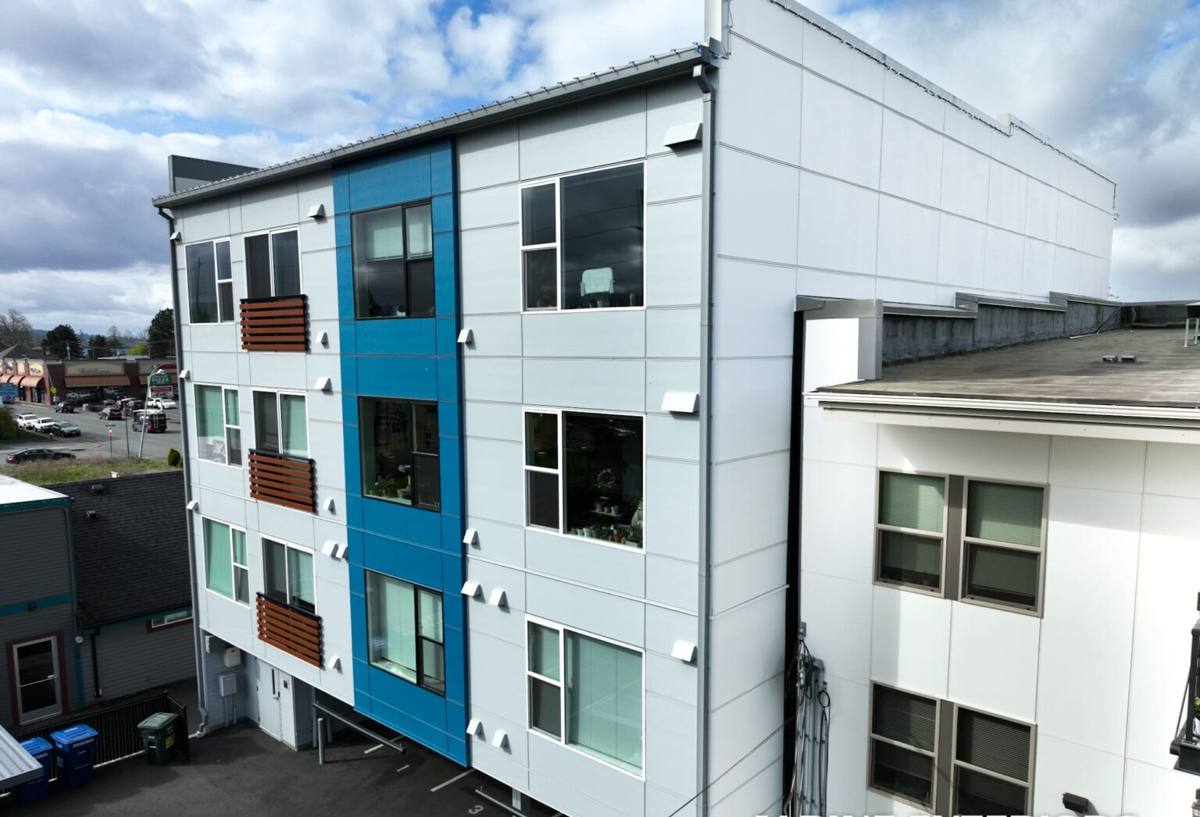
Siding replacement is not just pulling off old boards and nailing up new ones. In a marine climate like Blaine's, most of what determines whether a siding job lasts 10 years or 40 years happens underneath the siding, not on the surface.
Tear-Off and What It Reveals
Removing old siding is the point where we find out what's actually been happening behind it — soft sheathing, rusted fasteners, missing or failed flashing, or trapped moisture that never had a way to escape. On coastal homes this matters more than most places, because driving rain finds gaps that a calmer climate would never expose. Any damaged sheathing or framing gets addressed before anything new goes up; covering a moisture problem with new siding just hides it for a few more years.
Weather-Resistive Barrier and Flashing
A proper weather-resistive barrier (WRB) goes on the wall before siding does, and it has to be detailed correctly at every window, door, and penetration — that's where most water intrusion actually starts. Flashing above windows, doors, and horizontal trim needs to shed water outward, not just sit there for looks. In a wind-driven rain climate, sloppy flashing details are the single most common reason siding jobs fail early.
Drainage and Ventilation Behind the Siding
Fiber cement siding installed directly against a wet-prone wall assembly, with no way for incidental moisture to drain or dry, is asking for trouble. A drainage gap or rainscreen approach behind the siding gives any water that does get past the surface a path to escape instead of sitting against the sheathing — which matters more in Blaine's damp, shaded, moss-prone conditions than it would in a drier inland climate.
Why We Only Install James Hardie Fiber Cement
We standardized on James Hardie siding for every project, including here in Blaine, and we don't install vinyl, LP SmartSide, cedar, primed spruce, or other fiber cement brands. That's not a marketing position — it's a professional standard built around what actually holds up in this climate.
What Matters for a Coastal, Wet Climate
- Non-combustible material: fiber cement doesn't rot, warp, or feed insects the way wood-based products can when they take on repeated moisture exposure.
- Factory-applied ColorPlus finish: baked-on color and coating that resists fading and holds up to UV and salt air far better than field-applied paint, which is where a lot of siding problems on this coastline start.
- Climate-engineered product line: Hardie manufactures different siding formulations for different regional demands — freeze-thaw cycling, moisture exposure, humidity — rather than a single one-size-fits-all product, which matters in a Pacific Northwest marine climate.
- Long, transferable warranty: backed by a large manufacturer with decades of track record, not a smaller or regional supplier.
We're not going to tell you vinyl or LP SmartSide are junk — they're reasonable products in the right application. But vinyl expands, contracts, and can crack or warp with temperature swings and direct sun exposure, and it's a petroleum-based product with real limits on impact resistance. Engineered wood products like LP SmartSide perform well when maintained perfectly, but they're more sensitive to sustained moisture exposure than fiber cement — and sustained moisture is exactly what Blaine's climate delivers for months at a time. Cedar and primed spruce look great on day one but require an ongoing maintenance commitment most homeowners underestimate. We'd rather install one product correctly than offer five products and hope the homeowner keeps up with the maintenance schedule each one needs.
How Common Siding Materials Hold Up on the Coast
| Material | Salt Air / Moisture Behavior | Maintenance Burden | Typical Lifespan Here |
|---|---|---|---|
| James Hardie fiber cement | Does not rot or corrode; factory finish resists fading and salt exposure | Low — occasional wash, no repainting on a fixed schedule | Decades, per manufacturer warranty terms |
| Vinyl | Doesn't absorb water, but can warp, crack, or fade with sun and temperature swings | Low, but damage often means full panel replacement | Moderate, shorter in direct sun/wind exposure |
| LP SmartSide / engineered wood | Sensitive to sustained moisture if any coating or caulking fails | Moderate — coating and caulk need to be monitored | Good with consistent maintenance, shorter without it |
| Cedar / primed spruce | Absorbs moisture readily; prone to rot, moss growth, and paint failure in shaded, damp areas | High — regular repainting, sealing, and moss treatment | Shortest without diligent upkeep |
What Drives the Cost of a Blaine Siding Replacement
Every home is different, but the same handful of factors move the price up or down on most projects we quote in this area.
| Factor | Why It Matters |
|---|---|
| Existing wall condition | Rotted sheathing or framing found during tear-off adds repair scope before new siding can go on |
| Home size and wall complexity | More corners, gables, and trim details mean more labor and material |
| Siding profile and accessories | Lap width, trim style, and accent details affect both material cost and installation time |
| Water damage or moss remediation | Homes with a history of moisture problems may need extra prep before siding installation |
| Access and site conditions | Waterfront lots, tight setbacks, or difficult staging can affect labor time |
Signs Blaine Homeowners Shouldn't Ignore
Because of the climate here, siding problems tend to show up earlier and more visibly than they would inland. Watch for these on your own home:
- Moss or dark green/black streaking on north- or shade-facing walls that keeps coming back after cleaning
- Paint that's peeling, bubbling, or chalking rather than just fading evenly
- Caulk at joints and trim that's cracked, shrunk, or pulling away from the surface
- Soft or spongy spots when you press on siding near the bottom edges or around windows
- Visible warping, cupping, or gapping between boards
- Musty smell or discoloration on interior walls that share an exterior wall with problem siding
Our Process
We keep the process straightforward, and it's the same rigor whether the home is a small in-town lot or a larger waterfront property:
- On-site inspection: we look at the current siding, trim, and any signs of moisture intrusion before quoting anything.
- Tear-off and assessment: old siding comes off, and we evaluate the sheathing and framing underneath before covering anything back up.
- Repair as needed: any rot or damage found gets addressed — not papered over.
- WRB, flashing, and drainage detailing: the water-management layer goes in correctly, especially around every window, door, and penetration.
- James Hardie installation to manufacturer spec: correct fastening, clearances, and caulking, done to the standard that keeps the warranty valid.
- Final walkthrough: we go over the finished work with you before calling the job done.
Why a Crew That Already Works in Blaine Matters
Siding installation isn't one-size-fits-all across Whatcom County. A crew that's used to doing standard inland installations can miss the details that matter most right on the water — how tight the flashing laps need to be for wind-driven rain, where moss is most likely to establish, and how much clearance to leave given the moisture load this area gets for a good chunk of the year. Working in Blaine and the surrounding coastal parts of the county regularly means those details aren't guesswork — they're just how the job gets done here every time.
If your siding is showing its age, or you're just trying to get ahead of a problem before it turns into a bigger repair, we're happy to take a look. Reach out for a free, no-pressure estimate using the form below — we'll walk the property, tell you honestly what we see, and give you a straightforward quote for doing it right.