 Bellingham
 Board & Batten Siding Built for Blaine's Coastal Exposure
Blaine sits right on the water at the northwest corner of Whatcom County, close enough to the Salish Sea that salt-laden air, wind-driven rain, and long stretches of gray, damp weather are just part of living there. That combination is hard on exterior walls in general, and it's especially unforgiving on siding profiles that weren't designed with drainage and moisture cycling in mind. Board and batten is one of the most requested looks in this area — vertical lines, deep shadow reveals, a clean farmhouse-to-modern range of style — but the look only holds up long-term if the material underneath and the installation behind it are both correct for this climate.
This page focuses on one thing: board and batten siding, done correctly, on homes in and around Blaine. Not a generic overview of siding options, and not a sales pitch — a straight explanation of what this climate does to exterior walls, what a correct board and batten job actually involves, and why the installation matters as much as the material.
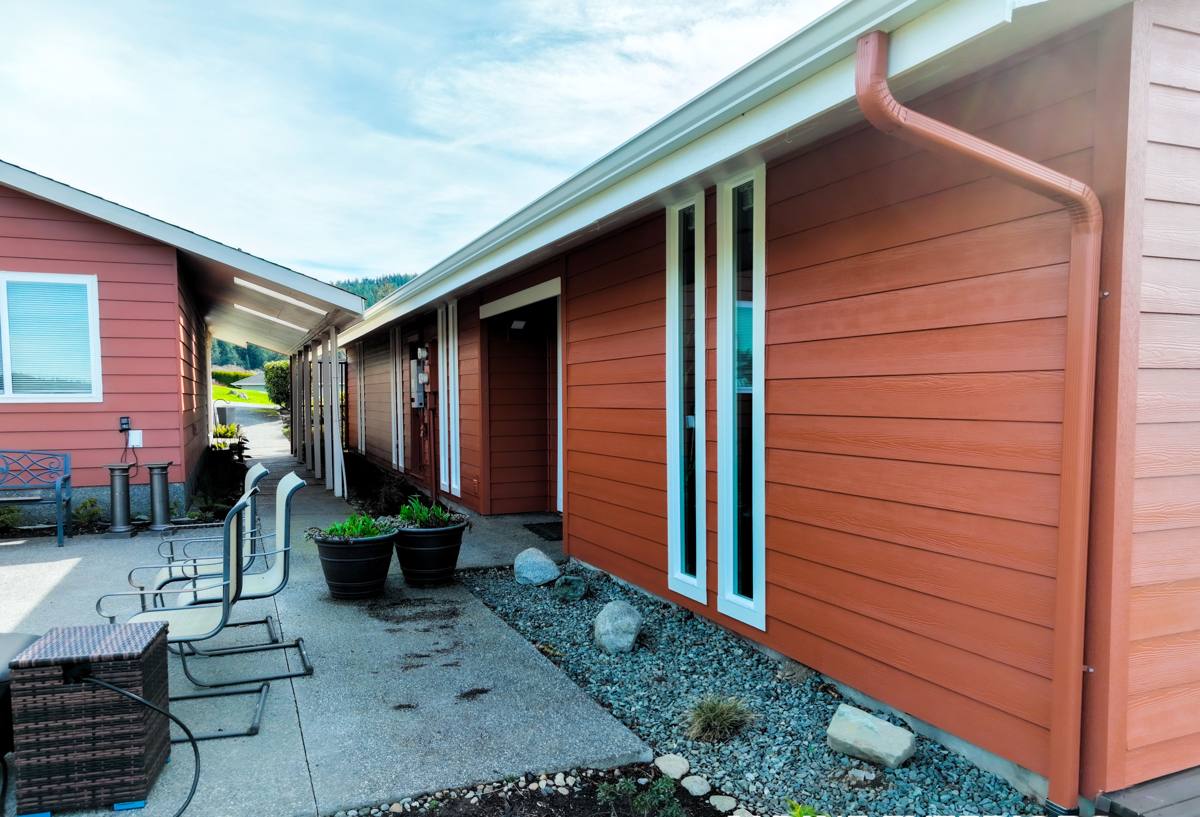
What Blaine's Climate Actually Does to a Vertical Siding Profile
Salt air
Proximity to saltwater accelerates corrosion on fasteners, flashing, and trim metal, and it degrades cheaper paint films faster than inland exposure does. Board and batten has more exposed vertical joints and more fastener penetrations per square foot than a horizontal lap profile, which means there's more hardware in play that has to be corrosion-resistant from day one — not just at installation, but for the life of the wall.
Driving rain
Wind off the water doesn't let rain fall straight down — it drives it sideways into the wall, and board and batten's vertical battens create narrow channels that can funnel water if the drainage plane behind them isn't built correctly. A board and batten wall is only as good as the water management system hidden behind the boards: house wrap, flashing, and an actual gap for drainage and drying.
A long moss season
Whatcom County's damp, mild winters and shaded, tree-lined lots create long moss and algae seasons on north- and shade-facing walls. Vertical battens create horizontal ledges at the top of every board where debris, pollen, and organic growth like to sit and hold moisture against the surface — a detail that has to be accounted for in the design and the finish, not treated as an afterthought.
Why We Install Board & Batten Only in James Hardie Fiber Cement
Board and batten is often built with cheaper wood-based or vinyl products because the vertical-board look is easy to fake with lightweight materials. We don't install those. On a wall this exposed to salt air and driving rain, we've standardized on James Hardie fiber cement for board and batten work because it's non-combustible, dimensionally stable when it gets wet and dries out repeatedly, and comes with a factory-applied ColorPlus finish that's baked on rather than field-painted — which matters enormously for a profile with this many exposed edges and joints.
Hardie's climate-engineered HZ product lines are formulated for regions that see this kind of moisture cycling, and the boards hold their dimensions and paint adhesion far better over time than materials that swell, delaminate, or need repainting on a five-to-seven-year cycle. For board and batten specifically — where a warped or cupped board is visible from the street in a way a lap board's flaw often isn't — that stability is the whole point.
What a Correct Board & Batten Installation Involves
The board and batten look is simple. The assembly behind it is not, and skipping steps is exactly how homeowners end up with trapped moisture, streaking, or rot at the base of the wall within a few years. A correct installation includes:
- A weather-resistant barrier installed and lapped correctly behind the entire wall assembly, with every seam and penetration properly sealed
- A rainscreen gap (furring strips or a drainage mat) behind the boards so water that gets past the surface can drain and the wall can dry to the outside
- Corrosion-resistant fasteners and flashing rated for coastal exposure, not standard-grade hardware
- Correctly sized and positioned battens with consistent reveal, fastened per manufacturer spec so panels aren't over-fastened or restrained from normal expansion and contraction
- Proper flashing and kickout details at every roofline, window head, and deck ledger intersection — the places water actually gets in
- Factory-finished boards and batten strips field-caulked and touched up only where required, not fully field-painted
- Clearance at the base of the wall so the bottom course isn't sitting in splashback or landscaping moisture
Any one of these skipped is usually invisible on installation day and expensive to find later, once it's a moisture problem inside the wall.
Board & Batten vs. Other Siding Choices for a Blaine Property
Board and batten isn't the right call for every home, and it's worth understanding how it compares to the other common options homeowners in this area consider before committing to it.
| Profile | Best Fit | Coastal/Moisture Considerations |
|---|---|---|
| Board & Batten (Hardie) | Farmhouse, modern, accent walls and gables | Needs a correctly built rainscreen and drainage detailing; factory finish holds up well to salt air when installed to spec |
| Horizontal Lap (Hardie) | Traditional and most full-house applications | Naturally sheds water along overlapping courses; slightly more forgiving of minor installation variance |
| Vinyl Board & Batten | Budget-driven projects | Panels can warp or fade under UV and salt exposure; not what we install |
| Cedar Board & Batten | Homeowners wanting real wood grain | Requires ongoing sealing/staining to resist moss and moisture in this climate; high long-term upkeep |
For homeowners who want the vertical board look without signing up for the maintenance cycle that comes with wood, or the long-term fading and warping risk that comes with vinyl, Hardie board and batten is the option that's built to actually hold its appearance in this environment.
Our Process, Start to Finish
- On-site assessment — we look at the wall's current condition, exposure direction, existing moisture or moss issues, and how water currently moves around the home before we talk about materials.
- Design and layout — board width, batten spacing, and reveal are planned to fit the home's proportions and any existing trim, windows, and rooflines.
- Tear-off and inspection — old siding comes off and we inspect the sheathing underneath for any hidden rot or damage before anything new goes up.
- Water management install — house wrap, flashing, and rainscreen furring go in first, since this is the layer that actually protects the wall long-term.
- Board and batten installation — Hardie boards and battens are installed to manufacturer fastening and clearance specs, not shortcuts.
- Detail work — trim, caulking, and touch-up finishing at every joint, corner, and penetration.
- Final walkthrough — we go over the finished wall with the homeowner before calling the job done.
Maintenance Homeowners Should Actually Expect
One of the appeals of factory-finished fiber cement is how little ongoing maintenance it asks for compared to wood or repainted siding — but "low-maintenance" isn't "no-maintenance," especially with this much moss and algae pressure in Whatcom County. Realistic upkeep looks like an annual rinse-down to keep organic growth from taking hold on shaded elevations, periodic visual checks of caulking at joints and trim, and prompt attention if a gutter or downspout starts overflowing onto a wall section. None of that is labor-intensive, but it's the difference between a wall that looks new for decades and one that starts showing streaking and staining within a few years.
A Pre-Project Checklist for Blaine Homeowners
- Confirm which elevations get the most direct wind-driven rain and salt exposure — these often deserve extra attention in the drainage design
- Ask any contractor exactly what's going behind the boards, not just what the boards are made of
- Check whether battens will be fastened per manufacturer spec, including reveal spacing and fastener type
- Ask how the base of the wall will be detailed for clearance above grade, decks, and patios
- Confirm the finish is factory-applied (like ColorPlus) rather than fully field-painted
- Get a clear, written scope so there's no ambiguity about flashing, house wrap, and rainscreen details
Why Hiring a Crew That Already Works Blaine Matters
Board and batten installation isn't complicated in theory, but getting it right in a place like Blaine means understanding, without having to learn it on your dime, how hard the wind pushes rain sideways off the water, how long moss season really runs on a shaded north wall, and how quickly under-spec'd fasteners corrode this close to salt air. A crew that already works this stretch of Whatcom County has already made the adjustments — drainage detail, fastener grade, flashing sequence — that a crew unfamiliar with the coast has to learn by trial and error on someone's house. That experience shows up in how the wall performs five and ten years out, long after installation day.
If you're weighing board and batten for a home in Blaine, we're happy to walk the property, talk through what a correct installation involves for your specific exposure, and give you a straightforward, no-pressure estimate. There's no obligation — just a clear look at what the job actually requires.