 Bellingham
 Why Decks in Columbia Take Extra Punishment
Columbia is one of Bellingham's older, established neighborhoods, and a lot of the decks here were built decades ago under very different codes — or added on later without much thought to how Whatcom County weather actually treats exterior wood structures. Between the salt air drifting in off Bellingham Bay, the long stretch of driving rain we get from fall through spring, and a moss season that can run most of the year in shaded yards, decks here age faster than the same structure would in a drier climate. None of that is unusual for this part of Washington. But it does mean deck repair here isn't just cosmetic work — it's about catching moisture and corrosion problems before they turn into a safety issue.
We work on decks throughout Bellingham, and Columbia's mix of mature tree cover, older housing stock, and proximity to the water puts it squarely in the category of neighborhoods where we see repeat problems: soft framing, corroded fasteners, and surfaces that stay damp and mossy long after a storm has passed.
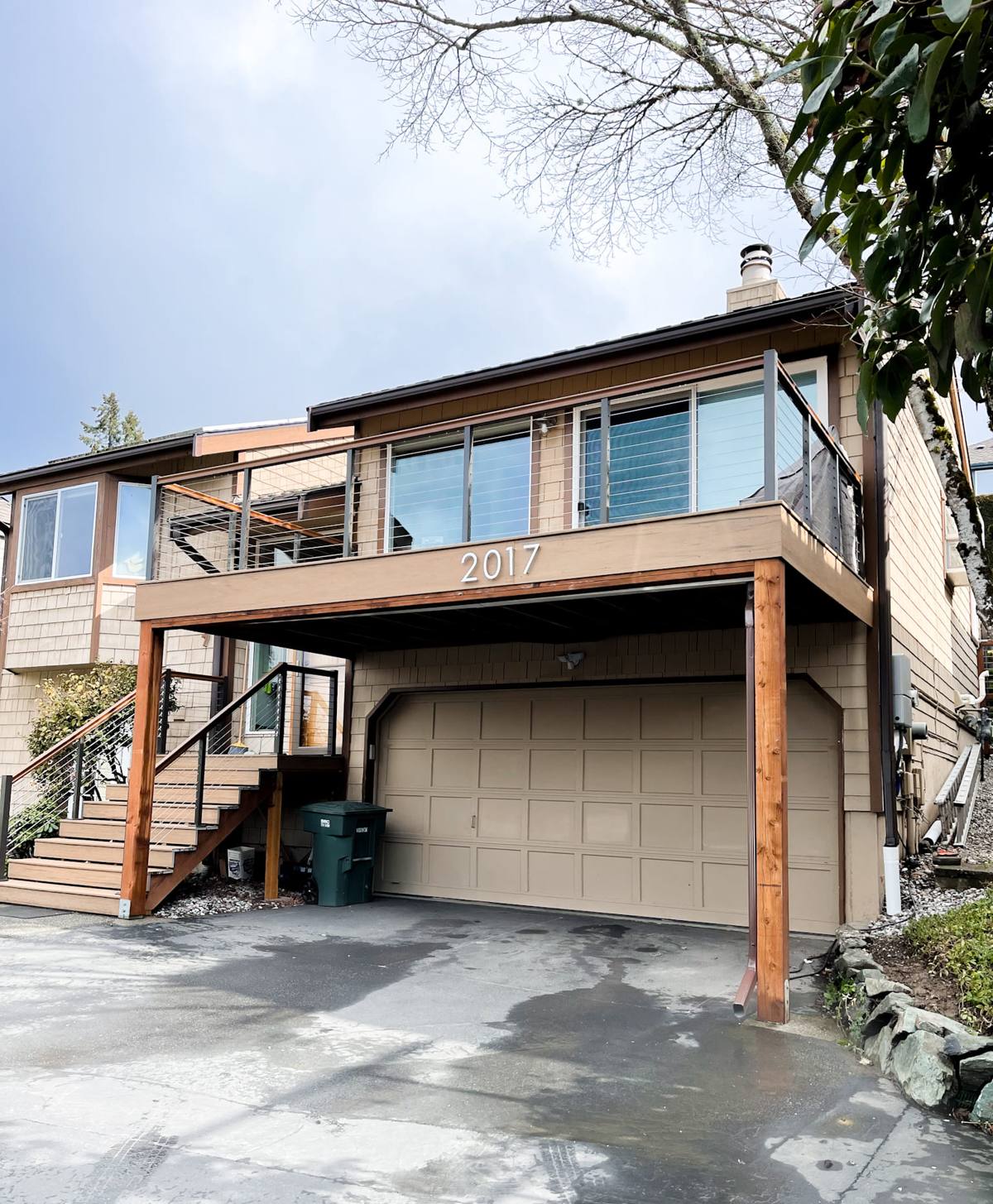
Signs Your Deck Needs Repair, Not Just a Cleaning
A pressure wash and a fresh coat of stain will make a tired deck look better for a season, but it won't fix what's happening underneath. Here's what actually signals a repair is due:
- Boards that feel spongy, bounce, or flex more than they used to
- Visible gaps, cracking, or splintering concentrated near fastener heads
- Rust streaking down from screws, nails, or joist hangers
- A railing or guardrail post that wiggles when you push on it
- Persistent black or green staining that comes back within weeks of cleaning
- Any spot where a screwdriver sinks into the wood without much resistance
That last one is the test worth doing yourself before calling anyone. Probe suspect boards, posts, and the ledger board where the deck meets the house. If the wood is soft, you're not looking at a surface problem anymore.
The Repair Issues We See Most Often Around Bellingham
Ledger Board and Rim Joist Rot
The ledger board — the piece bolted to the house that the whole deck hangs from — is the single most important structural member on most decks, and it's also the one most exposed to trapped moisture. If it wasn't properly flashed when installed, or the flashing has failed over time, water gets behind it and sits against the house's rim joist. In our climate, that's a slow, steady rot process that can go unnoticed for years because it's hidden behind the decking boards.
Post Rot at Grade
Support posts rot fastest right where they meet the ground or a concrete footing — the spot that stays wettest the longest after rain. Even pressure-treated posts eventually break down at this transition line if water isn't shedding away from the base.
Fastener Corrosion
Salt-laden air is harder on metal than most homeowners expect, and it doesn't take direct ocean spray to matter — proximity to Bellingham Bay is enough over the span of a decade or two. Nails, screws, and joist hangers that aren't rated for coastal exposure corrode, weaken, and eventually stop holding the connections they were driven for.
Moss, Algae, and Slick Surfaces
Shaded yards and long wet seasons grow moss on deck boards the same way they grow it on a roof. Beyond the slip hazard, moss and algae hold moisture against the wood surface, which accelerates decay in the boards themselves — especially on the north or shaded side of a house.
What a Correct Deck Repair Actually Involves
A repair done right isn't just swapping out the boards that look bad. It starts with a structural check, because a deck that looks fine on top can still have compromised framing underneath. Our approach covers:
- Checking the ledger connection and flashing — the most common source of hidden rot
- Inspecting posts, footings, and joists for soft spots, not just visible damage
- Confirming guardrail height and baluster spacing meet current Washington building code, since older decks were often built to looser standards
- Replacing corroded fasteners and hardware with hardware rated for exterior, coastal-influenced conditions
- Re-flashing any connection points that are directing water into the structure instead of away from it
- Matching or upgrading decking material based on how that section of yard drains and how much shade it gets
Skipping the structural check to just replace surface boards is the most common shortcut we see from past work, and it's why some decks need the same "repair" done again within a few years.
Repair or Rebuild? Cost Factors to Weigh
Not every deck problem calls for a full rebuild, but not every deck is worth patching either. The honest answer depends on where the damage is concentrated.
| Factor | Leans Toward Repair | Leans Toward Rebuild |
|---|---|---|
| Framing condition | Joists and posts probe solid, only isolated soft spots | Rot found at multiple structural points or the ledger itself |
| Age of the deck | Under 15 years, built to a reasonable original standard | Older than most PT lumber's realistic service life, or unknown build quality |
| Code compliance | Railings and spacing already meet current code | Guardrails, stairs, or footings fall short of current Washington code |
| Damage pattern | Localized to a few boards or one post | Widespread soft decking, corrosion, or movement throughout |
| Budget goal | Extend usable life a number of years for lower upfront cost | Long-term reliability and full code compliance matter more than upfront cost |
We'll always tell you honestly which category your deck falls into rather than defaulting to the bigger job. A well-built deck with isolated damage can often get another decade or more out of a targeted repair.
Decking and Fastener Material Choices
What you rebuild or repair with matters as much as the workmanship. In a climate that stays damp for most of the year, some choices simply hold up longer than others.
| Material | How It Holds Up Here | Trade-Off |
|---|---|---|
| Pressure-treated (ACQ) lumber | Good rot resistance when properly maintained and sealed | Needs periodic sealing/staining or moisture reintroduces decay risk |
| Cedar | Naturally decay-resistant, ages well in PNW climates | Softer wood, higher material cost, still needs maintenance |
| Composite decking | Doesn't rot, low maintenance against moss staining | Higher upfront cost; substructure still needs to be wood and properly protected |
| Fasteners & hardware | Hot-dip galvanized or stainless steel resist coastal air corrosion | Costs more than standard electro-galvanized hardware, but that's exactly what fails first here |
We won't put standard electro-galvanized fasteners into a coastal-exposed repair — it's not that the hardware is defective, it's just not rated for the corrosion load this climate puts on it, and we'd rather do the connection right the first time than have you paying for it again in five years.
Our Deck Repair Process
- On-site inspection — we probe framing, posts, and the ledger connection, not just the decking surface
- Written scope — you get a clear breakdown of what's structural versus cosmetic, and what code items need addressing
- Repair or rebuild the framing first — nothing gets a new deck board over rotten joists
- Re-flash and correct water paths — fixing the moisture source, not just the symptom
- Install decking and hardware — matched to the site's sun/shade and drainage conditions
- Final walk-through — we check rail stability, board spacing, and stair safety before calling it done
Keeping a Repaired Deck Ahead of the Weather
A good repair buys you years, but a little seasonal attention buys you more. Worth doing on your own between visits from us:
- Sweep leaves and debris off the deck surface before fall rains set in — trapped organic matter feeds moss and holds moisture
- Rinse off moss and algae growth in spring before it gets established, rather than waiting for it to darken the wood
- Check that gutters and downspouts near the deck aren't dumping water onto posts or the ledger area
- Look at fastener heads once a year for early rust streaking — it's cheaper to catch than to ignore
- Reseal or restain wood decking on the manufacturer's recommended cycle, not just when it starts looking gray
- Keep planters and anything that traps standing water off direct contact with the deck boards
Why a Crew That Already Works Columbia Matters
Deck repair done by someone unfamiliar with Bellingham's specific mix of salt air, shade, and rainfall tends to miss the details that actually matter here — the flashing detail that keeps a ledger dry through a wet Whatcom County winter, or the hardware grade that won't corrode near the bay within a few years. We've seen how decks in this neighborhood age, which means we know where to look first and what corners were likely cut on the original build. That's the difference between a repair that lasts and one that's back on your to-do list in a couple of years.
If you've got a deck in the Columbia area showing any of the signs above, we're glad to take a look. Use the form below to request a free, no-pressure estimate — we'll tell you honestly whether you're looking at a repair or something bigger, and why.