 Bellingham
 New Roof Installation Built for Columbia's Weather
Homes in Columbia sit close enough to the water and open enough to weather that roofing decisions here carry more weight than they would inland. Salt-laden air moving off Bellingham Bay, long stretches of driving rain through fall and winter, and a moss season that seems to start earlier every year all put real stress on a roof system. A new roof installed for this neighborhood needs to be chosen and installed with those specific conditions in mind, not treated as a generic replacement job.
This page covers what a correct new roof installation looks like for a Columbia home: the materials that hold up, the details that actually stop leaks, and how our process works from the first estimate to the final walk-through.
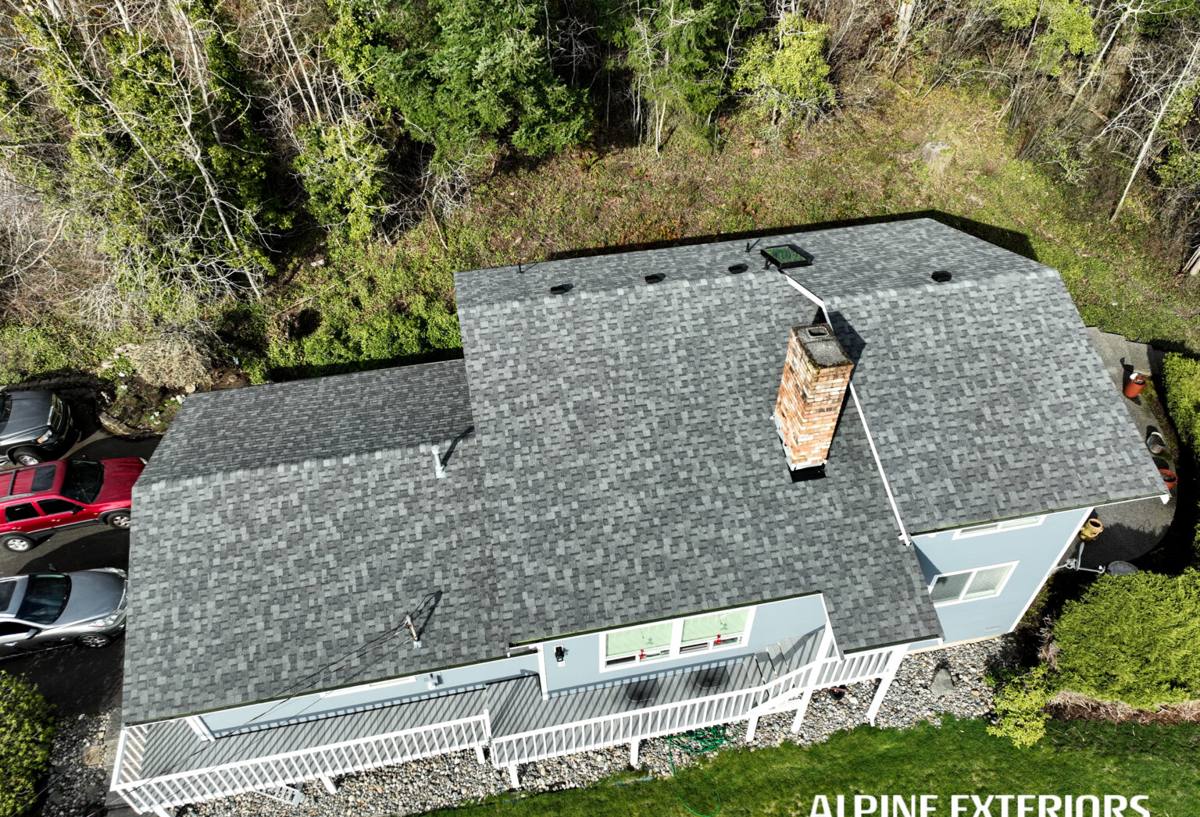
What Columbia's Climate Does to a Roof
Whatcom County doesn't get extreme heat or hard freezes very often, but it makes up for that with persistence. A roof here spends more days per year wet, damp, or shaded than a roof almost anywhere else in the country. That has specific consequences.
Salt Air and Corrosion
Homes closer to the water deal with airborne salt that accelerates corrosion on exposed metal — fasteners, flashing, vents, and gutter hardware. Standard galvanized fasteners can start rusting years before they should. This is a materials decision, not a workmanship one: the fix is specifying corrosion-resistant fasteners and flashing metals from the start, not repairing rust after it shows up.
Driving Rain
Bellingham's rain rarely falls straight down. Wind-driven rain gets pushed sideways and upward under shingle tabs, around vent boots, and into any flashing detail that was cut short. A roof that would perform fine in a calmer climate can still leak here if the underlayment and flashing weren't installed to handle wind-driven moisture specifically.
Moss and Shade
Tree cover and persistent moisture make Columbia good moss habitat. Moss holds water against the roof surface, works into shingle granules, and can lift edges over time if it's left unmanaged. A new roof is the right time to build in moss resistance — proper ventilation, strategic zinc or copper strips, and shingle products rated for moss resistance — rather than fighting it after the fact with scraping and treatments.
What a Correct New Roof Installation Actually Involves
A new roof is more than shingles on plywood. Every layer does a specific job, and skipping or shortcutting one is where most leaks and premature failures come from.
Tear-Off and Deck Inspection
We remove the old roofing down to the deck rather than layering over it. This lets us actually see the plywood or OSB underneath — soft spots, old water staining, or rot from a slow leak that was never visible from inside the attic. Any damaged decking gets replaced before anything new goes down. Installing new roofing over a compromised deck just hides the problem for a while.
Underlayment
In a climate this wet, underlayment is not a formality. We use a synthetic underlayment system with ice-and-water shield reinforcement at vulnerable areas — eaves, valleys, and around penetrations — where wind-driven rain and ice damming are most likely to find a weak spot.
Flashing
Flashing is where the majority of roof leaks actually originate, not the field shingles themselves. Chimneys, skylights, sidewalls, valleys, and vent penetrations all need properly formed, corrosion-resistant flashing integrated with the underlayment in the right layering order — not just caulked over the top. Caulk is a maintenance item, not a waterproofing strategy.
Ventilation
A roof that can't breathe traps moisture in the attic, which shortens the life of the decking and the shingles from underneath. Balanced intake and exhaust ventilation matters everywhere, but especially in a climate where the roof rarely gets a long dry stretch to air itself out. We check existing ventilation as part of every new roof estimate and correct it where it's inadequate.
Field Roofing Material
The visible shingle or roofing layer is the last piece, installed to manufacturer spec with the correct nailing pattern, exposure, and fastener count for the wind exposure this area sees.
Choosing the Right Roofing Material for Columbia
There's no single "best" roofing material — the right choice depends on the home's exposure, roof pitch, budget, and how much long-term maintenance the homeowner wants to take on. Here's how the common options compare for this specific climate.
| Material | Performance in Salt Air / Rain | Moss Resistance | Typical Lifespan |
|---|---|---|---|
| Architectural asphalt shingle | Good with proper flashing and fasteners | Moderate — better with algae/moss-resistant granules | 25–30 years |
| Standing seam metal | Excellent when fasteners and metal are corrosion-rated | Very good — sheds moisture, little for moss to grip | 40–50+ years |
| Synthetic/composite shake | Good, consistent performance, doesn't absorb moisture | Good | 30–50 years |
| Cedar shake (untreated) | Requires diligent maintenance near salt air and shade | Poor without ongoing treatment | 20–30 years with upkeep |
We'll walk through these trade-offs honestly during your estimate — including where a lower-maintenance option might save money over the life of the roof even if the upfront cost is higher.
Signs a Columbia Home Needs a New Roof, Not a Repair
- Granule loss showing up in gutters or downspouts in large amounts
- Shingles that are curling, cupping, or losing their tab seal
- Persistent moss growth that returns quickly after cleaning
- Daylight visible through the roof deck from inside the attic
- Soft or spongy spots when walking the roof
- Flashing that's separated, rusted through, or missing at penetrations
- A roof approaching or past its expected lifespan with multiple past repairs
- Rising energy bills tied to poor attic ventilation or insulation gaps at the roofline
One or two of these can often be handled with a targeted repair. Several at once, especially on an older roof, usually means repair costs are about to outpace what a full replacement would cost over the next few years.
Our New Roof Installation Process
- On-site assessment: We inspect the current roof, deck condition, ventilation, and flashing details specific to your home's exposure.
- Material selection: We go over options based on your budget, roof pitch, and how much long-term maintenance you want to take on.
- Written estimate: A clear, itemized quote — no vague allowances or surprise add-ons discovered mid-job.
- Tear-off and deck repair: Old roofing comes off, the deck is inspected, and any damaged sheathing is replaced.
- Underlayment and flashing installation: The waterproofing layers go in first, with extra attention at valleys, penetrations, and wall intersections.
- Field roofing installation: Shingles, metal, or shake are installed to manufacturer spec for this wind and rain exposure.
- Cleanup and walk-through: We clear debris, magnet-sweep for stray fasteners, and walk the finished roof with you before we consider the job done.
What Drives Cost
| Factor | Why It Matters |
|---|---|
| Roof size and pitch | Steeper, larger roofs take more material and labor time |
| Material choice | Asphalt, metal, and composite products carry different material costs |
| Deck condition | Rotten or soft decking found during tear-off adds repair cost |
| Number of penetrations | More vents, skylights, and chimneys mean more flashing labor |
| Layers to remove | Removing multiple old roofing layers adds tear-off time |
| Access and site conditions | Tree cover, tight lot lines, and steep grades affect setup and disposal |
We don't quote a roof over the phone. Every home's combination of these factors is different, and an accurate number requires a walk-through and a look at the attic and deck.
Why Hire a Crew That Already Works in Columbia
A roof designed for a dry inland climate isn't automatically wrong for Bellingham — but installed without adjustment, it's more likely to develop problems here than in a milder setting. A crew that regularly works Columbia and the surrounding Whatcom County area already knows which fastener and flashing specs hold up against salt air, which valley details actually shed wind-driven rain, and where moss tends to establish itself first on a given roof orientation. That local pattern recognition shows up in the details — the ones that determine whether a roof is still watertight in year fifteen, not just at the final inspection.
It also means we're not guessing at permitting requirements, disposal logistics, or the practical realities of working around this area's tree cover and lot access. Those are small things individually, but they add up to a smoother project and a roof that's actually built for where it sits.
Maintaining Your New Roof
A correctly installed roof still benefits from basic upkeep in this climate:
- Keep gutters clear so water isn't backing up under the eaves
- Trim back overhanging branches to reduce shade and debris buildup
- Have moss growth addressed early, before it works into the shingle surface
- Schedule a periodic inspection after major storms to check flashing and fasteners
- Watch for granule buildup in gutters as an early wear indicator
None of this replaces the value of correct installation up front, but it extends the life of a roof that was built right the first time.
If your Columbia home needs a new roof or you're not sure whether repair or replacement makes more sense, we're happy to take a look. Fill out the form below for a free, no-pressure estimate.