 Bellingham
 Window Installation Built for Columbia's Weather, Not Just Any Weather
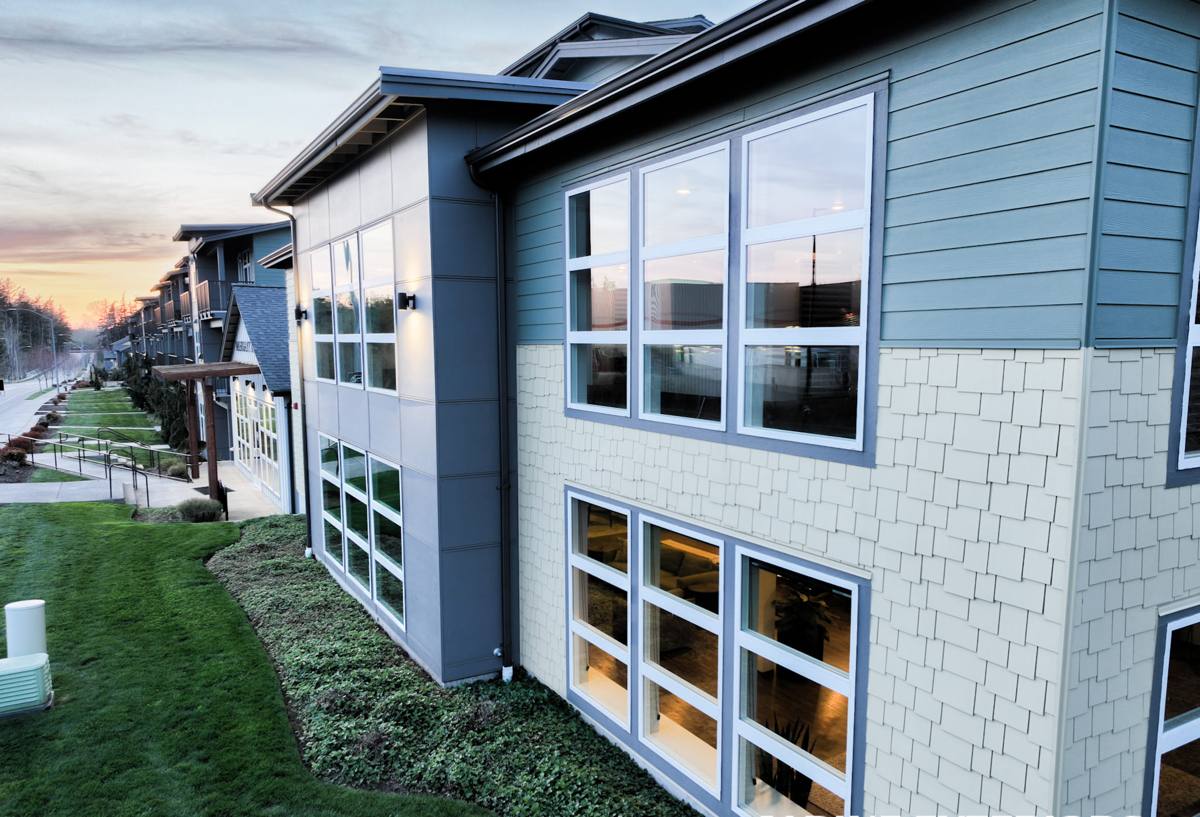
Columbia sits close enough to the water and the tree line that its homes take a different kind of beating than houses further inland. Salt-laden air off Bellingham Bay works into metal hardware and finishes. Driving rain off Puget Sound doesn't fall straight down, it comes in sideways against west- and south-facing walls. And the long stretch of grey, damp months every year gives moss and algae months at a time to get a foothold on anything that holds moisture. A window that's rated fine on paper can still fail early here if it wasn't installed with this specific combination in mind.
We install windows across Whatcom County, but Columbia jobs get treated as their own case. Lot size, tree cover, sun exposure, and how exposed a given wall is to weather off the water all change what we recommend and how we flash and seal the opening.
What Salt Air, Rain, and Moss Season Actually Do to Windows
Salt air and hardware
Salt in the air accelerates corrosion on anything metal — hinges, cranks, balance systems, screws, and cheaper cladding fasteners. It's slow and easy to miss until a window that used to open smoothly starts binding, or a lock won't seat right.
Driving rain and wind-driven moisture
Bellingham's rain rarely falls politely straight down. Wind pushes it sideways and up under trim, sills, and poorly lapped flashing. Most window failures we see aren't the glass or the frame itself — they're water finding a gap in the flashing or sealant and getting behind the siding, where it can sit against sheathing and framing for months before anyone notices a stain or soft spot.
The long moss season
From fall through spring, Whatcom County stays damp enough that moss and algae get a real foothold on horizontal surfaces — sills, mullions, and anywhere debris collects. Beyond the appearance issue, moss holds moisture against the window longer than open air would, which shortens the life of caulking, wood trim, and any exposed fasteners.
Signs a Columbia Home May Need Window Installation Soon
- Visible fogging or a permanent haze between the panes of a double-pane window — the seal has failed
- Windows that are hard to open, close, or lock, especially after a wet stretch of weather
- Soft or discolored wood trim or sill, particularly on west- or south-facing walls
- Moss or dark green growth building up on sills or in corners year after year despite cleaning
- Noticeable draft or cold spot near the window frame in winter
- Rising heating bills without another clear explanation
- Visible gaps between the window frame and the siding or trim
- Condensation forming on the inside of the glass regularly, even in mild weather
Any one of these on its own isn't necessarily an emergency, but a few together usually means the window and its flashing are past the point where sealant and patching will hold.
What a Correct Window Installation Actually Involves
Window installation done right is mostly about what happens before the new window ever goes into the opening. The window itself is only as good as the opening it's set into.
Removing the old window and inspecting the opening
Once the old unit is out, we check the sheathing, sill, and framing around the opening for rot, soft spots, or old water staining. In a wet climate like this, it's common to find some degree of moisture damage around older or poorly flashed windows, especially on exposed walls. Any damaged material gets repaired or replaced before a new window goes in — installing a new window into a compromised opening just resets the clock on the same problem.
Flashing and weatherproofing
This is the step that matters most for a house in this climate. Proper flashing directs any water that gets past the exterior cladding back out and away from the framing, using correctly lapped layers — sill pan, jamb flashing, and head flashing — so water always sheds downward and outward, never sideways into a seam. Skipping or shortcutting this step is the single biggest reason window installations fail early in wet, wind-driven climates like ours.
Setting, shimming, and sealing the window
The window has to be shimmed level, plumb, and square, then fastened per the manufacturer's specifications — not just caulked into place. Insulation goes into the gap around the frame (without overpacking it, which can bow the frame), and the appropriate interior and exterior sealants go on last.
Interior and exterior trim
Trim gets reinstalled or replaced, caulked, and, where needed, painted or finished to match. On the exterior, we make sure trim is sealed and sloped to shed water rather than collect it, which also helps cut down on where moss can start.
Window Types and Materials: What Holds Up in This Climate
| Material | How it handles salt air & rain | Maintenance | Typical fit for Columbia homes |
|---|---|---|---|
| Vinyl | Doesn't corrode; handles moisture well; UV can affect color over many years | Low — occasional cleaning | Good all-around choice for most homes, especially budget-conscious replacements |
| Fiberglass | Very stable in moisture and temperature swings; strong resistance to warping | Low | Strong option for exposed walls that take direct wind-driven rain |
| Wood-clad | Attractive, but the wood core is vulnerable if the cladding seal is ever breached | Higher — cladding seams and any exposed wood need monitoring | Best reserved for covered or less-exposed openings, or homes prioritizing a specific look |
| Aluminum | Conducts cold and can corrode faster in salt air unless well-finished | Moderate | Less common as our first recommendation for this specific climate |
We don't push one material on every job. The right call depends on the wall's sun and wind exposure, the home's style, and budget. On a wall that takes rain straight off the water, we're more conservative about wood-clad products — not because the product is bad, but because any small gap in the cladding seal on an exposed wall gives moisture a path to wood that doesn't dry out quickly here.
Our Installation Process
- On-site assessment — we look at the actual openings, note exposure to wind and rain, and check for existing moisture damage before quoting anything
- Product selection — we walk through material, glass, and style options based on that specific wall and your priorities
- Written estimate — clear scope, materials, and price before any work starts
- Removal and opening inspection — old windows come out, and we check framing and sheathing condition
- Repair as needed — any rot or damage found gets fixed before the new window goes in, not covered over
- Flashing, setting, and sealing — done to manufacturer spec, built for wind-driven rain
- Trim and cleanup — interior and exterior finish work, site cleaned up daily
- Final walkthrough — we check operation, seals, and finish with you before calling the job done
What Window Installation Typically Costs — and Why It Varies
| Cost factor | Why it moves the price |
|---|---|
| Number of windows | Per-window cost usually drops somewhat on larger jobs due to shared setup and labor |
| Window size and type | Larger units, bay/bow windows, or custom shapes cost more in materials and labor than standard sizes |
| Material | Vinyl is generally the most affordable; fiberglass and wood-clad cost more upfront |
| Condition of the opening | Rot or framing damage found during removal adds repair cost but is not optional to skip |
| Wall exposure | Openings on walls exposed to direct wind-driven rain may need more thorough flashing detail |
| Trim and finish work | Matching existing trim profiles or repainting adds labor beyond the window itself |
We give an honest range once we've actually looked at the openings — not a phone quote. A house with several straightforward, similarly sized windows in good framing condition is a very different job than one with a single custom shape on a wall with existing water damage.
Why a Crew That Already Works in Columbia Matters
A window installer who works regularly in this specific part of Whatcom County has already seen how the local combination of salt air, wind direction, and rain exposure plays out on real houses — not just in a manufacturer's spec sheet. That shows up in small decisions: which walls get extra attention on the flashing detail, which materials we're cautious about on exposed sides of a house, and knowing what moisture damage actually looks like when we open up an old frame in this climate versus a drier one.
It also means we're not guessing at permitting, typical construction in the area's older versus newer homes, or how a given product has actually held up on other jobs nearby over several wet seasons.
After Installation: Keeping New Windows Performing
- Rinse sills and frames periodically to keep moss and algae from establishing, especially on shaded or north-facing windows
- Check exterior caulking once a year, particularly after a hard winter, and have any cracked sealant redone
- Keep gutters and downspouts clear so water isn't sheeting down over window heads
- Operate hardware (locks, cranks) periodically even on windows you don't open often, to keep moving parts from seizing up
- Watch for condensation between panes — it's the clearest early sign of a failing seal, and it's worth addressing before it leads to fogged glass
New windows installed correctly, with proper flashing and quality materials matched to the exposure, should hold up well through Whatcom County's wet seasons for decades. The maintenance above is minor compared to what's needed to fix a window that was flashed poorly from the start.
If your Columbia home has windows showing any of the signs above, or you're just planning ahead, we're happy to take a look and give you a straight, no-pressure estimate — no obligation, just an honest read on what your windows actually need. Fill out the form below to get started.