 Bellingham
 Roofing in Cordata Isn't the Same Job as Roofing Inland
Cordata sits in north Bellingham, close enough to Bellingham Bay and the Salish Sea that homes here deal with a specific mix of conditions: salt-laden air off the water, wind-driven rain that comes in sideways more often than straight down, and long stretches of overcast, damp weather that keep roof surfaces wet for days at a time. None of that is dramatic on its own. What it does is compound. A shingle roof that would hold up fine in a drier inland climate can start showing moss, granule loss, and soft spots years earlier here if it wasn't installed with this specific climate in mind.
This page covers what asphalt shingle roofing actually needs to hold up in the Cordata area — not generic roofing advice, but the details that matter for homes dealing with Whatcom County's coastal-influenced weather year-round.
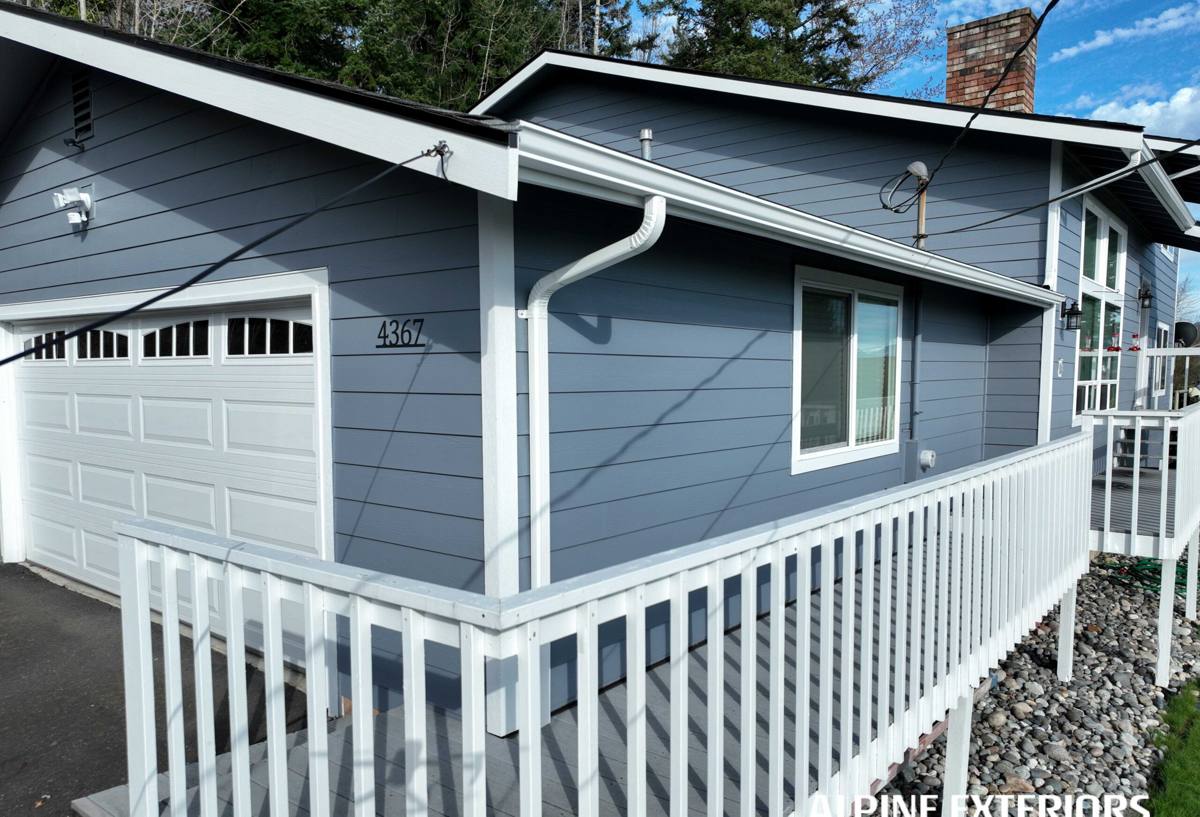
What Bellingham's Climate Does to Asphalt Shingles
Moss and Algae Growth
Bellingham's moss season isn't really a season — it's most of the year. Shingles that sit in shade under trees, or on north-facing slopes that don't get much sun, stay damp long enough for moss spores to take hold. Once moss establishes itself, it holds moisture against the shingle surface, works its way under shingle edges, and lifts tabs enough for wind and rain to get underneath. A roof with heavy moss isn't just ugly — it's losing its ability to shed water the way it's designed to.
Wind-Driven Rain and Flashing
Rain here rarely falls straight down. Storms off the Sound push rain sideways into roof-wall intersections, chimneys, skylights, and valleys. Shingles alone don't stop that kind of water intrusion — flashing does. Most of the leaks we get called out for in this area trace back to flashing that was reused during a re-roof, undersized, or installed without enough overlap, not to the shingles themselves failing.
Salt Air and Fastener Corrosion
Proximity to salt water accelerates corrosion on exposed metal — nail heads, flashing, and vent hardware included. Standard electro-galvanized fasteners can start showing rust streaks on a shingle roof years before the shingles themselves are due for replacement. It's a small detail that gets skipped on a lot of lower-bid jobs, and it's one of the first things that shows up as a cosmetic and functional problem later.
What a Correct Asphalt Shingle Roof Install Actually Involves
A shingle roof is a system, not a single product. Skipping any one layer shortens the life of the whole roof, even if the shingles themselves are a good product.
Tear-Off and Deck Inspection
We don't install new shingles over old ones, and we don't recommend it. A full tear-off lets us actually see the roof deck — soft spots, rot around old vent penetrations, and damage that's invisible from the attic or the ground. Any compromised sheathing gets replaced before anything new goes down. Skipping this step just buries a problem under a new roof.
Underlayment and Ice-and-Water Barrier
Synthetic underlayment goes down as the roof's secondary water barrier, and self-adhering ice-and-water shield goes in the areas that take the most abuse — eaves, valleys, and around penetrations. In a climate with this much sustained rain, that secondary barrier isn't optional; it's what keeps a small shingle failure from becoming a leak inside the house.
Ventilation
Attic ventilation affects how long shingles last from the underside, not just the top. Poor airflow traps moisture in the attic, which can lead to sheathing rot, mold, and premature shingle aging from below — a problem that's easy to miss because it doesn't show up on the roof surface until it's advanced. We check intake and exhaust balance as part of every roofing job, not as an upsell.
Flashing Details
Step flashing at walls, counter-flashing at chimneys, and properly lapped valley flashing are where most leaks either get prevented or get created. We install new flashing on every re-roof rather than reusing old pieces, because flashing that's been through one roofing cycle is often bent, thinned, or no longer sealing the way it did originally.
Choosing the Right Shingle for a Cordata Home
Shingle selection matters more here than in a mild, dry climate. The table below covers the practical trade-offs for this area, not just price.
| Shingle Type | Typical Lifespan | How It Handles Local Conditions |
|---|---|---|
| 3-Tab | 15–20 years | Lowest upfront cost; thinner profile shows wind and moss wear faster; limited manufacturer wind ratings |
| Architectural / Dimensional | 25–30 years | Heavier, more wind-resistant; better moss resistance with algae-resistant granules; the standard choice for most re-roofs in this area |
| Impact-Rated / Premium | 30+ years | Best long-term value on exposed or high-wind lots; stronger warranty coverage; higher upfront cost |
We install algae-resistant shingle lines as our standard for anything going on a shaded or north-facing roof in Cordata — the copper-infused granules in these products slow moss and algae growth measurably compared to standard granules. It's a small cost difference that pays for itself in fewer moss treatments down the road.
Signs Your Roof Needs a Look
Most shingle roof failures give warning signs well before they turn into an interior leak. Worth checking for:
- Moss or algae streaking, especially on north-facing or shaded slopes
- Granules collecting in gutters or downspouts
- Shingle tabs that are curling, cupping, or lifting at the edges
- Rust staining around nail heads, vents, or flashing
- Soft or spongy spots when walked (we check this, not something to test yourself)
- Daylight visible through the roof deck from inside the attic
- Missing or torn shingles after a windstorm
- Water stains on interior ceilings near exterior walls or chimneys
Any one of these on its own isn't necessarily an emergency, but it's worth a proper inspection rather than waiting for it to show up as a ceiling stain.
Repair, Maintenance, or Full Replacement
Not every roof problem in Cordata needs a full replacement. We look at three things before recommending anything: the age of the existing roof, how much of the damage is isolated versus spread across the whole surface, and what condition the underlayment and deck are in underneath. A roof that's 10 years in with a localized flashing leak usually just needs that section repaired correctly. A roof that's 20-plus years old with widespread moss, granule loss, and multiple soft spots is usually past the point where repair makes financial sense.
Between full roof work, moss and algae buildup can often be managed with a soft wash treatment and clearing debris out of valleys and gutters before it holds moisture against the shingles. We're straightforward about which situation you're in — we don't sell a full replacement when a repair will genuinely hold, and we don't recommend patching a roof that's already past its useful life just to avoid a bigger conversation.
How We Approach Roofing Work in Cordata
We start with an on-site inspection, not a drive-by estimate — that means getting on the roof (or using a drone where access is limited) to actually look at flashing, ventilation, and deck condition before quoting anything. From there we walk through what we found, what it means for the roof's remaining life, and what the realistic options are, including doing nothing yet if that's genuinely the right call.
On the job itself, that means a full tear-off when replacement is warranted, deck repair where needed, new underlayment and ice-and-water barrier, correct ventilation, all-new flashing, and daily cleanup so the property isn't left with nails and debris scattered around. We also walk the finished roof with the homeowner before calling the job done.
Why a Crew That Already Works This Area Matters
A roofer who works Whatcom County regularly already knows which slopes in this neighborhood tend to hold moss, how far wind-driven rain typically pushes under improperly lapped flashing, and which fastener and flashing materials actually hold up against the salt air coming off the water. That's not something you can fully account for with a generic install approach built for a drier or more inland climate. It shows up over years, in the form of a roof that's still performing well versus one that's showing its age early.
If you're dealing with moss buildup, a suspected leak, or a roof that's simply getting up in years, we're happy to take a look and give you a straight answer about what it actually needs. Reach out for a free, no-pressure estimate using the form below — we'll walk the roof, explain what we find, and give you real numbers, not a sales pitch.