 Bellingham
 Windows Built for Cordata's Weather, Not Just Its Openings
Cordata sits far enough inland to avoid the worst of the waterfront salt spray that hits homes closer to Bellingham Bay, but it still gets plenty of the moisture-heavy weather that defines this corner of Whatcom County. Long stretches of low-intensity rain, wind-driven storms off the Strait of Georgia, and a moss season that can run from fall through spring all put steady pressure on window frames, sills, and the seals around them. Custom windows here aren't a luxury upgrade — they're the difference between a window that holds up for decades and one that starts failing at the corners in year eight or nine.
"Custom" in this context doesn't necessarily mean unusual shapes or high-end architectural glass, though we do that work too. More often it means windows sized and detailed to fit openings that were never quite standard to begin with — common in Cordata's mix of older ranch-style homes, multi-decade additions, and newer construction — combined with materials and installation details chosen specifically for a wet, moss-prone Pacific Northwest climate.
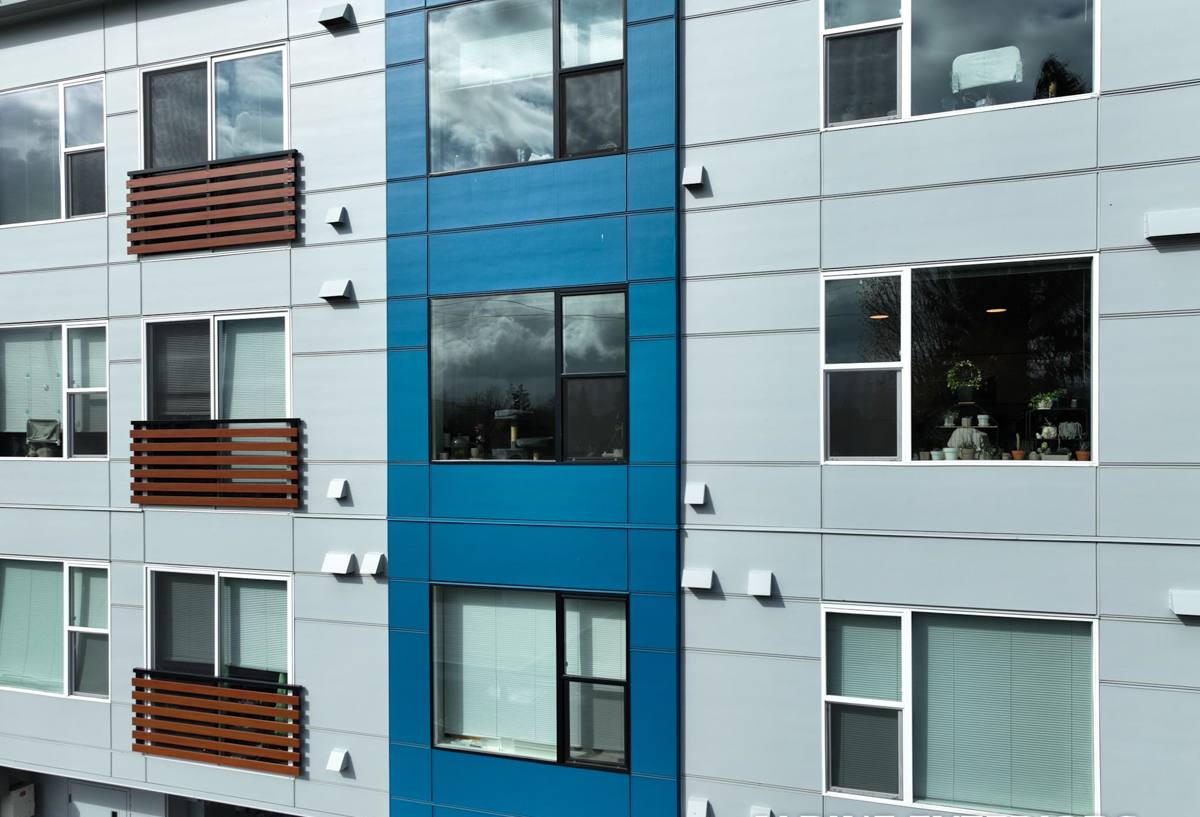
What Bellingham's Climate Actually Does to Windows
It helps to understand the specific failure modes we see, rather than treat "bad weather" as one vague problem.
Driving Rain and Wind-Driven Moisture
Storms moving through Whatcom County frequently bring rain at an angle, not straight down. That means water gets pushed sideways into any gap around a window frame, not just tested from above. Windows and flashing details that only shed water vertically tend to leak at the sides and bottom corners first — often years before a homeowner notices, since the damage happens inside the wall cavity before it shows up as a stain.
Salt Air, Even Inland
Cordata isn't on the water, but Bellingham's marine air still carries salt content that settles on exterior surfaces over time. On metal window components — hardware, some fasteners, aluminum-clad exteriors — this accelerates corrosion compared to a drier inland climate. It's a slower effect than what waterfront properties see, but it adds up over 15-20 years.
Moss and Sustained Dampness
Moss doesn't just grow on roofs. Given a shaded exterior wall, a north-facing elevation, or a window sill that never fully dries between rain events, moss and algae will colonize wood trim, caulk lines, and even vinyl surfaces with enough grime buildup. Beyond the cosmetic issue, sustained dampness under moss growth keeps wood substrates wet longer, which is exactly the condition that leads to rot around window openings.
Signs a Cordata Home Needs Window Attention
- Visible gaps, soft spots, or paint failure on the wood trim or sill around a window
- Condensation forming between panes (a sign the seal on a double- or triple-pane unit has failed)
- Drafts you can feel near the frame even when the window is fully closed and latched
- Difficulty opening, closing, or latching windows that used to operate smoothly
- Moss, black streaking, or persistent green staining on the sill or lower frame
- Noticeably higher heating bills in winter with no other explanation
- Visible daylight or gaps around the frame when viewed from inside on a bright day
Any one of these can be a minor fix. Several together, especially on a home more than 20-25 years old, usually points to windows that are past the point where caulk and weatherstripping will solve the problem.
What a Correct Window Installation Actually Involves
The window unit itself is only part of the job. Most premature window failures we see in this climate trace back to installation details, not product defects. A correct install for this region includes:
- Removing the old unit carefully to inspect the rough opening for hidden rot or water damage before anything new goes in.
- Repairing or rebuilding the opening if the sheathing, sill, or framing shows moisture damage — installing a new window into a compromised opening just hides the problem.
- Installing a sloped sill pan so any water that does get past the window sheds outward instead of pooling against the frame.
- Proper flashing integration with the existing weather-resistive barrier, layered so water sheds downward and outward at every junction — this is the single most common point of failure on rushed installs.
- Sealing and insulating the gap between the window frame and the rough opening with the right materials — not just caulk, which alone isn't a substitute for a proper air and moisture seal.
- Exterior trim and finish work that sheds water away from the frame rather than trapping it against the siding.
Skipping or rushing any one of these steps is how a brand-new, well-reviewed window still ends up with a rot problem five years later. The window is rarely the point of failure — the installation around it usually is.
Choosing the Right Frame Material for This Climate
There isn't one universally "best" window frame material — the right choice depends on the home, the budget, and how exposed a given elevation is to wind-driven rain. Here's how the common options actually perform in a wet, moss-prone Pacific Northwest setting:
| Frame Material | Moisture Performance | Maintenance | Typical Lifespan |
|---|---|---|---|
| Vinyl | Good — won't rot, but seams and corners need quality construction | Low — occasional cleaning | 20-30 years |
| Fiberglass | Excellent — dimensionally stable, resists moisture-driven warping | Low | 30-40+ years |
| Wood (unclad) | Requires diligent upkeep — attractive but vulnerable to rot without maintenance | High — repainting, sealing | Varies widely with maintenance |
| Wood/Aluminum-Clad | Good exterior protection, interior wood warmth | Moderate — clad exterior, wood interior needs occasional attention | 25-35 years |
| Aluminum | Prone to condensation and corrosion over time in marine air | Moderate | Varies; thermal performance is a common weak point |
For most Cordata homeowners, fiberglass and quality vinyl offer the best balance of moisture resistance and low upkeep for this climate. Wood and clad-wood windows can be the right call where appearance and a traditional look matter more than minimizing maintenance — that's a legitimate trade-off, not a wrong choice, as long as the homeowner understands the upkeep that comes with it.
Glass and Coatings Matter as Much as the Frame
In this region, low-E coatings and gas-filled double- or triple-pane glass aren't about extreme heat or cold so much as managing condensation and steady heat loss through long, gray, damp winters. A well-specified glass package reduces interior condensation on cold mornings and keeps energy bills more predictable through the heating season.
What Drives Cost on a Custom Window Project
Every home and opening is different, so we avoid quoting numbers without seeing the actual site — but these are the factors that most influence price on a Cordata project:
- Number of openings and their size — larger or non-standard openings cost more to fabricate and install correctly
- Frame material — vinyl, fiberglass, and clad-wood sit at different price points, as shown above
- Condition of the existing opening — hidden rot or framing damage adds repair work before the new window goes in
- Glass package — low-E coatings, gas fills, and pane count all affect price and performance
- Full-frame vs. insert replacement — a full-frame replacement (removing down to the studs) costs more but is often the right call when the existing frame or flashing is compromised
- Access and site conditions — second-story windows, tight lots, or landscaping obstacles can add labor time
Our Process for Cordata Homeowners
We keep the process straightforward because most homeowners just want to know what's actually happening to their house and what it'll cost, without surprises partway through.
1. On-Site Assessment
We look at each window from both sides — interior condition, exterior trim, sill condition, and signs of moisture intrusion — and talk through what we're seeing before recommending anything.
2. Honest Scope and Estimate
We tell you plainly if an opening needs more than a window swap — hidden rot repair, for instance — rather than discovering it mid-project and adding surprise costs.
3. Accurate Measurement and Ordering
Custom windows are built to the exact opening, which means precise measurement up front matters more than with off-the-shelf sizes.
4. Installation Done to the Steps Above
Sill pan, flashing sequence, insulation, and trim — done in the order that actually sheds water, not just the order that's fastest.
5. Cleanup and Walkthrough
We walk the finished openings with you, inside and out, before considering the job done.
Why It Matters to Hire a Crew That Already Works in Cordata
Window installation standards written for a dry climate don't hold up here. A crew that regularly works Whatcom County homes already knows to over-build the flashing detail, slope every sill, and choose materials that tolerate a long wet season rather than a short one. That local pattern recognition — knowing which elevations take the worst wind-driven rain, which older Cordata-area homes tend to have certain framing quirks, and how moss behaves on shaded walls through a Bellingham winter — comes from doing this work here repeatedly, not from a general contracting background applied to a new region.
Maintaining Your Windows Once They're In
Even the right windows, installed correctly, benefit from basic seasonal upkeep in this climate:
- Rinse sills and frames periodically to keep moss and organic buildup from taking hold, especially on shaded or north-facing walls
- Check and clean weep holes (the small drainage openings in the frame) so they aren't blocked by debris or moss
- Inspect exterior caulk lines each fall before the wet season sets in, and touch up any cracked or separated sections
- Keep gutters and downspouts clear so overflow doesn't run directly down onto window openings below
- Trim back vegetation that keeps a window's exterior shaded and damp for extended periods
None of this replaces a correct installation, but it does extend the life of windows that were installed properly in the first place.
If you're noticing drafts, fogged glass, or moss buildup around your windows, or you're planning a renovation and want windows sized right for your home's actual openings, we're happy to take a look. Reach out for a free, no-pressure estimate — the form below will get you started.