 Bellingham
 Siding Repair Built for Cordata's Weather, Not Just the Symptom
Cordata sits in north Bellingham, close enough to Bellingham Bay to catch salt-laden air off the water and far enough into the tree cover to hold onto shade and moisture longer than homes out in the open. That combination is hard on siding. Homeowners in this neighborhood call us about the same handful of problems over and over: soft spots near the bottom courses, dark streaking that won't scrub off, and trim that's started to pull away from the wall. Most of the time, the siding itself isn't the real story — it's what's happening behind it.
A siding repair that only addresses the visible crack or stain, without figuring out why it showed up there, tends to fail again within a season or two. Our approach starts with the cause, not the cosmetic fix.
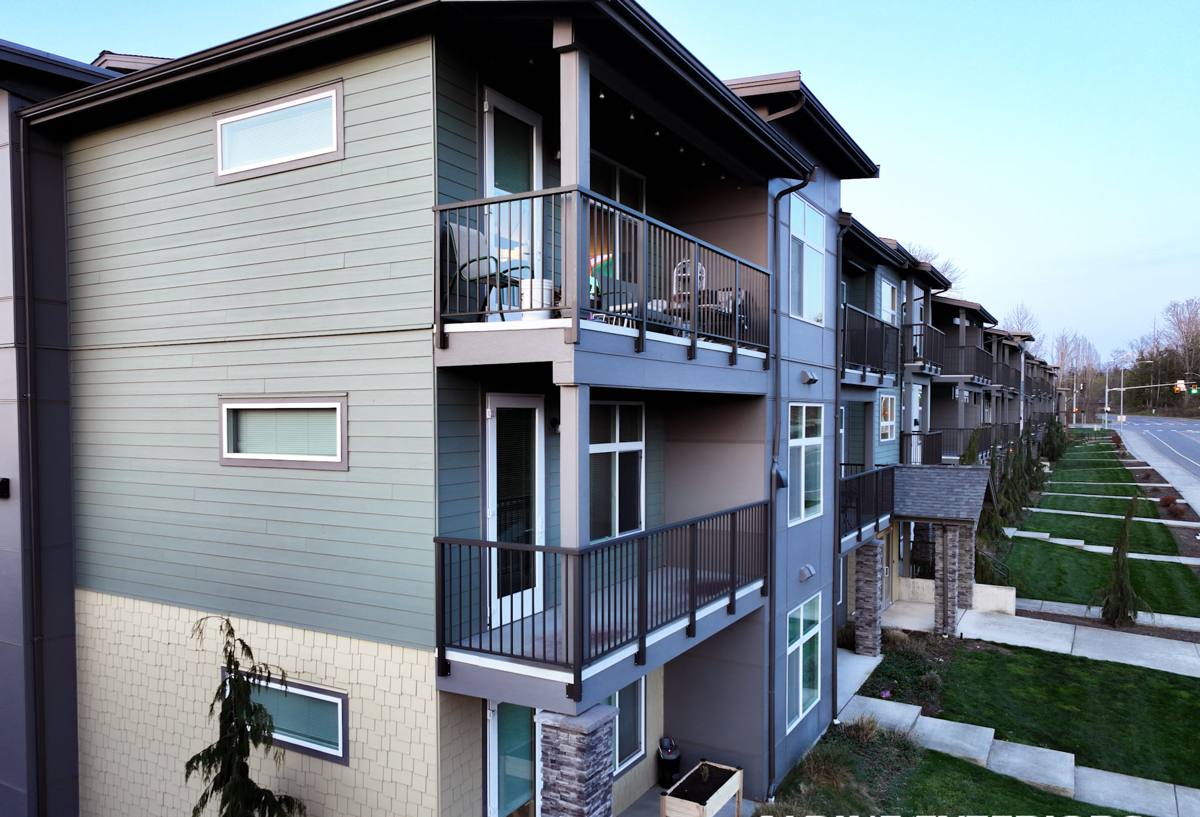
Why Cordata's Climate Is Tougher on Siding Than It Looks
Driving Rain and Wind-Driven Moisture
Whatcom County doesn't just get rain — it gets rain pushed sideways by wind off the Sound, especially during fall and winter storm systems. That driving rain finds any gap in caulking, flashing, or siding laps and pushes water behind the cladding instead of letting it run off the face. Once water gets behind siding, it doesn't dry out quickly in our climate, and that's when rot and delamination start.
Salt Air's Slow, Quiet Damage
Even a few miles inland from Bellingham Bay, salt air accelerates the breakdown of fasteners, caulk, and lower-grade siding materials. It's a slow process — you won't see it happen — but over years it shows up as premature paint failure, rusted nail heads bleeding through the finish, and trim that deteriorates faster than the rest of the house.
A Moss Season That Runs Most of the Year
Between the tree canopy common in Cordata's residential streets and Whatcom County's long, mild, wet stretch from fall through spring, moss and algae get a real head start here. On shaded north- and west-facing walls, moss doesn't just look bad — it holds moisture against the siding surface far longer than a dry wall would, and its root structure can work into seams and butt joints over time.
What's Usually Going On Under the Surface
When we pull a damaged section of siding in Cordata, we're typically looking for one of these:
- Failed or missing flashing above windows, doors, and horizontal trim, letting water track behind the siding face
- Caulk joints that have shrunk, cracked, or pulled away, especially at butt joints and corner boards
- Siding installed too close to grade, decking, or roof lines, where splash-back and standing moisture never fully dry
- Moss and organic growth trapped against the surface long enough to hold moisture and stain the material underneath
- Fastener corrosion from salt-influenced air, which loosens boards and opens tiny gaps water can exploit
None of these show up as "just a crack." They show up as symptoms — and a repair that doesn't address the underlying moisture path is a repair you'll be paying for again.
Repair or Replace? How We Make That Call
Not every damaged section needs a full re-side, and we're not going to tell you it does. But there's a point where patch repairs stop making financial sense. Here's roughly how we sort it out on a Cordata inspection:
| Signal | Usually Repairable | Usually Points to Replacement |
|---|---|---|
| Extent of damage | Isolated to one or two sections/elevations | Spread across multiple walls or the whole house |
| Underlying sheathing | Dry, solid when probed | Soft, spongy, or visibly rotted |
| Siding material | Still structurally sound elsewhere | Delaminating, warping, or crumbling in multiple spots |
| Age of existing siding | Newer install, isolated failure point | Original siding nearing or past its practical service life |
| Moisture source | Identifiable and fixable (flashing, caulk, fastener) | Chronic, systemic moisture path (grading, roofline, multiple entry points) |
We'll always tell you honestly which category your situation falls into, and why — including when a repair is genuinely the right, less expensive call.
What a Correct Siding Repair Actually Involves
Diagnose Before You Touch a Board
We pull the damaged material and check the sheathing, house wrap, and flashing underneath before deciding on a repair plan. Patching over a hidden moisture problem just hides it for a while longer.
Fix the Water Path, Not Just the Board
If flashing has failed above a window or the weather barrier has a gap, that gets corrected as part of the repair — not left in place under new siding. A repair that doesn't fix the entry point is a repair with an expiration date.
Match the Existing Material Honestly
When your home is already sided in James Hardie fiber cement, matching a repair is straightforward — profile, reveal, and ColorPlus finish are all consistent and available. If your existing siding is a different material, we'll tell you upfront what matching will and won't look like, and where a full section replacement in Hardie makes more visual and practical sense than trying to blend a mismatched patch.
Re-Seal and Re-Flash Properly
Caulking gets replaced at joints, not just touched up. Flashing gets lapped correctly, not caulked over as a substitute for proper overlap. This is the step that gets rushed on cheap repairs, and it's the step that determines whether the fix lasts five years or fifteen.
Why We Repair — and Replace — With James Hardie Fiber Cement Only
We don't install LP SmartSide, vinyl, Cemplank, Allura, primed spruce, or cedar, including for repair sections. That's a deliberate standard, not a sales pitch:
- Non-combustible material — fiber cement doesn't feed a fire the way wood-based and some engineered wood products can
- Built for wet, coastal-influenced climates — Hardie's HZ5 product line is engineered specifically for regions like ours, with freeze-thaw cycling, sustained moisture, and driving rain in mind
- ColorPlus factory finish — baked-on color that resists the fading and peeling that salt air and UV accelerate on field-painted materials
- Strong transferable warranty — backed by the manufacturer, not just our own labor guarantee
- Proven long-term performance — when installed to spec, it holds up over decades in exactly the conditions Cordata deals with every winter
We're upfront that this means we won't just slap a vinyl patch on a Hardie-sided home to save you money in the short term, and we won't quote a repair in a material we don't stand behind. If a full match requires stepping up from what's currently on the wall, we'll explain why before you commit to anything.
Our Process for a Cordata Siding Repair Call
- Inspection: We walk the affected areas, probe for soft spots, and check flashing, caulk, and grading around the damage.
- Honest assessment: You get a clear explanation of what's causing the damage — not just what it looks like on the surface.
- Written estimate: Repair scope, material, and cost laid out before any work starts, including whether repair or partial replacement is the better move.
- The repair itself: Damaged material removed, underlying issues corrected, new Hardie material installed and finished to match.
- Cleanup and walkthrough: We clear debris and go over the completed work with you before we consider the job done.
Preventing Repeat Damage After the Repair
A good repair buys you years, but Cordata's climate doesn't let up, so a little maintenance goes a long way:
- Keep gutters and downspouts clear so water isn't overflowing onto siding below the roofline
- Trim back branches and shrubs that keep siding shaded and damp, especially on north-facing walls
- Rinse visible moss or algae growth before it spreads, using a gentle low-pressure method rather than a pressure washer that can force water behind laps
- Check caulk joints at trim, windows, and corners every year or two for cracking or separation
- Keep an eye on grade and mulch levels so soil or bark isn't piling up against the bottom siding course
- Address small stains or soft spots as soon as you notice them — they're cheaper to fix early
Why Hiring a Crew That Already Works in Cordata Matters
Repair work is diagnostic work as much as it's carpentry. A crew that's already spent time on Cordata roofs and walls knows what driving rain off the water does to west-facing elevations, how far moss tends to creep on shaded lots, and where flashing details commonly get missed on homes built to older code. That local pattern recognition shortens the diagnosis and reduces the chance of a repair that looks fine for one dry summer and fails again the next wet winter. It also means straightforward, local accountability — no chasing down an out-of-area company if a question comes up after the work is finished.
If you're dealing with a stained wall, a soft spot near a downspout, or trim that's pulling away in Cordata, we're happy to take a look and give you a straight answer about what's actually going on. Reach out for a free, no-pressure estimate using the form below.