 Bellingham
 Why Cordata Siding Wears Out Faster Than Homeowners Expect
Cordata sits in north Bellingham, close enough to Bellingham Bay and the Salish Sea that salt-laden air is a constant, low-grade stressor on exterior building materials. Add Whatcom County's pattern of steady, driving rain for much of the year and a moss season that can stretch from fall through spring, and you have a climate that is quietly hard on siding — even when nothing looks obviously wrong from the curb.
Salt Air and Driving Rain
Salt air accelerates corrosion on fasteners, flashing, and any exposed metal trim, and it works its way into seams and butt joints where lesser siding materials rely on caulk or paint film to stay sealed. Driving rain compounds the problem by forcing water sideways against wall assemblies rather than letting it simply run off — this is why lap siding installed with weak overlaps or under-driven fasteners in Cordata tends to show staining, cupping, or soft spots years before it would in a drier, calmer climate.
The Long Moss Season
Moss and algae need shade, moisture, and time — and Bellingham's tree cover combined with our extended wet season gives them all three. On siding that holds moisture at the surface, moss doesn't just look bad; it keeps the substrate damp for longer stretches, which is exactly the condition that causes rot, delamination, and paint failure. A siding material's ability to shed water and resist moisture absorption matters more here than in most parts of the country.
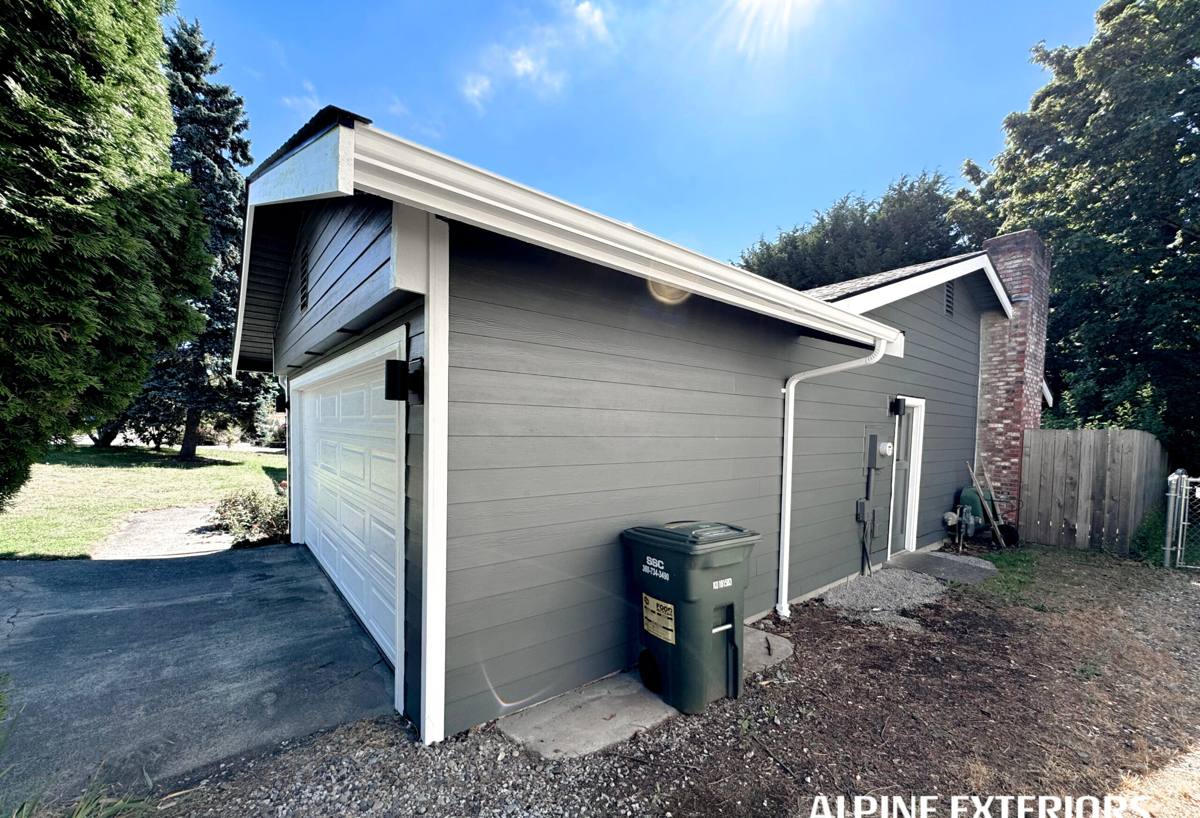
Signs a Cordata Home Needs Siding Replacement, Not Just Repair
Not every siding problem calls for a full replacement, but in this climate, small issues left alone tend to spread faster than homeowners expect. Here's what we look for when we walk a property in Cordata:
- Soft or spongy siding when pressed, especially near the bottom courses and around window trim
- Persistent moss or dark streaking that returns within a season of cleaning
- Visible cupping, warping, or separation at panel seams
- Paint that's peeling or bubbling rather than just fading
- Rust streaks below fasteners or trim, a sign moisture is reaching metal it shouldn't
- Rot detectable at corner boards, window sills, or the bottom few inches of wall siding
- Interior signs — musty smells, discolored drywall, or peeling interior paint on exterior walls
One or two of these on their own might mean spot repair. Several together, especially combined with the age of the siding, usually mean the underlying materials and water management have failed and a full replacement is the more honest recommendation.
What a Correct Siding Replacement Actually Involves
Siding replacement is often sold as a cosmetic upgrade, but the real work — and the real value — is in what goes on underneath the visible product. A job that looks right at closing but wasn't built right will fail early in a climate like ours.
Tear-Off and Wall Inspection
We remove the old siding down to the sheathing and inspect for rot, soft framing, or prior water damage that's been hidden. Any compromised sheathing or framing gets addressed before anything new goes on the wall — covering damaged substrate with new siding just hides the problem for a few more years.
Weather-Resistive Barrier and Flashing
A correctly lapped weather-resistive barrier, properly integrated window and door flashing, and correctly flashed penetrations are what actually keep driving rain out of the wall assembly. This layer does more to determine how your siding performs over the next 20-30 years than the siding product itself.
Fastening, Clearances, and Joints
James Hardie specifies exact fastener types, spacing, and penetration depth, along with minimum clearances from grade, roof lines, and decks. Butt joints get properly flashed or caulked per manufacturer detail, not just butted together and painted over. Skipping these details is the single biggest cause of premature siding failure we see on homes that were "recently redone."
Why We Install Only James Hardie Fiber Cement
We made the decision, as a company, to install James Hardie exclusively — not LP SmartSide, not vinyl, not Cemplank or Allura, not primed spruce or cedar. Each of those products has legitimate strengths, and we're not going to pretend otherwise. But for a climate that combines salt air, sustained wet weather, and heavy moss pressure, the trade-offs stacked up against them.
| Factor | Vinyl | Wood / Cedar | James Hardie Fiber Cement |
|---|---|---|---|
| Moisture behavior | Doesn't rot, but can trap moisture behind panels | Absorbs water; prone to rot without diligent upkeep | Engineered to resist moisture damage; won't rot |
| Fire performance | Combustible | Combustible | Non-combustible fiber cement |
| Maintenance | Low, but fades and can crack in cold snaps | High — regular staining/sealing required | Factory ColorPlus finish, minimal repainting |
| Pest resistance | Good | Vulnerable to insects and woodpeckers | Not a food or nesting source for pests |
| Typical lifespan when installed to spec | 20-30 years | 15-25 years with upkeep | 30+ years, backed by a strong transferable warranty |
Wood siding, in particular, asks a lot of a homeowner in this climate — regular refinishing to keep water out, and constant vigilance against the rot and moss that thrive under Bellingham's tree cover and rainfall. Vinyl holds up reasonably well but can warp under heat, crack in a cold snap, and doesn't offer the same fire performance. Fiber cement, done right, gives us a material we can stand behind for the specific conditions Cordata homes face.
Matching the Right Hardie Line to This Climate
James Hardie builds climate-specific product lines, and for Whatcom County we generally recommend the HZ5 line, engineered for regions with freeze-thaw cycles and sustained moisture exposure. It's manufactured to perform in wetter, cooler climates rather than the hot, dry regions some fiber cement lines are optimized for. Combined with the factory-applied ColorPlus finish — which resists fading and chipping far better than field-applied paint — it's a system built for exactly the weather Cordata sees most of the year.
Our Process, Start to Finish
- On-site walk and assessment — we inspect existing siding, trim, flashing, and any visible damage, and talk through what we find in plain terms.
- Written estimate — a clear scope covering tear-off, sheathing repair (if needed), weather barrier, flashing, Hardie product and color, and trim work.
- Tear-off and substrate repair — old siding removed, framing and sheathing inspected and repaired as needed before anything new is installed.
- Weather barrier and flashing installation — the layer that determines long-term performance, installed to manufacturer detail.
- Hardie siding installation — fastened, spaced, and joined to James Hardie's published specifications, not shortcuts.
- Final walkthrough — we review the finished work with you and stand behind it.
Why a Crew That Already Works Cordata Matters
Siding installation isn't identical everywhere. A crew that regularly works Cordata and the surrounding Bellingham neighborhoods already knows how local wind-driven rain patterns behave against different home orientations, how much moss pressure to expect on shaded north- and west-facing walls, and which failure patterns show up first on homes in this specific microclimate. That local repetition matters more than it sounds — it's the difference between a generic installation and one detailed for what this area actually throws at a house year after year.
It also means a crew that's accountable locally. If a question comes up after the job is done, you're not chasing down a company that worked here once and moved on.
Cost Factors for Cordata Siding Replacement
Every home is different, but a few factors consistently move the price on siding replacement jobs in this area:
| Factor | Why It Matters |
|---|---|
| Extent of substrate damage | Rotted sheathing or framing found during tear-off adds repair scope beyond the siding itself |
| Home size and wall complexity | More corners, dormers, and trim details mean more labor and cutting |
| Siding profile and accessories | Lap width, trim style, and accent details (shakes, board-and-batten) affect material cost |
| Existing siding removal difficulty | Multiple layers of old siding or extensive moss/mold remediation add time |
| Access and site conditions | Steep lots, limited access, or landscaping close to the home can affect labor |
We won't quote a number without seeing the home, but we'll walk you through exactly what's driving your estimate so there are no surprises.
If your Cordata home is showing signs of siding wear — or you're simply ready to stop maintaining a product that keeps asking for attention — we'd like to take a look. Request a free, no-pressure estimate using the form below, and we'll walk the property, answer your questions honestly, and give you a clear picture of what the job would involve.