 Bellingham
 Why Window Installation in Cordata Takes a Different Approach
Cordata sits in north Bellingham, and like the rest of Whatcom County it gets the full package of Pacific Northwest weather: months of driving rain, a long stretch of low sun and moss growth every winter, and a steady dose of damp, salt-tinged air rolling in off Bellingham Bay. None of that is dramatic on its own, but it adds up. Window openings are one of the most common places we find hidden rot and water damage in this region, because a window is a hole cut into the weather barrier of a house, and every seam around it is a place water can find its way in if the installation wasn't done right the first time.
Replacing a window is straightforward in dry climates. Here, it's a moisture-management job first and a window job second. A window that looks fine and even opens and closes fine can still be letting water track down inside the wall cavity for years before anyone notices a soft spot in the siding or a stain on an interior sill.
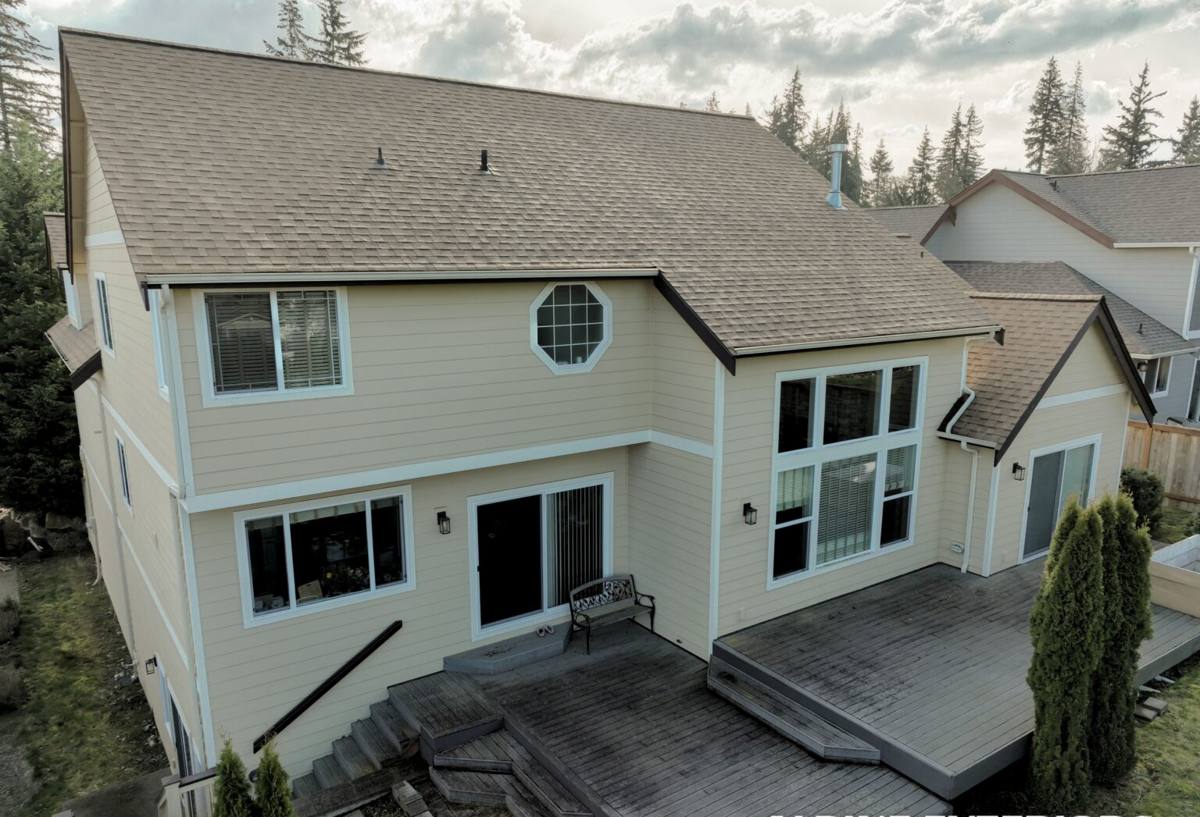
What Actually Goes Wrong With Windows in This Climate
Wind-Driven Rain and Flashing Gaps
Straight-down rain is easy for any window to shed. Wind-driven rain, which is common during Whatcom County's fall and winter storm systems, pushes water sideways and upward under trim and around the edges of a window unit. If the flashing sequence underneath the trim wasn't layered correctly — or if a previous installer relied mainly on caulk instead of proper flashing — that water gets past the surface and into the wall.
Moss, Trim Rot, and Trapped Moisture
Moss season isn't just a roof problem. Moss and organic buildup on horizontal trim surfaces above and below windows hold moisture against the wood or trim material far longer than open air would, which accelerates rot in wood sills and trim boards. Once that trim starts failing, the seal around the window frame goes with it.
Condensation and Older Glass
Older single-pane or early double-pane windows in this area often show heavy interior condensation during cold, wet stretches. That's a comfort and mold-risk issue as much as an energy one, and it's frequently the first sign a homeowner notices before ever suspecting there's a bigger moisture problem in the wall around the frame.
What a Correct Window Installation Actually Involves
A window installation done right in this climate isn't just "pull the old one, set the new one." The frame opening, the flashing, and the connection to the existing weather-resistive barrier matter more than the window itself. This is what should happen on every install, whether it's one window or a whole house:
- Old window and any damaged trim removed, framing inspected for hidden rot before anything new goes in
- Sill pan flashing installed at the bottom of the opening so any water that does get past the window drains back out, not into the wall
- Flashing tape or membrane integrated with the house's existing weather-resistive barrier in the correct shingle-lap order — top layer overlaps the one below it, never the reverse
- Window set level, plumb, and square, then mechanically fastened per the manufacturer's instructions — not just foamed or caulked into place
- Insulation around the frame gap done with a low-expansion foam or backer rod, not packed solid, so the frame isn't bowed
- Exterior trim and sealant applied as the last line of defense, not the only line of defense
- Interior sill and casing finished and checked for square operation before we call the job done
If any one of those steps gets skipped to save time, the window can look perfect for a year or two before a problem shows up — and by then it's a drywall and framing repair, not just a window repair.
Window Installation and Siding Go Together
Because we're a siding contractor first, we look at window installation as part of the whole exterior envelope, not an isolated swap. The flashing around a window has to tie into the siding and the house wrap behind it in a specific order for water to actually drain the way it's supposed to. When window work and siding work are handled by two different crews on two different timelines, that handoff is where mistakes happen — one crew doesn't know exactly how the other flashed things, and gaps get missed or covered up instead of fixed.
Doing both together, or at least having the same crew coordinate the transition, means the flashing plan for the windows and the drainage plane for the siding are designed as one system instead of two separate guesses.
Choosing the Right Window for a Cordata Home
There's no single "best" window material — it depends on the home's age, budget, and how much upkeep the homeowner wants to take on. Here's how the common options hold up in a climate with this much rain and moss exposure:
| Frame Material | Moisture Behavior | Maintenance | General Cost Tier |
|---|---|---|---|
| Vinyl | Won't rot; seams and welds are the main watch point | Low — occasional cleaning | Lower |
| Fiberglass | Very stable, resists moisture and expansion/contraction well | Low | Mid to higher |
| Wood-clad | Good if the cladding stays intact; exposed wood trim is a moss and rot risk | Higher — trim and clad joints need periodic checking | Higher |
| Aluminum | Durable but conducts cold, prone to interior condensation in this climate | Low | Varies |
For most Cordata homes we recommend vinyl or fiberglass frames with a solid low-E, double-pane glass package. Wood-clad windows can look great and perform well, but only if the cladding and any exposed trim are properly detailed and maintained — in a climate this wet, that's not optional.
Our Window Installation Process
- Walkthrough and assessment — we look at each window opening, existing trim condition, and any signs of past water intrusion before quoting anything
- Removal — old window and compromised trim come out, exposing the rough opening
- Framing check — any soft or rotted framing gets flagged and repaired before a new window ever goes in; this is where hidden damage usually turns up
- Flashing and sill pan installation — built and layered to shed water correctly, tied into the existing weather barrier
- Window set and fastened — leveled, squared, and secured per manufacturer specs
- Insulation and air sealing — gap filled correctly, not overpacked
- Exterior trim and siding tie-in — finished so the whole opening drains as one system
- Interior finish and function check — casing, sill, and smooth operation confirmed before we walk it with the homeowner
Permits, Codes, and Energy Considerations
Window replacement in the City of Bellingham and unincorporated Whatcom County generally involves a permit, especially when the rough opening size changes or a bedroom egress window is involved — egress windows have specific minimum size and sill-height requirements that matter for safety, not just code compliance. Energy code also sets minimum performance requirements for U-factor on replacement windows in Washington State. We don't guess on these — we check current local code requirements for each project rather than relying on what applied a few years ago, since energy code updates periodically.
Beyond code minimums, a better-performing window package (lower U-factor, better glass coatings) pays off in this climate through less condensation and more consistent indoor comfort during the long wet stretches of the year, not just a lower heating bill.
Cost Factors to Expect
We don't post fixed prices because every job is different, but the main things that move the number are consistent from house to house:
- Frame material chosen (vinyl vs. fiberglass vs. wood-clad)
- Number of window openings and their sizes
- Whether framing repair or rot remediation is needed once the old window comes out
- Glass package — standard double-pane vs. upgraded low-E or impact-resistant options
- Trim and exterior finish work required to tie the opening back into the siding
- Whether it's a standard replacement in an existing opening or a resize/new opening requiring structural and permit work
A home with straightforward, standard-size openings and no hidden rot is a much simpler job than one where a few openings turn up soft framing once the old windows come out — which is exactly why we inspect before we quote a final number, not after.
Why a Crew That Already Works in Cordata Matters
Housing stock in Cordata spans a real mix of ages and construction styles, from older framing that may have outdated or missing flashing details to newer builds that still need the window-to-siding transition done correctly. A crew that already works this part of Bellingham has seen how these specific homes tend to fail, what flashing details tend to get missed on houses of a given era, and how the local permitting process actually works in practice — not just on paper. That local familiarity means fewer surprises, fewer repeat trips, and a quote that reflects what's actually likely to be behind the trim, not just what's visible from the outside.
If you're dealing with drafty windows, fogged glass, soft trim, or you're just planning ahead before the next wet season hits, we're happy to take a look. Reach out for a free, no-pressure estimate — we'll walk the openings with you, tell you honestly what we find, and lay out the options without any pressure to decide on the spot.