 Bellingham
 Building Decks for a Waterfront Neighborhood
Silver Beach sits close enough to the water that its homes deal with a different set of conditions than decks built further inland in Bellingham. Salt-laden air moves through the neighborhood off Bellingham Bay, humidity stays elevated for long stretches of the year, and rain doesn't just fall here — it drives sideways with the wind often enough that "covered" and "protected" mean two different things. A deck built without accounting for that combination will show problems years before it should: corroding fasteners, black streaking on wood surfaces, soft spots where water pools, and moss creeping across any board that doesn't get afternoon sun.
We've built and repaired enough decks in this part of Whatcom County to know which materials and details hold up here and which ones just look good on the day they're installed. This page is about what a custom deck built specifically for Silver Beach conditions should include, not a generic overview of decking options.
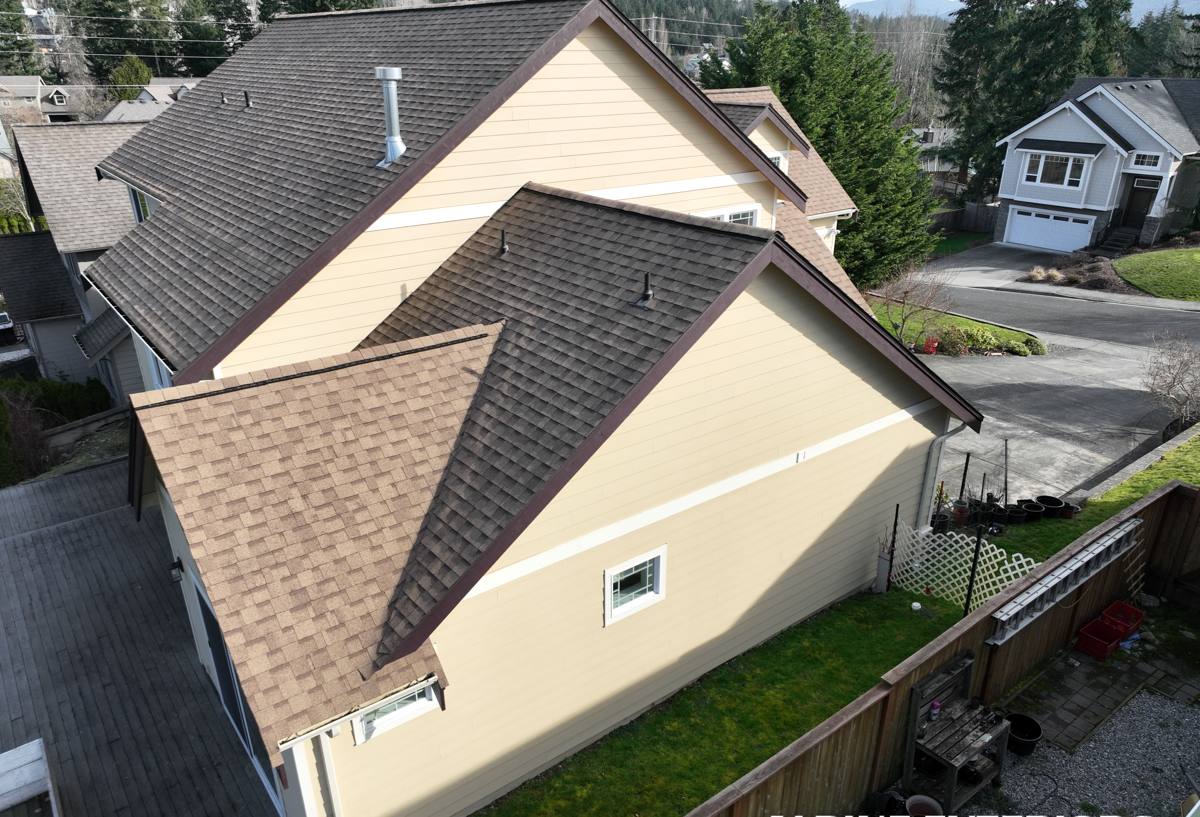
What Salt Air, Rain, and Moss Actually Do to a Deck
Salt Air and Metal Fasteners
Salt-carrying air accelerates corrosion on anything metal — screws, structural hardware, railing brackets, post bases. On a standard deck built with mismatched or under-rated fasteners, corrosion often shows up first at the ledger board connection and at any hardware that isn't fully coated or stainless. Once a fastener starts rusting, it weakens before it ever visibly fails, which is why fastener spec matters more here than in a drier, inland yard.
Driving Rain and Water Intrusion
Wind-driven rain doesn't behave like straight-down rain. It gets pushed under railing caps, behind fascia boards, and into any gap where flashing was skipped or minimized. The most common failure point we see on older Bellingham decks near the water isn't the decking itself — it's the ledger board and rim joist connection to the house, where water has been getting behind flashing for years before anyone notices the rot underneath.
Moss and Sustained Moisture
Whatcom County's moss season runs long, and Silver Beach's tree cover combined with bay humidity means decking surfaces stay damp longer after a rain than they would in a more exposed, sunnier yard. Moss on a deck isn't just a slip hazard — it holds moisture directly against the board surface, which is exactly the condition that breeds rot in wood decking and accelerates surface degradation in lower-grade composite products.
Decking Material Choices That Make Sense Here
There's no single "best" decking material for every Silver Beach home — the right choice depends on budget, how much sun the deck gets, and how much maintenance the homeowner actually wants to do. Here's how the common options hold up against these specific conditions:
| Material | Salt Air Resistance | Moss/Moisture Behavior | Maintenance |
|---|---|---|---|
| Pressure-treated wood | Good with proper fasteners | Needs regular cleaning and re-sealing to resist moss and staining | Annual cleaning, re-stain every 2-3 years |
| Cedar | Naturally decent rot resistance | Still needs sealing to shed water; moss grows on any untreated wood in shade | Sealing every 1-2 years in this climate |
| Composite decking | Excellent — no wood fibers to corrode or absorb salt | Surface sheds water well but low-quality composite can still stain and grow moss film in deep shade | Occasional washing, no staining/sealing |
| PVC/capped polymer | Excellent | Best moisture and moss resistance of the group | Lowest maintenance, highest material cost |
For Silver Beach specifically, we lean toward composite or capped polymer decking on shaded lots and lots with heavy tree cover, since those surfaces resist the moss and staining that plague wood in constant dampness. On sunnier, more open lots closer to the water, a well-built wood deck with the right fastener and finish schedule can still perform well and costs less up front.
Substructure and Fastener Details We Don't Skip
The visible decking is maybe a third of what determines how long a deck lasts here. The framing and hardware underneath do the real work of resisting salt air and moisture over time. On every custom deck we build in this neighborhood, that means:
- Stainless steel or heavy hot-dip galvanized fasteners rated for coastal exposure, not standard exterior-grade screws
- Proper ledger board flashing that directs water away from the house rim joist, installed before any decking goes down
- Joist tape or a moisture barrier on top of framing lumber to slow water absorption into end grain and fastener holes
- Post bases set above grade with proper drainage, not buried or sitting in standing water after rain
- Gapping between deck boards sized correctly for the material, so water and debris don't just pool between boards
- Railing post connections through-bolted into framing, not just lag-screwed into rim joist face
None of this is visible once the deck is finished, which is exactly why it's where corners get cut on lower-bid jobs. It's also the part that determines whether a deck is still solid in fifteen years or needs structural repair in five.
Designing the Deck Itself
Layout and Sun Exposure
Silver Beach lots vary a lot in how much direct sun they get depending on tree cover and orientation toward the water. A deck layout that accounts for where the sun actually hits — and where it doesn't — helps us pick materials and finish schedules that match reality instead of a generic recommendation. Shaded sections benefit from lower-maintenance material choices; sun-exposed sections have more flexibility.
Railings and Wind
Proximity to the water means more direct wind exposure than a typical inland Bellingham lot. Railing systems need solid post connections and hardware that won't corrode under salt exposure, and we consider wind when we're advising on glass panel or cable railing systems versus standard baluster designs, since some options handle wind-driven rain and debris better than others.
Drainage Underneath
For decks built low to the ground or over patios, drainage systems that route water off the deck surface and away from the foundation matter more here than in drier parts of the county, simply because there's more total rainfall to manage across the wet season.
Our Process for a Silver Beach Deck Project
- On-site assessment: We look at sun exposure, existing drainage, soil conditions, and how close the deck will sit to salt-air exposure from the water.
- Material and design conversation: We walk through the tradeoffs above in plain terms — what fits the budget, what fits the maintenance appetite, and what will actually hold up on this specific lot.
- Permitting: Most deck projects in the City of Bellingham require a permit, and we handle that process as part of the build rather than leaving it to the homeowner.
- Structural build: Framing, flashing, fastener spec, and post/footing work — the part that determines long-term performance.
- Decking, railing, and finish work: Installed to the manufacturer's spec for the material chosen, with attention to gapping and drainage.
- Final walkthrough: We go over basic maintenance expectations for the specific material installed, so there are no surprises about upkeep.
Maintenance Realities for This Climate
Even the best-built deck in Silver Beach needs some seasonal attention because of the climate, not because of poor construction. A practical maintenance checklist we give homeowners:
- Sweep debris and standing leaves off the deck surface regularly, especially in fall — trapped organic material holds moisture and feeds moss growth
- Rinse or lightly wash the deck surface a couple of times a year to interrupt moss and algae buildup before it takes hold
- Check railing hardware annually for early corrosion signs, particularly on decks with direct water-facing exposure
- Re-seal or re-stain wood decking on the schedule appropriate to the product — skipping a cycle in this climate shows up fast
- Keep gutters and downspouts near the deck clear so roof runoff isn't adding extra water load onto or under the deck structure
Why Hire a Crew That Already Works This Neighborhood
A contractor who mostly builds decks in drier, inland parts of Whatcom County may not default to coastal-grade fasteners or the right flashing details unless specifically asked — and by the time the gaps show up, it's a repair job instead of a design decision. We build and repair decks throughout Bellingham, and the jobs near the water, including Silver Beach, get built to the same coastal-exposure standard from the start: the fastener spec, the flashing detail, and the material recommendation all account for salt air, driving rain, and moss season as the baseline, not an upgrade.
That matters most on the details nobody sees after the ribbon is cut on the project — the flashing behind the ledger board, the grade of screw holding the railing post, the drainage path under the framing. Those are the details that decide whether a deck is still tight and solid after a decade of Whatcom County winters, or starting to soften at the connections after five.
If you're planning a new deck or replacing one that's showing its age in Silver Beach, we're happy to come take a look and talk through what makes sense for your specific lot. The estimate is free, there's no pressure, and you'll get a straight answer about what your deck actually needs — just fill out the form below to get started.