 Bellingham
 Windows Built for Edgemoor's Bluff-Top Exposure
Edgemoor sits above Bellingham Bay, and that location is exactly what makes it a beautiful place to live and a demanding place to own windows. Homes here catch salt-laden air off the water, take driving rain straight off Puget Sound weather systems, and sit under a heavy tree canopy that keeps everything shaded and damp for a good chunk of the year. That combination — salt, wind-driven moisture, and shade — is harder on window frames, sills, and seals than almost anywhere else in Whatcom County.
We've worked on enough homes in this neighborhood to know the pattern: it's rarely the glass that fails first. It's the frame material, the sealant, and the flashing detail behind the trim. A window that looks fine from the street can be rotting quietly at the sill because water got behind the casing and never had a way out. Custom window work in Edgemoor has to account for that from the start, not patch around it later.
What "Custom" Actually Means Here
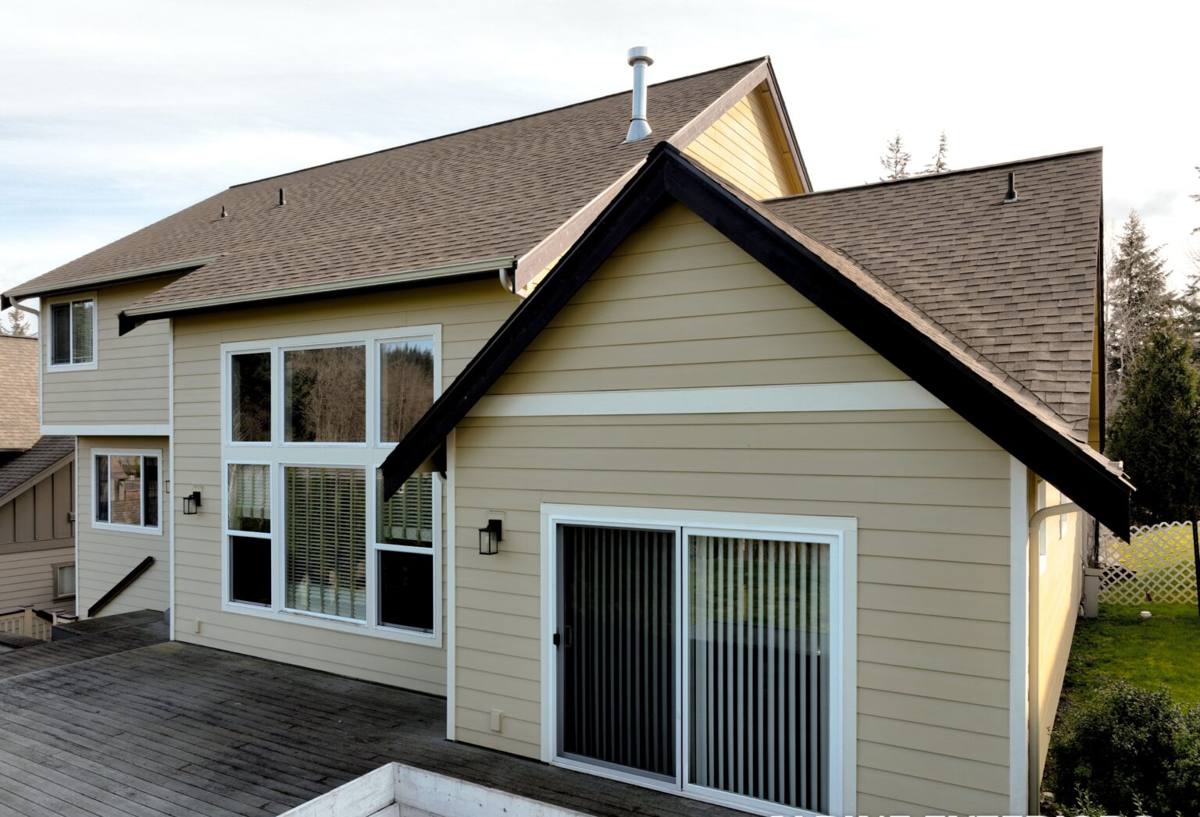
Custom doesn't mean fancy shapes or a higher price tag for its own sake. It means the window is built to fit the actual opening in your actual house, instead of forcing your house to fit a stock size. Edgemoor has a mix of older, architecturally distinctive homes and newer construction, and the older ones especially tend to have rough openings that don't match anything on a standard size chart.
Where custom sizing matters most
- Older homes with settled framing, where openings are slightly out of square
- Picture windows and larger view openings oriented toward the water
- Bay or bow window configurations that need matched, mulled units
- Odd-shaped or angled openings on additions built at a different time than the original house
- Replacing multiple windows on one wall that need to line up visually even if the openings vary slightly
Custom-built windows also let you correct problems the original builder left behind — a sill that never sloped properly to shed water, or a window that was undersized for the room it's lighting. Done right, this is a one-time fix, not a five-year patch.
Frame Materials: What Holds Up in Salt Air and Shade
Material choice matters more in Edgemoor than in a drier, more inland part of Whatcom County. Salt air accelerates corrosion on metal components, and the shade from mature trees means painted or bare wood surfaces stay damp longer between dry spells, which invites rot and mildew. Here's how the common options actually behave in this environment:
| Material | Moisture Behavior | Maintenance | Notes for This Climate |
|---|---|---|---|
| Vinyl | Won't rot; sealed unit resists moisture intrusion at the frame | Low — occasional cleaning | Solid all-around choice; verify UV-stable formulation given long daylight exposure in summer |
| Fiberglass | Excellent — dimensionally stable, doesn't expand/contract with damp-dry cycles | Low | Handles temperature and moisture swings well; costs more upfront |
| Wood-clad | Good if the cladding seal is intact; exposed wood interior needs a dry indoor environment | Moderate — watch cladding seams | Attractive for older, character-driven homes; we're careful about where we recommend it given shade and moisture exposure |
| Aluminum | Prone to corrosion and condensation in salt air without a quality thermal break | Moderate to high | We steer most Edgemoor clients away from bare aluminum frames for this reason — it's a maintenance burden in this specific setting, not a knock on the material everywhere |
None of this means one material is "bad" — it means each has trade-offs, and a house two blocks from the bluff has different needs than one further inland. We'll walk you through what fits your specific exposure rather than pushing one default.
Glass Packages and Performance
Beyond the frame, the glass package affects comfort and condensation control, which matters in a climate with long stretches of cool, damp weather. Most homes here do well with dual-pane, low-E coated glass with argon gas fill — it cuts heat loss and reduces the interior condensation that shows up on cold mornings. Triple-pane is worth discussing for rooms with large, exposed glass facing the water, where wind and temperature swings are more pronounced, though it adds weight and cost. For view-oriented rooms, we also talk through coating tint and reflectivity, since Edgemoor's water views are part of what makes these homes valuable — you don't want a coating so dark it dulls the view you're paying to keep.
Installation Details That Actually Prevent Failure
Most window problems we get called out to fix in this neighborhood aren't product failures — they're installation shortcuts. In a climate that drives rain sideways against a house, the flashing and sealing details around the window matter as much as the window itself.
What a correct install includes
- A sloped sill pan that directs any water that gets past the exterior seal back outside, not into the wall cavity
- Proper integration with the existing weather-resistive barrier (house wrap or building paper), lapped correctly so water sheds downward and outward
- Flashing tape or metal flashing at the head and sides, installed in the right sequence relative to the siding
- Backer rod and quality exterior sealant at the trim joint — not sealant alone, which cracks and fails faster without backing
- Shimming and fastening that keeps the frame square so the sash operates and seals correctly for the long term
- Interior air sealing at the rough opening, which affects both energy performance and condensation control
Skip any one of these steps and the window can look perfect for a year or two while moisture works its way into the framing behind it. In Edgemoor's climate, that hidden damage tends to show up faster than in a drier part of the county — which is exactly why installation quality matters more here, not less.
How Our Process Works
We keep the process straightforward because window replacement is disruptive enough without added confusion.
Step by step
- On-site visit and assessment. We look at each opening, check for existing moisture damage or rot, and measure precisely. This is also when we talk through material and glass options for your specific exposure on the property.
- Written proposal. You get a clear scope — materials, glass package, number of openings, and what's included — before anything is ordered.
- Custom fabrication. Windows are built to the exact measurements taken on-site. Lead times vary by manufacturer and configuration, and we'll give you a realistic timeframe up front rather than a best-case guess.
- Removal and inspection. When we pull the old window, we check the framing underneath for hidden moisture or rot before anything new goes in. This is often where problems get caught early.
- Installation. Flashing, sill pan, sealing, and fastening done in the correct sequence — the part that determines whether the window performs for the next twenty years or the next five.
- Cleanup and walkthrough. We clear debris, clean the new windows, and walk you through operation and any care notes specific to the material you chose.
Signs Your Current Windows Are Already Failing
Because Edgemoor's climate accelerates certain kinds of damage, it's worth knowing what to watch for before a small problem becomes a framing repair.
- Condensation or fogging between panes — the seal on the insulated glass unit has failed
- Soft or spongy wood at the sill or lower corners of the frame
- Persistent drafts even with the window fully latched
- Paint bubbling or peeling on wood trim near the window, a sign moisture is trapped underneath
- Visible moss or persistent green staining on sills and lower trim, which holds moisture against the wood longer
- Windows that are difficult to open, close, or lock — often a sign the frame has shifted or swollen
Any one of these on its own isn't an emergency, but in this climate they tend to compound quickly once moisture gets a foothold.
What Affects the Cost
We don't quote a number until we've seen the openings, but these are the factors that move the price up or down on most Edgemoor jobs:
| Factor | Why It Matters |
|---|---|
| Number and size of openings | More material and labor per opening; larger picture windows cost more than standard-size units |
| Frame material | Vinyl is typically the most affordable; fiberglass and wood-clad cost more upfront |
| Glass package | Triple-pane and specialty coatings add cost over standard dual-pane low-E |
| Condition of the existing opening | Hidden rot or framing damage found during removal adds repair scope before the new window goes in |
| Access and site conditions | Upper-floor windows, tree cover, and tight access on sloped bluff lots can add labor time |
| Trim and finish work | Matching existing exterior trim profiles on older homes takes more time than a straightforward swap |
Why a Crew That Already Works in Edgemoor Makes a Difference
Window replacement here isn't the same job as window replacement in a newer, inland subdivision. A crew that regularly works this neighborhood already understands the exposure patterns — which walls take the worst of the driving rain, where shade and tree cover keep things damp longer, and what to expect when opening up an older house's wall framing. That familiarity shows up in fewer surprises during the job and fewer callbacks after.
It also matters for the practical logistics: navigating tighter, sloped lots, working respectfully around mature trees and landscaping that homeowners here have often spent years cultivating, and understanding City of Bellingham permitting requirements for exterior work on established properties. None of that is guesswork when it's a neighborhood you already know.
If you're weighing new windows for an Edgemoor home, we're happy to take a look and give you a straight assessment — what's actually needed, what can wait, and what it will cost. Reach out for a free, no-pressure estimate using the form below.