 Bellingham
 Why Edgemoor Roofs Wear Differently
Edgemoor sits close enough to Bellingham Bay that salt-laden air is part of daily life on the roof, not just the siding. Add the amount of rain Whatcom County sees over a typical year, plus the shade from mature trees that keeps roof surfaces damp and slow to dry, and you get a combination that ages roofing materials faster than it would inland. We've reroofed enough homes in this pocket of Bellingham to know the pattern: metal fasteners corrode sooner near the water, algae and moss get a head start in shaded, north-facing sections, and valleys that don't shed water fast enough become chronic trouble spots.
None of this means Edgemoor homes need exotic materials. It means the installation details — underlayment choice, fastener type, ventilation, and flashing work — matter more here than they would in a drier, more open part of the county. A roof installed without those details in mind might look fine for a few years and then fail early in exactly the ways a coastal roof is prone to: soft decking under a poorly vented ridge, rusted flashing at a chimney, or moss lifting shingles at the edges.
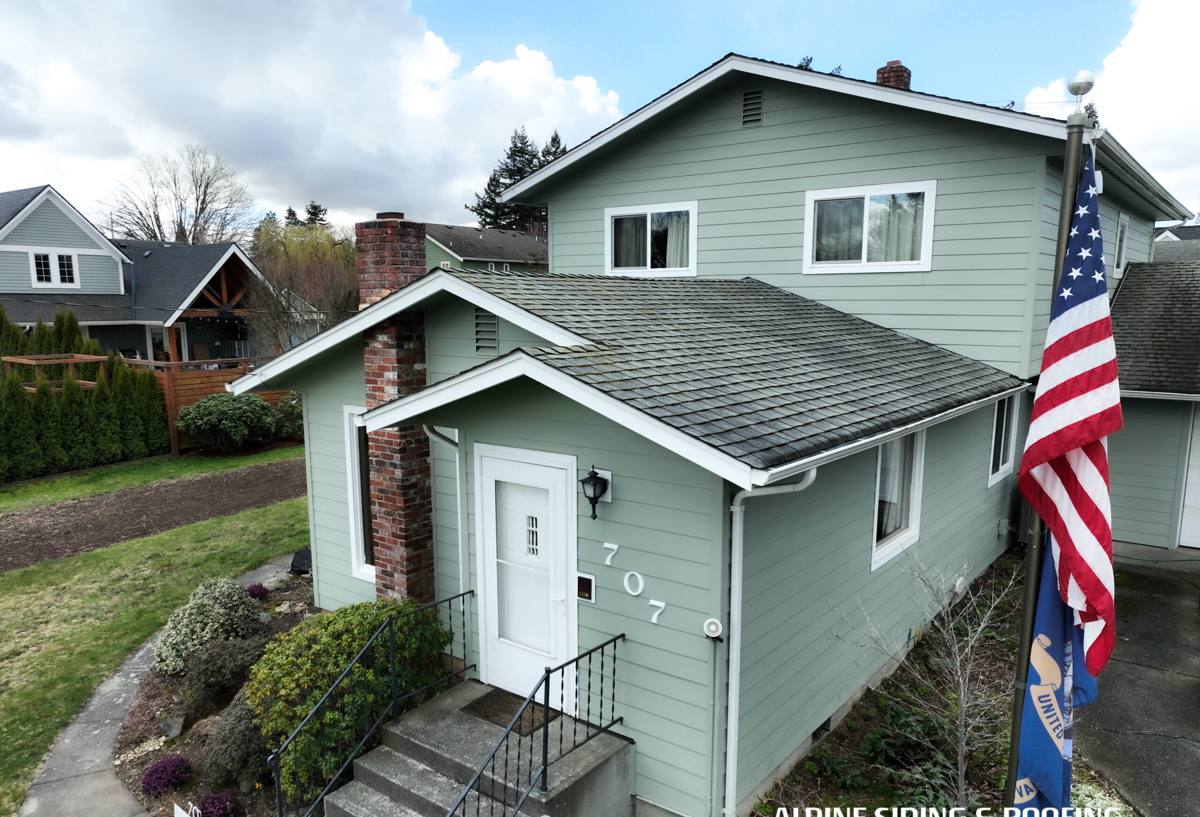
Signs an Edgemoor Roof Needs Replacing, Not Patching
Roofing is one of those systems where a homeowner can go years without looking closely, then discover the damage is more than a repair. Some signs point clearly toward full replacement rather than another round of patchwork:
- Granule loss heavy enough that you're finding grit in gutters every season, not just after a storm
- Moss established in mats, not just surface streaks — once it's rooted under shingle edges, spot-cleaning doesn't solve it
- Soft or spongy spots when walked, which usually means the decking underneath has taken on moisture
- Daylight visible through the attic at roof boards, or consistent damp smell in the attic during wet months
- Multiple past repairs in different areas — a sign the roof as a whole is past its useful life, even if it isn't leaking today
- Shingles curling, cracking, or losing their seal, especially on south- and west-facing slopes that see the most sun and wind-driven rain
If a roof is showing one or two of these in isolation, a repair can still make sense. When several show up together, or the roof is already near the end of its expected lifespan, replacement is usually the more honest recommendation — repeated repairs on a failing roof rarely save money over time.
How Moss Season Changes the Calculus
Whatcom County's moss season isn't a minor cosmetic issue — it's a moisture-retention problem. Moss holds water against the roofing material long after the surrounding area has dried out, which accelerates granule loss and can work its way under shingle tabs. On mature Edgemoor lots with tree cover, north-facing slopes are often a full season or two "older" in wear than the sunnier side of the same roof, simply because they never fully dry out between rains.
What a Correct New Roof Installation Involves
A roof replacement is more than stripping old shingles and nailing down new ones. For a coastal Bellingham home, the sequence and materials matter:
Tear-Off and Deck Inspection
We remove the existing roofing down to the deck and inspect every sheet of sheathing. Any decking that's soft, delaminated, or water-stained gets replaced before anything new goes down — installing new roofing over compromised decking just hides the problem for a year or two.
Underlayment
Given the rain volume here, we use synthetic underlayment as a baseline and add self-adhered ice-and-water barrier at vulnerable points — eaves, valleys, and around any roof penetration — even though Bellingham doesn't see the ice-dam issues of colder climates. The concern locally is wind-driven rain finding its way under the primary roofing layer, and that barrier is the backup line of defense.
Flashing
Flashing around chimneys, skylights, and wall intersections is where most leaks actually originate, not in the open field of shingles. We install new flashing rather than reusing old pieces, and we use corrosion-resistant metal given the salt air this close to the bay.
Ventilation
Proper intake and exhaust ventilation keeps the attic dry and the roof deck at a stable temperature, which slows moss growth on the shaded slopes and helps shingles last their full rated life. A lot of older Edgemoor homes were built with minimal ventilation by today's standards, so this is often the single biggest upgrade we make during a reroof.
Final Roofing Material and Fasteners
We use corrosion-resistant fasteners throughout — standard fasteners can start rusting within a few years this close to salt air, which leads to streaking and eventually loose shingles.
Choosing the Right Roofing Material for Edgemoor
There's no single "best" roofing material for every coastal home — the right choice depends on the home's roof pitch, tree cover, budget, and how much moss maintenance the homeowner wants to take on.
| Material | How It Handles Salt Air & Moss | Maintenance Expectation |
|---|---|---|
| Architectural asphalt shingles | Good performance with algae-resistant granules; standard choice for most homes here | Periodic moss removal on shaded slopes; typical 25-30 year lifespan |
| Standing seam metal | Excellent water shedding, less surface for moss to grip; needs quality coating to resist salt corrosion long-term | Low; occasional inspection of fasteners and seams |
| Cedar shake | Traditional look but holds moisture longer, which shortens lifespan in a shaded, damp lot | Higher; requires more frequent treatment and moss control |
| Composite/synthetic shingle | Resists moisture absorption well; performs consistently across sun and shade exposure | Low to moderate |
For most Edgemoor homes we recommend algae-resistant architectural shingles or standing seam metal, depending on roof pitch and the homeowner's long-term maintenance preference. We'll walk through the honest trade-offs for your specific roof rather than pushing one product line.
Our Process for an Edgemoor Reroof
- On-site assessment — we inspect the roof, attic, and any problem areas you've noticed, and check for tree cover or drainage issues specific to the lot
- Written estimate — clear scope, material options, and a straightforward price, no vague allowances
- Material selection — we help you weigh options against your budget and how much moss upkeep you want to deal with
- Scheduling around weather — we plan installation windows with Bellingham's rain patterns in mind, and we don't leave a deck exposed overnight without weather protection
- Tear-off and installation — deck inspection, underlayment, flashing, ventilation upgrades, and final roofing installed to manufacturer spec
- Cleanup and final walkthrough — magnetic sweep for nails, debris haul-away, and a walkthrough so you understand what was done and why
Cost Factors Homeowners Should Understand
Every roof is priced on its own specifics, but the main variables that move the number are consistent:
| Factor | Why It Matters |
|---|---|
| Roof size and pitch | Steeper roofs take longer to work safely and use more material per square |
| Number of layers to remove | Tear-off of multiple old layers adds labor and disposal cost |
| Deck condition | Rotten or soft sheathing found during tear-off adds replacement cost, but skipping it costs more later |
| Material choice | Asphalt shingles are the most budget-friendly; metal and composite options cost more upfront but can lower long-term maintenance |
| Roof complexity | Valleys, dormers, skylights, and chimneys each add flashing detail and labor time |
| Ventilation upgrades | Adding intake/exhaust vents where a home has none is a worthwhile add-on, not just a cost line |
We'll give you a real number after seeing the roof in person — broad estimates over the phone rarely hold up once tear-off reveals actual deck condition.
Why a Crew That Already Works Edgemoor Matters
A roofing crew that's worked this specific stretch of Bellingham knows which slopes on a given lot layout tend to hold moss, how close a home sits to the bay's salt exposure, and how local drainage and tree cover affect a roof's long-term performance — not from a manual, but from having reroofed homes with the same conditions before. That translates into fewer surprises during tear-off, better material recommendations for your exact situation, and installation choices — flashing, ventilation, fastener grade — that are calibrated for this climate rather than a generic spec sheet. It also means we're a known, findable local business if you ever have a warranty question years down the road, not a crew that worked one job in the area and moved on.
Get a Free, No-Pressure Estimate
If your Edgemoor roof is showing its age — moss buildup, granule loss, or a repair history that's starting to add up — it's worth having a local crew take a look before you decide between another repair and a full replacement. Use the form below to schedule a free estimate; we'll assess the roof, answer your questions honestly, and give you a clear, written price with no pressure to decide on the spot.