 Bellingham
 Edgemoor's Siding Problem Isn't Like the Rest of Bellingham's
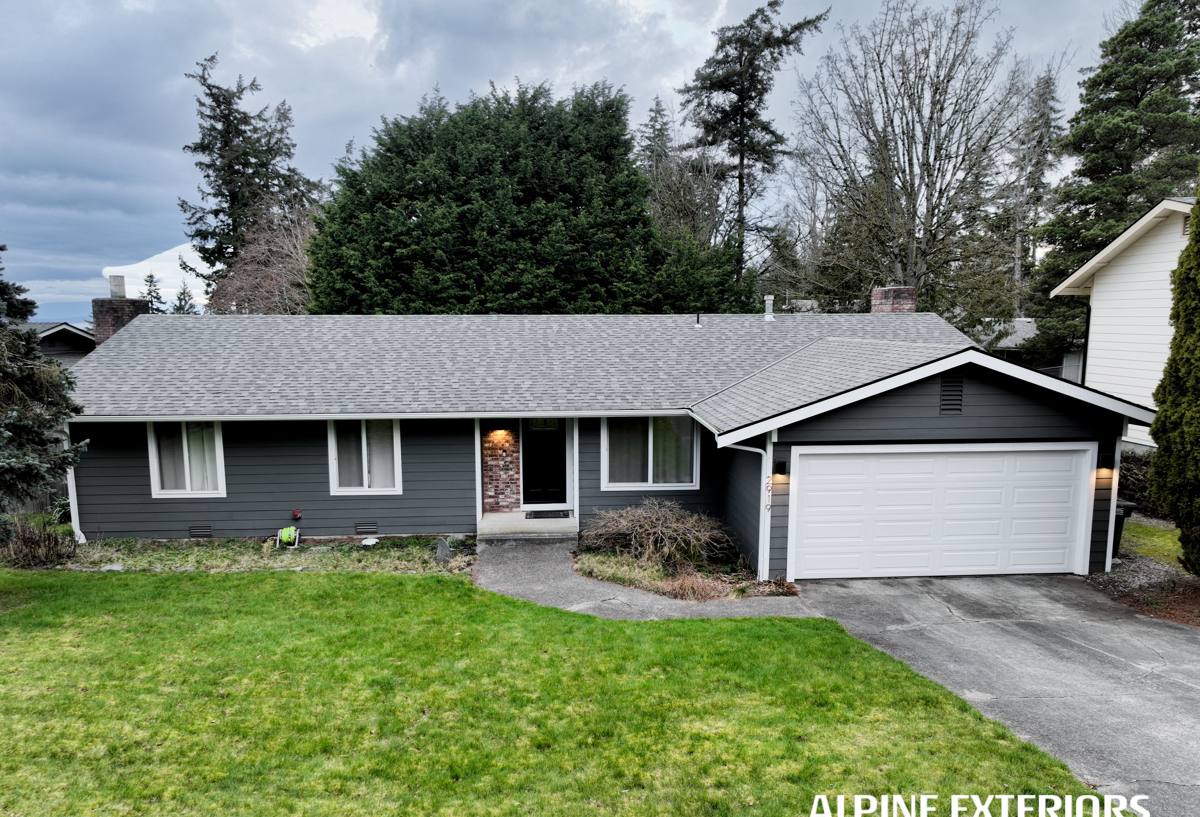
Edgemoor sits close to the water, under a heavy canopy of mature trees, on lots that were laid out long before anyone was thinking about how a house would shed moisture over fifty years. That combination — salt air drifting off Bellingham Bay, deep shade that keeps walls from drying out, and long stretches of driving rain typical of Whatcom County winters — puts more pressure on exterior siding here than in a newer, more open subdivision across town. It's not that Edgemoor homes were built badly. It's that the site conditions are tougher, and siding that would hold up fine on a sunny, exposed lot can struggle here.
That's the lens we bring to every repair call in the neighborhood: the damage in front of us is usually a symptom of the site, not just bad luck or old age. A repair that ignores that will fail again in a year or two.
What Salt Air, Shade, and Rain Actually Do to Siding
Salt Air
Homes closer to the bay deal with airborne salt that settles on exterior surfaces and accelerates corrosion of fasteners, flashing, and any exposed metal trim. On wood-based siding it can also draw moisture into the material faster than a homeowner would expect from rainfall alone.
Shade and Moss
Mature tree cover is one of the things that makes Edgemoor desirable, but it also means walls stay damp longer after every rain. Less direct sun means slower drying, and slower drying means more time for moss, algae, and mildew to take hold on siding surfaces — especially on north- and west-facing walls that see the least light.
Driving Rain
Whatcom County's marine climate delivers rain that doesn't just fall straight down — wind off the water pushes it sideways into wall assemblies, seams, and trim joints. Any gap in caulking, flashing, or siding coverage becomes an entry point, and once water gets behind the siding, the damage is often worse than what's visible from the outside.
Signs Your Siding Needs a Repair Call
Most siding problems give warning signs well before they become structural. Worth a look if you notice any of the following:
- Soft or spongy spots when you press on the siding, especially near the bottom of walls or below windows
- Visible cracking, splitting, or buckling in individual boards or panels
- Persistent moss or dark streaking that keeps returning after cleaning
- Gaps or separation at seams, corners, or trim joints
- Peeling or bubbling paint, which often signals moisture trapped underneath
- Warped or bowed sections, particularly on shaded walls
- Stains on interior walls or ceilings near exterior corners
Catching any of these early is almost always cheaper than waiting. A localized repair addressed promptly can prevent rot from spreading into sheathing, framing, or insulation — repairs that go well beyond the siding itself.
What a Correct Repair Actually Involves
Diagnose Before You Patch
A repair that only replaces the damaged board without figuring out why it failed is a repair that fails again. Before we touch anything, we check the flashing, the house wrap, the caulking, and the framing behind the damaged area. If water is getting in through a bad flashing detail or a missed seal, replacing the siding alone won't fix the underlying problem.
Match the Material and the Method
Repairing fiber cement correctly means cutting and fastening it the way it was designed to be installed — proper nailing patterns, correct clearances, and factory-matched caulking and touch-up paint where needed. Sloppy patch jobs, mismatched materials, or the wrong fasteners are one of the most common causes of repeat failures we see on repair calls.
Reseal and Reflash Properly
Any repair around windows, doors, corners, or wall penetrations needs correct flashing and sealant, not just a bead of caulk over the gap. In a wind-driven-rain climate like this one, flashing detail is often the difference between a repair that lasts and one that doesn't.
Why the Siding Material Changes What "Repair" Means
Not all siding responds to damage or repair the same way, and it matters for anyone deciding whether to patch or replace. Here's how the materials most common on older Bellingham homes tend to behave:
| Material | How It Typically Fails | Repair Reality |
|---|---|---|
| Vinyl siding | Cracks in cold snaps, fades unevenly, warps near heat sources | Hard to color-match after years of sun fade; brittle old panels often crack further during removal |
| Cedar / wood siding | Rot, insect damage, paint failure, moisture absorption | Repairable if caught early, but ongoing maintenance and repainting are part of the deal long-term |
| OSB-based siding (LP SmartSide and similar) | Swelling and edge deterioration once moisture reaches the wood-composite core | Swollen sections generally need full replacement, not a patch — the core doesn't recover |
| James Hardie fiber cement | Impact damage, failed caulk joints, damage from external causes (debris, settling) | Non-combustible core doesn't swell or rot; damaged sections can be cut out and replaced cleanly when installed to spec |
This is part of why we install only James Hardie fiber cement on new work and full re-sides. It holds up more predictably in exactly the conditions Edgemoor deals with — persistent moisture and shade — and it's more forgiving to repair correctly when damage does happen. We still repair whatever siding a home already has when that's the right call, but when a wall's condition points toward replacement, Hardie is what we recommend and what we put on the house.
Our Process on Edgemoor Repair Calls
- Inspection. We look at the damaged area and the surrounding siding, plus flashing, trim, and any signs of moisture intrusion beyond what's visible.
- Diagnosis. We identify the actual cause — impact damage, a failed seal, trapped moisture, or a material issue — before recommending a fix.
- Repair-or-replace conversation. We tell you honestly whether a targeted repair will hold, or whether the damage is a sign the wall needs a broader fix. We're not trying to sell a full re-side when a repair will genuinely do the job.
- The work itself. Proper removal of damaged material, correction of any underlying flashing or sealing issue, and a repair that matches the existing siding as closely as possible.
- Cleanup and walkthrough. We walk the finished repair with you before we consider the job done.
Repair vs. Replacement: How to Think About It
Homeowners often ask whether it's worth repairing an aging wall or just replacing that section outright. There's no single right answer, but these factors matter most:
| Factor | Leans Toward Repair | Leans Toward Replacement |
|---|---|---|
| Extent of damage | Isolated to one or two boards/panels | Spread across a wall or recurring in the same area |
| Cause | One-time impact or isolated seal failure | Systemic moisture issue or material breakdown |
| Age of existing siding | Relatively recent, otherwise sound | Original siding nearing or past its expected service life |
| Underlying material | Fiber cement or sound wood | Swollen OSB-based product or heavily degraded wood |
| Cosmetic match | Color and texture can be reasonably matched | Existing siding is too faded or discontinued to match well |
The Shade and Moss Factor Deserves Its Own Plan
On heavily shaded Edgemoor lots, a repair that doesn't account for ongoing moisture exposure is only a temporary fix. Where practical, that can mean recommending some tree or brush trimming to improve airflow and sun exposure on the worst-affected walls, making sure gutters and downspouts are actually directing water away from siding rather than onto it, and using caulking and touch-up products rated for damp, low-sun conditions. None of that replaces a correct repair, but skipping it means the same problem tends to come back on the same wall.
Why a Crew That Already Works Edgemoor Matters
Repairing siding on a shaded, waterfront-adjacent lot in Whatcom County isn't the same job as patching a wall on an open, sunny street. A crew that's worked this neighborhood knows to check flashing details before assuming a repair is purely cosmetic, knows how salt air and moss accelerate certain kinds of failure, and knows what correct fiber cement repair looks like versus a patch that will need to be redone. That local familiarity shows up in fewer surprises and fewer repeat calls.
If you're seeing damage, staining, or moss buildup on your siding and want an honest read on whether it needs a repair or something more, we're glad to take a look. Reach out for a free, no-pressure estimate — we'll tell you what we actually see, not just what's easiest to sell.