 Bellingham
 Fairhaven's Waterfront Setting Is Hard on Siding
Fairhaven sits close to Bellingham Bay, and that proximity to open water shapes everything about how siding ages there. Salt-laden air moves off the water and settles on exterior surfaces, accelerating corrosion on fasteners, trim, and any hardware that isn't rated for a marine-adjacent environment. Add in Whatcom County's driving winter rain, which comes in sideways during a good storm, and you get a combination that finds every weak seam, gap, or aging caulk joint on a home's exterior. Homes just a few blocks apart can weather very differently depending on how exposed they are to wind off the bay, tree cover, and which direction their siding faces.
None of this means Fairhaven homes are doomed to constant repair. It means the siding, the flashing details, and the maintenance schedule all need to match the environment they're actually in — not a generic assumption about what siding "should" hold up to. A repair approach that works fine in a drier, inland part of Whatcom County can fall short here.
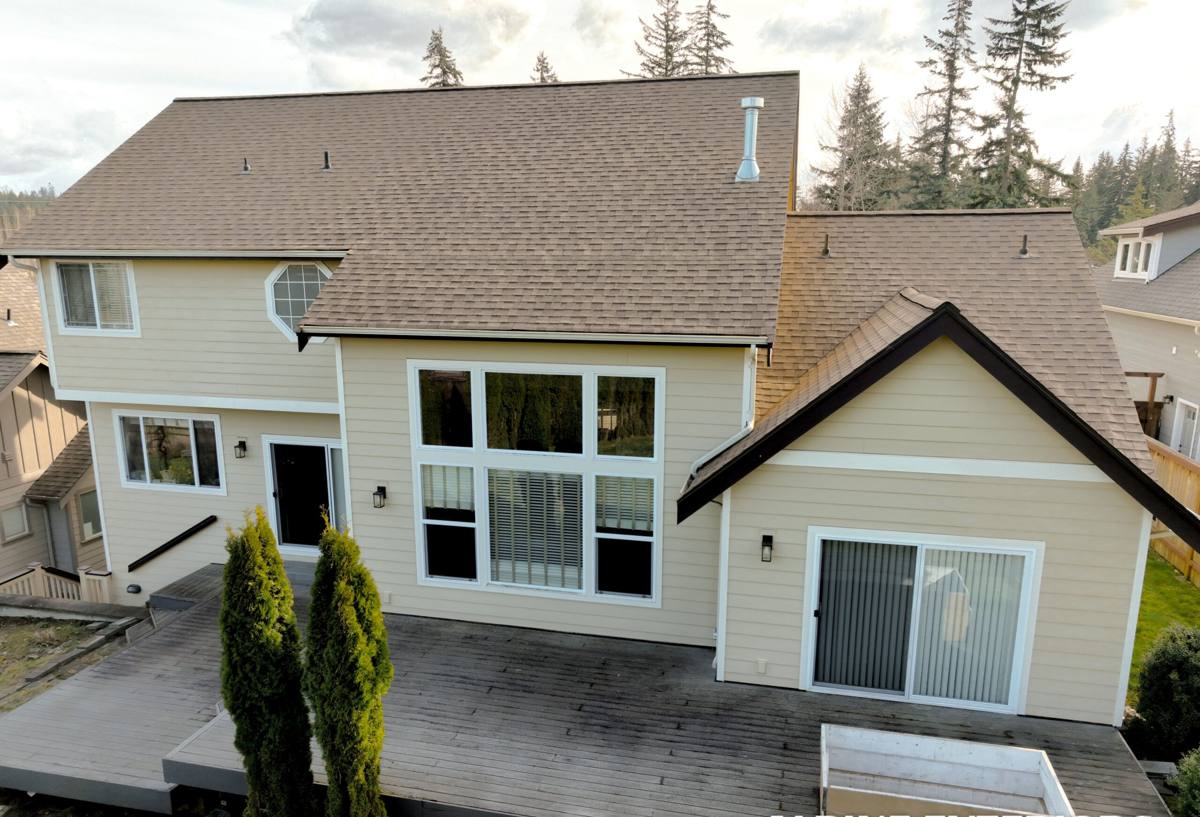
Common Siding Damage We See on Fairhaven Homes
Moisture Intrusion at Joints and Trim
The most common failure point isn't the flat field of the siding — it's the seams. Butt joints, corner trim, window and door trim, and anywhere two materials meet are where caulk fails first and where water finds its way behind the cladding. Once moisture gets behind siding and can't dry out, it can damage sheathing and framing long before the siding itself looks obviously bad from the street.
Moss, Algae, and Organic Growth
Whatcom County's moss season runs long, and Fairhaven's mix of tree cover and persistent damp air gives moss and algae plenty of time to establish themselves on north-facing walls, under eaves, and anywhere airflow is limited. Left alone, moss holds moisture directly against the siding surface and can work into small gaps, joints, and coating imperfections, turning a cosmetic problem into a moisture problem.
Impact, Wind, and Age-Related Damage
Storm-driven debris, ladder or equipment contact, and simple age all show up as cracked panels, loose boards, or sections where paint has failed and the substrate underneath is exposed. On older homes, mismatched or discontinued siding products can also make a simple patch harder than it should be.
Repair or Replace? How We Make That Call
Not every damaged section means a full re-side, and not every home with a few problem spots can be reasonably patched forever. We look at how much of the wall assembly is actually compromised, not just how bad a given board looks.
| Situation | Usually a Repair | Usually Replacement |
|---|---|---|
| Damage extent | Isolated boards or a single wall section | Damage spread across multiple elevations |
| Underlying sheathing | Dry, sound wood behind the siding | Soft, stained, or rotted sheathing found on inspection |
| Siding material | Still-available or closely matchable material | Discontinued profile, color, or product with no clean match |
| Age of siding | Mid-life siding with a clear, contained problem | Siding near or past its expected service life |
| Cause of damage | A one-time event (impact, isolated flashing failure) | A systemic issue (poor original installation, chronic moisture) |
Where it's close, we'll say so directly. A homeowner who understands the trade-off between a targeted repair now and a replacement in a few years makes a better decision than one who's just told what they want to hear.
What a Correct Siding Repair Actually Involves
A repair that only addresses what's visible from the sidewalk tends to fail again within a season or two, especially in a wet, salt-exposed setting like Fairhaven. A repair done right includes:
- Removing enough surrounding material to see the actual extent of damage, not just the obviously bad board
- Checking the sheathing and framing behind the damaged area for soft spots, staining, or existing rot before closing anything back up
- Confirming flashing at windows, doors, and any penetrations is intact and correctly lapped, not just re-caulked over
- Matching new material to existing siding in profile, reveal, and finish as closely as possible
- Re-establishing proper drainage paths (weep gaps, kickout flashing, clearance at grade) rather than sealing everything shut
- Using fasteners and trim details rated for coastal/marine-adjacent exposure
- Cleaning and treating any moss or algae growth before it's sealed behind new material
Skipping the "look behind it" step is the single most common shortcut in siding repair, and it's the one that causes the same spot to fail again in a year or two.
Why We Repair and Replace With James Hardie Fiber Cement
We install James Hardie fiber cement siding exclusively, including for repair and patch work — we don't install LP SmartSide, vinyl, Cemplank, Allura, or unfinished wood siding. That's a deliberate standard, not a default. Fiber cement is non-combustible, holds paint and factory finish far longer than wood-based alternatives, and is engineered specifically for climates like ours through Hardie's HZ product lines. For repair work in a setting like Fairhaven, that matters in a very practical way: patched-in Hardie material resists moisture, doesn't swell or delaminate the way some engineered wood products can when repeatedly wetted, and holds its ColorPlus factory finish so a repaired section blends in rather than weathering differently than the surrounding siding within a year.
James Hardie also backs its products with a strong, transferable warranty — valuable for homeowners who may sell within the years after a repair or replacement. When a full section needs replacing rather than patching, we treat it as an opportunity to bring that part of the home up to a material standard that will actually hold up to salt air and long wet winters, rather than replacing like-for-like with something we already know struggles in this environment.
Our Fairhaven Siding Repair Process
- On-site inspection. We look at the damaged area and the surrounding siding, checking for moisture behind the surface, not just surface symptoms.
- Honest scope. We tell you plainly whether this is a contained repair, a larger repair, or something that's really a replacement conversation.
- Material matching. For repairs, we source James Hardie material that matches existing profile and finish as closely as possible.
- Removal and assessment. We open up the affected area, inspect sheathing and framing, and address any hidden moisture damage found.
- Flashing and drainage correction. Any flashing or drainage issue that caused or contributed to the damage gets fixed, not just covered.
- Installation to spec. New material goes in following James Hardie's fastening, clearance, and finishing requirements.
- Final walk-through. We review the completed work with you before we consider the job done.
Cost Factors in a Fairhaven Siding Repair
Every repair is different, but the same handful of factors drive most of the cost difference between a quick patch and a larger repair project.
| Factor | Why It Matters |
|---|---|
| Extent of hidden damage | Rotted sheathing or framing found once panels come off adds scope beyond the visible repair |
| Material matching | Matching an older or discontinued profile can take more time to source or may require a broader repair area |
| Access and elevation | Upper stories, tight side yards, or areas near steep grade take longer to work safely |
| Flashing and trim complexity | Repairs around windows, corners, and roof intersections involve more detail work than flat wall sections |
| Moss and growth remediation | Heavier organic growth needs proper cleaning and treatment before new material goes on |
We won't give a number over the phone without seeing the damage — in a climate this variable, an accurate quote requires an actual look at what's happening behind the siding, not just what's visible from the driveway.
Why a Crew That Already Works in Fairhaven Matters
Siding repair in a waterfront neighborhood isn't identical to siding repair a few miles inland. A crew that regularly works Fairhaven homes has a working sense of how exposure to bay wind, salt air, and shade from mature trees plays out differently street to street, and knows what kind of hidden damage tends to show up in homes of a similar age and construction in this part of Bellingham. That familiarity shows up in small but real ways — knowing to check certain trim details more closely, understanding how long moss has likely been established based on growth pattern, and not being surprised by what's behind the siding once it comes off.
It also matters for follow-through. A repair is only as good as the workmanship and materials behind it, and a local crew has a direct stake in a repair holding up, since it's their name and their reputation in the same community for years to come.
Get a Straightforward Look at Your Siding
If you're seeing soft spots, moss buildup, cracked panels, or trim that's starting to fail on a Fairhaven home, it's worth getting a direct assessment before the damage spreads behind the surface. We offer free, no-pressure estimates — we'll look at what's actually happening, tell you honestly whether it's a repair or a replacement conversation, and explain the reasoning either way. Use the form below to request a visit.