 Bellingham
 Why Fairhaven Is a Tough Neighborhood on Siding
Fairhaven sits close to Bellingham Bay, and that proximity to open water shapes everything about how siding ages here. Salt-laden air moves off the bay and settles on exterior surfaces year-round, which accelerates corrosion on fasteners and trim and slowly breaks down paint films that aren't built for it. Add Whatcom County's long, wet winters and the driving rain that comes with storms off the water, and you have a climate that finds every weak seam in a siding system faster than it would inland.
Fairhaven's mix of hillside lots, mature tree cover, and older housing stock adds another layer. Homes tucked under trees or shaded by neighboring structures stay damp longer after a storm, which is exactly the condition moss and algae need to take hold. Around here, "moss season" isn't a few weeks in the fall — it's most of the year, and siding that can't shed water quickly or resist organic growth ends up doing the losing side of that fight.
None of this means Fairhaven homes need something exotic. It means the siding, the installation details, and the materials behind the siding all have to be chosen for a marine, high-moisture environment — not for a catalog photo.
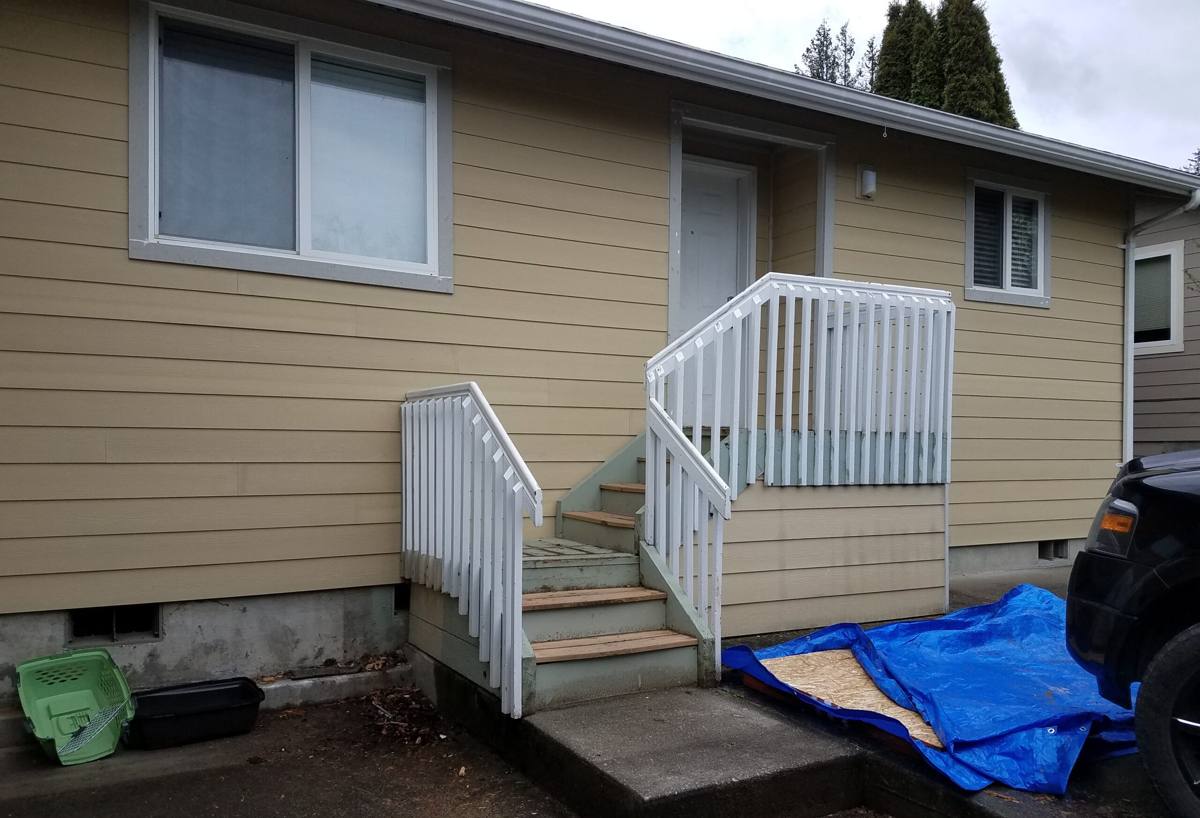
Signs a Fairhaven Home Needs Siding Replacement, Not Just a Patch
Repairs make sense when damage is isolated and the material underneath is sound. Replacement becomes the honest answer when the siding itself has stopped doing its job across most of the house. In a bay-adjacent, high-moisture neighborhood like Fairhaven, we look for a specific set of warning signs before recommending a full tear-off.
- Soft or spongy spots when you press on the siding, especially near the bottom courses and around windows
- Paint that's bubbling, peeling, or needing repainting every two to three years instead of holding for a decade
- Persistent moss or black streaking that comes back within weeks of cleaning, even on shaded elevations
- Visible warping, cupping, or gaps opening up at seams and butt joints
- Rust bleeding from fastener heads or corroded trim pieces near the roofline and foundation
- Musty smells or damp drywall on interior walls that back up to exterior siding
- Cracked or delaminating panels on older wood-based or composite products
If you're only seeing one or two of these on a single wall, a repair may be enough. If you're seeing several of them spread across the house, that's usually a sign the water-management layer behind the siding has failed, not just the surface material — and that's a replacement conversation.
What a Correct Siding Replacement Actually Involves
Siding replacement is often sold as a cosmetic upgrade, but the material you see is the least important part of keeping a Fairhaven home dry. The layers behind it — and the details at every penetration and edge — are what determine whether the job holds up through twenty more winters off the bay.
Water Management Behind the Cladding
Every wall needs a continuous drainage plane: a weather-resistant barrier installed shingle-style so any water that gets past the siding runs down and out, not into the sheathing. In a driving-rain climate like ours, we also build in a rainscreen gap wherever the wall assembly calls for one, so siding can dry from both sides instead of trapping moisture against the sheathing.
Flashing and Trim Details
Windows, doors, decks, and roof-to-wall transitions are where the vast majority of siding failures actually start. Correct flashing sheds water outward at every one of these penetrations, and it has to be installed before the siding goes on, not caulked in afterward as an afterthought. Caulk is a backup layer here, not the primary defense.
Fastening and Fit
Fiber cement siding has manufacturer-specified nailing patterns, fastener types, and clearances from grade, roof lines, and other materials. Skipping those specs to save time is one of the most common causes of early failure — and it's often invisible from the ground until the damage is already done underneath.
Why We Only Install James Hardie Fiber Cement
We get asked why we don't offer vinyl, LP SmartSide, or cedar as options. The honest answer is that we looked at how those products perform in a Pacific Northwest marine climate over the long run, and we decided we didn't want our name on installations we knew would need more maintenance and carry more moisture risk than necessary.
Vinyl is inexpensive and low-maintenance in dry climates, but it expands and contracts more than fiber cement, and it's not fire-resistant. Engineered wood products like LP SmartSide perform well when detailing is perfect, but they're wood-based, which means moisture intrusion has a faster, less forgiving path to rot than it does with cement. Cedar and primed spruce are attractive but demand ongoing refinishing to survive a climate this wet — refinishing that's easy to fall behind on.
James Hardie fiber cement is non-combustible, dimensionally stable in wet-dry cycling, and available in HardieZone HZ5 formulations engineered for climates with real moisture and freeze-thaw exposure — which describes Whatcom County. The ColorPlus factory finish is baked on under controlled conditions, so it resists the fading and peeling that field-applied paint struggles with near salt air. It's the product we're confident standing behind on a Fairhaven house for the next thirty-plus years, backed by a strong transferable warranty when it's installed to spec.
| Material | Where it earns its reputation | What it means near Bellingham Bay |
|---|---|---|
| Vinyl siding | Low upfront cost, minimal maintenance in mild dry climates | Not fire-resistant; can warp or crack under Bellingham's temperature swings and wind exposure |
| LP SmartSide / engineered wood | Wood look at a lower cost than real wood | Wood-based core is vulnerable to moisture intrusion if flashing or caulking details fail |
| Cedar / primed spruce | Natural, high-end appearance | Requires frequent refinishing to hold up against constant coastal moisture and moss growth |
| James Hardie fiber cement | Non-combustible, dimensionally stable, factory-cured finish | Built for marine, high-moisture zones like Whatcom County; holds color and shape with minimal upkeep |
Our Siding Replacement Process for Fairhaven Homes
Inspection and Scope
We start by walking the exterior and, where accessible, checking behind existing siding for hidden moisture damage — especially around windows, decks, and lower courses where Fairhaven's rain and splash-back do the most damage. We won't quote a full replacement without understanding what's actually happening behind the current siding.
Tear-Off and Sheathing Repair
Old siding and any compromised building paper or house wrap come off down to the sheathing. Any rot or soft sheathing we find gets repaired or replaced before anything new goes back on — covering damaged sheathing with new siding just hides the problem for a few more years.
Weather-Resistive Barrier and Flashing
We install a new drainage plane and flash every window, door, and penetration correctly before siding goes up. This is the step that determines whether the house stays dry for the next few decades, and it's the step that's easiest to shortcut if a crew is rushing.
Hardie Installation
Panels and trim go on to manufacturer specifications — correct fastener spacing, clearances from grade and roofing, and properly lapped joints. We follow James Hardie's published installation requirements, which is also what keeps the manufacturer's warranty intact.
Final Walkthrough
We walk the finished exterior with you, check caulking and paint lines, and make sure every elevation was finished to the same standard — not just the sides visible from the street.
Cost Factors for a Fairhaven Siding Replacement
Every siding job is priced around the same handful of variables. Knowing them ahead of time makes it easier to understand a quote and compare it against anyone else's.
| Factor | Why it moves the price |
|---|---|
| House size and wall complexity | More square footage and more corners, gables, and dormers mean more cutting, flashing, and labor time |
| Condition of the sheathing underneath | Rot repair discovered during tear-off adds material and labor that can't be quoted sight unseen |
| Siding profile and trim package | Lap width, shingle-style accents, and trim detail all affect material cost and install time |
| Access and site conditions | Hillside lots, tight setbacks, and mature landscaping common in Fairhaven can slow staging and scaffolding |
| Paint or ColorPlus finish choice | Factory-applied ColorPlus finishes cost more upfront but reduce repainting over the life of the siding |
We won't give you a number without seeing the house, but we'll always walk you through which of these factors are driving your specific quote.
Why Hiring a Crew That Already Works in Fairhaven Matters
Fairhaven isn't a generic subdivision. It's an older, established part of Bellingham with a real mix of home ages, hillside lots, and a historic character that shapes how some exterior projects get scoped. A crew that's worked in the neighborhood before knows to check whether a property falls within an area that involves extra design review before exterior work starts — and to flag that early, not after a contract is signed.
Local experience also means knowing how the bay's exposure changes the job. Which elevations take the worst of the driving rain, where moss tends to come back fastest, how much clearance a given lot's landscaping leaves for staging materials — these aren't things you learn from a spec sheet. They're things you learn by doing the work here, repeatedly, and adjusting the plan for what this specific neighborhood throws at a house.
Just as important is being reachable afterward. Siding is a long-term investment, and a crew based in and around Bellingham is going to be far easier to reach for a warranty question five years from now than one that drove in from out of the area for a single job.
Living with New Siding in a Bay-Adjacent Climate
James Hardie siding is low-maintenance, but "low-maintenance" doesn't mean "no maintenance" in a climate like this one. A light annual rinse keeps salt residue and early moss growth from building up, especially on shaded, north-facing walls. Keeping gutters clear and downspouts directed away from the foundation reduces the splash-back and standing moisture that stress the bottom courses of siding the most. Trimming back vegetation that shades the walls helps them dry faster after storms, which is one of the simplest ways to keep moss from getting a foothold in the first place.
Done right, correctly installed Hardie siding with proper flashing and a working drainage plane should need very little from you beyond that — no repainting cycle, no re-caulking every couple of years, no chasing moisture problems that started behind the wall.
If your Fairhaven home is showing signs of worn-out siding, or you just want an honest read on whether repair or replacement makes more sense, we're happy to take a look. Reach out below for a free, no-pressure estimate — we'll walk the house with you and tell you what we'd actually recommend, not just what's easiest to sell.