 Bellingham
 Ferndale's Climate Is Hard on Siding, Even When It Looks Fine
Ferndale sits close enough to the water and to the open farmland east of I-5 that homes here take a specific kind of weathering: salt-laden air drifting in off Bellingham Bay and the Strait of Georgia, long stretches of driving rain that come in sideways off the water, and a wet season that stretches on long enough for moss and algae to get a real foothold on north-facing walls and anything shaded by trees or a neighboring structure. None of that shows up overnight. It shows up as a slow softening of whatever siding is on the wall, and by the time it's visible, the damage is usually already a few years deep.
Wood-based products absorb moisture at the edges and in fastener holes, then swell, crack, and eventually let water behind the cladding. Vinyl doesn't rot, but it doesn't hold a factory finish or stand up to the freeze-thaw swings we get in a bad winter, and it becomes brittle over time. Whatcom County's building stock includes a lot of homes that were sided decades ago with materials that were fine for the era but were never built for a marine climate that stays damp for eight months at a stretch. That's the starting point for almost every Ferndale siding conversation we have.
Why We Only Install James Hardie in This Area
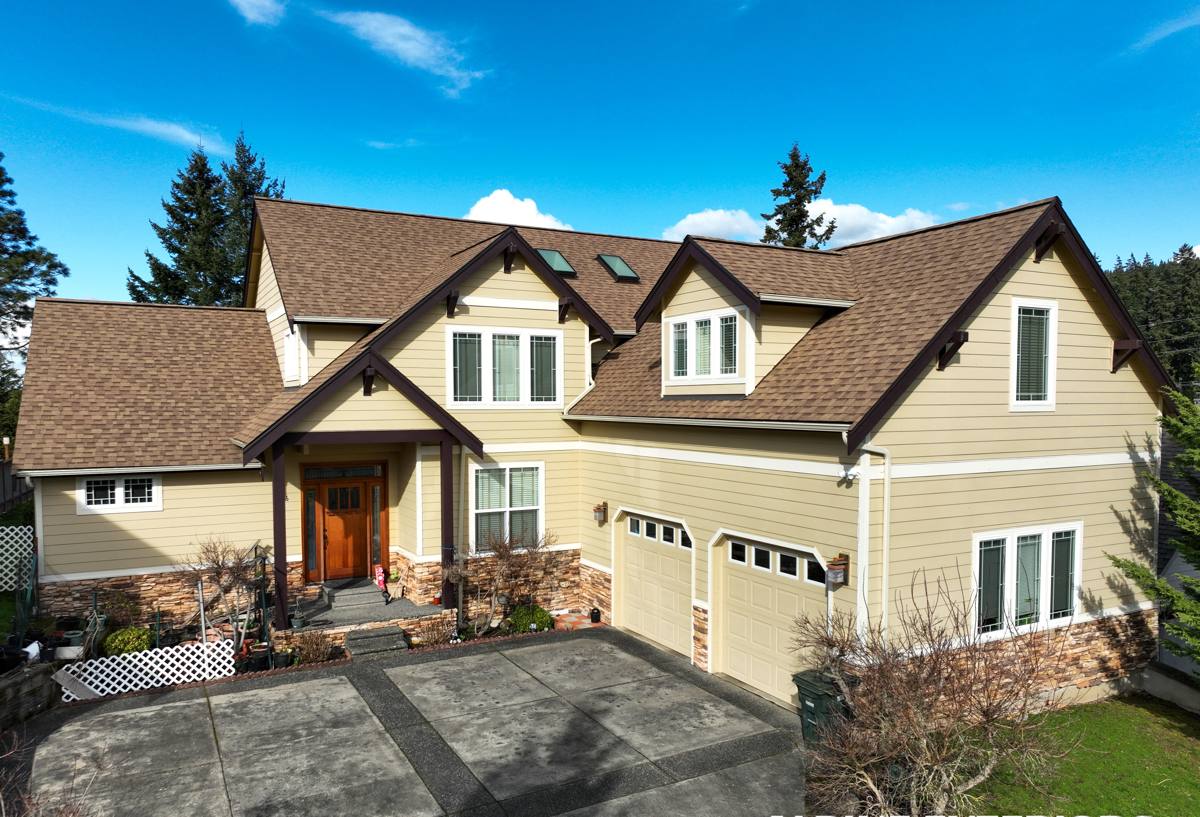
We made a decision a while back to stop installing anything other than James Hardie fiber cement siding, and Ferndale is one of the clearest examples of why. Fiber cement is non-combustible, doesn't feed moss and algae the way wood fiber products can, and holds its factory-applied ColorPlus finish through years of the region's rain rather than needing repainting every five to seven years. We're not going to tell you every other product is junk — LP SmartSide, vinyl, and other fiber cement brands all have legitimate uses. We just don't think they hold up as well to this specific climate, and we'd rather install one product correctly and stand behind it than offer four options and hedge on all of them.
James Hardie also builds region-specific product engineering into its siding, which matters more here than in a drier climate. The HZ5 formulation, built for harsher, wetter climates, is what we spec for Ferndale homes as a rule rather than an exception.
What HZ5 Actually Changes
HZ5 isn't a marketing label — it's a different moisture-management formulation than the HZ10 product built for milder, drier regions. For a Ferndale home exposed to salt air and near-constant winter dampness, that difference shows up over the life of the siding, not in the first year. It's part of why we don't treat product selection as a formality; it's the first real decision on the job.
What "Correct" Actually Means on a Ferndale Job
Siding is a system, not a panel. The board is maybe half the job. The other half is everything behind and around it, and this is where a lot of the real damage from a bad install shows up years later, often after the original crew is long gone.
- Weather-resistive barrier installed and lapped correctly, with no gaps at seams
- Rainscreen or proper drainage gap where conditions call for it, so water gets a path out instead of sitting against the wall
- Flashing at every window, door, and roof-to-wall intersection, installed in the correct shingle-lap order
- Fastener placement and spacing per Hardie's published install specs — not "close enough"
- Correct clearances from grade, roofline, decks, and hardscape so board edges aren't sitting in standing water or snow
- Factory-cut and factory-primed edges kept intact; field cuts sealed per manufacturer guidance
- Caulking only where Hardie's details call for it — over-caulking traps moisture instead of shedding it
Get any one of these wrong and the siding itself can be flawless while the wall behind it fails. That's the part a homeowner can't easily inspect after the fact, which is exactly why the installer matters as much as the product.
Moss, Algae, and North Walls: The Ferndale-Specific Problem
Because of the tree cover and the number of shaded, north- and west-facing walls common in this area, we see moss and algae growth on siding here more than in drier inland parts of the county. It's mostly cosmetic on Hardie's factory finish, since ColorPlus is baked on rather than sprayed and doesn't feed organic growth the way raw wood fiber can. But growth sitting against any siding for months at a time keeps that section of wall damp longer than the rest of the house, which is a maintenance issue worth planning around rather than ignoring. Simple things — keeping gutters clear so runoff isn't sheeting down one section of wall, trimming back vegetation that shades a wall year-round — do more for long-term siding health here than most homeowners expect.
Salt Air and Fasteners
The other Ferndale-specific issue is corrosion, not of the siding itself but of the fasteners and trim hardware holding it up. Salt-laden air accelerates corrosion on lower-grade fasteners, and once a fastener starts to corrode, it can streak the siding face and eventually lose holding strength. We spec corrosion-resistant fasteners rated for the exposure on every job in this area — it's a small cost difference on the front end and a real difference in how the wall looks and performs ten years out.
Our Process, Start to Finish
1. On-Site Assessment
We walk the exterior, check the current siding and what's happening behind it where we can see it (trim, corners, window returns), and talk through what's actually driving the need for replacement — moisture, age, appearance, or a combination.
2. Product and Color Selection
We go through the relevant Hardie lines and ColorPlus color options for the home's style and the neighborhood, and we're upfront about what fits a Ferndale exposure versus a more sheltered lot.
3. Written Scope and Estimate
Every job gets a written scope covering removal, any sheathing repair found once old siding comes off, house wrap, flashing details, fastener spec, and the Hardie product and color — not just a lump-sum number.
4. Tear-Off and Sheathing Check
Old siding comes off and we inspect the sheathing underneath before anything new goes up. This is where hidden moisture damage from a prior install shows up, and it gets addressed before new siding covers it again.
5. Weather Barrier and Flashing
This is the step that determines how the house performs in a wet winter, done to spec rather than rushed.
6. Hardie Installation
Panels, planks, or shingles go up per manufacturer spacing, fastening, and clearance requirements, with trim and caulking limited to where the details call for it.
7. Final Walkthrough
We walk the finished job with the homeowner before calling it done, and go over basic maintenance specific to the site — gutter clearance, plantings, anything relevant to that particular lot.
What Drives Cost on a Ferndale Siding Job
| Factor | Why It Matters Here |
|---|---|
| Home size and wall complexity | More corners, dormers, and trim detail means more cut edges and flashing points |
| Sheathing condition | Homes with prior moisture intrusion often need sheathing repair before new siding goes on |
| Product line and profile | Lap, shingle, and panel profiles vary in material and labor cost |
| Rainscreen/drainage detailing | Added on exposures with heavier wind-driven rain or shaded, slow-drying walls |
| Access and site conditions | Tree cover, fencing, and lot layout affect setup and staging time |
| Trim and accessory scope | Fascia, corner boards, and trim replacement alongside siding add to scope |
We won't quote a number without seeing the house, but these are the factors that actually move the price, and we'll walk through them plainly during the estimate rather than burying them in a lump sum.
Why a Crew That Already Works Ferndale Is Worth Something
A lot of siding problems in this area aren't product failures — they're installation shortcuts that only reveal themselves after a few wet winters. A crew that's already worked this area knows which details matter more here than they would in a drier part of the state: where rainscreen gaps earn their keep, which wall orientations need extra attention to flashing and clearance, and what fastener spec actually holds up against the salt air off the bay. That's not something you get from a generic siding crew working from a single national spec sheet. It's the difference between siding that looks right on installation day and siding that still looks right in year twelve.
Maintenance After Installation
Correctly installed Hardie siding with a ColorPlus finish is genuinely low-maintenance, but "low" isn't "none." A simple annual check keeps it that way:
- Rinse the exterior yearly to clear salt residue, pollen, and organic buildup, especially on shaded walls
- Keep gutters and downspouts clear so runoff doesn't sheet down one section of wall
- Trim back vegetation and tree cover that keeps a wall section shaded and damp longer than the rest of the house
- Check caulking at penetrations (hose bibs, vents, fixtures) periodically — caulking is a maintenance item even when the siding isn't
- Have any impact damage or corner separation looked at promptly rather than left through a wet winter
None of this is heavy upkeep. It's the same short list that keeps any well-installed exterior performing the way it's supposed to for decades rather than one.
If you're weighing a siding replacement on a Ferndale home, we're glad to walk the exterior with you, look at what's actually happening behind the current siding where we can see it, and put together a straightforward, no-pressure estimate. There's a form below to get that started.