 Bellingham
 Storm Damage Roof Repair Built Around Ferndale's Weather
Storm damage on a Ferndale roof rarely looks like the dramatic hole-in-the-roof scenario people picture. Whatcom County doesn't see much hail. What it sees instead is sustained wind that works shingles loose over hours rather than seconds, rain that gets driven sideways and up under roof edges instead of falling straight down, and falling limbs from the mature trees common on so many local lots. Salt-tinged air off the water adds a second layer to the problem after the fact, accelerating corrosion on any flashing or fasteners left exposed once a storm has compromised them.
That combination changes what a correct storm repair actually requires. A patch that would hold up fine in a drier, calmer climate can fail here within a season if it doesn't account for wind-driven rain finding its way under a repaired section, or if it's done during the long wet stretch when moss and trapped moisture are already working against the roof from underneath. This page covers what storm damage actually looks like on a Ferndale roof, what a repair needs to get right, and how our process works from the first call to the final walkthrough.
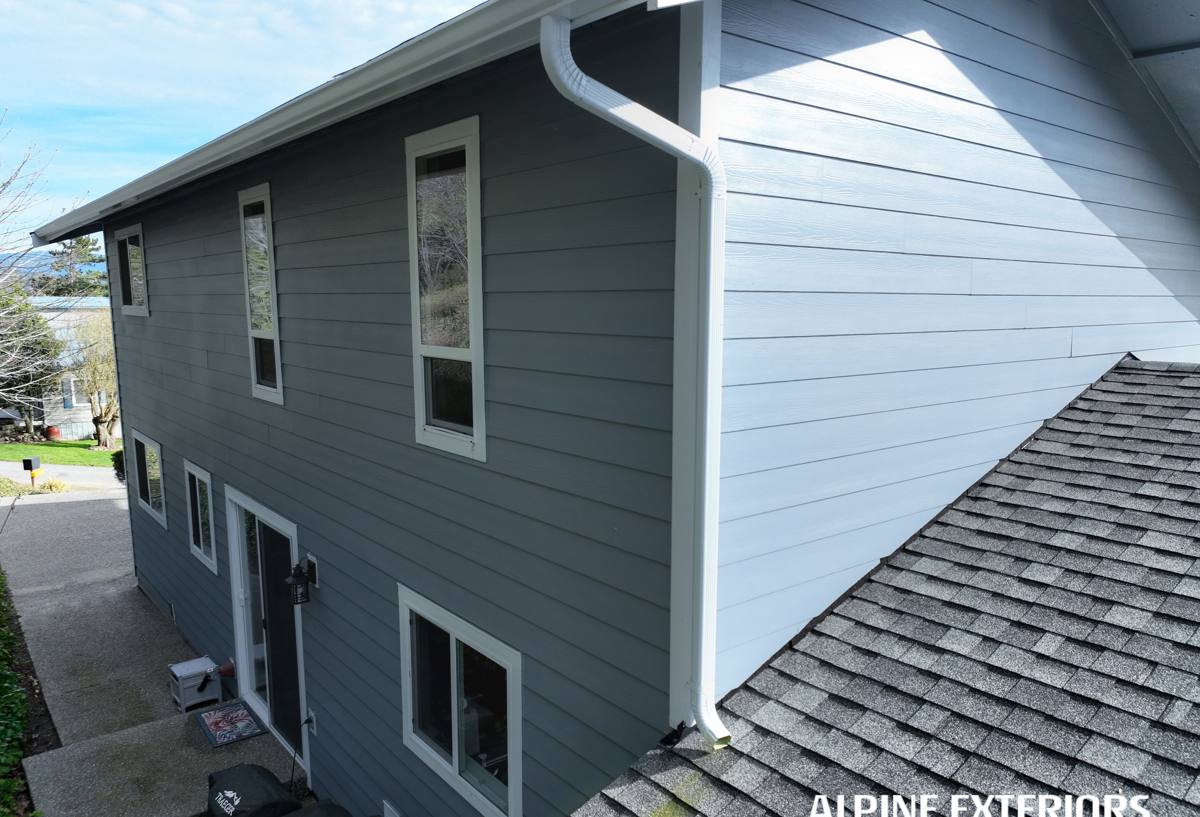
What Storm Damage Actually Looks Like Here
Storm damage isn't always obvious from the ground, and it isn't always the section of roof that looks worst. A full inspection has to check several different failure modes, not just the spot a homeowner already noticed.
Wind Damage
Sustained wind lifts shingle tabs and can tear them loose entirely, especially on older roofs where sealant strips have already weakened with age. Partially lifted shingles that haven't blown off yet are often the more urgent problem, since they leave the underlayment exposed to the next round of weather while looking mostly intact from the street.
Wind-Driven Rain Intrusion
This is the damage type that catches homeowners off guard. Water doesn't need a hole to get in — it just needs a shingle edge, a flashing lap, or a vent boot that wind has pushed rain up and under. The result is a leak that shows up days or weeks after the storm, once water has worked its way through the deck, rather than during the storm itself.
Fallen Limbs and Debris Impact
A falling branch doesn't have to punch through the roof to cause real damage. It can crack shingles, dislodge granules in a way that shortens shingle life, or compromise the deck underneath without an obvious visible break in the surface.
Flashing and Seal Failures
Flashing at valleys, chimneys, and vent penetrations takes the brunt of wind stress because it's already the most mechanically vulnerable part of the roof. A storm can peel back or loosen flashing that then leaks quietly for months before it's noticed inside the house.
The First 24 to 48 Hours: Stopping Further Damage
Once a roof has been compromised, the biggest ongoing risk usually isn't the storm that already happened — it's the next normal rain that follows it. Getting a temporary tarp or protective covering over exposed or damaged areas quickly is what keeps a repairable problem from turning into a deck-replacement problem.
Temporary protection needs to be done safely and correctly, which matters more than doing it fast. A poorly secured tarp can do its own damage in high wind, and working a storm-damaged roof before conditions are safe isn't worth the risk. Once the area is stabilized, the permanent repair can be scheduled and done properly rather than rushed.
What a Thorough Storm Damage Inspection Involves
A drive-by look from the street tells you almost nothing useful after a storm. An actual inspection means getting on the roof, documenting the damage in detail, and checking the areas that don't show damage from below.
- On-roof, close inspection: Wind and impact damage often only shows up when you're standing next to it, not looking up at it from the yard.
- Attic and deck check from underneath: Water staining, damp insulation, or soft decking reveal intrusion that hasn't reached the interior ceiling yet.
- Flashing inspected separately from the shingle field: Flashing failures are a different problem from shingle damage and need to be checked on their own, not assumed fine because the shingles nearby look okay.
- Matching material availability confirmed before quoting: If a patch repair is realistic, we check whether your existing shingle profile and color are still available before recommending it as an option.
Photo documentation at this stage also matters if you're filing an insurance claim, since it gives you an independent record of the damage that isn't dependent on what an adjuster happens to note during a single visit.
Repair or Replace? What Actually Drives That Decision
Not every storm-damaged roof needs full replacement, and not every damaged section can be responsibly patched. The right call depends on a handful of concrete factors rather than a blanket rule.
| Factor | Favors Repair | Favors Replacement |
|---|---|---|
| Roof age | Roof is relatively young with plenty of remaining service life | Roof is already near the end of its expected lifespan |
| Extent of damage | Damage is isolated to one slope or a small area | Damage is spread across multiple slopes or the whole roof |
| Deck condition underneath | Decking is sound once exposed | Decking shows rot or soft spots from prior undetected moisture |
| Material availability | Matching shingle product and color are still available | Discontinued product means a patch will always look mismatched |
| Prior condition of the roof | Roof was in good shape before the storm hit | Storm damage adds to pre-existing wear that was already advancing |
We'll give you a straight answer on which side of that table your roof falls on, including telling you when a repair is the honest, reasonable choice rather than pushing a full replacement that isn't yet necessary.
Working Through an Insurance Claim
Most storm damage repairs in this area involve an insurance claim at some point, and the process goes more smoothly when the documentation is thorough from the start. We're happy to provide a detailed written estimate and photos you can submit alongside your claim, and to walk an adjuster through what we found on the roof if that's useful.
A few practical things worth knowing going in: getting your own independent inspection and estimate, separate from the insurance company's adjuster, gives you something to compare their assessment against. And it's worth being cautious of anyone who shows up unprompted after a storm pushing you to sign a contract before any real inspection or estimate has happened — that pressure is a bigger red flag than the storm damage itself.
How Our Storm Damage Repair Process Works
- Prompt inspection: We get out to look at storm-damaged roofs quickly, since delays after a storm are exactly when small problems become bigger ones.
- Temporary protection if needed: If the roof is actively exposed, we get it safely covered before anything else happens.
- Detailed written estimate: You get a clear breakdown of what's damaged, what repair or replacement involves, and documentation you can use for an insurance claim.
- Scheduling around weather: Permanent repair work gets scheduled for conditions that are actually safe and dry enough to do it right.
- Repair or replacement work: Flashing, underlayment, and shingles are addressed to manufacturer specification, not just patched over the surface.
- Final walkthrough: We review the completed work with you and confirm the repair matches what was scoped and quoted.
Why a Crew That Already Works Ferndale Roofs Matters After a Storm
After a windstorm, it's common for out-of-area crews to move through affected neighborhoods offering fast repairs. Some of that work is fine. A lot of it disappears along with the crew once the immediate rush is over, which is a real problem if a repair fails or a warranty claim comes up a year or two later and there's no one local left to call.
A crew that regularly works roofs in and around Ferndale already understands how salt air affects exposed flashing and fasteners after a storm, how wind-driven rain finds gaps that a generic patch might miss, and which slopes and orientations tend to take the worst of local wind events. That's practical knowledge that shows up in the small decisions made during a repair — and it's also who you can actually reach afterward if something needs a second look.
Signs Your Ferndale Roof May Have Storm Damage You Haven't Noticed
Not all storm damage announces itself right away. These are worth checking after any significant wind or rain event, even if nothing looks obviously wrong from the ground.
- Granules collecting in gutters or at downspout outlets after a storm
- Shingle tabs that look slightly lifted or out of line compared to the rest of the roof
- New water staining on ceilings or in the attic, even faint or small
- Visible debris impact marks, cracked shingles, or bare spots where granules are missing
- Flashing around chimneys, vents, or valleys that looks bent, lifted, or separated
- A musty smell in the attic that wasn't there before, which can indicate moisture intrusion before it reaches visible interior surfaces
If you're seeing any of these after a recent storm, it's worth having the roof checked before the next round of rain rather than waiting to see if it gets worse.
If your Ferndale roof has taken storm damage, we're glad to come take a look and give you a straightforward, no-pressure estimate — use the form below to request a free assessment.