 Bellingham
 James Hardie Siding for Happy Valley Homes
Happy Valley is one of Bellingham's older, well-established residential neighborhoods, and that means a lot of its housing stock is carrying exterior siding that's decades past the point where it was originally installed. Whether that's original wood lap siding, an aging vinyl replacement, or a fiber cement product installed before today's flashing and clearance standards were common practice, the underlying question homeowners in this neighborhood eventually face is the same: what actually holds up here, and what's the right way to put it on.
We install James Hardie fiber cement siding exclusively, and this page is specifically about what that looks like for Happy Valley — not a generic rundown of the product, but the climate realities of this part of Bellingham, what a correctly installed Hardie system needs to account for on a property like yours, and why the crew doing the work matters as much as the material itself.
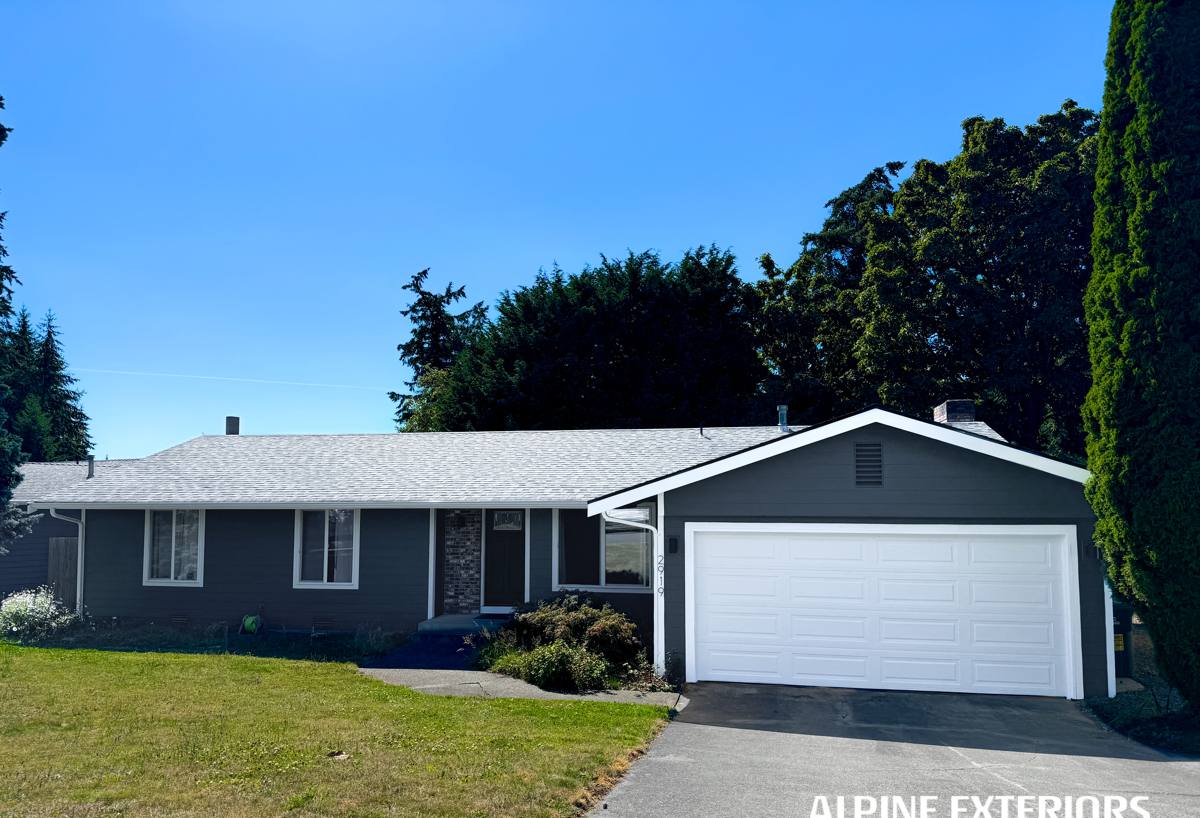
What Happy Valley's Climate Does to Siding
Bellingham sits close enough to the water that salt-laden air is a constant, low-grade factor on exterior surfaces, even for homes set back from the shoreline. That salt air speeds up corrosion on exposed fasteners and hardware and keeps painted or coated surfaces damp longer than they'd stay in a drier inland climate, which accelerates the breakdown of any finish not built to handle sustained exposure.
Driving rain is the second factor, and it's a bigger deal than most homeowners assume until they've dealt with the aftermath. Rain that arrives sideways on a windy day doesn't run down a wall the way a calm, straight-down shower does — it gets forced into laps, seams, and fastener points that wouldn't be tested nearly as hard somewhere drier. On a mature neighborhood like Happy Valley, with mixed lot sizes, established tree canopy, and homes set at all kinds of angles to prevailing weather, flashing and clearance details that would be adequate elsewhere start to matter a lot more.
Moss rounds out the picture, and it's the one homeowners notice first because it's visible. Shaded walls, north-facing exposures, and anything under mature trees stay damp through much of the fall, winter, and spring — exactly the conditions moss needs to take hold. On wood-based siding, that ongoing dampness isn't just a green stain to pressure-wash off; it's a durability problem, since sustained moisture against a moisture-absorbent material eventually leads to swelling, softening, and rot at seams and cut edges.
Why Established Neighborhoods Like This One See More Siding Problems, Not Fewer
It's a common assumption that an older, settled neighborhood with mature landscaping is gentler on a home's exterior than a newer, more exposed development. In practice it can go the other way. Mature tree cover means more shade, more debris in gutters and against walls, and slower drying after every rain event. Combined with siding that's often reaching or past the end of its practical service life, Happy Valley homes frequently need a closer look at their exterior sooner than owners expect.
Why We Install Only James Hardie Fiber Cement
We don't install vinyl siding, LP SmartSide, primed spruce, cedar, or other fiber cement brands. That's a professional standard, not a limitation on what we're capable of installing. In a climate defined by salt air, driving rain, and a long moss season, the products that tend to struggle share a common thread: they either absorb moisture directly, rely on a field-applied or factory coating to keep water out indefinitely, or expand and contract enough with temperature and humidity swings that seams gradually work themselves open.
James Hardie fiber cement is engineered specifically against that kind of exposure. It's non-combustible, it doesn't swell, rot, or feed moss the way wood-based products can, and its ColorPlus factory finish is baked on under controlled conditions and warrantied against the fading and chalking that constant moisture and UV cycling cause over time. Hardie also builds climate-specific HZ formulations rather than one generic board for the whole country, which matters in a region that sees this much sustained dampness. Paired with a strong transferable warranty and installation done to the manufacturer's actual specifications, it's the system we trust to perform through a full Bellingham year on a property like yours in Happy Valley — not just look good the day it goes up.
What Homeowners Should Weigh Before Choosing Something Else
Cheaper alternatives aren't dishonest products — vinyl, engineered wood, and primed wood all have legitimate uses in the right climate and budget. But in a salt-air, high-rain, long-moss environment like Happy Valley's, the maintenance burden and moisture risk on those materials tends to land back on the homeowner within a decade or two, often as caulking, repainting, or panel replacement that a correctly installed fiber cement system simply doesn't demand as often.
What a Correct Happy Valley Installation Actually Involves
James Hardie only performs the way it's engineered to when it's installed to spec, and that spec has specific line items that matter more in this neighborhood's conditions than they would somewhere drier:
- Fastener type and spacing matched to the siding profile and substrate, using corrosion-resistant fasteners given the salt-air exposure
- Correct clearance above grade, decks, and hardscape so lower courses aren't sitting in ground moisture that stays damp longer under mature landscaping
- Properly lapped house wrap or weather-resistive barrier underneath the siding, so any water that does get past the cladding has somewhere to go besides the sheathing
- Flashing detailed at every window, door, and penetration so wind-driven rain is directed out and away rather than trapped behind the boards
- Wall-by-wall assessment of shade and rain exposure, since a north-facing wall under tree cover and a south-facing wall in full sun on the same house can need different attention to ventilation and touch-up scheduling
Skipping or shortcutting any one of these steps can undercut the material's real-world performance, no matter how good the product itself is. This is where a lot of the difference between a Hardie installation that lasts decades and one that develops problems within a few years actually comes from — not the material, but the details around it.
| Installation Detail | Why It Matters in Happy Valley |
|---|---|
| Corrosion-resistant fasteners | Salt-laden air accelerates rust on exposed hardware faster than an inland climate would |
| Flashing at windows and penetrations | Wind-driven rain gets pushed into gaps a calmer climate wouldn't test as hard |
| Clearance above grade and landscaping | Mature yards and shaded ground stay damp longer without proper standoff |
| Shaded and north-facing wall treatment | These walls stay wettest longest and develop moss and mildew first |
| Factory-applied ColorPlus finish | A baked-on finish resists the fading and chalking that constant moisture and UV cycling cause |
Comparing Siding Materials for This Neighborhood
Most Happy Valley homeowners planning a siding project have already come across the main material options, so it's worth being direct about how they actually compare in this specific climate rather than treating the decision as settled from the start.
| Material | Moisture Behavior Here | Typical Long-Term Maintenance |
|---|---|---|
| James Hardie fiber cement | Non-combustible, doesn't absorb moisture or feed rot the way wood-based products can | Low — factory finish holds up well against sustained damp and salt exposure |
| Vinyl | Doesn't rot, but can warp or crack under temperature swings and sustained wind-driven rain | Low upfront, but panel replacement rather than repair once it fails |
| LP SmartSide / engineered wood | Wood-based core is more moisture-sensitive at cut edges and seams than fiber cement | Moderate — edge sealing and coating upkeep matter more in sustained damp conditions |
| Primed spruce or cedar | Natural wood absorbs moisture readily and is a preferred surface for moss growth | Highest — regular repainting, caulking, and moss treatment needed to hold up |
None of this means every alternative product is a poor choice everywhere. It's why our own standard, for a neighborhood dealing with this exact combination of salt air, driving rain, and moss, is fiber cement installed correctly rather than a material that trades a lower upfront cost for a heavier maintenance load down the road.
How Our Process Works on a Happy Valley Project
Every project starts with a walk-through of the actual property, not a phone estimate. We look at wall orientation, tree cover, drainage, and the condition of the existing siding and substrate underneath it, since what's happening behind the current cladding often matters more than what it looks like from the curb. From there we put together a straightforward scope and timeline before any work begins.
Once a project is underway, tear-off exposes the sheathing so we can address any rot or moisture damage found underneath before new siding goes on — installing new Hardie boards over a compromised substrate just locks a problem in rather than solving it. Weather-resistive barrier, flashing, and fastening are all installed to manufacturer spec and adjusted for the specific wall's exposure, and trim and touch-up detailing are finished before we walk the property with the homeowner at the end.
A Quick Pre-Project Checklist for Happy Valley Homeowners
- Note which walls stay damp or shaded longest — those need the closest attention to flashing and ventilation
- Check for soft spots or give near window and door trim before assuming siding alone is the issue
- Ask any contractor for their Washington state license and current insurance, not just a verbal assurance
- Confirm whether a quote includes substrate repair or only surface-level siding replacement
- Ask specifically how fasteners, flashing, and clearance will be handled for this property's exposure, not a generic answer
Signs a Happy Valley Home Might Need Siding Attention
Most homeowners call because something specific caught their eye, not because they've been tracking their exterior's condition closely. It's worth knowing what to look for before a small issue becomes an expensive one:
- Visible moss or green staining on shaded or north-facing walls
- Paint that keeps failing or peeling no matter how often it's redone
- Soft spots or slight give when pressing near a window or door trim
- Siding that's cupping, warping, or separating at seams
- Rust streaks below fasteners or hardware
- Visible daylight or drafts around older window frames, which can point to bigger moisture issues behind the wall
Any one of these on its own doesn't necessarily mean a full replacement is needed. But they're worth having a professional actually look at, since moisture-related damage in this climate tends to compound rather than stay static.
Why a Crew That Already Works Happy Valley Matters
A lot of what makes siding hold up here comes down to details a crew unfamiliar with this specific neighborhood tends to overlook: which walls take the most wind-driven rain given typical lot orientation, where moss establishes first based on mature tree cover, how much clearance siding needs above grade given how long the ground stays damp under established landscaping, and how flashing needs to be layered so it sheds water through an entire wet season rather than just passing a dry-day inspection.
A crew that installs Hardie siding across Bellingham and greater Whatcom County regularly starts to recognize these patterns property by property. That shows up in the on-site decisions homeowners rarely notice directly but absolutely feel over the following decade — where a J-channel actually needs to go, where caulk is appropriate versus where flashing is required, and how fasteners are spaced given this specific neighborhood's wind and moisture exposure.
If your Happy Valley home needs new siding or you'd just like an honest, no-pressure look at what your current exterior is dealing with, we're glad to take a look. Use the form below to schedule a free estimate.