 Bellingham
 Why Lynden Decks Wear Differently Than You'd Expect
Lynden sits inland from Bellingham Bay, out in the flatter farmland stretch of Whatcom County near the Canadian border. That inland position means Lynden decks see less direct salt air than homes right on the water, but they still take a beating from the same long, wet Pacific Northwest weather pattern that defines this whole region: months of driving rain, heavy morning dew, and a moss season that can run from October clear through April. Add in the valley's cooler overnight temperatures and you get decks that stay damp longer than they would in a drier climate, which is exactly the condition wood, fasteners, and even composite decking struggle with over time.
We're not guessing at this from a truck driving through once. Deck repair in Lynden is a regular part of our work in Whatcom County, and the failure patterns we see here are consistent: moss and algae holding moisture against boards, rusted or corroding fasteners, ledger board rot where the deck meets the house, and joists that look fine from above but are soft underneath. None of that is dramatic damage until it is — deck failures tend to happen quietly, over a couple of seasons, until a board gives way or a railing wobbles.
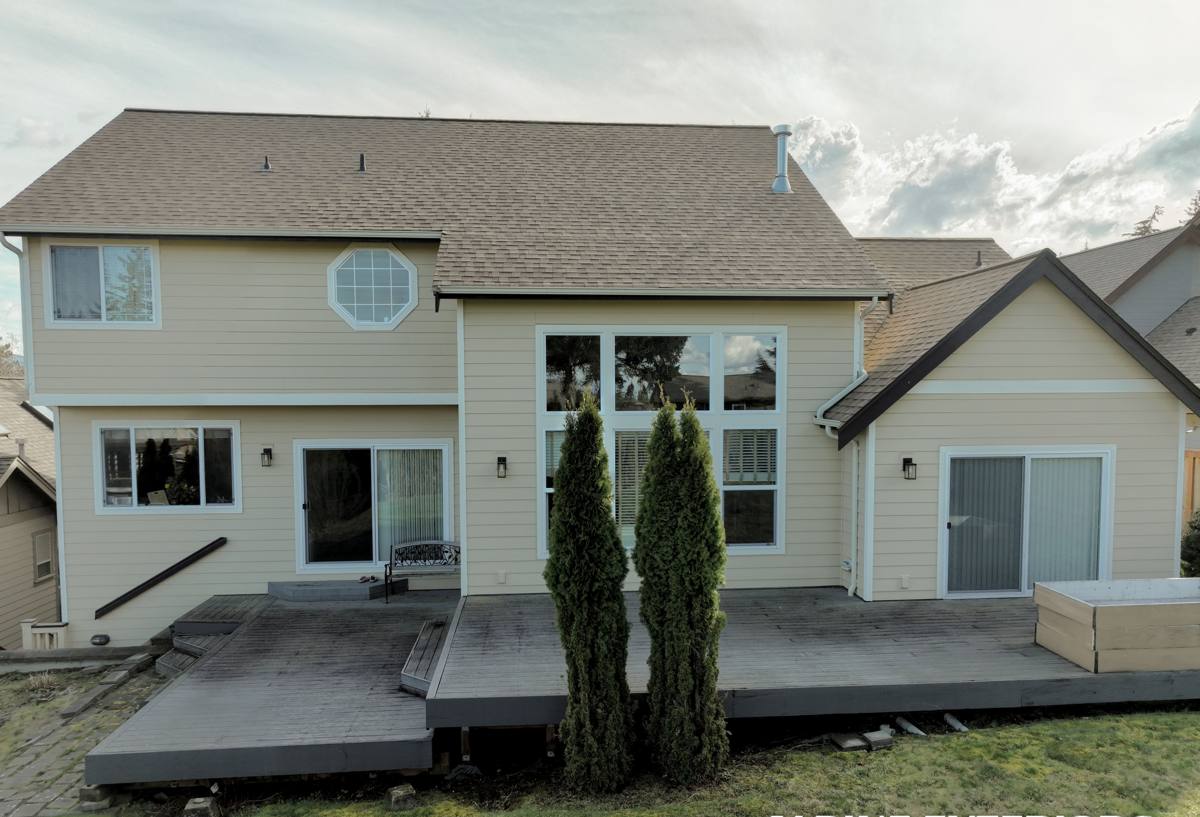
Signs a Lynden Deck Needs Repair — Not Just a Cleaning
A pressure wash and a coat of stain can make a tired deck look better without fixing what's actually wrong underneath. Before you spend money on cosmetic work, it's worth knowing what actual structural or moisture damage looks like.
- Soft or spongy spots when you walk across the deck, especially near the house or stairs
- Boards that stay dark or wet-looking long after the rest of the deck has dried
- Visible gaps, cracking, or splintering along board edges
- Rust streaks below fastener heads or nails backing out of the decking
- A ledger board (where the deck attaches to the house) that shows staining, gaps, or separation from the siding
- Railings or posts that flex or wiggle more than they used to
- Moss or algae that returns within weeks of cleaning, which usually points to a shaded, poorly drained area holding moisture
If you're seeing more than one of these, it's a sign the damage has moved past the surface and into the structure — which is where repair decisions start to matter a lot more than they would for a simple stain job.
What a Correct Deck Repair Actually Involves
A repair that only replaces the boards you can see is a repair that's likely to fail again within a season or two, because it ignores the parts of the deck doing the structural work. A proper job in this climate has to account for what's happening below the decking, not just what's visible from the yard.
The Ledger Board and House Connection
This is the single most important connection on the deck, and the one most prone to hidden rot in a wet climate, because it sits right where the deck meets the wall and rainwater naturally collects. We check for proper flashing behind the ledger, confirm it's fastened correctly (not just nailed, which loosens over time), and look for any moisture that's made its way into the wall assembly behind it.
Joists, Beams, and Posts
These carry the weight of the deck, and rot here doesn't always show from above. We probe joists and beams with a moisture meter or awl at connection points and anywhere water tends to pool, since that's where soft wood shows up first.
Fasteners and Hardware
Standard fasteners corrode faster in our wet season, and corroding hardware weakens the whole structure even when the wood around it still looks sound. Repairs get done with fasteners and connectors rated for exterior/wet exposure, not whatever matches the existing (often undersized or outdated) hardware.
Decking, Railings, and Stairs
Once the structure underneath is confirmed sound, we address the surface: replacing damaged boards, resecuring loose railings, and making sure stair stringers are solid, since stairs take repeated point-load stress and are often the first thing to fail on an aging deck.
Repair or Replace? A Straight Answer
Homeowners often ask us to "just fix it" before we've looked at what's underneath, and sometimes that's exactly the right call. Other times, a full or partial rebuild actually costs less over five years than repeated patch repairs. Here's how we think about it.
| Factor | Repair usually makes sense | Replacement usually makes sense |
|---|---|---|
| Structural framing (joists, beams, posts) | Sound, with isolated soft spots | Widespread rot or repeated moisture damage at multiple points |
| Ledger board | Solid, properly flashed | Rotted, poorly flashed, or attached to compromised siding |
| Age of original build | Under 10-12 years, built to code | Older, undersized lumber, or unpermitted original construction |
| Decking material | A handful of boards damaged, rest sound | Widespread cupping, splitting, or delamination across the deck |
| Budget goal | Extend usable life a few more years | Want a long-term fix and possibly a layout or size change |
We'll give you a straight recommendation either way — there's no benefit to us talking a sound deck into a full rebuild, and no benefit to patching a deck that's going to keep failing.
Materials: What We Use and Why
For repairs and replacement decking in this climate, we lean toward materials that handle sustained moisture without a heavy maintenance schedule. Pressure-treated lumber remains a solid, economical choice for framing, since it's rated for ground contact and wet exposure. For visible decking, many Lynden homeowners are moving toward composite or capped composite boards specifically because they don't require annual staining or sealing — in a climate with a five-to-six month moss season, that maintenance savings adds up. Traditional cedar decking still has a place for homeowners who want that look and are committed to the upkeep, but we're honest about the trade-off: it needs regular sealing and cleaning to hold up here, and skipping that maintenance is what leads to the soft, discolored boards we replace most often.
Whatever material you choose, fastener and hardware quality matters more than most homeowners expect. We won't cut corners there even on a smaller repair, because undersized or non-rated hardware is one of the most common reasons a "repaired" deck fails again within a year or two.
Our Deck Repair Process
- On-site assessment — we inspect the ledger connection, framing, decking, and railings, and probe for soft or moisture-damaged wood rather than just eyeballing the surface.
- Honest scope and estimate — you get a clear breakdown of what needs repair versus what's holding up fine, with no pressure toward a bigger job than the deck actually needs.
- Repair work — structural issues get addressed first (framing, ledger, fasteners), then decking, railings, and stairs.
- Moisture management check — we look at drainage, grading near posts, and flashing so the same failure isn't likely to recur in the same spot.
- Final walkthrough — we walk the deck with you so you know exactly what was done and what to watch for going forward.
Keeping a Repaired Deck Solid Through Whatcom County's Wet Months
A good repair buys you time, but a little seasonal upkeep buys you a lot more of it. This is the same short checklist we give homeowners after finishing a repair.
- Sweep leaves and debris off the deck regularly in fall — trapped organic matter is what feeds moss and holds moisture against boards
- Clean moss and algae early in the season before it spreads, rather than waiting until it's visibly thick
- Check that gaps between boards stay clear so water can drain through instead of pooling
- Inspect the ledger board area once a year for staining or gaps where it meets the house
- Re-seal or re-stain wood decking on the manufacturer's recommended schedule, not just when it looks faded
- Keep gutters and downspouts near the deck clear so runoff isn't dumping extra water onto or under it
Why Hire a Crew That Already Works in Lynden
Deck repair looks similar on paper everywhere, but the failure points we check first in Lynden aren't the same ones a crew from a drier climate would prioritize. We know to look hard at ledger flashing because that's where wet-season damage shows up first here. We know moss returns fast in shaded, low-airflow spots common on Whatcom County lots, and we know which fastener and material choices actually hold up through a full Pacific Northwest winter rather than just looking good on installation day. That local pattern recognition is what keeps a repair from being a temporary fix.
If your deck has soft spots, returning moss, or just doesn't feel as solid as it used to, we're happy to take a look and give you a straight assessment — no pressure, no upsell. Use the form below to request a free estimate, and we'll get back to you with next steps.