 Bellingham
 Why Decks in Lynden Wear Out Faster Than Homeowners Expect
Lynden sits in a part of Whatcom County that stays wet for a good chunk of the year. Long stretches of driving rain, low winter sun that never quite dries out shaded areas, and a moss season that can run from fall through spring all work against a deck the same way they work against roofs and siding. A deck takes it worse, though, because it's a horizontal surface — rain doesn't just hit it, it sits on it, soaks into end grain, and pools in any spot where the boards, flashing, or framing aren't pitched and sealed correctly.
We see the same pattern on deck after deck: the visible boards look "fine enough" for a few more years, but the framing underneath — ledger board, joists, posts, and hardware — is already compromised. By the time cupping, soft spots, or a spongy feel shows up on top, the structure below has usually been absorbing moisture for a while. In this climate, a deck rebuild isn't just a cosmetic upgrade; it's a chance to fix the parts you can't see that actually determine whether the deck is safe to stand on.
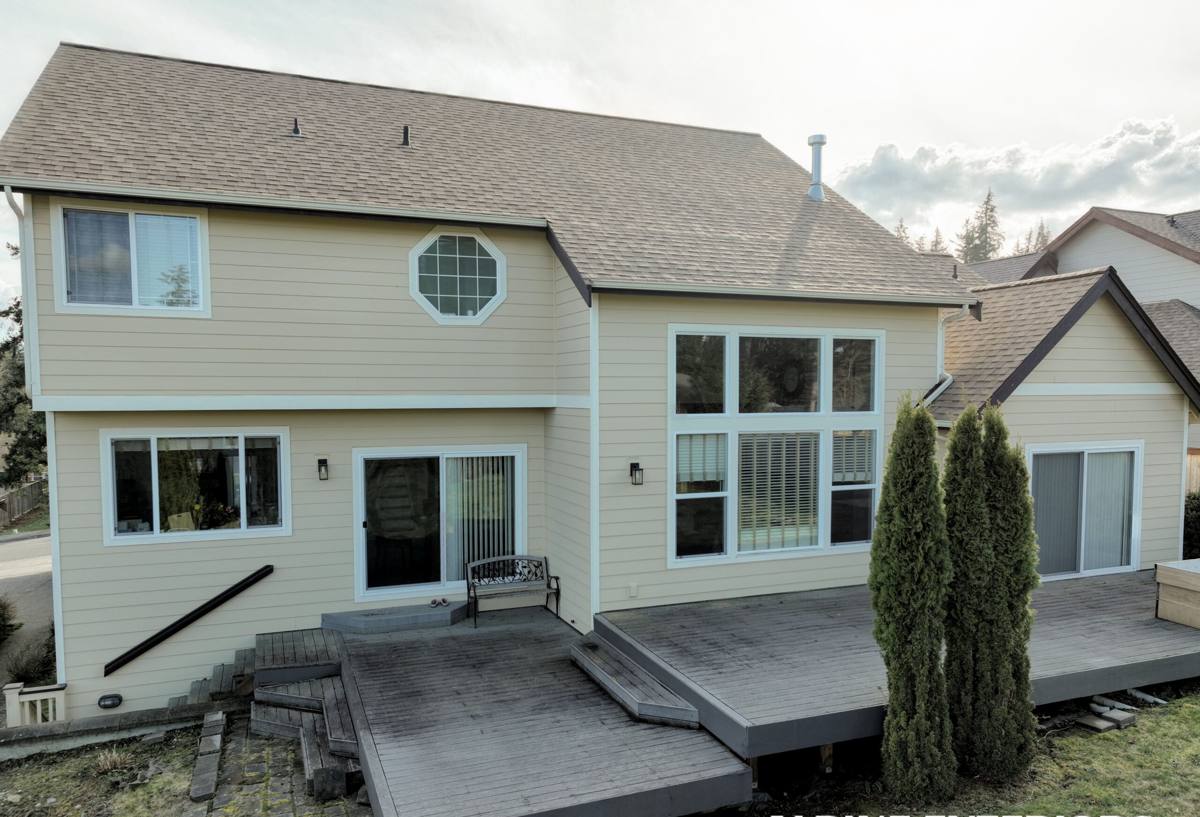
Signs a Deck Needs Full Replacement, Not Just Repair
Not every tired-looking deck needs to be torn out. But in a climate like ours, certain signs point past repair and into replacement territory:
- Soft, spongy, or bouncy decking underfoot, especially near the house or in shaded corners
- Visible rot or dark staining at the ledger board where the deck meets the house
- Rust streaking or corroded fasteners and joist hangers
- Persistent moss or algae growth that comes back within weeks of cleaning
- Gaps that have widened between boards from repeated wet-dry cycling
- Railing posts that wiggle or feel loose at the base
- A deck more than 15-20 years old on the original framing, even if the boards were replaced once already
If it's just a handful of cracked boards on an otherwise sound frame, a repair can make sense. If the framing, ledger connection, or footings are in question, patching the surface just delays a bigger problem — and in wet climates, that problem tends to grow underground and out of sight.
What a Correct Deck Replacement Actually Involves
A deck replacement done right is mostly about what's underneath the decking, not the decking itself. The pieces that determine how long a Lynden deck lasts:
Ledger Board and Flashing
The ledger board — where the deck attaches to the house — is the single most common failure point we find on older decks in this region. If it isn't properly flashed with a self-adhering membrane and correctly fastened with structural lag screws or through-bolts, water tracks behind it and rots both the ledger and the house rim joist behind it. This connection gets more attention on a proper rebuild than almost anything else on the project.
Framing and Fasteners
Joists, beams, and posts should be pressure-treated lumber rated for ground contact where applicable, with hardware and fasteners rated for the treatment chemicals used in modern lumber (standard galvanized hardware corrodes faster against ACQ-treated wood). In a climate that stays wet for months at a time, using the correct coated or stainless fasteners isn't optional — it's the difference between hardware that lasts and hardware that's rusting through in five years.
Footings and Post Bases
Footings need to sit below frost depth and bear on solid, undisturbed soil, with post bases that keep the wood post off the concrete and away from standing water. We check existing footings during a replacement rather than assuming they're adequate just because the old deck stood on them.
Drainage and Airflow
Water needs somewhere to go — both off the deck surface and out from underneath it. Proper board spacing, a slight slope away from the house, and clear ventilation under the deck all reduce the standing moisture that drives rot and feeds moss.
Decking Material Options for a Wet Climate
The board material matters, but it matters less than the framing underneath it. Still, it's the choice homeowners spend the most time on, so here's an honest comparison for a climate like Whatcom County's:
| Material | Moisture Behavior | Maintenance | Typical Lifespan |
|---|---|---|---|
| Pressure-treated wood | Absorbs and releases moisture; prone to cupping and splintering if not sealed regularly | Annual cleaning, re-sealing every 1-2 years | 10-15 years |
| Cedar | Naturally rot-resistant but still needs sealing; softer and more prone to surface wear | Cleaning plus periodic sealing/staining | 15-20 years with upkeep |
| Capped composite | Resists moisture absorption well; capped shell sheds water instead of soaking it in | Occasional washing, no sealing or staining | 25-30 years |
| Cellular PVC | Doesn't absorb moisture at all; unaffected by freeze-thaw or prolonged wet weather | Occasional washing | 30+ years |
Uncapped or budget composite decking is one product we steer clients away from in this climate specifically. Older-generation composites without a full cap can wick moisture at cut ends and fastener holes, and in a region that stays damp for months at a time, that shows up as swelling and mold staining faster than it would somewhere drier. That's a maintenance and moisture-behavior tradeoff, not a knock on composite decking as a category — fully capped composite and PVC products perform well here.
Our Deck Replacement Process
- On-site assessment — we inspect the ledger, framing, footings, and posts, not just the surface boards, to determine what's actually driving the replacement
- Scope and material selection — we walk through material options and their real tradeoffs for your specific layout, sun exposure, and budget
- Permit handling — for work that requires it, we prepare and submit the paperwork so you're not chasing it down yourself
- Demolition and disposal — full removal of the old deck, including hauling off old lumber and hardware
- Framing rebuild — new or reinforced ledger flashing, joists, beams, and footings brought up to current structural standards
- Decking and railing installation — boards, fascia, and railing installed to manufacturer spec, with attention to spacing and drainage
- Final walkthrough — we go over the finished deck with you, including basic care specific to the material you chose
Permits and Code Considerations
Most deck replacements that involve new framing, footings, or structural changes require a building permit in Whatcom County, and railing height and guard spacing have to meet current code — requirements that have tightened over the years, so a deck built decades ago may not meet today's standard even if it's structurally sound. We handle the permit process as part of the job rather than leaving it for the homeowner to sort out, and we build to current code rather than just matching what was there before.
Cost Factors to Understand Before You Get Quotes
| Factor | Why It Matters |
|---|---|
| Deck size and shape | Multi-level decks, curves, and built-in features add labor and material beyond a simple rectangle |
| Framing condition | Hidden rot at the ledger or posts can mean more structural work than a quote based on a visual walk-through assumes |
| Material choice | Pressure-treated wood costs less upfront; composite and PVC cost more initially but less over the deck's life |
| Railing style | Cable, glass, and composite railing systems cost more than standard wood or metal baluster railing |
| Height and access | Elevated decks with stairs or difficult site access add time and equipment needs |
| Permit and inspection requirements | Structural changes that trigger permits add both time and a modest cost to the project |
Be cautious of any quote that's dramatically lower than others for the same scope — it's usually a sign that ledger flashing, proper fasteners, or footing work has been left out to hit a lower number. Those are exactly the parts of the job that matter most in our climate, and they're the hardest to fix after the decking is already down.
Why Hire a Crew That Already Works in Lynden
Contractors who work regularly around Bellingham and Whatcom County know how the weather here actually behaves on a project — when a wet week will delay framing versus when it's fine to keep working, how to sequence flashing and decking installation so exposed framing isn't sitting in the rain longer than necessary, and which fastener and flashing products hold up under a genuinely long wet season rather than an occasional rainy month. That's different knowledge than a crew that mostly builds decks in a drier climate and treats moisture protection as an afterthought. It also means we're not learning the local permit process on your project — we've been through it enough times to keep that part moving instead of stalling your timeline.
Keeping a New Deck Looking Right Through the Wet Season
Even a well-built deck needs some basic upkeep in this climate. A short checklist that applies to most materials:
- Sweep leaves and debris off the deck regularly, especially in fall — trapped organic material holds moisture and feeds moss
- Rinse the surface periodically to prevent moss and algae from getting established, particularly in shaded areas
- Check that gaps between boards stay clear so water can drain through rather than pool
- Inspect railing posts and stair connections once a year for looseness
- For wood decks, plan on re-sealing or staining on the schedule the product calls for — skipping a cycle in this climate shows up fast
- Keep gutters and downspouts near the deck clear so runoff isn't dumping directly onto or under it
If you're weighing a repair against a full replacement, or just want an honest look at what's going on under your current deck, we're happy to come take a look. Reach out for a free, no-pressure estimate using the form below.