 Bellingham
 Why Lynden Homes Need Siding Built for This Exact Climate
Lynden sits in a stretch of Whatcom County where Pacific storm systems, coastal moisture off Bellingham Bay, and long stretches of overcast, damp weather all combine against the outside of a house. It isn't one dramatic weather event that wears siding down here — it's the accumulation. Driving rain during fall and winter storms, salt-laden air moving in off the Strait, and a moss and algae season that can run eight or nine months out of the year all work on a wall system slowly, year after year. A siding product that's fine in a dry inland climate can struggle here, and a siding product that's installed correctly for a dry climate but wrong for this one will fail faster than the material itself would suggest.
We install James Hardie fiber cement siding exclusively, and on jobs in and around Lynden that decision comes down to how the product behaves under exactly these conditions: sustained moisture exposure, cycles of wet and dry, and the organic growth that moisture invites. We don't install LP SmartSide, vinyl, Cemplank, Allura, primed spruce, or cedar. Each of those products has real strengths, but none of them combine the moisture stability, factory-cured finish, and long-term performance record we want standing on a Whatcom County wall for the next several decades.
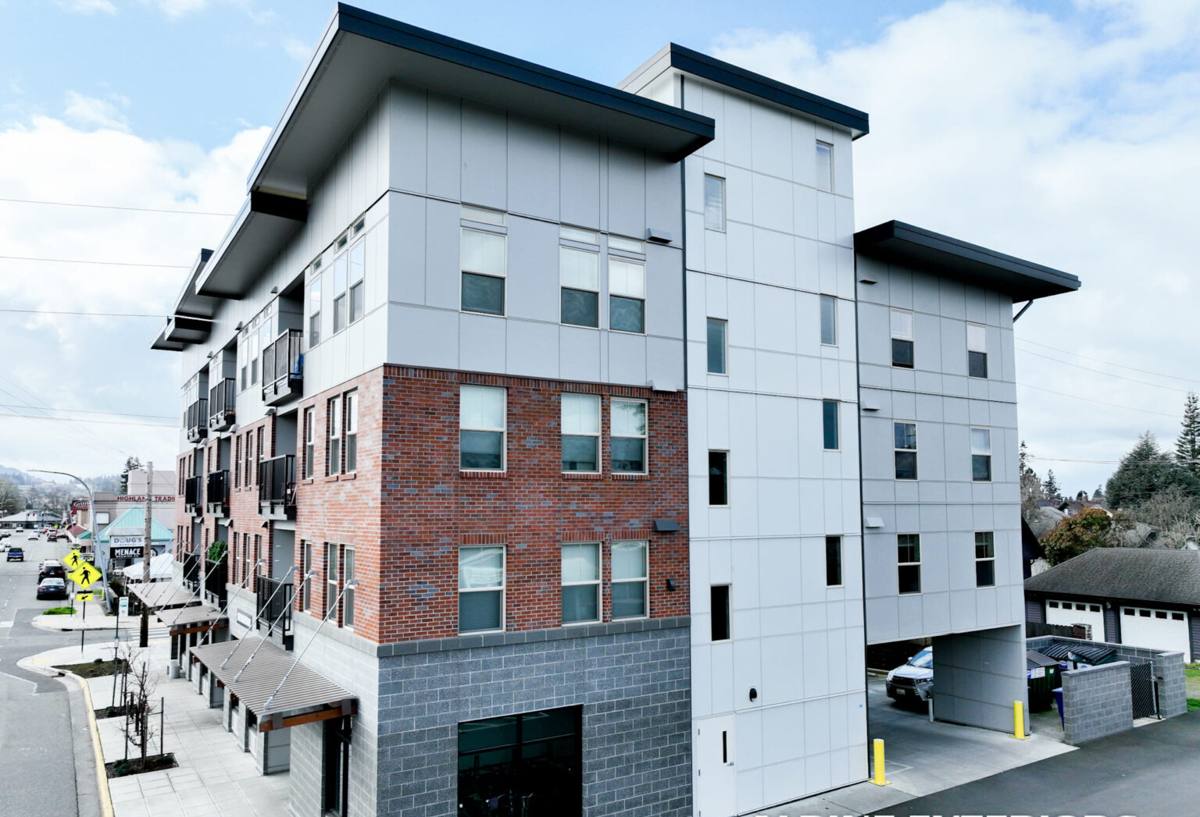
What Salt Air, Driving Rain, and Moss Actually Do to Siding
Salt Air
Homes closer to the water pick up airborne salt that settles on exterior surfaces. On wood-based products, that salt-laden moisture accelerates swelling, checking, and finish breakdown at the surface. On metal fasteners and trim that aren't rated for coastal exposure, it accelerates corrosion. Fiber cement isn't organic material, so salt exposure doesn't feed rot the way it can on wood or wood-composite siding.
Driving Rain
Wind-driven rain doesn't just wet a wall — it pushes water sideways and upward into laps, seams, and penetrations that a calm rain would never reach. This is where installation detail matters as much as the product itself. A siding system with the right lap coverage, flashing, and gap spacing sheds driving rain. One installed with tight nail spacing, missing kick-out flashing, or caulked seams instead of proper laps will start taking on water in exactly the storms Lynden gets every winter.
Moss and Algae
Constant dampness and shade from mature trees — common around Lynden's residential lots — create ideal conditions for moss and algae growth on exterior surfaces. Left alone, organic growth holds moisture against the siding surface far longer than the material would otherwise be exposed to it, which compounds any underlying moisture issue. A factory-applied finish that resists moss adhesion and cleans up easily makes a real difference in how a home looks and performs ten or fifteen years in.
Why James Hardie Fiber Cement Fits This Climate
James Hardie siding is a cement-based composite — sand, cement, and cellulose fiber — not a wood product. That distinction matters directly for Whatcom County's climate profile:
- It doesn't rot, and it isn't a food source for the fungal growth that thrives in prolonged damp conditions.
- It's non-combustible, which matters during the dry summer stretch when wildfire smoke and regional fire risk both increase.
- The ColorPlus factory finish is baked on under controlled conditions, giving it more consistent moisture and UV resistance than a field-applied paint coat.
- Hardie's HZ5 product line is engineered specifically for climate zones with freeze-thaw cycling and sustained moisture exposure — the profile Whatcom County sits in.
None of that means fiber cement is maintenance-free. It still needs correct installation, proper caulking at trim and penetrations, and periodic cleaning to keep moss and algae from taking hold. What it means is that the material itself isn't the weak link — the installation is where a Hardie job either performs for thirty-plus years or falls short of it.
What a Correct James Hardie Install Actually Involves
A lot of the difference between a Hardie job that holds up in this climate and one that doesn't comes down to details that aren't visible once the siding is up. This is the sequence we hold every crew to on a Lynden install:
- Inspect and repair the sheathing. Any water damage, soft spots, or existing rot behind the old siding gets addressed before anything new goes on. Covering a compromised wall with new siding just hides the problem.
- Install a weather-resistant barrier correctly lapped. House wrap or building paper has to be lapped shingle-style, top over bottom, so any water that gets past the siding drains out instead of pooling behind it.
- Flash every penetration and transition. Windows, doors, hose bibs, vents, and roof-to-wall intersections all need proper flashing — this is the single most common failure point we find on older installs in this area.
- Maintain correct lap and fastener spacing. Hardie's install specs call for specific minimum overlap and fastener placement. Shortcuts here are invisible at first and show up as water intrusion years later.
- Caulk and paint field-cut edges. Any cut end that exposes the raw fiber cement core needs to be sealed per manufacturer spec to maintain the product's moisture resistance.
- Maintain proper clearance at grade and roof lines. Siding installed too close to the ground, a deck, or a roof surface traps moisture against the bottom edge — a common issue we find when re-siding older Lynden homes.
Skipping or rushing any one of these steps is usually still invisible on install day. It shows up three, five, or ten years later as staining, soft trim, or paint failure at the exact points where the shortcut was taken.
How Our Process Works on a Lynden Home
We start with a walk-around of the exterior to look at the current siding condition, trim, flashing, and any visible moisture damage — not just to quote the job, but to flag anything that needs to be addressed before new siding goes up. From there:
| Stage | What Happens |
|---|---|
| Assessment | On-site inspection of existing siding, sheathing condition, trim, and drainage details |
| Scope and estimate | Written estimate covering material, tear-off, sheathing repair if needed, and install labor |
| Prep | Removal of old siding, sheathing repair, correct weather-resistant barrier installation |
| Install | James Hardie panels or lap siding installed to manufacturer spec, with full flashing and fastener detail |
| Finish and walkthrough | Caulking, touch-up paint at cut edges, final walkthrough with the homeowner |
We don't quote a job without seeing the actual wall condition first. A house that's had water intrusion behind the old siding for years needs sheathing repair worked into the scope — and that's the kind of thing that only shows up once the old material comes off.
Cost Factors on a Lynden Siding Job
Every home is different, but the same handful of factors drive most of the cost variation we see on jobs in this area:
| Factor | Why It Matters |
|---|---|
| Sheathing condition | Hidden rot or water damage found during tear-off adds repair scope before new siding can go up |
| Wall complexity | Homes with multiple gables, dormers, or intersecting rooflines take more flashing and cutting labor |
| Siding profile | Lap siding, board-and-batten, and shingle-style Hardie profiles carry different material and labor costs |
| Trim scope | Full trim replacement alongside siding adds cost but avoids mismatched old trim against new siding |
| Access | Multi-story sections, tight lot lines, or landscaping that limits staging can add labor time |
We give straightforward written estimates and explain what's driving the number, rather than a flat per-square-foot figure that doesn't reflect the actual condition of the home.
What to Check Before Hiring Any Siding Crew in Whatcom County
Whether you go with us or another contractor, a few things are worth verifying before signing anything for a job in this climate:
- Washington state contractor license and current insurance, verifiable independently — not just a claim on a business card.
- Manufacturer training or certification specific to the siding product being installed, not just general carpentry experience.
- A written scope that names the flashing and weather-barrier details, not just "install siding."
- Willingness to inspect and repair sheathing as part of the job, not just cover whatever is underneath.
- References or completed work in this specific region, where the crew has already dealt with local moisture and moss conditions.
- A clear explanation of warranty coverage — both the manufacturer's material warranty and the contractor's labor warranty.
A crew that already works regularly in Lynden and the surrounding Whatcom County area has already run into the specific issues this climate creates — old flashing failures, moss-related staining, sheathing damage behind decades-old siding — and knows what to look for before it becomes a bigger repair.
Why Local Experience Matters More Than It Sounds
Siding installation specs are the same on paper everywhere. What differs is what a crew has actually seen go wrong. A contractor who mostly works drier inland regions may not think twice about a borderline flashing detail that would hold up fine there but fails under Bellingham-area driving rain. A crew that works Lynden and the surrounding county regularly has already seen which details matter here — where moss builds up first, which wall orientations take the worst of the weather, and which older homes commonly have hidden moisture damage behind the original siding. That local pattern recognition is hard to substitute for, no matter how good the product is on paper.
If you're weighing a siding replacement or repair on a Lynden home, we're glad to walk the exterior with you and give a straightforward, no-pressure estimate. There's a form below — reach out and we'll take a look.