 Bellingham
 Metal Roofing Built for How Lynden Actually Weathers
Lynden sits a little further inland than the rest of Whatcom County's coastline, but that doesn't spare it from the same wet weather pattern that defines roofing here: long stretches of steady rain from fall through spring, heavy cloud cover that keeps surfaces damp for days at a time, and a moss season that can run nearly year-round on north-facing slopes and shaded roof planes. A roof in this area doesn't fail because of one big storm. It fails slowly, from moisture sitting where it shouldn't, fasteners loosening, and granule loss on aging shingles that nobody notices until there's a stain on a ceiling.
Metal roofing holds up well against that pattern when it's installed correctly. It sheds water fast, gives moss far less to grab onto, and doesn't rely on layered granules that wear thin over time. But "metal roofing" covers a wide range of products and installation quality, and the difference between a system that lasts thirty-plus years and one that leaks in five comes down to details most homeowners never get shown. This page is about what that actually looks like for a home in Lynden.
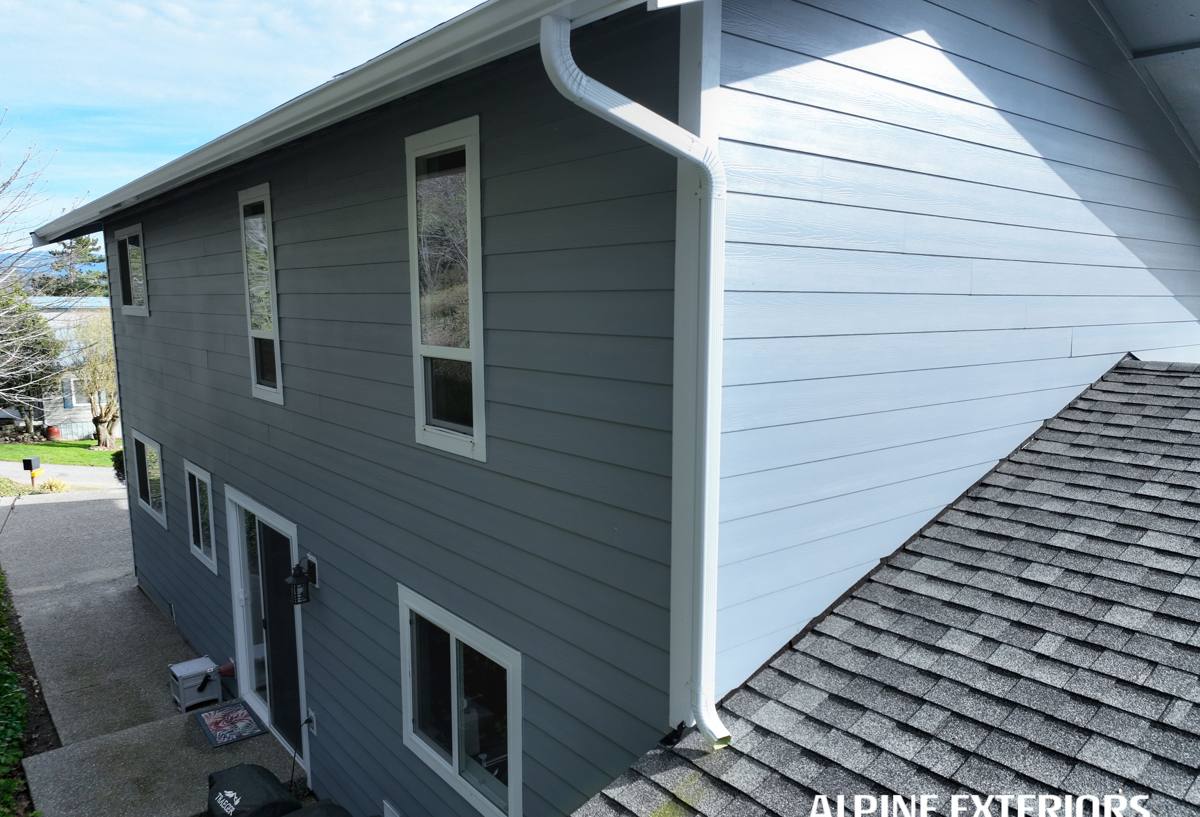
What Lynden's Climate Does to a Roof Over Time
Whatcom County's marine-influenced climate reaches inland to Lynden even without direct coastal exposure. The practical effects on a roof are consistent across the area:
- Driving rain: wind-driven rain during fall and winter storms pushes water sideways and uphill under poorly lapped materials, which is why flashing detail matters more here than in drier climates.
- Extended moss season: shaded roof sections, especially those under trees or facing north, can stay damp long enough for moss and moisture-loving growth to establish and hold water against the roof surface for months.
- Freeze-thaw swings: Lynden sees more frost and occasional hard freezes than areas closer to the water, which stresses roofing materials and fasteners that expand and contract repeatedly through winter.
- Humidity and slow drying: even without rain falling, the air stays damp enough that roofs here rarely get the fast, thorough drying out that roofs in sunnier climates get between storms.
None of this is unique to any one property — it's the baseline every roof in this part of Whatcom County has to handle. The question is whether the roofing system and the installation were built with that in mind.
Why Metal Holds Up Well Against This Pattern
Steel and aluminum panel roofing doesn't have the layered, granule-surfaced construction that asphalt shingles rely on, which removes a lot of the failure points that show up in this climate. Water runs off a continuous or long-run panel faster than it can off shingles, there's far less surface texture for moss spores to establish on, and a properly coated metal panel doesn't absorb moisture the way an aging shingle mat can. Over a 30-to-50-year service life, that adds up to fewer weak points for driving rain and standing moisture to exploit.
That said, metal roofing is not maintenance-free, and it's not automatically the right fit for every home or budget. We'll walk you through the honest trade-offs — cost, noise considerations with certain assemblies, and how it pairs with your home's existing roof pitch and structure — as part of any estimate, rather than assuming metal is the answer before we've looked at your roof.
Panel Types We Install
| System | Best For | What to Know |
|---|---|---|
| Standing seam | Homes wanting the longest service life and cleanest look | Concealed fasteners, raised seams shed water fastest, higher upfront cost |
| Exposed-fastener panel | Budget-conscious projects, outbuildings, additions | Lower cost, fasteners need periodic inspection and occasional re-torquing over time |
| Stone-coated steel | Homeowners wanting a traditional shingle or shake appearance | Textured surface can hold moss longer than smooth panel — needs the same wash schedule as any roof in shaded areas |
What a Correct Installation Actually Involves
Metal roofing punishes shortcuts more visibly than shingles do — a poorly cut panel or a missed flashing detail shows up as a leak or an unsightly seam, not a slow granule loss you might not notice for years. On a Lynden roof, the details that matter most are:
Underlayment and Moisture Barrier
We install a synthetic underlayment rated for the full exposure period the panels will see, with self-adhered membrane at eaves, valleys, and any low-slope transitions where wind-driven rain is most likely to find its way underneath the panel edge.
Flashing at Every Penetration
Chimneys, vents, skylights, and wall-to-roof transitions are where the vast majority of roof leaks start, on metal or shingle roofs alike. Each one gets custom-fitted flashing designed for that specific detail rather than a generic boot or a bead of sealant standing in for proper metalwork.
Fastening and Panel Layout
Panels are laid out and fastened to manage thermal movement — metal expands and contracts more than asphalt with temperature swings, and a system that doesn't account for that will eventually work fasteners loose or oil-can under stress. Concealed-fastener systems in particular need correct clip spacing to move properly without failing at the seams.
Ventilation
A roof deck that can't breathe traps moisture underneath the roofing material regardless of what's on top of it. We check and, where needed, correct ridge and soffit ventilation as part of a metal roofing project, not as an afterthought.
Metal Roofing vs. Asphalt Shingles in This Climate
| Factor | Metal Roofing | Asphalt Shingles |
|---|---|---|
| Typical service life | 30–50+ years | 20–30 years |
| Moss resistance | Higher — less surface texture to hold growth | Lower — granule surface and shingle laps trap moisture and debris |
| Water shedding in driving rain | Fast, especially with standing seam | Adequate when new, slows as granules wear |
| Upfront cost | Higher | Lower |
| Repair approach | Panel or seam-specific, requires matching material | Individual shingle replacement, easier partial repairs |
Neither option is wrong. Homeowners planning to stay long-term, or dealing with a heavily shaded roof that's had chronic moss problems, tend to get the most value out of switching to metal. Homeowners with a tighter budget or a roof geometry that doesn't favor long panel runs sometimes get better value staying with a well-installed asphalt system. We'll give you a straight answer either way.
Our Process on a Lynden Metal Roofing Project
- On-site inspection: we look at your existing roof deck, ventilation, flashing points, and any moss or moisture damage before recommending a system.
- Written estimate: panel type, underlayment, flashing scope, and timeline laid out clearly, with no vague allowances.
- Material staging and protection: landscaping, gutters, and siding are protected before tear-off begins.
- Tear-off and deck inspection: we check the deck itself for rot or soft spots once the old roofing is off — this is often where hidden moisture damage from a previous roof turns up.
- Underlayment, flashing, and panel installation: done in that order, with flashing details fitted before panels go down around them.
- Final walkthrough and cleanup: magnetic sweep for fasteners, full site cleanup, and a walkthrough so you know what to expect from the new roof.
What Maintenance Looks Like After Installation
Metal roofing needs less maintenance than shingles, but "less" isn't "none," especially with Lynden's moss season working against any roof surface year-round.
- Clear debris from valleys and around penetrations at least once a year, ideally after leaf drop in fall.
- Keep gutters clear so water isn't backing up against eave flashing during heavy rain.
- Rinse shaded or north-facing sections periodically if you notice moss or algae starting to establish — catching it early is far easier than removing an established growth.
- Have fastener torque checked on exposed-fastener systems every few years, since thermal cycling can gradually loosen screws over time.
- Trim back overhanging branches where practical to reduce shade, debris, and the constant dampness that feeds moss growth.
Why It Matters That We Already Work in Lynden
A roofing crew that works this part of Whatcom County regularly knows which roof orientations in this area tend to hold moss the longest, how local frost patterns affect fastener performance, and what flashing details actually get tested by a real Lynden winter rather than a manufacturer's install guide written for a different climate. That's not a marketing point — it's the difference between a roof that's engineered on paper and one that's built for the rain, damp, and moss season this area actually sees.
We also stand behind our own installation work, separate from the manufacturer's material warranty, so if a workmanship issue shows up, you're not left trying to figure out who's responsible.
Get a Straightforward Estimate
If you're weighing metal roofing for a home in Lynden, we're happy to take a look, walk you through what your specific roof needs, and give you an honest estimate with no pressure to sign anything on the spot. Use the form below to request a free estimate.