 Bellingham
 Lynden sits inland from Bellingham Bay, but the marine air off the water still reaches it — carrying moisture, a trace of salt, and enough dampness to keep moss and algae active for most of the year. Add the open farmland winds that sweep across this part of Whatcom County and the driving rain that blows in sideways during fall and winter storms, and you get a roof environment that's more demanding than it looks from the ground. A new roof installed here needs to be built for that specific combination, not just installed to the minimum code requirement.
Why Lynden Roofs Wear Differently
Homes closer to the water deal with more direct salt exposure, but Lynden's roofs still take a beating from the same weather system — just filtered through a few extra miles of farmland and river valley. That means near-constant humidity for much of the year, a moss season that can run eight months or longer in shaded or north-facing sections, and wind-driven rain that finds its way under poorly sealed flashing and worn shingle edges. Freeze-thaw cycles are less severe here than in colder climates, but they still happen enough to widen existing cracks and lift already-loose material.
None of this means Lynden roofs fail faster than roofs anywhere else. It means the details — underlayment, ventilation, flashing, and material choice — matter more here than they would in a dry climate, because there's less margin for error before moisture starts finding its way in.
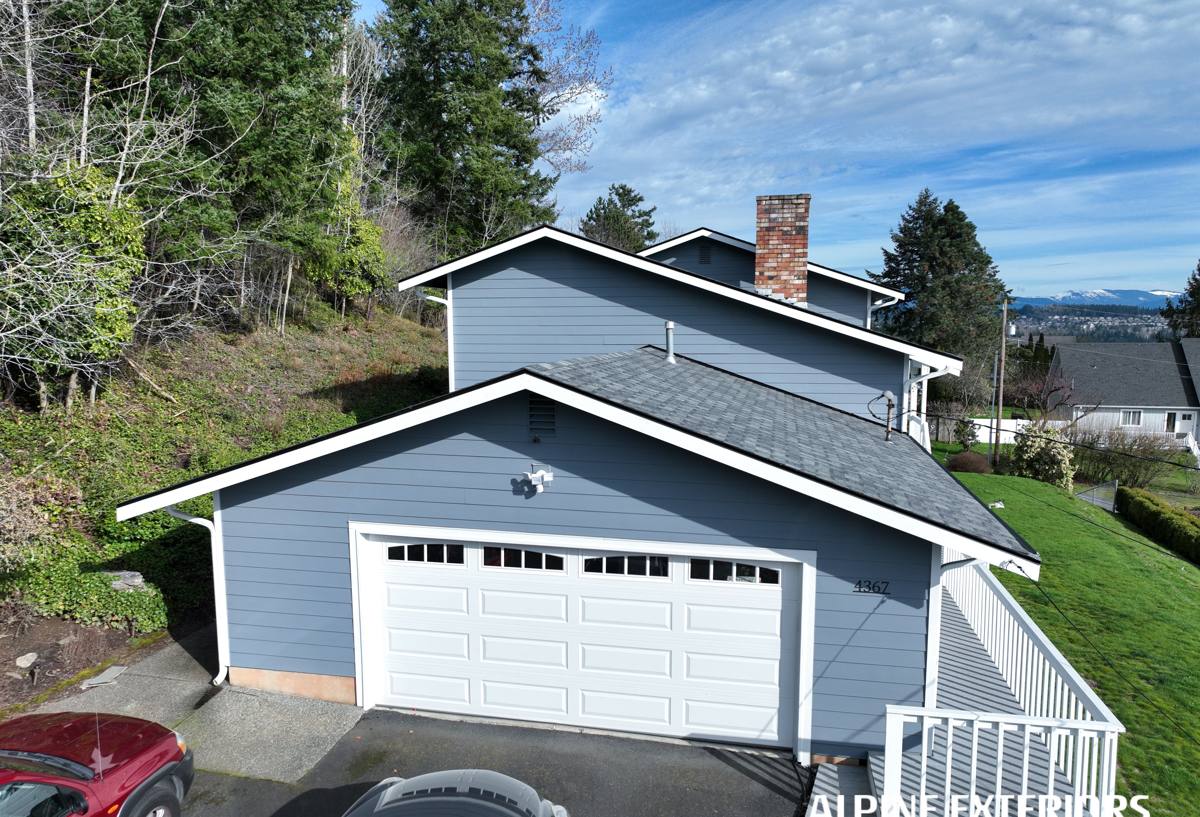
Signs Your Lynden Home Needs a New Roof
Roofs rarely fail all at once. They give warning signs first, and catching them early is usually the difference between a straightforward replacement and a rescue job involving rotted decking or interior damage.
- Granules collecting in gutters or at the base of downspouts
- Shingles that are curling, cupping, or losing their edges
- Dark streaking or thick moss growth, especially on north-facing slopes
- Soft spots or noticeable sagging when walking the roof or viewing from the attic
- Daylight visible through the roof deck from inside the attic
- Water stains on ceilings or upper interior walls after heavy rain
- A roof that's 20-25+ years old and has never been fully replaced, only patched
- Rising energy bills tied to poor attic ventilation or insulation gaps
What a Correct New Roof Installation Actually Involves
A new roof is more than laying down shingles over what's already there. Done correctly, it's a system — every layer depends on the one below it, and skipping steps is exactly how a roof that looks fine for two years starts leaking in year three.
Tear-Off and Deck Inspection
We remove the old roofing down to the deck rather than layering over it. That's the only way to actually see the condition of the plywood or OSB underneath — soft, delaminated, or water-stained sections get replaced before anything new goes down. Covering over a compromised deck just hides the problem under a new roof.
Underlayment and Moisture Barriers
Given how much rain this area sees, underlayment isn't a place to cut corners. We use synthetic underlayment across the full deck for tear and water resistance, with self-adhering ice-and-water shield membrane at the eaves, valleys, and any roof penetrations — the spots where wind-driven rain is most likely to work its way underneath the shingle layer.
Ventilation
A roof needs balanced intake and exhaust ventilation to keep the attic dry and the shingles at a stable temperature. Without it, trapped moisture condenses on the underside of the deck, which accelerates rot and gives moss and mold exactly the damp environment they need to take hold from underneath.
Flashing Details
Step flashing at walls, counter-flashing at chimneys, valley flashing, and properly sealed pipe boots are where most roof leaks actually originate — not in the open field of shingles. These get replaced as part of the job, not reused from the old roof, since flashing takes the brunt of wind-driven rain.
Fastening and Wind Rating
Shingles are fastened according to the manufacturer's high-wind pattern, not the minimum spec, given how exposed some Lynden properties are on open farmland with little windbreak.
Choosing the Right Roofing Material for This Climate
There's no single "best" roofing material — the right choice depends on your home, your budget, and how much long-term maintenance you're willing to take on. Here's how the common options stack up against Whatcom County's rain and moss exposure.
| Material | How It Handles Rain & Moss | Typical Lifespan | Maintenance Load |
|---|---|---|---|
| Architectural asphalt shingles (algae-resistant) | Good with algae-resistant granules; needs clean gutters and periodic moss removal | 25-30 years | Low to moderate |
| Standing seam metal | Sheds water and moss growth very well due to smooth, sloped surface | 40-50+ years | Low |
| Cedar shake | Attractive but absorbs moisture and needs regular treatment to resist rot and moss in a wet climate | 20-30 years with upkeep | High |
| Composite/synthetic shingle | Engineered for moisture resistance; performance varies by manufacturer | 30-50 years | Low to moderate |
For most Lynden homes, a quality architectural asphalt shingle with algae-resistant granules offers the best balance of upfront cost, appearance, and performance in this climate. Metal is worth considering for homes with steeper pitches or owners who want to minimize long-term moss maintenance, even at a higher upfront cost. We'll walk through the honest trade-offs for your specific roof rather than push whatever happens to be on the truck.
Cost Factors for a New Roof in Lynden
Every roof is priced individually, but the same handful of factors drive most of the variation we see on local jobs.
| Factor | Why It Affects Price |
|---|---|
| Roof size and pitch | More surface area and steeper slopes mean more material, labor, and safety setup |
| Number of existing layers | Tear-off cost and time increase with each layer of old roofing removed |
| Decking condition | Rotted or soft plywood/OSB found during tear-off requires replacement before install |
| Material selection | Asphalt, metal, and composite options carry different material and labor costs |
| Ventilation upgrades | Adding proper intake/exhaust venting where none existed adds material and labor |
| Roof complexity | Valleys, dormers, chimneys, and skylights all add flashing work and time |
Our Installation Process, Start to Finish
- On-site inspection and estimate — we walk the roof and attic, document the actual condition, and give you a written estimate with no pressure to sign on the spot.
- Material selection — we go over options and trade-offs for your budget and roof type, based on what actually performs well in this climate.
- Scheduling around the weather — we plan tear-off days around dry stretches whenever possible, since an open roof deck in Whatcom County rain is not something we leave exposed longer than necessary.
- Tear-off and deck inspection — old roofing comes off, the deck is inspected, and any damaged sections are repaired or replaced before anything new goes down.
- Underlayment, flashing, and ventilation installed — the moisture-management layers go in first, since they matter more to long-term performance than the shingles themselves.
- Roofing material installed to manufacturer spec — including the high-wind fastening pattern appropriate for exposed properties.
- Full site cleanup — including a magnetic sweep for stray nails and debris removal, so your property and driveway are left clean.
- Final walkthrough and warranty paperwork — we review the finished roof with you and make sure manufacturer warranty registration is handled correctly.
Why a Local Crew That Already Works in Lynden Matters
A roof installed by a crew unfamiliar with this specific area is still just a roof — but a crew that already works Whatcom County knows which details actually matter here: how exposed a given property is to farmland wind, how long moss stays active on shaded slopes through the wet months, and what county permitting and inspection actually require before we ever set a ladder against the house. That familiarity shows up in fewer surprises during the job and faster response if something needs attention after the fact — we're not driving in from out of the area to handle a warranty callback.
It also means realistic scheduling. We're not promising a tear-off date during a stretch of forecasted heavy rain just to fill the calendar, because we've seen what an exposed deck looks like after an unexpected Whatcom County downpour.
Maintaining Your New Roof Through the Moss Season
A correctly installed roof still needs basic upkeep to hit its full lifespan in this climate. Keep gutters clear so water isn't backing up under the shingle edge, especially heading into fall. Have moss growth treated or gently removed before it thickens — a light annual treatment is far less invasive than scraping years of buildup off shingles later. And have the roof looked at after any major windstorm, since a lifted shingle or damaged flashing detail is a quick, inexpensive fix if it's caught early, and a much bigger repair if it's left to leak all winter.
If your Lynden home is due for a new roof, or you're just not sure whether what you're seeing is normal wear or something that needs attention, we're happy to take a look. Reach out for a free, no-pressure estimate using the form below — we'll give you a straight assessment and a clear price, no obligation.