 Bellingham
 Siding Repair Built for Lynden's Climate, Not a Generic Patch Job
Lynden sits inland from Bellingham Bay in the heart of Whatcom County, but "inland" doesn't mean dry. Homes here still take a beating from the same weather pattern that defines this whole corner of Washington: long stretches of low-intensity rain, heavy overnight dew, short winter days that keep siding damp for hours at a time, and a moss and algae season that can run most of the year in shaded spots. Add wind-driven rain during winter storms and the seasonal freeze-thaw cycles that hit exposed north- and west-facing walls, and you have a climate that is genuinely hard on exterior siding — even siding that looks fine from the curb.
A lot of siding repair work in this area isn't glamorous. It's not about a single dramatic problem; it's about small, moisture-related failures that compound over years. Our job on a Lynden repair call is to figure out what's actually happening behind the siding, not just patch what's visible on the surface.
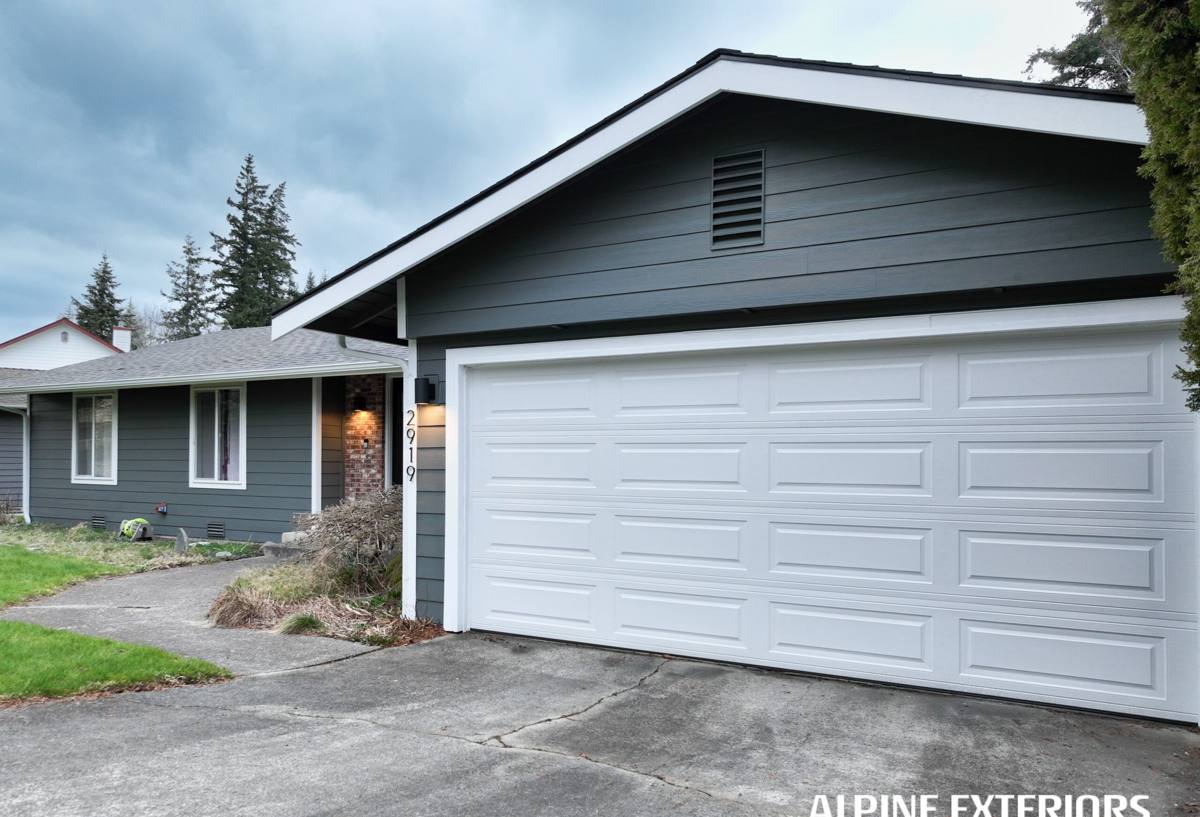
What Whatcom County Weather Does to Siding Over Time
Moisture That Never Fully Dries
Bellingham-area summers are mild and winters are wet and mild too — there's rarely a stretch of hot, dry weather long enough to fully dry out siding that's taken on moisture. That matters because most siding failure isn't caused by one big rainstorm; it's caused by materials that stay slightly damp for weeks at a time, season after season. Wood-based products swell, delaminate, or rot from the inside. Seams and end cuts that weren't sealed correctly become entry points that never get a chance to dry.
Moss, Algae, and Constant Shade
Mature trees, cloud cover, and shaded exposures mean a lot of Lynden properties have at least one wall that rarely sees direct sun. That's exactly where moss and algae take hold fastest. Beyond the cosmetic issue, moss holds moisture directly against the siding surface, which accelerates rot in wood products and can stain or degrade paint finishes on other materials.
Wind-Driven Rain and Exposure
Winter storms coming off the water bring rain at an angle, not straight down. That drives water up under laps, into poorly caulked joints, and behind trim that was installed with gaps. Corners, window and door surrounds, and the bottom courses near grade take the worst of it.
Signs Your Lynden Home Needs Siding Repair
Most homeowners don't notice siding problems until they're significant, because early damage hides behind the siding itself. These are the signs worth acting on before they spread:
- Soft or spongy spots when you press on the siding, especially near the bottom courses or below windows
- Visible cracking, splitting, or buckling in individual boards or panels
- Persistent moss or algae growth that keeps returning after cleaning
- Peeling or bubbling paint, which often signals moisture trapped underneath rather than a simple paint failure
- Gaps opening up at seams, corners, or trim that weren't there a year or two ago
- Staining or discoloration streaking down from a joint, nail head, or window flashing
- A musty smell near an exterior wall inside the house, which can point to moisture intrusion behind the siding
- Warping or wavy panels, particularly on walls that get the most rain and wind exposure
Any one of these on its own might be minor. Several together, or any sign near a window, door, or roofline, usually means water has been getting in for a while.
What a Correct Siding Repair Actually Involves
A repair that only addresses the visible damage often fails again within a season or two. Done correctly, siding repair in a climate like ours involves a few steps that aren't optional:
1. Find the Real Source
Damaged siding is usually a symptom, not the root cause. We look at flashing, caulking, grade slope, gutter overflow, and how water actually moves across that section of wall before deciding what to replace.
2. Check What's Behind the Siding
If moisture has been present for any length of time, we check the house wrap, sheathing, and framing in the affected area. Replacing siding over compromised sheathing just hides the problem and guarantees a repeat call later.
3. Match Materials and Reveal Correctly
Repairs need to match the existing siding's profile, reveal, and fastening pattern — not just the general look. A mismatched board line or an inconsistent reveal is one of the most common signs of a rushed repair.
4. Rebuild the Water Management, Not Just the Surface
Proper flashing, correctly lapped house wrap, and sealed penetrations matter more to long-term performance than the siding material itself. A repair that skips this step is cosmetic, not structural.
Repair or Replace? How We Make the Call
Not every repair call ends in a repair, and not every homeowner needs a full re-side. The right answer depends on how widespread the damage is and what's causing it.
| Factor | Repair Is Usually Enough | Replacement Should Be Considered |
|---|---|---|
| Extent of damage | Isolated to one wall, corner, or a handful of boards | Recurring across multiple walls or exposures |
| Sheathing condition | Dry and sound once siding is pulled back | Soft, delaminating, or showing rot |
| Age of existing siding | Newer material with clear localized cause | Original siding near or past its expected service life |
| Product type | Fiber cement or similar durable material still performing well elsewhere | Materials prone to systemic moisture issues (older wood composite, damaged vinyl runs) |
| Root cause | A fixable detail — one bad flashing, one open seam | A design or material issue affecting the whole elevation |
We'll tell you honestly which category your home falls into. A repair-only recommendation isn't us trying to avoid a bigger job — it's what the house actually needs.
Our Repair Process for Lynden Homes
The process is straightforward, but each step matters:
- Inspection. We walk the exterior, check the areas you're concerned about, and probe for hidden moisture or soft sheathing.
- Diagnosis. We identify the actual source — flashing, caulk failure, grading, gutter issue — not just the symptom.
- Written scope. You get a clear explanation of what needs to happen and why, including whether it's a true repair or a case for partial/full replacement.
- Repair work. Damaged material comes out, the underlying assembly gets corrected if needed, and new material goes in matched to the existing siding.
- Final check. We confirm flashing laps correctly, seams are sealed where they should be, and the finished repair blends with the surrounding siding.
Why We Only Repair and Install James Hardie Fiber Cement
When we're called out to repair siding in Lynden, what we find behind the material tells a consistent story: fiber cement holds up to this climate far better than wood-based or composite alternatives, especially in the shaded, moisture-prone spots that cause the most trouble. That's a large part of why we standardized on James Hardie as the only siding product we install.
James Hardie's fiber cement is non-combustible and dimensionally stable, so it doesn't swell, warp, or delaminate the way wood and wood-composite products can when they stay damp for extended periods — which, in this climate, is often. The HZ5 product line is engineered specifically for climates like ours, with freeze-thaw cycling and sustained moisture exposure in mind. The factory-applied ColorPlus finish is baked on under controlled conditions, so it resists the fading and peeling that field-applied paint is prone to, and it holds up better against the moss and algae growth that's constant in shaded Whatcom County yards. It also carries a strong transferable warranty backed by the manufacturer, not just the installer.
We don't install LP SmartSide, vinyl, Cemplank, Allura, primed spruce, or cedar. Each of those has real strengths, but each also comes with a maintenance burden, a moisture vulnerability, or an installation sensitivity that we've decided isn't worth the trade-off for homes in this specific climate. When we repair a home that has one of those products, we'll always give you an honest assessment of what a Hardie replacement would change — but we won't push it if a straightforward repair is genuinely the right call.
Why Hiring a Crew That Already Works in Lynden Matters
Siding repair is detail work, and local experience changes the quality of that work in ways that are easy to overlook:
- We know which exposures fail first. After enough repair calls in Whatcom County, patterns become obvious — which wall orientations, roof details, and grading conditions consistently cause problems.
- We carry matching material and know current product lines. Tracking down a matching board profile or color is faster when you already work with the same suppliers regularly.
- We understand local permitting and code requirements. Repairs that cross into larger scope can trigger permitting; a local crew knows when that applies.
- We're not driving in from out of the area for a callback. If something needs a follow-up look after a storm, a local crew can actually get back out to your property promptly.
A contractor who only occasionally works this area may not recognize the early warning signs the way a crew that repairs Whatcom County siding regularly will.
Cost Factors to Expect
Every repair is different, so we won't quote a number without seeing the damage in person. What generally drives cost up or down:
| Factor | Effect on Cost |
|---|---|
| Number and location of damaged boards | Small, accessible repairs cost less than repairs on multiple elevations or hard-to-reach areas |
| Hidden moisture or sheathing damage | Increases cost if sheathing or framing needs to be addressed, not just siding |
| Material matching | Matching an older or discontinued product can add time and cost versus a current Hardie profile |
| Access and height | Second-story or steep-roofline repairs require more setup and labor |
| Root-cause fixes | Correcting flashing, caulking, or drainage issues adds a modest cost but prevents repeat repairs |
We'll walk you through exactly what's driving the price on your specific repair before any work starts — no surprises added later.
Get an Honest Look at Your Siding
If you're seeing soft spots, recurring moss, cracked boards, or paint that keeps failing in the same spot, it's worth having someone look at it before winter rain makes it worse. We'll give you a straightforward assessment of what's causing the damage, whether it calls for a repair or something more, and a clear estimate with no pressure to do more work than your home actually needs. Fill out the form below to schedule a free estimate for your Lynden home.