 Bellingham
 Siding Replacement in Lynden: A Different Job Than a Repair
Lynden sits inland from Bellingham Bay, but it still sits squarely inside the marine weather system that shapes exterior work across Whatcom County — salt-tinged air moving off the water, driving rain that hits walls sideways more often than it falls straight down, and a moss season that can run most of the calendar year on shaded, north-facing walls. Those three conditions don't just wear siding out; over enough years they work their way past the surface and start affecting the sheathing and framing underneath. That's the line between a repair and a full replacement, and it's the reason this page exists as its own topic rather than a subsection of general siding work.
A siding repair patches a localized problem — a cracked board, a damaged corner, a section that took storm damage. A full replacement is a different scope entirely: every course of old material comes off, the wall assembly gets inspected and corrected, and a new system goes up from the weather barrier out. Homeowners in Lynden often aren't sure which one they actually need when they first notice a problem, so this page walks through both the signs that point toward replacement and what a correct replacement job involves once you commit to one.
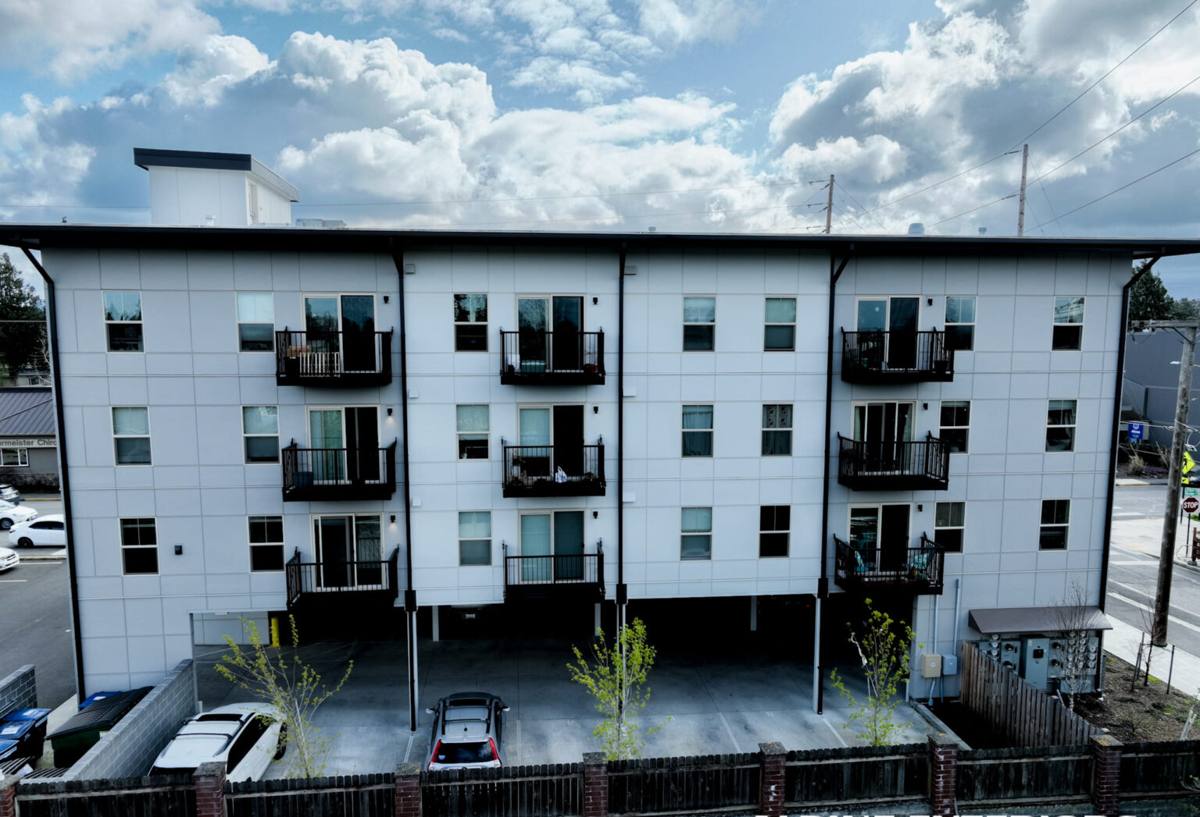
Signs a Lynden Home Needs Full Replacement, Not a Patch
Some damage is obviously localized. Other damage looks minor on the surface but tells you the whole wall system is past its useful life. The distinction usually comes down to how widespread the problem is and whether it's isolated to the siding itself or has already reached the substrate underneath.
Signs That Usually Mean Repair Is Enough
- A single cracked or impact-damaged board, with no soft spots nearby
- Isolated caulking failure around one window or trim piece
- Minor fading or chalking on an otherwise sound, well-fastened wall
Signs That Usually Mean Full Replacement
- Soft, spongy, or crumbling siding in multiple areas, not just one spot
- Moss or dark staining that returns within weeks of cleaning, especially spread across several walls
- Visible warping, buckling, or separation at multiple seams
- Musty odors or staining on interior walls that back up to exterior siding
- Siding original to a home that's 20-25+ years old, with no documented replacement
- Rot discovered at even one spot during an inspection — because if moisture reached the sheathing in one place, it's usually reached it in others you can't see yet
That last point is the one homeowners underestimate most. Fiber cement, wood, and engineered wood siding can all look fine from ten feet away while the sheathing behind them is already compromised. We won't recommend a full tear-off just to sell a bigger job — but we also won't recommend a patch over siding that's masking wall damage, because that just delays a more expensive problem.
What Whatcom County's Climate Does to Aging Siding
Salt Air
Lynden isn't waterfront, but marine air still moves across this part of the county on a regular basis. Over years, that salt content accelerates corrosion on fasteners, flashing, and lower-grade trim hardware faster than a dry inland climate would. Old siding jobs installed with standard fasteners, rather than corrosion-resistant hardware, often show that wear first at nail heads and trim joints.
Driving Rain
Wind-driven rain is the detail that separates siding that fails in five years from siding that lasts twenty-five. Rain that hits a wall at an angle pushes moisture into seams, laps, and window flashing in a way straight-down rainfall never would. Older siding systems, or ones installed without careful attention to lap direction and flashing overlap, tend to show water intrusion here first — usually well before the damage becomes visible from the outside.
A Long Moss and Mildew Season
Mild temperatures, shade from mature trees, and near-constant moisture add up to a moss season that runs most of the year on shaded walls across Whatcom County. Any siding material that's even slightly porous, or that holds moisture against the substrate rather than shedding it, becomes a growth surface over time. On a full replacement, this is one of the reasons the choice of replacement material matters as much as the installation quality.
Why We Replace Old Siding With James Hardie Fiber Cement Only
When a Lynden home is down to bare sheathing, that's the moment to install a system built for this climate rather than repeating whatever was there before. We install James Hardie fiber cement exclusively on every replacement job — not a range of options at different price points, one system we fully stand behind.
- Non-combustible core: Fiber cement doesn't feed a fire the way wood-based siding can, which matters for both safety and insurance considerations on a full replacement.
- Factory-applied ColorPlus finish: The color is baked on under controlled factory conditions rather than brushed on in the field, holding up far longer against fading and moisture than site-applied paint on the old siding it's replacing.
- Climate-engineered HZ product lines: Hardie's HZ5 formulation is built for regions with significant moisture exposure and freeze-thaw cycling, which fits Lynden and the rest of northern Whatcom County closely.
- Dimensional stability: Fiber cement doesn't swell, cup, or warp the way engineered wood can after repeated wetting cycles — a common cause of the buckling that triggers a replacement call in the first place.
- Strong transferable warranty: Hardie backs the product with one of the more robust warranty structures in the industry, provided the installation follows their spec, which matters on a full-value investment like a replacement.
We don't install LP SmartSide, vinyl siding, Cemplank, Allura, primed spruce, or cedar as replacements. Each has a legitimate place in the market and homeowners who are satisfied with them. Our position is a professional one: on a job where a homeowner is paying for a full tear-off and reinstall, we'd rather put up one system engineered for this climate than offer a cheaper option that shifts more maintenance risk onto the homeowner a few years down the line.
What Typically Comes Off vs. What Goes Up
| Existing Material Often Being Replaced | Common Reason for Replacement | What We Install Instead |
|---|---|---|
| Original cedar or wood siding | Ongoing paint failure, rot at fastener points and butt joints | James Hardie lap or shingle siding, ColorPlus finish |
| Vinyl siding | Warping, fading, cracked panels, water tracking behind seams | James Hardie lap siding, HZ5 formulation |
| Aging engineered wood (LP-style) siding | Swelling or delamination at cut edges and fastener points | James Hardie panel or lap siding |
| Older fiber cement, poorly installed | Improper fastening, clearance, or flashing at install — not material failure | James Hardie reinstalled to full manufacturer spec |
What a Correct Siding Replacement Job Involves
Inspection Before Anything Is Quoted
A real siding replacement estimate starts with a walk of the whole house, not a per-square-foot guess. We look at how sun, shade, and wind exposure vary across the different walls, note visible warning signs, and get a sense of what's likely underneath before old material comes off — because that changes both scope and price.
Tear-Off and Sheathing Inspection
This is the step that determines whether a replacement stays on budget or turns up a surprise. Once the old siding is off, we inspect the sheathing for rot, soft spots, or prior water damage before anything new goes up. Covering damaged sheathing with fresh siding just hides a problem that keeps getting worse behind the wall — we'd rather find it now, while the wall is already open, than have it resurface as a bigger repair in a few years.
Weather Barrier and Flashing
Most siding failures in this region trace back to water getting behind the cladding, not through it. The house wrap, window flashing, and every wall penetration get careful attention at this stage, because it's the step that's easiest to rush and hardest to inspect once the new siding is up. We treat it as a fixed part of the process, not an optional upgrade.
Installation to Manufacturer Spec
James Hardie's warranty depends on the installation following their published specifications — correct fastener spacing and type, proper clearance above grade and roofline, and correct field-cutting and sealing practices at every joint. We install to that spec as the baseline on every job, because a warranty is only as good as the installation behind it.
Cleanup, Disposal, and Final Walkthrough
A full tear-off generates a real amount of debris, and hauling old siding, house wrap, and any damaged sheathing off-site is part of the job, not a separate charge that shows up later. We walk the finished work with the homeowner, cover basic care and maintenance expectations, and confirm the completed job matches what was estimated.
Permitting and Timeline for a Lynden Replacement
Full siding replacement in this part of Whatcom County typically requires a permit, since the scope involves removing material down to the sheathing rather than a cosmetic repair. Permitting timelines depend on the local jurisdiction's current workload as much as the job itself, so it's worth building that into the overall schedule rather than assuming work can start the week after an estimate. We handle the permitting process as part of the project so homeowners aren't left navigating that step alone. Once permitted, the physical work on an average single-family home typically runs from several days to a couple of weeks depending on square footage, trim complexity, and what turns up once the old siding comes off — weather windows in this region also factor into scheduling, since tear-off work needs a reasonably dry stretch to keep the wall assembly protected between steps.
What Affects Siding Replacement Cost
| Factor | Why It Matters |
|---|---|
| Total square footage and number of stories | Drives material quantity and labor time; multi-story homes add scaffolding and access complexity |
| Trim and detail complexity | Windows, dormers, and architectural detail all add cutting and flashing time beyond flat wall area |
| Sheathing condition once old siding is off | Rot or soft spots found during tear-off require repair before new siding goes up |
| James Hardie product line and color selected | Lap, shingle, and panel profiles, plus ColorPlus vs. field-painted options, vary in material cost |
| Disposal volume | More layers of old material or heavier substrates increase hauling and disposal cost |
Exact numbers depend on the specific home, which is why we walk each property before giving a real estimate rather than quoting off a generic price list. Broad ranges exist industry-wide, but a number that isn't tied to an actual inspection of your walls and sheathing isn't one you should plan a budget around.
A Simple Way to Think About Repair vs. Replacement
- If the problem is isolated to one board, one corner, or one recent impact — repair is usually the right call
- If damage shows up in multiple spots, or moss and staining keep returning across several walls — that points toward replacement
- If your siding is original to a home built more than two decades ago — a full inspection before deciding is worth the time even if nothing looks obviously wrong yet
- If rot turns up anywhere during an inspection — treat that as a signal to check the rest of the wall system, not just patch the spot found
- When in doubt, get an honest opinion before committing to either path — a contractor who only offers replacement work has an obvious incentive to skip the repair option, so it's worth asking directly which one they'd choose for their own house
Why a Crew That Already Works Lynden Matters
A crew that works across Whatcom County day to day sees how salt air, wind-driven rain, and moss actually behave on real houses over a full year, not just how a material performs on a spec sheet. That repeated, local exposure shapes practical decisions on a replacement job — which wall orientations on a Lynden property stay wet longest, where extra flashing attention pays off, and which install-day details are worth the time so a homeowner isn't dealing with a callback two winters later. Lynden's mix of open farmland and tree-sheltered residential lots also means moisture and shade patterns vary more from property to property than in a uniformly coastal town, and a crew with local experience accounts for that instead of applying the same approach to every house on the block.
If you're weighing whether your Lynden home needs a siding repair or a full replacement, we're glad to take a look and give you a straightforward, no-pressure assessment — including an honest answer if repair is genuinely the better call. Reach out using the form below to schedule a free estimate.