 Bellingham
 Ferndale Roofs Work Harder Than Most
Ferndale sits close enough to the water and open farmland that its roofs take on weather most inland towns never deal with. You get salt-laden air drifting in off the bay, wind-driven rain that finds its way under poorly lapped materials, and a wet season that runs long enough for moss to get a real foothold on shaded or north-facing slopes. None of that is unusual for Whatcom County, but it does mean a roof built to a generic spec sheet won't last as long here as one that's actually designed around these conditions.
A new roof installation is one of the few home improvements where doing it right the first time matters more than almost anything else you'll pay for. Get the underlayment, flashing, and ventilation wrong, and you won't see the consequences for a year or two — by which point moisture has already worked its way into the decking and framing. Get it right, and the roof should be the last thing you worry about for decades.
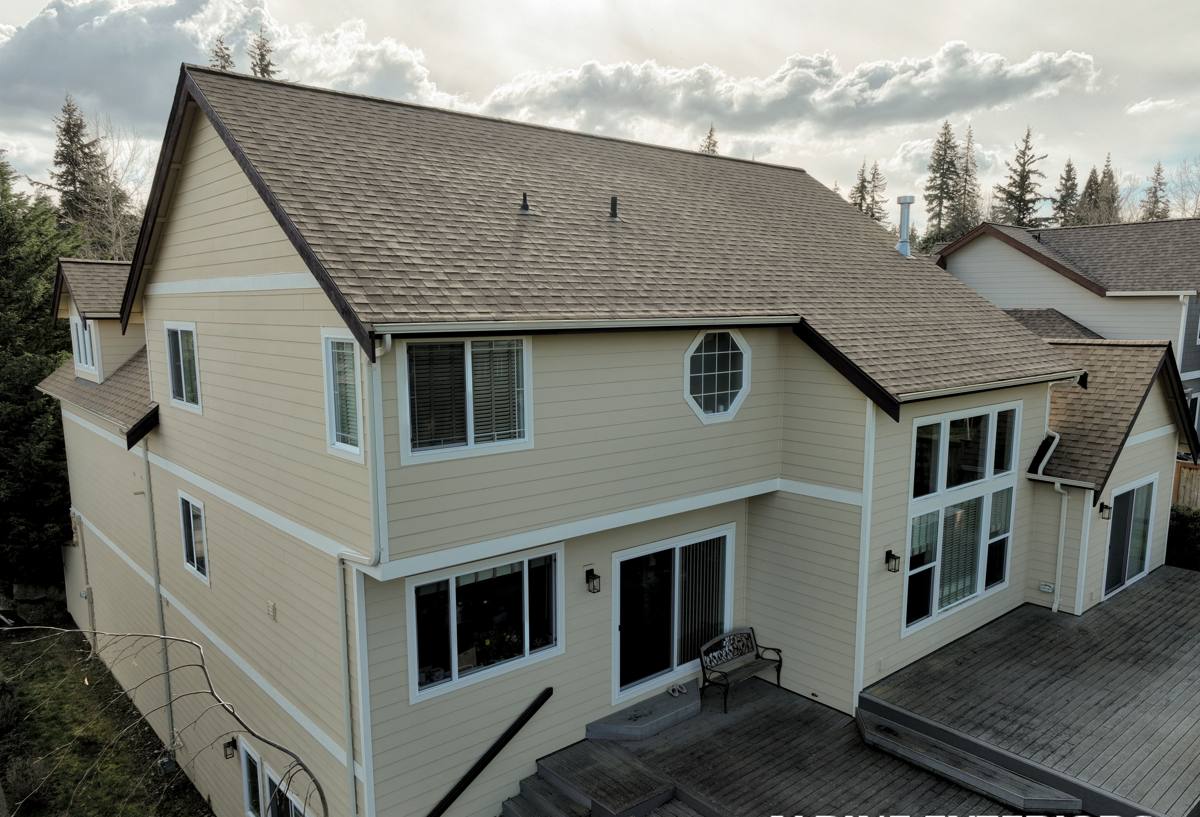
Signs a Repair Won't Cut It Anymore
Not every roofing problem calls for a full tear-off. But there's a point where patching individual issues stops making financial sense and a new roof becomes the more honest recommendation. Common signs we look for on Ferndale homes include:
- Shingles that are cupping, curling, or losing their granules in patches rather than just at the edges
- Soft spots or sagging in the roof deck when walked, which usually means water has reached the wood
- Moss that keeps returning within a season or two of cleaning, especially on shaded slopes
- Daylight visible through the attic roof boards, or damp insulation after a heavy rain
- A roof that's already past 20-25 years old for asphalt composition, regardless of how it looks from the ground
- Repeated flashing leaks around chimneys, skylights, or valleys that keep coming back after repair
If your roof is showing two or more of these, a replacement is usually the more cost-effective path than continuing to chase individual leaks.
What a Correct Installation Actually Involves
A new roof is more than laying new shingles over what's already there. In this climate, the layers underneath the visible surface are what determine whether the roof lasts 15 years or 35. A proper installation for a Ferndale home includes:
Tear-Off and Deck Inspection
We remove the old roofing down to the deck rather than layering over it. This lets us actually see the plywood or plank sheathing underneath and replace any sections that have soaked up moisture or gone soft — something you can't catch or fix with an overlay.
Ice and Water Barrier at Vulnerable Points
Valleys, eaves, and areas around chimneys and skylights get a self-adhering waterproof membrane before anything else goes down. These are the spots where wind-driven rain is most likely to work its way backward under standard shingles, and it's cheap insurance against the kind of slow leak that's hard to trace.
Synthetic Underlayment Across the Full Deck
The rest of the roof gets a synthetic underlayment rather than old-style felt paper. It holds up better to the extended wet stretches typical of a Whatcom County winter and doesn't tear as easily during installation or in wind before the shingles are on.
Flashing Done Right, Not Reused
Flashing around chimneys, walls, and roof-to-wall transitions gets replaced with new material formed to fit, not bent back into shape and reinstalled. Reused flashing is one of the more common causes of leaks we get called out to fix on other contractors' work.
Proper Nailing and Exposure
Shingles are installed to the manufacturer's nailing pattern and exposure specs — not a faster pattern that saves labor time but voids the warranty and leaves the roof more vulnerable to wind uplift, which matters on a site exposed to open wind off the water or fields.
Ventilation: The Part Homeowners Rarely Ask About
A roof that's properly vented lasts longer, plain and simple. Trapped heat and moisture in an attic accelerate shingle aging from underneath, and in a climate with as much sustained damp air as Ferndale gets, poor ventilation also invites condensation on the underside of the deck — which shows up later as rot or mold that has nothing to do with the shingles themselves. We check intake at the soffits and exhaust at the ridge as part of every new roof, and we'll tell you honestly if your attic needs additional venting to balance the system. It's a relatively small add-on cost during a reroof and a much bigger one to retrofit later.
Choosing a Roofing Material for This Climate
There's no single "best" roofing material — the right choice depends on your budget, your home's style, and how much long-term maintenance you're willing to do. Here's how the common options stack up for a Ferndale property:
| Material | Typical Lifespan | How It Handles Salt Air & Moss | Maintenance |
|---|---|---|---|
| Architectural asphalt shingle | 25-30 years | Good with proper algae-resistant granules; moss still needs periodic cleaning on shaded slopes | Low — occasional moss/debris removal |
| Standing seam metal | 40-50+ years | Excellent shedding of moisture and moss resistance; coastal-grade coatings hold up well to salt air | Very low, but higher upfront cost |
| Cedar shake | 20-30 years with upkeep | Attractive but absorbs moisture; needs consistent maintenance to resist moss and rot in this climate | High — regular treatment and inspection |
| Synthetic composite shake | 30-40 years | Mimics cedar's look without the moisture absorption; holds up well to damp, mossy conditions | Low to moderate |
For most homes in this area, a quality architectural shingle with algae-resistant granules is the practical middle ground — it balances upfront cost against realistic maintenance expectations. Where budget allows, standing seam metal is worth serious consideration for anyone who wants to minimize moss issues and long-term upkeep.
What Drives the Cost of a New Roof
Every roof is priced around a handful of factors, and understanding them helps you evaluate quotes honestly rather than just comparing bottom-line numbers.
| Factor | Why It Matters |
|---|---|
| Roof size and number of stories | More square footage and steeper access add labor and material time |
| Pitch and complexity | Steep slopes, multiple valleys, and dormers all add cutting, flashing, and safety time |
| Deck condition | Rotten or soft sheathing found during tear-off needs replacement before new roofing goes down |
| Material choice | Asphalt, metal, and shake carry very different material and labor costs |
| Ventilation upgrades | Adding or correcting intake/exhaust venting is easiest to do during a full reroof |
| Tear-off layers | Removing multiple existing layers of old roofing adds disposal and labor cost |
We walk every roof and give a written estimate that breaks these out, rather than a single number with no explanation behind it. If deck repair turns out to be needed once tear-off starts, we'll show you the damaged sections and talk through the cost before proceeding — no surprise change orders.
How Our Process Works
- On-site inspection. We walk the roof and attic, check for soft spots, ventilation issues, and the condition of flashing and edges.
- Written estimate. You get a clear scope of work and pricing, including material options, before any commitment.
- Material selection. We help you weigh cost, appearance, and long-term maintenance against your budget and how long you plan to stay in the home.
- Scheduling around weather. Given how much rain this region gets, we plan installation windows carefully and keep the deck protected if weather turns mid-project.
- Tear-off and deck inspection. Old roofing comes off, the deck gets inspected, and any rotten sheathing is replaced.
- Installation. Ice and water barrier, underlayment, flashing, ventilation, and the finish material go on in that order, to spec.
- Final walkthrough. We review the finished roof with you, clean up the site thoroughly, and confirm everything matches what was quoted.
Why It Matters That We Already Work in Ferndale
A crew that regularly works Whatcom County roofs isn't guessing at how this climate behaves — they've seen which slopes hold moss year after year, which flashing details actually stop wind-driven rain, and how salt air affects fasteners and coatings over time near the water. That local familiarity shows up in small decisions during installation that a generic out-of-area crew might not think to make: extra attention to north-facing valleys, corrosion-resistant fastener choices, and ventilation sized for the real moisture load this area sees, not a national average.
It also matters for the practical side of the job — knowing local permitting requirements, being available for warranty follow-up without a long drive, and having a track record in the community rather than a one-time job and a phone number that changes.
Keeping Your New Roof in Good Shape
A well-installed roof still benefits from basic upkeep, especially with the moss pressure common in this region. After installation, we recommend:
- Clearing gutters and downspouts at least twice a year so water isn't backing up under the roof edge
- Having moss growth treated or removed promptly on shaded or north-facing sections before it spreads
- Trimming back overhanging branches that keep sections of the roof damp and shaded
- Scheduling a visual inspection after major windstorms to check for lifted or damaged shingles
- Watching for any staining on interior ceilings, which is often the first visible sign of a flashing or vent issue
None of this is complicated, but staying on top of it is what lets a well-installed roof actually reach the upper end of its expected lifespan instead of the lower end.
If your roof is showing its age or you're just not sure whether repair or replacement makes more sense, we're happy to take a look and give you a straight answer. Use the form below to request a free, no-pressure estimate for your Ferndale home.