 Bellingham
 Board & Batten in a Place That's Hard on Siding
Puget sits in the part of Whatcom County where the weather doesn't ease up on a house just because the calendar says summer. Salt-laden air off the water, driving rain that comes in sideways during fall and winter storms, and a moss season that can stretch for months all work on exterior surfaces at the same time, year after year. Board and batten siding can look sharp on the farmhouse and craftsman-style homes common in this area, but it only stays looking sharp if it's built and installed with this specific climate in mind. A batten profile that would hold up fine in a dry inland town can fail early here if the details behind the boards aren't right.
This page is about that one job, done in this one area: board and batten siding for homes in and around Puget, installed by a crew that works this part of Whatcom County regularly and knows what the weather does to a wall system here.
What Board & Batten Siding Actually Is
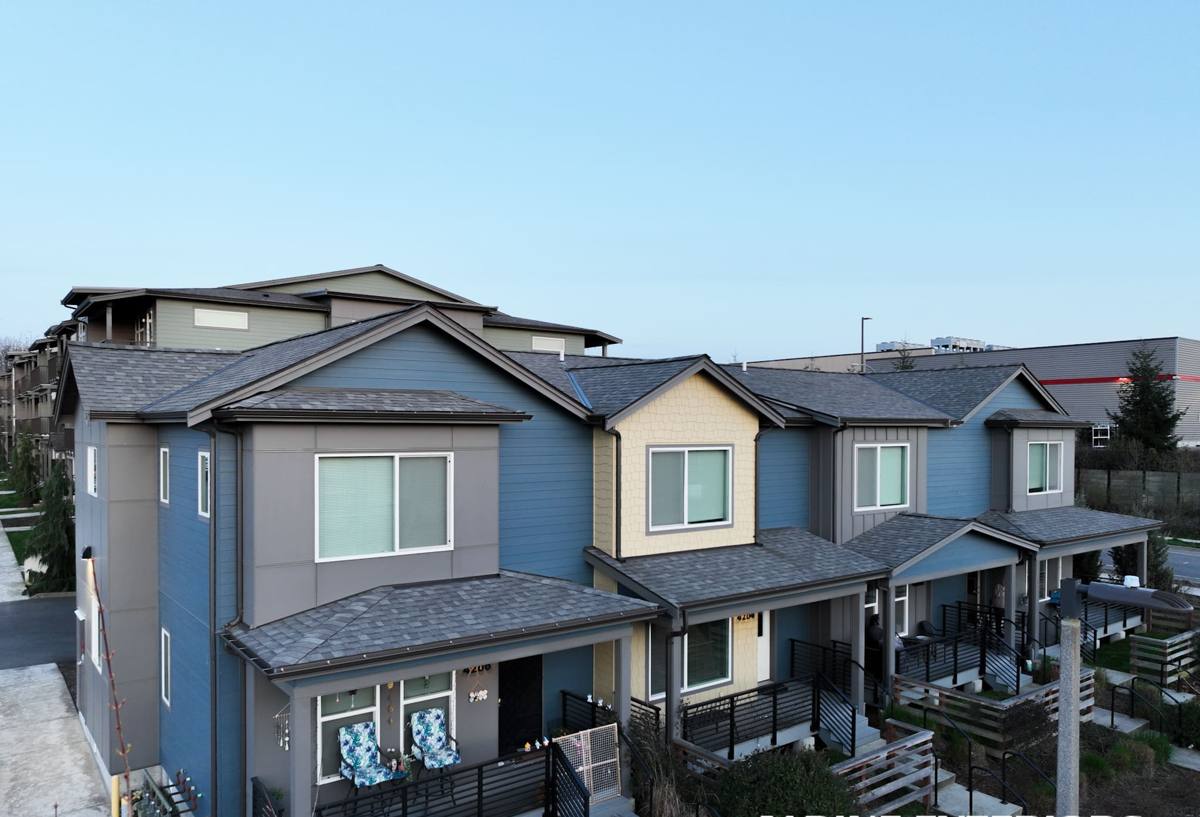
Board and batten is a vertical siding pattern: wide flat panels installed with narrower strips (battens) covering the seams between them. It's an old style, originally a way to cover joints on barns and farmhouses, and it's had a strong comeback on modern and modern-farmhouse homes because of the clean vertical lines it gives a facade. It's often used as a full-house siding choice or as an accent — gables, dormers, entry surrounds — paired with a different siding profile on the rest of the house.
The look is simple. The assembly behind it is not. Because the battens sit proud of the panel and the seams run vertically, water management has to be engineered into the wall, not left to chance. That's true anywhere, but it matters more here because Puget homes see more wet, wind-driven weather in a given year than most of the country.
Why the Style Fits — and Where It Gets Tested
Board and batten reads well against the region's building styles and against green, wet surroundings — the vertical lines hold up visually next to landscaping and tree cover. The trade-off is that a vertical pattern has more linear seams running down the wall than a horizontal lap pattern, and every one of those seams is a place water can find its way in if the installation is careless. That's the part of the job that separates a good board and batten install from one that looks fine for a year or two and then doesn't.
What a Correct Installation Requires Here
None of this is exotic. It's just detail work that has to be done in the right order and not skipped to save time.
Moisture Management Behind the Boards
A drainable water-resistive barrier and a rainscreen gap behind the siding are non-negotiable in this climate. The gap lets any moisture that gets past the cladding drain and dry out instead of sitting against the sheathing. In a place with a long stretch of damp months and a real moss season, skipping the rainscreen is one of the more common ways board and batten jobs go wrong — not immediately, but over a few winters.
Fastening and Batten Spacing
Panels and battens need to be fastened per the manufacturer's engineering — correct nail type, spacing, and placement relative to the framing, not just "close enough." Batten spacing also has to account for the panel's expansion behavior; battens set too tight can trap moisture and stress the seam over time.
Trim, Corners, and Transitions
Inside corners, outside corners, and the transitions where board and batten meets a soffit, a foundation, or a different siding profile are where most callbacks originate on any siding job, and vertical siding has more of them per square foot of wall than horizontal lap. Flashing at window and door heads, proper kickout flashing where a wall meets a roofline, and correctly sequenced sealant (used to seal the right joints, not as a substitute for flashing) all have to be right the first time — they're difficult and expensive to fix once the siding is up.
Why We Install It Only in James Hardie Fiber Cement
We don't install board and batten in LP SmartSide, vinyl, cedar, or primed spruce. We install James Hardie fiber cement — specifically HardiePanel vertical siding paired with Hardie trim battens, or the Artisan V-Rustic vertical profile for a more refined look. That's a deliberate standard, not a default.
Fiber cement doesn't absorb water the way wood-based panel products can, which matters directly here: a material that swells, delaminates, or invites rot after repeated wet-dry cycles is a bad match for a climate that gives it wet cycles most of the year. Fiber cement is also non-combustible, holds paint and factory finish far longer than raw wood substrates, and doesn't provide the same food source for the algae and moss growth this area is known for. Vinyl board and batten profiles exist, but vinyl's thinner appearance and heat sensitivity (it can warp against dark colors in direct sun and become brittle in cold snaps) make it a poor match for a look that's supposed to read as substantial, dimensional trim work. James Hardie's ColorPlus factory finish also carries a stronger, better-documented finish warranty than field-applied paint on other substrates — worth knowing given how much repainting a wet climate can demand of a lesser product.
None of this means other products are unusable everywhere. It means that for board and batten siding on homes that sit in salt air, heavy rain, and moss for a large part of the year, we've concluded fiber cement is the one we're willing to put our name behind.
Comparing Board & Batten Materials for This Climate
| Material | Moisture Behavior | Moss/Algae Resistance | Finish Longevity | Typical Maintenance |
|---|---|---|---|---|
| James Hardie fiber cement | Does not absorb and swell like wood-based panels | Does not feed growth the way wood substrates can | Factory ColorPlus finish, backed by a strong warranty | Periodic wash; repaint not typically needed for many years |
| LP SmartSide (engineered wood) | Wood-based; sensitive to sustained moisture exposure at cut edges and seams | Wood substrate can support growth if coating is compromised | Field or factory finish; edge sealing is critical | Regular inspection of seams and edges |
| Cedar / primed spruce | Absorbs moisture; prone to cupping and checking in wet climates | Natural wood is a food source for moss and mildew | Field-applied finish, shorter repaint cycle | Frequent repainting/staining, sealing |
| Vinyl board & batten profile | Doesn't absorb water but relies entirely on drainage behind it | Surface can still host growth in shaded, damp areas | Color molded in but can fade or become brittle over time | Low, but limited repair options if damaged |
Our Process on a Puget Board & Batten Project
- Assessment: We look at the existing wall assembly, moisture history, and exposure — which elevations take the worst of the wind-driven rain and where moss and algae are already established.
- Prep: Removal of failing siding, inspection and repair of sheathing, and installation of a drainable water-resistive barrier.
- Rainscreen and flashing: Furring or a manufactured rainscreen product goes on first, followed by flashing at every penetration, window, door, and roofline transition.
- Installation: HardiePanel or Artisan panels and battens go up to manufacturer fastening specifications, with attention to expansion gaps and batten spacing.
- Trim and sealant: Corners, transitions, and the specific joints that call for sealant (not all of them do) are finished last.
- Walkthrough: We go over the finished work with the homeowner before calling the job done.
What Drives Cost on a Job Like This
| Factor | Why It Matters |
|---|---|
| Tear-off vs. new construction | Removing old siding and repairing sheathing takes more labor than installing over new construction framing |
| Accent vs. full-house | A gable or entry accent in board and batten costs far less than covering an entire elevation or home |
| Trim and corner complexity | More corners, transitions, and window/door openings mean more flashing and trim labor per square foot |
| Panel line chosen | HardiePanel and Artisan V-Rustic are priced differently based on texture and finish detail |
| Existing wall condition | Rot or water damage found during tear-off adds sheathing repair before new siding goes on |
Why a Local Bellingham Crew Matters in Puget Specifically
Whatcom County building departments, wind exposure ratings, and moisture conditions aren't identical to what a crew coming from another region is used to working around. A crew that already works Puget and the surrounding Bellingham area knows how the local exposure affects which elevations need extra flashing attention, understands the permitting process for this jurisdiction, and can schedule work around the wettest stretches of the year instead of fighting them. That local knowledge shows up in details — where the rainscreen matters most, which corners take the worst weather, how long a moss-covered wall needs to dry before new siding can go over it — that aren't obvious from a spec sheet.
Maintaining Board & Batten Siding in This Climate
- Rinse the siding annually, and more often on north- or shade-facing walls where moss and algae establish fastest
- Keep gutters clear so overflow doesn't run down the wall and concentrate water at specific battens
- Trim back vegetation and tree cover that keeps a wall section shaded and damp longer than the rest of the house
- Inspect caulked joints yearly — sealant is a maintenance item, not a permanent fix
- Watch for staining or discoloration at the base of battens, which often signals a drainage issue behind the siding rather than a surface problem
If you're considering board and batten siding for a home in Puget, we're glad to take a look and give you a straightforward, no-pressure estimate — what your walls actually need, what it involves, and what it costs. There's a form below to get started.