 Bellingham
 Deck Repair Built for Puget's Coastal Conditions
The Puget neighborhood sits close enough to Bellingham Bay that homes here deal with a specific combination of stressors most inland decks never see: salt-laden air, long stretches of driving rain, and a moss season that can run from October well into spring. Individually, any one of those is manageable. Together, over years, they're what turns a solid deck into one with soft boards, rusted fasteners, and a railing that wobbles more than it should.
We repair decks in this part of Bellingham regularly, and the failure patterns we see are consistent enough that we can usually tell a homeowner what we'll find before we even pull up the first board. That's the advantage of working a neighborhood instead of just a service area on a map — we're not guessing at what Whatcom County weather does to a deck, we're looking at it every week.
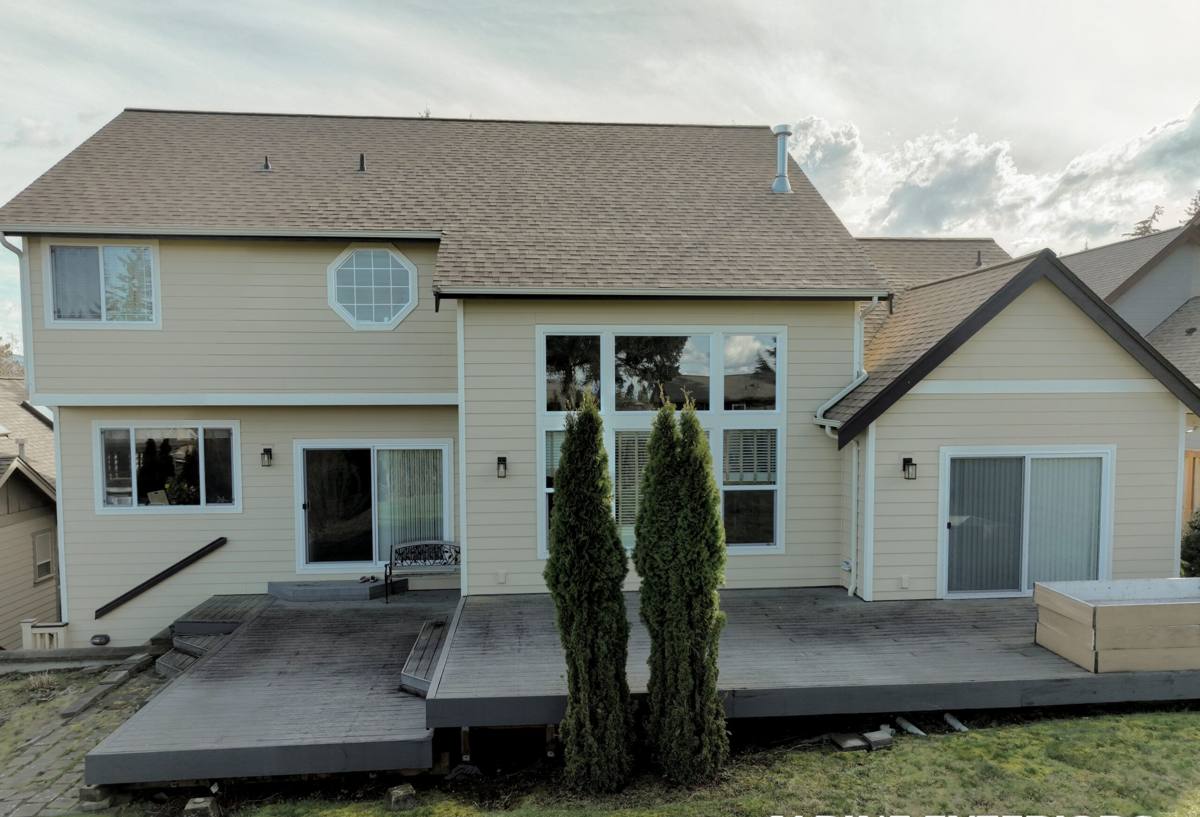
Why Puget Decks Wear Differently Than Decks Inland
Salt Air and Metal Fatigue
Proximity to the bay means airborne salt settles on everything, including deck hardware. Standard fasteners and connectors that would last decades in a drier, inland part of the county can start showing rust streaks and pitting in a fraction of that time near the water. Once a fastener corrodes, it loses holding strength long before it looks obviously broken — which is why a deck can feel "fine" right up until it isn't.
Driving Rain and Water Intrusion
Bellingham's rain doesn't just fall straight down — wind-driven rain off the water pushes moisture sideways, into places a deck was never designed to shed water from: the ledger board connection at the house, the tops of posts, and the underside of railings. Repeated wetting and drying cycles are what break down wood fiber and lift finishes, even on decks that are only a few years old.
Moss, Algae, and a Long Wet Season
Moss doesn't just look bad — it holds moisture directly against the deck surface for months at a time, which accelerates rot on wood decking and can stain or degrade composite surfaces. Shaded and north-facing decks in Puget, especially those tucked under trees or close to the house, tend to develop moss coverage faster than more exposed decks nearby.
Signs a Deck Needs Repair — Not Just a Cleaning
A pressure wash or a fresh coat of stain can make a tired deck look better without addressing what's actually wrong underneath. Before any cosmetic work, we check for the signs that point to a structural or moisture problem:
- Boards that feel spongy, springy, or noticeably softer underfoot in one area than the rest of the deck
- Visible rust streaking below fastener heads or around joist hangers
- A railing or post that flexes or moves when you lean on it
- Gaps opening up between the ledger board and the house siding
- Persistent dark staining, moss, or algae that returns within weeks of cleaning
- Stair stringers that feel uneven or have visible splitting near the fasteners
- Fasteners that are backing out, snapped off, or surrounded by dark, wet-looking wood
Any one of these on its own might be a minor fix. Several together usually mean the deck has been absorbing moisture for a while and it's worth a full inspection rather than a patch job.
What a Correct Deck Repair Actually Involves
Structural Inspection First
Before we touch a board, we get underneath the deck and check the framing: joists, beams, posts, and footings. Surface rot on decking boards is easy to spot, but rot at the ledger connection or a compromised post base is what actually determines whether a deck is safe — and it's invisible from the top.
Fastener and Hardware Upgrades
Given the salt exposure in Puget, we don't just replace corroded fasteners with the same grade of hardware that failed. Stainless steel or heavy hot-dip galvanized fasteners and connectors cost more up front but hold up far better this close to the bay, and mixing metals (which causes galvanic corrosion) is something we specifically avoid.
Decking Board Replacement
We replace boards individually where possible rather than resurfacing an entire deck when only certain sections have failed. This keeps costs down and lets us match repairs to where the damage — usually the areas that stay shaded or hold water the longest — actually is.
Rail, Stair, and Guard Safety
Guardrail posts and stair stringers take a disproportionate amount of stress and are common failure points. We check post attachment to the frame (not just to the decking) and stair connections as a standard part of every repair, since these are the components most likely to cause an actual injury if they fail.
Repair or Replace? How We Make the Call
Homeowners often assume visible damage means the whole deck needs to go. Just as often, we find a deck with excellent bones and a handful of failed components. The table below covers the main factors we weigh.
| Factor | Leans Toward Repair | Leans Toward Replacement |
|---|---|---|
| Framing condition | Joists and beams are sound, damage is at the surface | Rot has reached structural framing or footings |
| Extent of damage | Limited to specific boards, a rail section, or stairs | Widespread across most of the deck surface |
| Age of the deck | Deck is under 15-20 years old | Deck is old enough that most components are near end of life together |
| Fastener condition | Isolated corrosion, easily swapped | Fastener failure is systemic throughout the structure |
| Code/safety changes | Current railing and stair spacing already meet code | Original build predates current guard and stair safety requirements |
We'll walk you through which category your deck falls into and explain the reasoning — not just hand you a number.
Choosing Materials for a Repair That Lasts
What we use to repair a deck matters as much as the workmanship. In a coastal, high-moisture environment like Puget, some choices simply hold up better than others:
- Pressure-treated lumber remains a solid, economical choice for framing and structural repairs, provided fasteners and hardware are rated to match (not all connectors are compatible with newer treatment chemicals).
- Cedar is a traditional decking choice in the Pacific Northwest and weathers naturally, but it needs more consistent maintenance — sealing and cleaning — to resist the moss and moisture cycle here.
- Composite decking resists rot and doesn't need staining, which appeals to homeowners who want to spend less time on upkeep, though it still needs to be kept clear of trapped moisture and debris at board gaps.
We don't push one material as universally "best." The right call depends on your existing deck, your budget, and how much maintenance you actually want to do going forward — we'll give you the honest trade-offs for your specific situation rather than a one-size answer.
Our Deck Repair Process
- On-site inspection. We check the deck from underneath as well as on the surface, including ledger, posts, footings, and fasteners.
- Written scope and estimate. You get a clear breakdown of what needs repair, what's optional, and what it costs — no vague allowances.
- Repair work. Framing and structural fixes happen first, followed by fastener and hardware replacement, then decking, rails, and stairs.
- Final walkthrough. We test rails, stairs, and repaired sections with you before calling the job done.
Maintenance Checklist to Protect Your Repair
A repair holds up much longer if it's paired with a bit of seasonal upkeep — especially given how long the moss season runs in this part of Whatcom County.
- Sweep leaves and debris out of board gaps regularly through fall
- Rinse or brush off moss and algae before it builds a heavy layer, rather than after
- Check hardware and fastener heads once a year for early rust streaking
- Keep gutters and downspouts near the deck clear so runoff isn't draining directly onto it
- Reseal or restain wood decking on the manufacturer's recommended cycle, not just when it looks faded
- Trim back vegetation that's shading the deck and keeping it damp longer than the rest of the yard
Why a Crew That Already Works in Puget Makes a Difference
Deck repair isn't a one-size-fits-all trade. A contractor who mostly works drier, inland areas may not think twice about fastener grade or galvanic corrosion, because it's rarely the failure point they see. Working Puget and the surrounding Bellingham neighborhoods regularly means we're already calibrated to what this specific stretch of coastline does to wood, metal, and finishes — which shows up in fewer callbacks and repairs that are sized correctly the first time, not over-scoped or under-scoped.
If your deck has soft spots, rusted hardware, or railings that don't feel as solid as they used to, we're glad to take a look. Reach out for a free, no-pressure estimate using the form below, and we'll tell you honestly what we find.