 Bellingham
 Why Puget Homeowners Are Looking at Metal Roofing
Puget sits close enough to the water that homes here take a different kind of beating than roofs further inland in Whatcom County. Salt-laden air works on exposed fasteners and flashing year-round, driving rain off the Sound finds every gap in an aging roof system, and the long stretch of wet, shaded months keeps moss and algae growing on anything that holds moisture. A roof that would be perfectly fine in a drier climate can start failing early out here if it wasn't built with these conditions in mind.
Metal roofing has become a common answer for homeowners who are tired of replacing shingles every couple of decades or scraping moss off their roof every spring. Done correctly, a metal roof sheds water fast, doesn't give moss much to grab onto, and holds up to wind-driven rain far better than most other roofing materials available today. Done poorly, though, a metal roof can trap moisture, corrode at the fasteners, or leak at every penetration. The material only performs as well as the installation behind it.
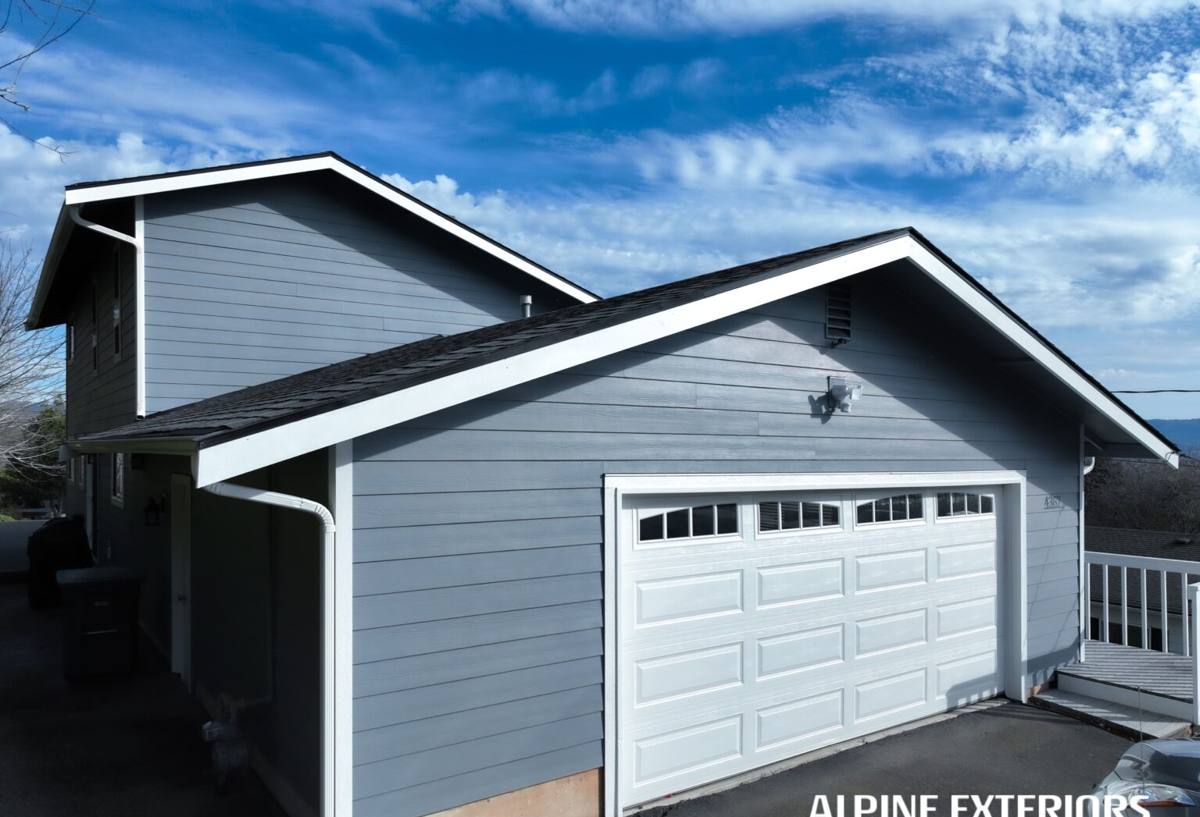
What Bellingham's Coastal Climate Does to a Roof
Salt Air and Metal Corrosion
Homes in Puget are close enough to Bellingham Bay that airborne salt is a real factor in material selection and fastener choice. Not every metal roofing product or fastener is built to handle a marine-influenced environment, and using the wrong coating or hardware near the water can mean visible corrosion within a few years instead of a few decades. This is one of the first things we account for when we quote a metal roof in this area.
Driving Rain and Wind-Driven Water
Storms coming off the Strait of Georgia and Puget Sound don't just drop rain straight down — they push it sideways, up under eaves, and into any seam that isn't properly lapped or sealed. A roof system that only performs well in calm, vertical rain isn't enough here. Every seam, flashing detail, and penetration has to be built assuming wind will try to force water backward through it at some point.
Moss, Algae, and the Long Wet Season
Whatcom County's overcast, damp stretch runs long, and north-facing or heavily shaded roof sections in Puget rarely get enough sun to dry out between storms. That's exactly the environment moss and algae need to establish. On asphalt shingles, moss roots into the granules and lifts them over time. Metal roofing doesn't give moss the same foothold, but it isn't automatically moss-proof — debris in valleys and against transitions can still hold enough moisture to get growth started if the roof isn't detailed and maintained correctly.
Metal Roofing Panel Types: What Fits a Puget Home
Not all metal roofing is the same product wearing different colors. The panel style changes how the roof handles water, wind, and long-term maintenance.
| Panel Type | Best For | Maintenance | Notes for This Area |
|---|---|---|---|
| Standing seam (concealed fastener) | Most Puget homes, especially near the water | Low | No exposed fasteners for salt air to attack; best wind and water performance |
| Exposed-fastener panel | Budget-conscious projects, outbuildings | Moderate to high | Fastener gaskets degrade faster in salt air and need periodic inspection |
| Stone-coated steel | Homeowners wanting a traditional shingle look | Low | Heavier system; good wind rating but more penetrations at the coating layer |
| Metal shingle/shake panels | Matching a neighborhood's traditional look | Low to moderate | More seams than standing seam, so flashing detail matters even more |
For most homes in this specific area, we lean toward standing seam because it has the fewest points where water or salt air can get a foothold. It costs more upfront than exposed-fastener panel, but for a coastal-influenced property, that difference tends to pay for itself in reduced maintenance and fewer callback issues over the life of the roof.
What a Correct Metal Roof Installation Actually Involves
The panels themselves get most of the attention, but the roof's actual performance comes down to what's underneath and around them.
Deck Inspection and Prep
We don't install new roofing over a deck we haven't inspected. Any soft spots, rot, or prior water damage get addressed before a single panel goes down — covering up a compromised deck just hides a problem that will eventually telegraph through the new roof.
Underlayment Selection
Metal roofing in a wet, coastal climate needs a high-quality synthetic or self-adhered underlayment underneath it, not a minimal-code layer. This is the roof's backup defense if wind ever forces water past a seam, and it matters more here than in drier parts of the state.
Fastener and Flashing Details
This is where salt air does the most damage if it's overlooked. We use fasteners and flashing rated for coastal exposure, and we pay close attention to every transition — valleys, wall intersections, chimney and vent penetrations, and eaves. Wind-driven rain finds the weak detail, not the open field of the roof.
Ventilation
A metal roof installed over a poorly ventilated attic can trap condensation underneath the panels, which causes its own moisture problems independent of anything happening outside. We check and correct attic ventilation as part of the scope, not as an afterthought.
Our Process for a Puget Metal Roof Project
- On-site assessment — we walk the roof, check the deck, and look at how the home is exposed to wind and water off the Sound.
- Straightforward proposal — panel type, underlayment, flashing plan, and a clear scope, explained in plain terms before any work starts.
- Tear-off and deck repair — old roofing removed, deck inspected and repaired as needed, debris hauled off-site.
- Underlayment and flashing installation — the layer that does most of the real waterproofing work, installed before panels go on.
- Panel installation — set with attention to fastener spacing, seam alignment, and coastal-rated hardware throughout.
- Final walkthrough — we go over the finished roof with the homeowner and point out anything worth knowing for long-term care.
Metal Roofing vs. Asphalt Shingles: The Real Cost Factors
The upfront price gap between metal and asphalt shingles is real, but it's not the whole story in a climate like this one.
| Factor | Metal Roofing | Asphalt Shingles |
|---|---|---|
| Upfront cost | Higher | Lower |
| Typical lifespan | Multiple decades with proper install | Roughly 20-25 years in this climate |
| Moss resistance | Better surface for shedding growth | Granules give moss a place to root |
| Wind-driven rain performance | Strong when seams and flashing are done right | More vulnerable at edges and laps over time |
| Maintenance needs | Periodic debris clearing and inspection | Regular moss treatment and granule loss monitoring |
| Salt air exposure risk | Managed with correct coatings and fasteners | Less of a factor, but shortens shingle life on its own |
For homes closer to the water in Puget specifically, the maintenance and moisture-resistance columns tend to matter more than they would further inland, which is a big part of why metal roofing comes up so often in these conversations.
Living With a Metal Roof in Moss Season
A metal roof isn't maintenance-free, and we don't tell homeowners it is. What changes is the type of maintenance needed.
- Clear leaves and debris out of valleys and around penetrations before the wet season sets in.
- Check that gutters are flowing freely — standing water at the eaves is where moss and algae get their start.
- Look at shaded, north-facing sections after a few wet months, since these hold moisture longest.
- Avoid pressure washing directly on seams or fastener points; a soft wash or gentle rinse is enough.
- Have flashing and sealant points checked periodically, especially after major windstorms.
None of this is heavy work, but skipping it entirely lets debris build up in exactly the spots where moisture problems start.
Signs Your Current Roof Is Telling You Something
- Moss or algae streaking that comes back within a season of cleaning it off
- Granules collecting in gutters or at downspout outlets
- Soft spots or sagging felt underfoot on the roof deck
- Rust staining at valleys, flashing, or fastener heads
- Daylight visible through the attic at eaves, ridges, or penetrations
- Interior water stains that appear after wind-driven storms specifically
Any one of these is worth a look before it turns into an interior repair, not just a roofing one.
Why Local Experience in Puget Matters
A roof crew that only occasionally works this close to the water can get the panel installation right and still miss the details that matter most here — the fastener spec that holds up to salt air, the flashing detail that survives sideways rain, the ventilation fix that prevents condensation under the panels. Those aren't things you learn from a manufacturer's install guide alone; they come from doing this work repeatedly in Bellingham's specific conditions and seeing what actually holds up over years, not just at the final walkthrough.
We're not going to tell you every roofing product on the market is wrong for this area — plenty of systems can perform well when they're specified and installed correctly for the exposure. What we won't do is install a system the same way we would in a drier, inland climate and hope the coastal air doesn't catch up with it in a few years.
Get a Straight Answer on Your Roof
If you're weighing a metal roof for your Puget home, or your current roof is showing signs it's losing the fight with moss and weather, we're happy to take a look and give you an honest read on where things stand. There's no pressure and no obligation — just a clear assessment and, if it makes sense, a straightforward quote. Use the form below to request a free estimate.