 Bellingham
 Siding Repair for the Puget Area's Particular Climate
Homes in the Puget neighborhood of Bellingham deal with a specific combination of weather stress that doesn't show up the same way inland. You're close enough to the water to get salt-laden air working on fasteners, trim, and any exposed wood. You get driving rain off Bellingham Bay that hits siding at an angle most installation details were never built to handle. And you get a moss season that runs long — often eight or nine months out of the year in the shaded, damp pockets between homes. None of these problems is dramatic on its own. Together, over a few years, they're what turns a small siding issue into a bigger repair bill.
This page is about siding repair specifically — not full replacement, not a general overview of exterior products. If you've got a section of siding that's cracked, staining, buckling, or soft to the touch, this is what a correct repair looks like in Whatcom County's climate, and why the crew you hire for it matters as much as the material.
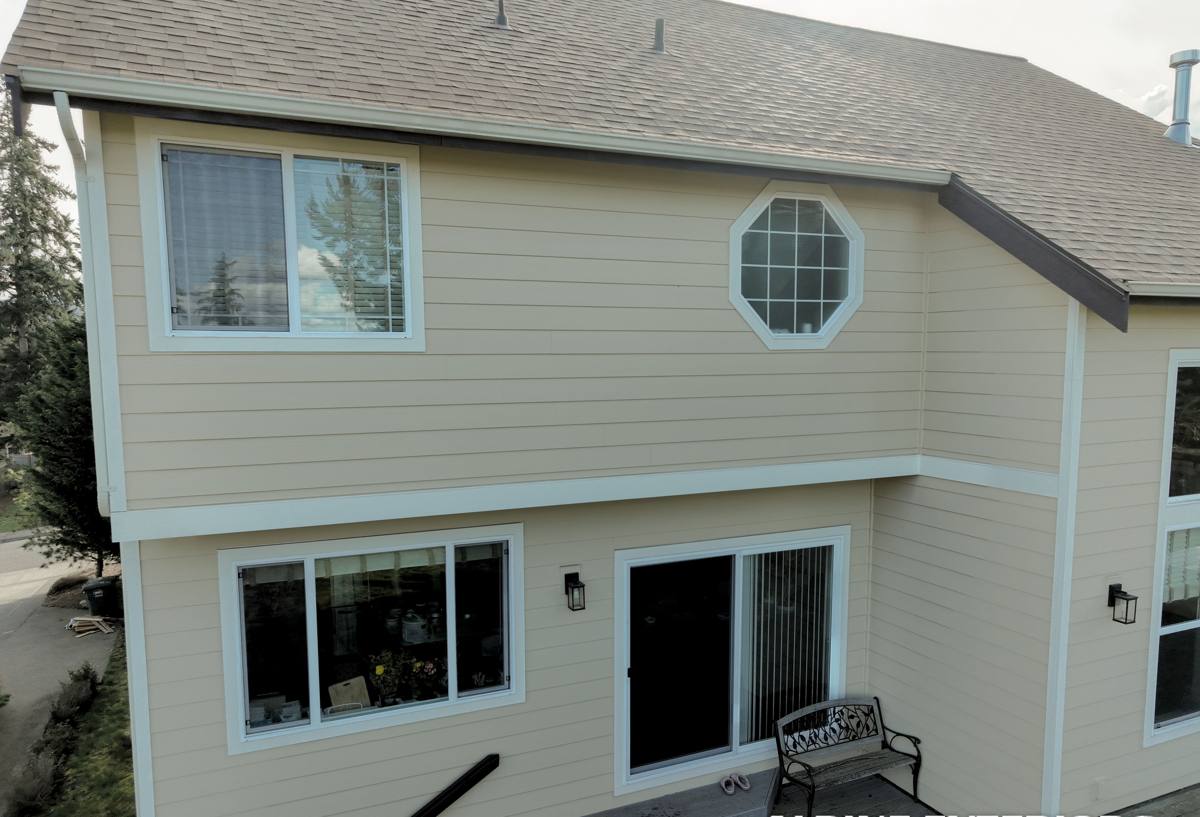
What Puget's Climate Actually Does to Siding
Salt Air and Corrosion
Proximity to Bellingham Bay means airborne salt settles on exterior surfaces even on homes that aren't waterfront. Over time it accelerates corrosion on nail heads, flashing, and any metal trim that isn't rated for coastal exposure. When a fastener starts to fail underneath siding, the symptom you see is a nail pop, a loose board, or a rust streak bleeding through paint — small signs that point to a bigger problem behind the surface.
Driving Rain and Wind-Driven Moisture
Rain that comes in sideways off the water finds every gap in flashing, every under-caulked seam, and every spot where the water-resistive barrier wasn't lapped correctly during the original install. Siding repair in this environment isn't just about replacing a damaged board — it's about figuring out how water got behind that board in the first place. Patch the surface without fixing the entry point and the same section fails again within a season or two.
Moss, Mildew, and Prolonged Dampness
Bellingham's tree cover and cloud cover keep north- and west-facing walls damp for long stretches, which is exactly what moss and mildew need to establish. Moss holds moisture against the siding surface, and on wood-based or improperly sealed products, that constant dampness is what leads to soft spots, delamination, and rot at butt joints and bottom edges.
Signs Your Puget Home Needs Siding Repair
- Soft or spongy spots when you press on the siding, especially near the bottom courses or around window trim
- Visible cracking or splitting, particularly after a hard freeze following wet weather
- Persistent moss or black streaking that keeps coming back within weeks of cleaning
- Nail heads backing out or visible rust bleeding through the paint film
- Bubbling, peeling, or chalking paint in patches rather than evenly across the wall
- Gaps opening at seams, corners, or where siding meets trim, window casings, or the foundation
- A musty smell or visible staining on interior walls that back up to an exterior wall with siding issues
Any one of these on its own might be minor. Several showing up on the same wall, especially a north- or west-facing one, usually means moisture has been getting behind the siding for a while.
What a Correct Repair Actually Involves
A siding repair that holds up in this climate isn't just cutting out the bad section and nailing in a new piece. It has a sequence:
- Diagnose the source, not just the symptom. Before anything gets replaced, we find out why that section failed — bad flashing, a caulk joint that opened up, a downspout dumping water against the wall, or a grading issue pushing splashback onto the lower courses.
- Check what's behind the siding. Damaged siding often means the water-resistive barrier or sheathing underneath took damage too. Patching over compromised sheathing just hides the problem for a while.
- Match the material correctly. Fiber cement doesn't always match old wood or vinyl siding in profile or reveal, and even matching Hardie product needs the right coordinating ColorPlus finish or a proper field-paint match so the repair doesn't stand out as an obvious patch.
- Re-flash and re-seal properly. Any repair that touches window trim, corners, or butt joints needs correct flashing and sealant details — the same details that should have been there originally.
- Fasten for the exposure. In a salt-air environment, fastener choice matters. Using the wrong nail or screw in a repair is how you end up back at the same wall in three years.
Repair or Replace? How We Make That Call
Not every problem area needs full replacement, but not every repair is worth doing either. Here's how we think through it with homeowners:
| Factor | Leans toward repair | Leans toward replacement |
|---|---|---|
| Extent of damage | Isolated to one or two sections/walls | Spread across multiple walls or the whole home |
| Underlying sheathing | Sound, no rot found on inspection | Soft, delaminated, or rotted in multiple spots |
| Age of existing siding | Still well within expected service life | Already near or past the end of its useful life |
| Material match | Hardie product with available matching ColorPlus finish | Discontinued product, wood, or a material we don't stock |
| Root cause | Fixable with better flashing, sealant, or drainage | Systemic issue (original install, grading, drainage plane) affecting the whole house |
When damage is contained and the sheathing underneath is sound, a well-executed repair is the honest recommendation — there's no reason to replace an entire wall of good siding to fix one bad section. When the damage points to a systemic issue, we'll tell you that directly instead of doing a repair we know won't hold.
Our Repair Process
Inspection First
We start by walking the affected areas and probing for soft spots, checking flashing at windows and corners, and looking at how water moves around the home during rain — gutter overflow, splashback, grading — since Bellingham's rainfall volume makes drainage details as important as the siding itself.
Honest Scope
You'll get a clear explanation of what's failing, why, and what it will take to fix it correctly — including if that means the repair needs to be larger than the visible damage suggests, because the sheathing behind it is compromised.
Repair Execution
We remove only what needs to come out, replace or repair any compromised sheathing and barrier, correct the flashing and drainage detail that caused the failure, and install matching material with proper fastening for a coastal-influenced climate.
Finish Match
Where we're patching into existing Hardie siding, we work to match the ColorPlus finish or coordinate a repaint so the repair blends in rather than reading as an obvious patch job on the wall.
Why We Only Work With James Hardie Fiber Cement
We don't install LP SmartSide, vinyl, Cemplank, Allura, or bare wood siding — and that standard matters just as much for repairs as it does for new installs. Fiber cement doesn't absorb moisture the way wood-based products can, which means a properly repaired section isn't sitting there as a future soft spot waiting to happen. It's non-combustible, it holds paint and factory finish far longer than wood, and Hardie's ColorPlus technology gives us a realistic shot at matching an existing repair to the surrounding wall instead of leaving a visibly different patch. When we do have to replace larger sections, homeowners get the benefit of Hardie's engineered HZ5 product line, which is built for exactly the wind-driven rain and moisture cycling that Whatcom County throws at exterior walls. We won't repair failing wood or vinyl siding by patching in more of the same material if we think it's setting the homeowner up for the same failure again in a few years — we'll say so and lay out the honest trade-offs.
Why a Crew That Already Works Puget Matters
Siding repair is detail work, and the details that matter in this neighborhood aren't generic. A crew that already works in and around Puget and greater Bellingham knows which walls take the worst of the wind-driven rain off the bay, how long moss actually takes to re-establish on a shaded elevation here, and what the local building department expects for flashing and moisture barrier work on a repair permit. That's different from a crew that mostly works inland and treats every job the same way.
- Ask if they've worked on homes in your specific neighborhood or similar coastal-exposure areas
- Ask how they diagnose the cause of the damage, not just how they'll patch it
- Ask what they do differently for a north- or west-facing wall versus a sheltered one
- Ask about their fastener and flashing choices for salt-air exposure
- Ask for a clear, written scope — not just "patch and paint"
- Confirm they carry proper licensing and insurance for exterior work in Washington
Keeping a Repair From Becoming a Repeat Repair
Once a repair is done right, a little seasonal attention keeps it that way. Rinse moss and organic buildup off shaded walls before it gets a chance to hold moisture against the siding through the wet months. Keep gutters clear so water isn't overflowing onto the wall below. Check caulk lines at trim and corners once a year, since UV and temperature swings will eventually open small gaps even in a good install. And if you notice a new soft spot, crack, or staining pattern, deal with it while it's still small — in this climate, small problems left alone don't stay small for long.
If you're seeing signs of siding damage in the Puget area of Bellingham, we're happy to take a look and give you a straight answer on what's actually going on — no pressure, no upsell. Reach out for a free estimate using the form below.