 Bellingham
 Ferndale Roofs Work Harder Than Most
Ferndale sits close enough to Bellingham Bay and the Strait of Georgia that salt-laden air is a real factor in how roofing materials age here, not just an abstract coastal-town cliché. Add Whatcom County's long, wet fall-through-spring stretch of driving rain off the water, and a shaded, slow-drying roof plane that never quite gets a break from moss, and you have a climate that is genuinely harder on a roof than most of the country deals with. None of this means Ferndale roofs are doomed to fail early. It means they need repair work that accounts for moisture cycling, wind-driven rain, and biological growth as ongoing conditions, not one-time problems to patch and forget.
A repair that looks fine the day it's finished but doesn't account for how water moves across a roof in a Whatcom County winter will often show its weaknesses again within a season or two. That's the standard we hold repair work to on every Ferndale roof we touch.
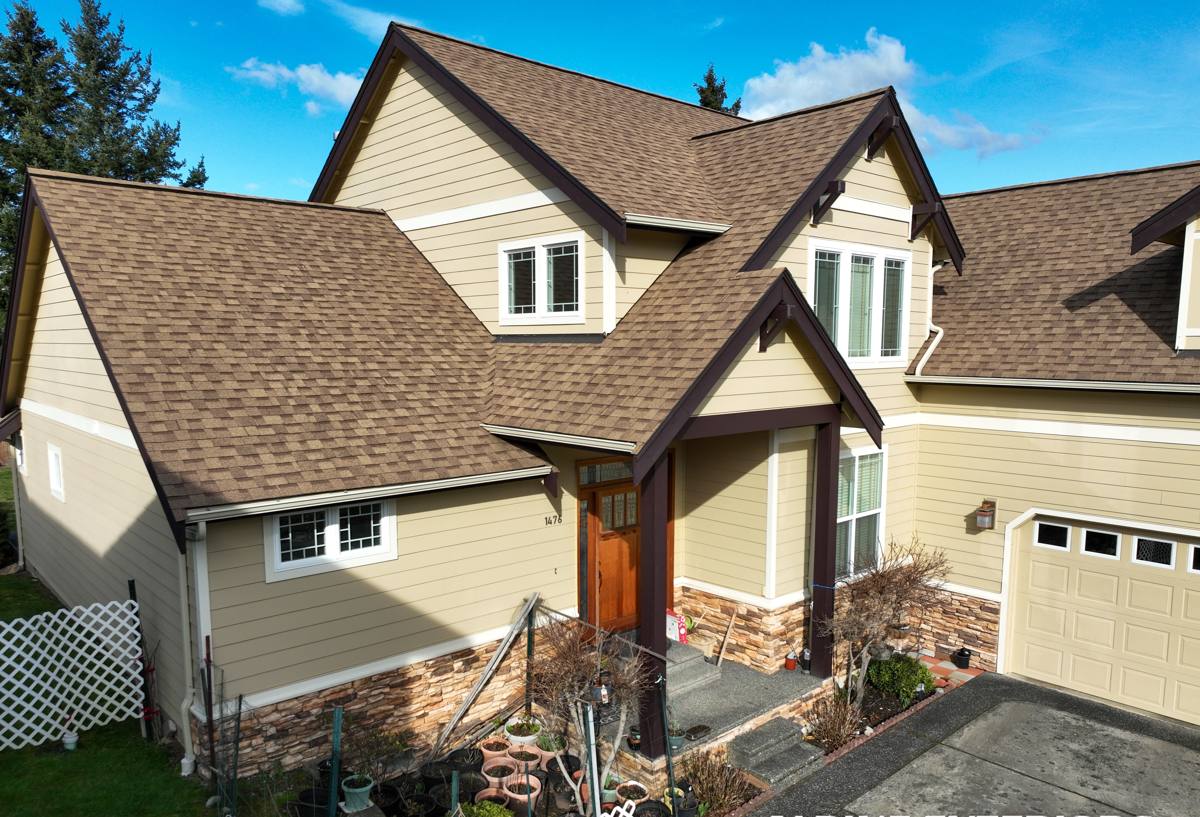
What Salt Air, Rain, and Moss Actually Do to a Roof
Salt Air and Metal Components
Salt in the air accelerates corrosion on exposed metal — flashing, fasteners, vents, gutters, and any exposed hardware. Galvanized fasteners and thin flashing that might last decades further inland can start showing rust streaks or pinholing years sooner in a coastal-influenced area like Ferndale. Once a fastener or flashing seam starts to corrode, it stops sealing the way it was designed to, and that's where leaks begin.
Driving Rain
Rain that comes in at an angle, pushed by wind off the water, behaves differently than a straight vertical downpour. It gets up under shingle tabs, around poorly lapped flashing, and into any gap that a calmer rain would never find. Roofs here need laps, flashing, and underlayment installed with that wind-driven behavior in mind, not just standard by-the-book spacing.
Moss and Prolonged Moisture
Whatcom County's moss season isn't a minor cosmetic issue. Moss holds moisture directly against the roofing surface for extended periods, which shortens the life of asphalt shingles, promotes wood rot on older cedar or wood-based roofing, and can lift shingle edges as moss mats grow underneath them. Shaded, north-facing slopes and roofs under tree cover are the most exposed and usually need the closest attention.
Common Roof Repair Issues We Find in Ferndale
- Lifted or cracked shingle tabs from wind-driven rain working underneath the edges
- Corroded or failing flashing around chimneys, vent stacks, and roof-to-wall transitions
- Moss mats holding moisture against shingles or wood shakes, accelerating granule loss and rot
- Clogged or sagging gutters that back water up under the roof edge (the first few feet of roof takes disproportionate damage)
- Nail pops and fastener corrosion that leave small but persistent leak paths
- Soft or discolored roof decking discovered once a leak has been active for a while unnoticed
What a Correct Roof Repair Actually Involves
A roof repair done right starts with finding the actual source of the problem, not just patching where the water is showing up inside the house. Water travels — a stain on a ceiling in one room can trace back to a flashing failure several feet away. We inspect the full roof plane involved, not just the spot that's leaking, because a repair that ignores a neighboring weak point usually means a second service call within a year.
Diagnosis Before Anything Gets Touched
We look at flashing, underlayment condition, shingle wear pattern, and how moss or debris is affecting drainage in that specific area. On an older roof, we're also checking whether the decking underneath has any soft spots, since that changes the scope of the repair.
Matching Materials and Techniques
Repairs should blend into the existing roof system, not fight against it. That means matching shingle type, color, and exposure as closely as possible, and using flashing and fastener materials suited to a salt-air environment rather than whatever is cheapest. A repair that uses mismatched or lower-grade materials than the rest of the roof tends to become the next weak point.
Proper Flashing and Underlayment Work
Most roof leaks in this region trace back to flashing, not the shingles themselves. Correct repair work means re-flashing with proper laps and sealant where needed, not just caulking over a gap and hoping it holds through the next storm season.
Cleanup and Debris Removal
Moss, needles, and granule debris get cleared from the repair area and surrounding drainage paths as part of the job, since leaving that material in place undermines the repair almost immediately.
Repair vs. Replacement: How We Help You Decide
Not every roof problem calls for a full replacement, and not every leak can be responsibly fixed with a patch. We give homeowners an honest read on which side of that line their roof is on, based on the roof's age, the extent of decking damage, and how much of the roof is affected.
| Factor | Repair Usually Makes Sense | Replacement Should Be Considered |
|---|---|---|
| Roof age | Well within expected lifespan for the material | At or past the end of its typical service life |
| Extent of damage | Isolated to one section or a specific flashing point | Widespread across multiple slopes or repeated leak points |
| Decking condition | Solid, no soft spots found during inspection | Soft, rotted, or water-stained decking in multiple areas |
| Moss/moisture history | Recent or first-time issue, roof otherwise sound | Long-term moss damage with granule loss across large areas |
| Repair frequency | First repair call in several years | Recurring leaks in different spots despite past repairs |
We'll always tell you if a repair is the more sensible option, even when a replacement would be the bigger job for us. A roof that only needs targeted repair doesn't need to be sold as a full tear-off.
Our Roof Repair Process
1. Inspection and Honest Assessment
We walk the roof (or use appropriate access methods for steep or fragile roofing), document what we find, and explain it in plain terms — what's failing, why, and what it will take to fix correctly.
2. Written Estimate
You get a clear scope of work and price before anything starts. No surprise add-ons once we're up on the roof.
3. The Repair Itself
We work efficiently but don't rush flashing and sealing details, since those are the parts of the job that determine whether the repair actually holds up through the next wet season.
4. Final Check and Cleanup
We verify the repair area sheds water correctly, clear debris and old materials from the site, and leave the roof and surrounding gutters in better condition than we found them.
Ongoing Moss and Moisture Management
A single repair visit can fix an active leak, but moss and moisture are recurring conditions in this part of Whatcom County, not one-time events. Homeowners who stay ahead of moss growth and keep gutters and drainage clear tend to need far fewer emergency repair calls over the life of their roof. If your roof has heavy tree cover or a shaded north slope, that's usually where we recommend the closest ongoing attention.
Roofing Materials We Repair
Most Ferndale homes we work on have asphalt composition shingle roofing, with some metal roofing and older wood shake roofs as well. Each material has different repair considerations:
- Asphalt composition shingle — the most common material locally; repairs focus on matching shingle exposure and color, and addressing granule loss from long-term moisture exposure.
- Metal roofing — generally holds up well against moss, but seams and fastener points need attention in a salt-air environment to prevent corrosion-driven leaks.
- Wood shake — more moisture-sensitive than other options and requires more careful, frequent maintenance in a climate like Ferndale's; we're upfront with homeowners about that maintenance burden when we're assessing an older shake roof.
We don't push homeowners toward a particular brand or material during a repair call. Our job is to fix what's there correctly and give you an honest read on how much life the existing roofing has left.
Why It Matters That We Already Work in Ferndale
A crew that already works in this specific area understands how salt exposure, prevailing wind direction off the bay, and moss growth patterns actually play out on local roofs — not as general coastal Pacific Northwest knowledge, but as what shows up repeatedly on Ferndale homes specifically. That familiarity shortens the diagnosis process and means we're not guessing at what materials and techniques hold up here. We also know how to schedule repair work around this region's wet season, which matters when you're trying to get a leak closed before the next storm system rolls through.
A Quick Homeowner Checklist
- Check for moss buildup on roof planes, especially shaded or north-facing sections
- Look for granule accumulation in gutters, a sign of shingle wear
- Watch for water stains on interior ceilings, especially near chimneys or vent penetrations
- Clear gutters and downspouts before the wet season sets in
- Have flashing around chimneys, vents, and roof-to-wall joints inspected periodically, not just when a leak appears
- Address small leaks promptly — delayed repairs are what turn into decking damage
If you're noticing moss buildup, a stain on a ceiling, or just want an honest read on your roof's condition before the next round of Whatcom County storms, we're glad to take a look. Request a free, no-pressure estimate using the form below and we'll walk you through exactly what we find.