 Bellingham
 Deck Repair Built for Sehome's Climate
Sehome sits close enough to Bellingham Bay to catch salt-laden air off the water, and close enough to Sehome Hill's tree cover to stay shaded and damp long after the rest of town has dried out. That combination is hard on decks. Salt air accelerates corrosion on fasteners and hardware. Shade from mature trees slows evaporation after every rain, which in Whatcom County means a deck surface can stay wet for days at a stretch during fall and winter. Add in a moss season that can run from October through April, and you have a structure that's under near-constant moisture pressure for most of the year.
None of that means a deck in Sehome is doomed — it means the repair work has to account for those conditions instead of treating the deck like it's in a dry climate. A patch job that would hold up fine in Arizona can fail here in a year or two if it ignores drainage, fastener choice, and airflow underneath the structure.
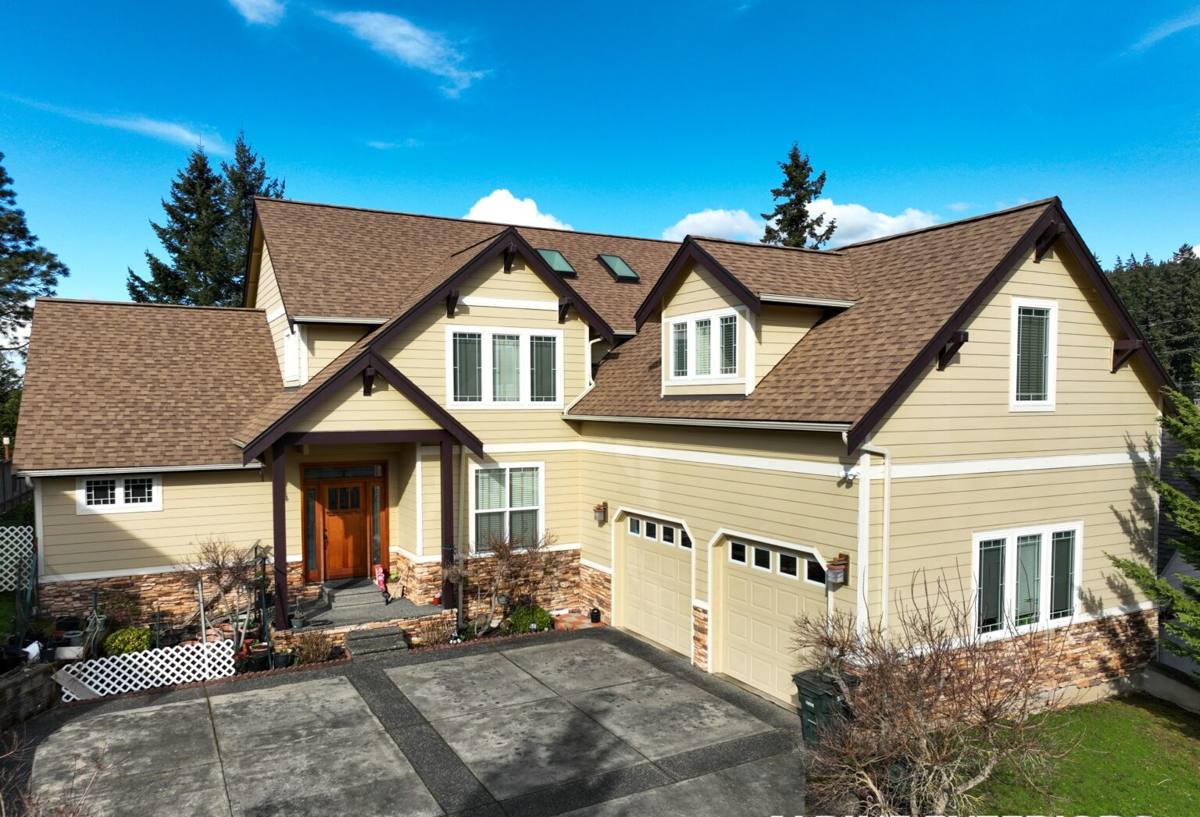
Why Decks in This Neighborhood Fail Early
Most of the deck repair calls we see in this area trace back to a handful of repeat causes:
- Standing water on the deck surface from boards installed too tight, with no gap for runoff
- Moss and algae holding moisture directly against wood fibers, especially on north-facing or heavily shaded decks
- Rusted or corroding fasteners, particularly on older decks built with standard galvanized hardware instead of coastal-rated materials
- Ledger board attachment (where the deck meets the house) that was never properly flashed, letting water track behind the siding and into the rim joist
- Poor ventilation underneath low decks, where trapped moisture rots joists from below where nobody looks
Any one of these can look cosmetic at first — a soft spot, a dark stain, a squeak — while the actual damage is happening in the framing underneath. That's the part a homeowner usually can't see from the surface.
Signs Your Deck Needs a Repair Call
Some of these are obvious once you know to look for them. Others get ignored for a season or two because the deck still seems usable.
- Boards that feel spongy, bounce, or flex more than they used to
- Visible gaps opening up between deck boards or around the ledger board where it meets the house
- Railings or posts that wiggle when you lean on them
- Rust streaks running down from screws, bolts, or joist hangers
- Green or black growth that keeps coming back even after cleaning
- Wood that's gone gray and fibrous, or that a screwdriver sinks into easily
- Stairs that feel less solid underfoot than the rest of the structure
- Any sagging along the deck's outer edge, which usually points to a beam or post problem, not just a board problem
If you're seeing more than one or two of these, it's worth having someone look at the framing, not just the decking boards on top.
What an Honest Deck Repair Actually Involves
Start Below the Surface
Anyone can swap out a rotten board. A repair that actually holds requires checking what's underneath it first — the joist, the ledger connection, the hardware. A new board screwed onto a compromised joist just hides the problem for another year.
The Ledger Board Gets Real Attention
The ledger is the board that bolts your deck to the house, and it's the single most common point of structural failure on residential decks nationally. In a climate that sees as much rain as ours, proper flashing at this connection isn't optional — it's the difference between water running off harmlessly and water tracking into your rim joist and wall framing where you won't see it until it's serious.
Hardware and Fastener Choice
Given the salt air Sehome gets off the bay, we don't use standard galvanized fasteners for repair work here. Hot-dip galvanized or stainless-steel hardware costs more up front but resists corrosion far longer, which matters when the alternative is pulling the deck apart again in a few years to replace fasteners that have already started rusting.
Airflow and Drainage
Where a deck sits low to the ground or has limited ventilation underneath, we look at whether moisture is getting trapped. Sometimes the fix includes small adjustments to grading, gaps, or clearance rather than just fixing the boards themselves.
Repair or Replace? How We Make That Call
Not every deck problem calls for a full rebuild, and not every deck is worth patching indefinitely. The honest answer depends on how much of the structural framing is still sound versus how much has already failed.
| Condition Found | Usually Repairable | Usually Needs Replacement |
|---|---|---|
| Individual rotten or cracked boards | Yes — spot replacement | Only if damage is widespread across most boards |
| Loose or rusted railing posts | Yes — re-secure or replace hardware | If posts themselves are rotted at the base |
| Soft spots near the ledger board | Sometimes, if joists are sound | If rim joist or ledger framing has soft or rotted wood |
| Sagging beam or support posts | Rarely a simple fix | Usually yes — structural framing issue |
| Deck over 20-25 years old with recurring rot | Case by case | Often more cost-effective long term |
We'll always tell you honestly which category your deck falls into, including when a repair is the smarter money decision even if a full replacement would be more profitable for us.
Our Deck Repair Process
- On-site assessment. We check the surface, but more importantly we check underneath — joists, beams, posts, and the ledger connection — since that's where the real story is.
- Written scope. You get a clear explanation of what's failing, what's still sound, and what the repair will and won't fix.
- Address the cause, not just the symptom. If rot is coming from a drainage or flashing problem, we fix that source, not just the board sitting on top of it.
- Rebuild with climate-appropriate materials. Corrosion-resistant fasteners, proper flashing, and lumber or composite decking suited to a wet, shaded environment.
- Final check for level, secure railings, and drainage before we call it done.
Wood, Composite, or a Mix — An Honest Comparison
Homeowners often ask whether to repair with the same material or switch when replacing sections. There's no single right answer, and we won't push you toward whichever material is easiest for us to install.
Pressure-Treated Lumber
Lower material cost and easy to source and match to existing decking. It does require periodic sealing or staining, and in a shaded, damp spot like a heavily treed Sehome yard, that maintenance schedule matters more than it would in full sun.
Cedar
Naturally more rot-resistant than standard framing lumber and a good look for this region, but it's a softer wood that still needs regular finish maintenance to perform well through our wet season.
Composite Decking
Higher upfront cost but far less ongoing maintenance — no staining, better resistance to moss staining and moisture absorption on the surface. The trade-off is that composite doesn't fix a rotten substructure underneath it; it's a decking choice, not a framing fix, and it still needs a properly built and ventilated frame below it to perform well.
Dealing With Moss and Algae Long-Term
Cleaning moss off a deck surface is a short-term fix if the underlying moisture problem isn't addressed. Where sun exposure is limited by tree canopy, we look at whether boards are spaced to allow enough drainage and airflow, and whether nearby vegetation is keeping the deck damp longer than it needs to be. Sometimes the longest-lasting fix is a combination of proper board spacing during repair, periodic cleaning, and being realistic about how often a shaded deck in this climate needs attention compared to one in full sun.
Permits and Code in Bellingham
Structural deck repairs — particularly anything involving the ledger board, support posts, beams, or railing height and spacing — can fall under City of Bellingham permitting requirements, especially where guardrail height or baluster spacing needs to meet current code. Simple board or hardware replacement typically doesn't trigger a permit, but we'll tell you up front if your repair crosses into work that does, rather than leaving you to find out later.
Why Hire a Crew That Already Works This Neighborhood
A deck repair crew that regularly works Bellingham and Whatcom County properties already knows what this climate does to fasteners, framing, and finishes over time — it's not a guess, it's what we see repeatedly on homes with the same salt air, rain exposure, and tree cover as Sehome. That familiarity shows up in the small decisions: which hardware to spec, where flashing tends to fail first, and how much drainage a shaded deck actually needs to hold up through another wet season.
If your deck has soft spots, loose railings, recurring moss, or just doesn't feel as solid as it used to, we're happy to take a look and give you a straight answer about what it needs. Reach out for a free, no-pressure estimate using the form below.