 Bellingham
 Fiber Cement Siding for Sehome Homes: Why the Details Matter More Here
Sehome sits in central Bellingham, close enough to Sehome Hill that a lot of homes deal with sloped lots, mixed sun and shade, and tree cover that keeps parts of the exterior damp longer than open ground would. Layer in Whatcom County's marine climate, salt air moving in off the Salish Sea, driving rain that comes in sideways more often than straight down, and a moss season that can run most of the year on shaded walls, and siding on a Sehome house is doing real work year-round, not just holding paint and looking presentable.
This page is specifically about fiber cement siding installation in Sehome: what the climate demands from the material, what a correct install actually involves, and how our process works when we're on one of these homes. We install James Hardie fiber cement exclusively, and everything below explains what that choice looks like in practice on the ground here, not just as a spec sheet claim.
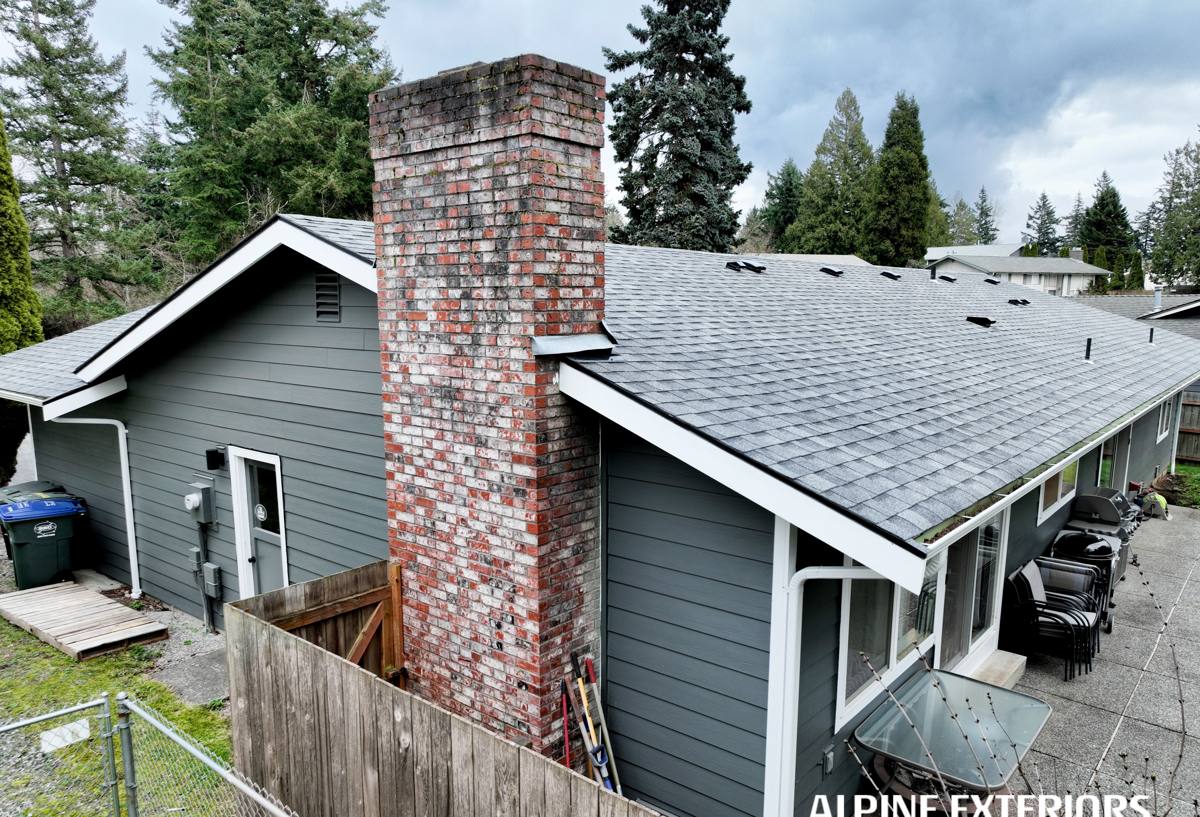
What Sehome's Climate Actually Does to Siding
Salt Air and Corrosion
Sehome isn't waterfront, but it's well within reach of the salt-laden air that moves through Bellingham off the Sound. Salt speeds up corrosion on fasteners, flashing, and any exposed metal trim, and it wears down lower-grade coatings faster than they'd wear in a drier inland climate. That's why fastener choice and flashing material matter as much as the siding panel itself on a job like this.
Driving Rain Against Wall Assemblies
Wind-driven rain pushes moisture sideways into siding laps, window flashing, and any gap where two materials meet, rather than just sheeting off a flat surface. A siding system that isn't dimensionally stable, or that wasn't installed with correct lap and clearance details, gives that wind-driven water a place to collect. On a sloped Sehome lot, grading and drainage around the foundation add another layer to how much water ends up working against the lower courses of siding.
A Long Moss and Mildew Season
Tree cover and mild, moist temperatures mean moss and algae get a long growing season across Bellingham, and shaded or north-facing walls in Sehome are usually first to show it. Any material that's even slightly porous, or that holds moisture at the surface, becomes a growth surface over time, and once moss or algae takes hold it holds even more moisture against the wall than bare siding would.
Why We Install Only James Hardie Fiber Cement
We don't offer a menu of siding products for Sehome jobs. We install James Hardie fiber cement, and that's a professional standard built from what we consistently see when older siding comes off walls in this exact climate.
- Non-combustible core: fiber cement doesn't feed a fire the way wood-based siding can, which matters for homeowner safety and can matter for insurance too.
- Factory-applied ColorPlus finish: color is baked on under controlled factory conditions rather than brushed on in the field, so it holds up longer against fading, chalking, and moisture than site-applied paint.
- HZ5 climate-engineered formulation: built for regions with heavy moisture exposure and freeze-thaw cycling, which fits Whatcom County's weather better than Hardie's formulations meant for drier, warmer regions.
- Dimensional stability: fiber cement doesn't swell, cup, or warp the way engineered wood products can after repeated exposure to a wet season.
- Strong transferable warranty: Hardie backs the product with one of the stronger warranty structures in the industry, as long as installation follows their published spec.
We don't install LP SmartSide, vinyl siding, Cemplank, Allura, primed spruce, or cedar. Each of those products has a place in the market and plenty of homeowners are satisfied with them elsewhere. But we've made a standing professional call that in a climate with this much sustained moisture and salt exposure, we'd rather fully stand behind one system than offer a cheaper option that quietly shifts maintenance risk onto the homeowner a few years down the road.
What a Correct Installation Actually Involves
Fiber cement siding is only as good as the details underneath it. A panel that looks identical to a neighbor's from the street can be installed in a way that fails in five years or one that holds up for decades, and the difference is almost never visible once the job is done.
Weather-Resistive Barrier and Rainscreen
Behind the siding, a correctly lapped weather-resistive barrier needs to shed any water that gets past the cladding, and on a wet-climate job like this we build in a drainage gap, sometimes called a rainscreen, so that any incidental moisture behind the panels can actually dry out instead of sitting against the wall sheathing.
Fastening and Clearances
Hardie's spec calls for specific fastener types, spacing, and penetration depth, and for minimum clearances between the bottom edge of the siding and grade, decks, roofing, and other horizontal surfaces. Skipping those clearances is one of the most common shortcuts we see on older installs, and it's a direct path to trapped moisture at the bottom courses.
Flashing at Every Penetration
Windows, doors, hose bibs, light fixtures, and vents all interrupt the siding plane, and each one needs its own flashing detail so wind-driven rain can't work its way behind the cladding. This is the single area where we spend the most extra time compared to a faster, lower-cost install, because it's also the area most likely to cause a callback if it's rushed.
Caulking and Joint Treatment
Hardie panels need factory-primed cut edges sealed, and joints treated according to spec rather than just caulked over generically. Done right, this keeps water out of the cut ends of the boards, which is one of the more vulnerable points on any fiber cement job.
| Install Detail | Why It Matters in Sehome |
|---|---|
| Rainscreen / drainage gap | Lets incidental moisture from wind-driven rain dry out instead of sitting against sheathing |
| Correct fastener type and spacing | Resists salt-air corrosion and keeps panels secure through wind events |
| Bottom-of-siding clearances | Prevents standing water and splash-back from grading on sloped lots from wicking into panels |
| Flashing at every penetration | Stops wind-driven rain from working behind siding at windows, doors, and fixtures |
| Sealed cut edges and joints | Protects the most moisture-vulnerable points on the board from a long, wet moss season |
Our Process on a Sehome Siding Job
- On-site assessment: we walk the exterior, check existing siding and substrate condition, and note anything specific to the lot, slope, shade pattern, tree cover, that will affect the install.
- Honest scope and estimate: we explain what we find in plain terms, including any substrate repair likely needed once old siding comes off, before giving a written estimate.
- Tear-off and substrate check: once old siding is removed, we inspect sheathing and framing for hidden moisture damage, common on older Bellingham homes, before anything new goes up.
- Weather barrier and rainscreen installation: the drainage plane goes in correctly before any siding panel is hung.
- Hardie panel installation to spec: fastening, clearances, and flashing follow Hardie's published installation guide, not a shortcut version of it.
- Final walkthrough: we go over the finished job with the homeowner and point out anything worth knowing for long-term care.
Cost Factors for a Sehome Fiber Cement Project
Every home is different, and we won't quote a number without seeing the property, but the factors below are the ones that actually move the price on a Sehome job, more than the base cost of the siding panels themselves.
| Factor | How It Affects the Job |
|---|---|
| Substrate condition | Hidden moisture damage found during tear-off adds repair scope before new siding can go on |
| Home size and wall complexity | More corners, dormers, and trim details mean more cutting, flashing, and labor time |
| Lot slope and access | Sloped Sehome lots can complicate scaffolding, staging, and material access |
| Existing siding type | Removing brittle or hazardous older materials takes more care and time than a simple strip-off |
| Trim and color selections | ColorPlus color choice and trim profile don't change performance but do affect material cost |
Signs a Sehome Home May Need New Siding
- Soft or spongy spots low on the wall or around window trim
- Persistent moss or algae growth on shaded or north-facing walls that returns soon after cleaning
- Visible warping, cupping, or gaps between boards
- Peeling or chalking paint that keeps returning within a year or two of repainting
- Staining or discoloration streaking down from seams or trim joints
- Rust staining around fasteners or trim
Why a Crew That Already Works Sehome Matters
A crew that installs siding across Bellingham day to day sees how salt air, wind-driven rain, and a long moss season actually behave on real houses over a full year, not just how a product performs on paper. That repeated, local exposure shapes practical decisions on a Sehome job: how much extra flashing attention a shaded, tree-covered wall needs, how a sloped lot changes drainage planning around the base of the siding, and which details are worth the extra time on install day so the homeowner isn't dealing with a callback two winters later. A contractor who only occasionally works in this specific climate is more likely to fall back on generic details that don't quite fit what this part of Bellingham throws at a house.
If your Sehome home needs new siding, or you're not sure whether what's on the walls now still has good years left in it, we're glad to take a look and give you a straightforward, honest assessment. Reach out using the form below to schedule a free, no-pressure estimate.