 Bellingham
 Siding That Actually Holds Up in Sehome
Sehome sits close enough to Bellingham Bay that salt-laden air is a daily fact of life, and it sits on and around enough wooded hillside that shade, moisture, and moss are just as constant. That combination is hard on exterior building materials. Paint fades and chalks faster near the water. Anything with exposed wood grain or seams that can wick water stays damp longer under tree cover, and damp wood-based siding is exactly what moss, algae, and rot organisms are looking for. If you're planning a siding replacement in Sehome, the product and the installation both need to be chosen with this specific climate in mind — not a generic "Pacific Northwest" climate, but the particular mix of coastal exposure and hillside shade that Sehome gets.
We install James Hardie fiber cement siding exclusively. Not because it's the only decent product on the market, but because after years of doing exterior work in Whatcom County, it's the one system we're willing to put our name behind for houses that have to deal with what Sehome throws at them year-round.
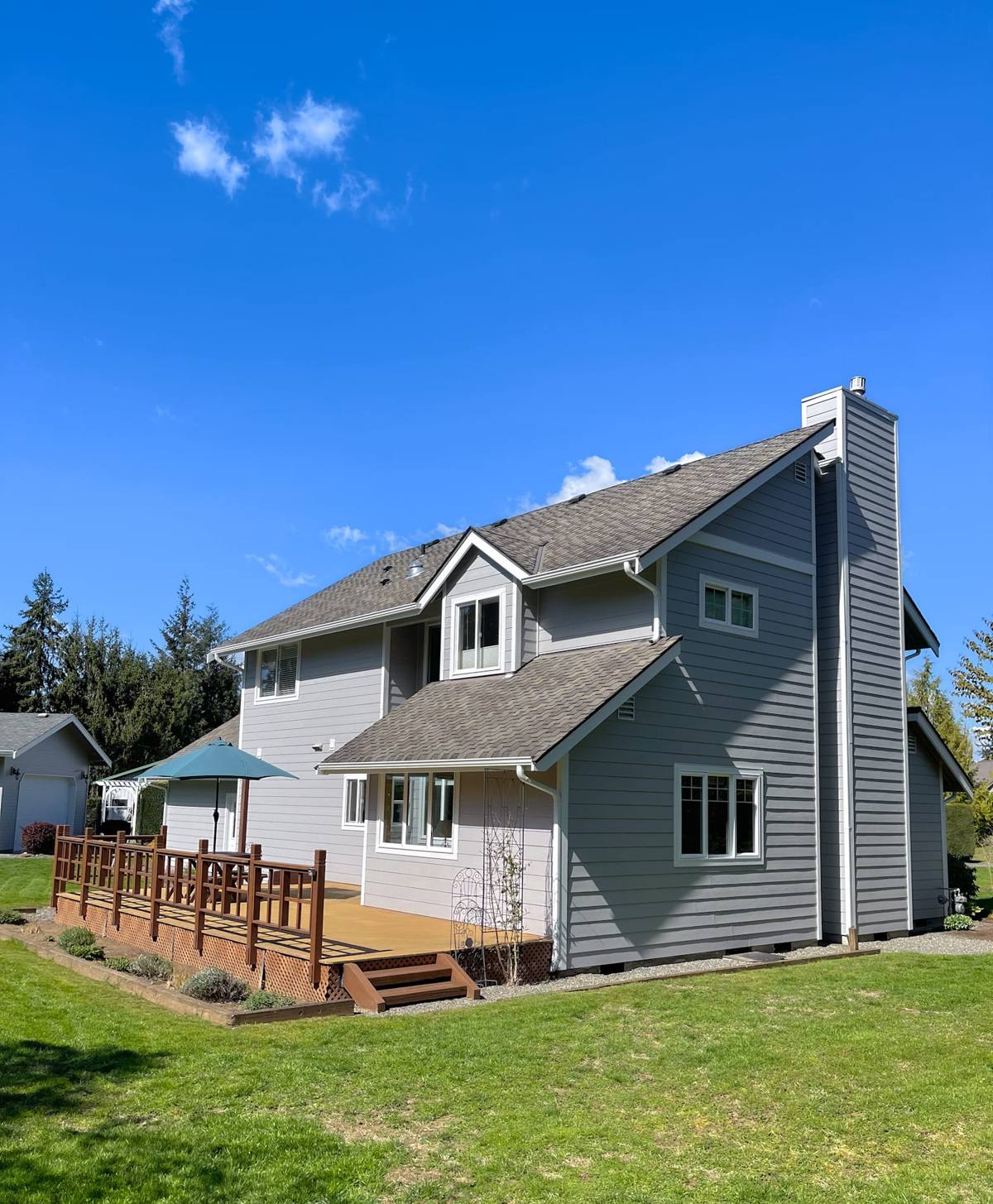
What Sehome's Climate Does to a House
Three things define the wear pattern on Sehome homes:
- Salt air: Proximity to the bay means airborne salt settles on exterior surfaces, accelerating the breakdown of cheaper paint films and corroding unprotected fasteners over time.
- Driving rain: Storms off the Sound don't fall straight down — wind-driven rain gets pushed sideways into wall assemblies, which punishes any siding system with weak seams, poor flashing, or joints that aren't properly lapped and sealed.
- A long moss season: Sehome's tree cover and hillside terrain keep plenty of walls shaded and slow to dry. Moss and algae don't just look bad — they hold moisture against the siding surface for weeks at a time, which is a problem for any material that isn't dimensionally stable when wet.
None of these are exotic conditions. They're just persistent, and persistence is what wears out a mediocre siding job. A house that gets re-sided without accounting for all three will look tired again within a handful of years, regardless of what material went up.
Why We Standardized on James Hardie
James Hardie fiber cement is non-combustible and dimensionally stable — it doesn't swell, cup, or wick water the way wood-based products can, which matters directly on the shaded, damp-prone sides of a Sehome house. The factory-applied ColorPlus finish is baked on under controlled conditions, so it resists the fading and chalking that field-applied paint struggles with in salt air, and it comes with a substantial finish warranty on top of the product warranty.
Just as important, Hardie makes climate-engineered HZ product lines. For a marine, high-moisture area like Bellingham, that means a formulation and installation spec built for exactly this exposure, not a one-size-fits-all product. We size and detail every Sehome job to that HZ10 climate zone specification.
We don't install LP SmartSide, vinyl, Cemplank, Allura, primed spruce, or cedar. Each of those has legitimate uses somewhere, but for the salt air, wind-driven rain, and shade this neighborhood sees, we're not willing to put our crew's name on the install and then watch a homeowner deal with moisture problems or premature fading five years later. Fiber cement done right, in this climate, is the trade-off we're comfortable standing behind.
What a Correct Installation Actually Involves
Fiber cement siding is only as good as the install underneath it. Most of the failures we get called out to inspect on older Sehome homes trace back to installation shortcuts, not the material itself. A correct job includes:
- A weather-resistive barrier and, on most walls, a rainscreen gap so water that gets behind the cladding can drain and the wall can dry.
- Proper clearance between the siding's bottom edge and grade, decks, and roof lines — a common source of rot on older homes is siding installed tight to the ground or a patio slab.
- Correctly lapped and sealed flashing at every window, door, and penetration, plus kick-out flashing wherever a roofline meets a wall to direct runoff away from the siding.
- Factory or field-primed and painted cut edges, since an unsealed cut edge is the one place fiber cement can absorb water.
- Fastener spacing and type matched to Hardie's published specs for our exposure category, not just "whatever holds it up."
- Correct panel and joint overlap, with joints staggered and sealed per manufacturer detail, not just butted and caulked.
Every one of these is a place where a rushed crew can cut a corner that's invisible on install day and expensive five years later. In a climate that pushes rain sideways and keeps walls damp under shade, there's very little margin for error in the details.
Our Process for a Sehome Siding Job
1. On-Site Assessment
We walk the house, note which elevations get the most weather exposure, where moss and algae staining already shows, where trim and flashing look questionable, and whether there's any existing moisture damage under the current siding that needs to be addressed before new siding goes up.
2. Tear-Off and Sheathing Check
We remove the existing siding and inspect the sheathing underneath. Any soft, rotted, or water-damaged sheathing gets repaired or replaced before anything new is installed — covering a compromised wall with new siding just hides the problem.
3. Weather Barrier and Rainscreen
A new weather-resistive barrier goes on, with furring or a rainscreen product where the wall assembly calls for it, so the house can shed and dry water rather than trap it.
4. Hardie Installation to Spec
Panels or lap siding go up per Hardie's HZ10 installation instructions — correct fastening, flashing, clearances, and sealed cut edges as described above.
5. Trim, Caulk, and Touch-Up
Trim is installed, joints and penetrations are sealed with a paintable, exterior-grade sealant, and any factory-finish touch-up is done with Hardie's matched touch-up product.
6. Walkthrough and Cleanup
We walk the finished job with the homeowner, point out anything worth knowing about maintenance, and clear the site of debris and old material.
Why It Matters That We Already Work in Sehome
A crew that's worked Sehome specifically already knows which elevations tend to hold moss, which older homes commonly have sheathing issues under their existing siding, and how the City of Bellingham's permitting and inspection process typically runs for exterior work in this part of town. That's not a small thing — it's the difference between a quote that has to guess and one built on what we've actually found opening up walls in this neighborhood before. It also means we're not learning the local exposure conditions on your dime; the fastener spacing, flashing details, and rainscreen decisions we make are based on what actually holds up here, not a generic install sheet.
Comparing Siding Options for This Climate
| Factor | James Hardie Fiber Cement | Vinyl | Cedar / Untreated Wood |
|---|---|---|---|
| Moisture behavior in shaded, damp areas | Dimensionally stable, doesn't swell or wick | Won't rot but can trap moisture behind panels | Absorbs moisture, prone to rot without diligent upkeep |
| Salt air resistance | Factory finish resists fading/chalking | Can become brittle and discolor over time | Finish breaks down faster near salt exposure |
| Fire performance | Non-combustible | Combustible, can melt/deform near heat | Combustible |
| Maintenance in moss season | Occasional wash, factory finish holds up | Low maintenance but can look worn early | Regular sealing/staining and moss treatment needed |
| Typical warranty structure | Long-term, transferable product and finish warranty | Varies widely by manufacturer and grade | Typically no manufacturer warranty on the material itself |
Living With Fiber Cement Siding in a Bellingham Climate
Once it's installed correctly, Hardie siding in Sehome is genuinely low-maintenance, but "low" isn't "none." A few habits go a long way in this climate:
- Rinse siding annually, more often on shaded, moss-prone elevations, using a garden hose and soft brush rather than a pressure washer, which can force water behind joints.
- Keep gutters clear so overflow doesn't run down a wall section repeatedly.
- Trim back vegetation and tree limbs that keep a wall shaded and damp longer than the rest of the house.
- Check caulking at trim and penetrations every couple of years and re-seal if it's cracked or pulling away.
- Address any moss or algae growth early with an appropriate cleaner rather than letting it establish.
What to Ask Before Hiring Anyone for This Job
Because the install quality matters as much as the material, it's worth pushing on a few specifics with any contractor bidding a Sehome siding job:
| Question | Why It Matters |
|---|---|
| Are you using the HZ10 climate specification? | Confirms the installation is engineered for this region's moisture exposure, not a generic spec |
| Will you inspect and repair sheathing before re-siding? | Covering damaged sheathing hides problems instead of fixing them |
| Is a rainscreen or furring gap included? | Affects how well the wall assembly dries between rain events |
| How are cut edges sealed? | Unsealed cut edges are the main vulnerable point on fiber cement |
| What's covered under the warranty, and is it transferable? | Matters at resale and if problems surface years later |
Getting Started
If your Sehome home is showing chalky or faded paint, visible moss on shaded walls, or siding that's simply reached the end of its life, we're happy to take a look and walk you through what correct James Hardie installation would involve for your specific house — no pressure, no sales script. Reach out for a free estimate using the form below.