 Bellingham
 When a Storm Hits a Sehome Roof
Sehome sits close in to Bellingham, on rolling, tree-covered terrain that catches wind differently than the flatter parts of town. When a system rolls in off the water, homes here take it from more than one direction at once — gusts funneled by the hill, rain driven sideways under eaves, and falling branches from the mature tree canopy that gives the neighborhood its character. After a bad blow, we get calls about lifted shingles, water spots on ceilings, granules in the gutters, and the occasional limb through a roof plane. Some of that is obvious the day it happens. A lot of it isn't, and that's the part that costs homeowners money down the road if it's not caught early.
This page is about one job, done right, in one place: storm damage roof repair for Sehome homes, by a crew that already works this part of Bellingham and understands what the local weather does to a roof over time.
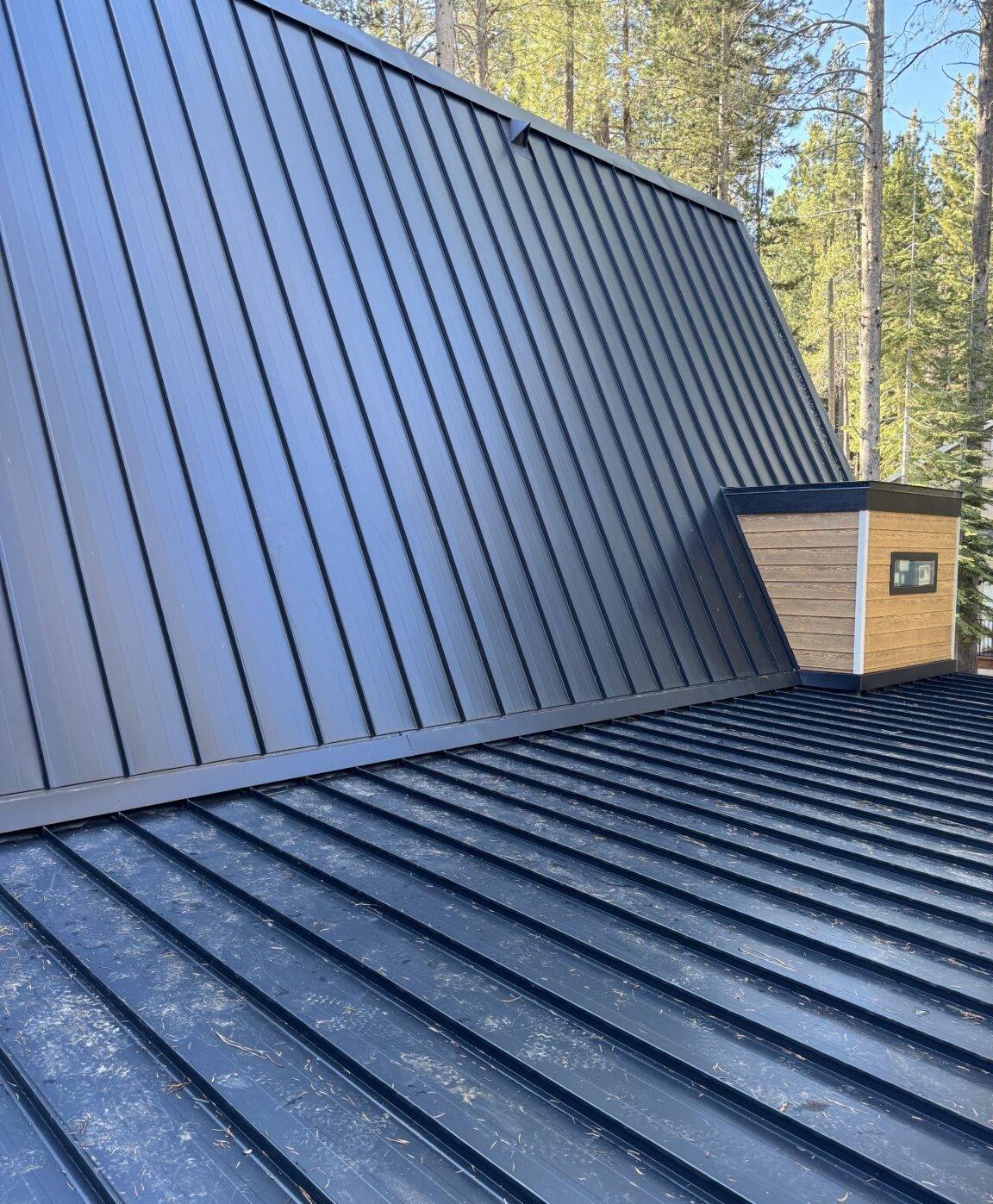
What Bellingham's Climate Does to a Sehome Roof
Whatcom County weather is hard on roofing in ways that aren't always dramatic. It's rarely one violent event — it's the accumulation.
Salt Air
Bellingham's proximity to the Sound means a steady low dose of salt-laden air moving through the region. Over years, that air accelerates corrosion on exposed metal — flashing, fasteners, gutter hardware, and vent stacks. A storm doesn't cause that corrosion, but it exploits it: a fastener that's already weakened by years of salt exposure is far more likely to back out or shear under wind load than a fresh one.
Driving Rain
Wind-driven rain during a storm doesn't behave like ordinary rainfall. It can be pushed uphill under shingle tabs, sideways past step flashing, and into any gap that would never leak in a calm downpour. Sehome's elevation and exposure mean wind-driven rain is a bigger factor here than in more sheltered parts of the city.
Long Moss Season
Bellingham's wet, mild stretch of the year runs long, and moss takes hold on north-facing and shaded roof slopes — common in a neighborhood with as much tree cover as Sehome has. Moss holds moisture against the roofing material, lifts shingle edges over time, and creates the exact conditions where storm wind can get underneath and do more damage than it would on a clean, moss-free roof. A storm-damaged roof with an existing moss problem almost always needs more than a patch.
Common Storm Damage We Find on Sehome Homes
- Wind-lifted or torn shingles — tabs creased, cracked, or torn loose, often on the windward slope
- Wind-driven rain intrusion — water finding its way under flashing or shingle laps without any visible exterior damage
- Limb and debris impact — cracked shingles, punctured decking, or dented metal flashing from falling branches
- Flashing failure — chimney, valley, and sidewall flashing worked loose by wind and repeated flexing
- Gutter and downspout damage — pulled fasteners, bent sections, and overflow that soaks fascia and soffit
- Granule loss — accelerated wear on shingles that were already aging before the storm hit
Some of these are urgent — active leaks, exposed decking, a hole from a fallen limb. Others are slow leaks in the making, the kind that show up as a ceiling stain two months later, long after the storm that caused it is forgotten.
What a Correct Storm Damage Repair Actually Involves
A rushed repair after a storm usually shows up again as a second repair within a year or two. Doing it right means treating the storm as a symptom and checking the roof as a system, not just patching the visible spot.
1. Full-Slope Inspection, Not Just the Obvious Spot
We look at the whole roof plane the damage occurred on, plus adjoining slopes and penetrations, because wind damage rarely stays confined to one shingle.
2. Deck Condition Check
If water got under the roofing material, we check the decking underneath for soft spots or delamination before we cover anything back up. Repairing over damaged decking is one of the most common shortcuts that causes a second failure.
3. Underlayment and Flashing Review
Wind-driven rain problems are often a flashing problem, not a shingle problem. We check step flashing, valley metal, and any penetration flashing (vents, chimneys) for gaps, corrosion, or fasteners that have worked loose.
4. Material Matching
We match shingle type, color, and where possible manufacturer line as closely as the market allows, so the repair doesn't stand out as a patch and doesn't create a mismatched wear pattern down the line.
5. Moss and Debris Clearing
If moss or debris contributed to the failure, we address it as part of the repair — not as an upsell, but because leaving it means the same weak point fails again next storm season.
Our Process From Call to Completed Repair
- Contact and triage — we ask what happened and how urgent it is (active leak vs. cosmetic damage) so we can prioritize correctly
- Emergency tarp if needed — for active leaks or exposed decking, stopping further water intrusion comes before anything else
- On-site inspection — a full look at the damage, the surrounding roof condition, and likely cause
- Written assessment — what's damaged, what it will take to fix, and an honest repair-vs-replace read if the roof is older or has broader issues
- Insurance documentation — photos and a clear scope of damage if you're filing a claim
- Repair — the actual work: decking, underlayment, flashing, and roofing material, done to match the existing roof
- Final walkthrough — we show you what was done and what to watch for going forward
Repair vs. Replacement: How We Help You Decide
Not every storm-damaged roof needs a repair — and not every storm-damaged roof needs a full replacement either. The honest answer depends on the roof's age and condition going into the storm, not just the storm damage itself.
| Factor | Leans Toward Repair | Leans Toward Replacement |
|---|---|---|
| Roof age | Under 15 years, otherwise sound | Nearing or past expected lifespan |
| Damage extent | Isolated to one slope or area | Spread across multiple slopes |
| Decking condition | Solid, no rot or soft spots | Soft, delaminated, or repeatedly repaired |
| Moss/wear history | Minimal prior wear | Heavy moss history or granule loss pre-dating the storm |
| Material availability | Shingle line still in production, easy match | Discontinued material, visible mismatch unavoidable |
We'll give you a straight answer on which side of that line your roof falls on. A repair that's genuinely sound is almost always the better value than a replacement pushed too early — but we won't sell a patch job on a roof that's clearly at the end of its useful life either.
Working With Your Insurance Claim
Most storm damage repairs in Sehome go through homeowner's insurance. We're not a public adjuster and we don't negotiate your claim for you, but we can make the process smoother:
- Photo documentation of the damage before any repair work covers it up
- A written scope of damage and repair that your adjuster can reference
- An honest description of what's storm-related versus what's pre-existing wear, so the claim holds up to review
Being straightforward about the difference between storm damage and ordinary aging matters — it protects your claim's credibility and it's simply the accurate picture of your roof.
Why a Crew That Already Works Sehome Matters
After a regional storm, roofing crews get busy fast, and out-of-area contractors often triage by ZIP code convenience rather than urgency. A crew already working Bellingham neighborhoods, including Sehome specifically, has a few practical advantages:
- Faster response for emergency tarping when a leak is active
- Familiarity with local roof types — the age and construction common to Sehome's mix of older and newer homes
- Whatcom County permitting knowledge when a repair crosses into work that requires it
- Accountability — we're not driving off after one job; we're a phone call away next storm season too
A Homeowner's Storm-Damage Checklist
If a storm has just come through and you're not sure whether your roof needs attention, this is a reasonable starting checklist:
- Check ceilings and upper closets for new stains, especially after wind-driven rain
- Look at gutters from the ground for granules, shingle pieces, or bent sections
- Scan the roofline for obviously lifted, missing, or curled shingles
- Note any fallen limbs that landed on or near the roof, even if nothing looks punctured
- Check attic insulation (if accessible) for damp spots after heavy rain
- Photograph anything unusual before cleanup, in case you need it for an insurance claim
- Don't walk the roof yourself after a storm — wet, storm-loosened roofing is not safe footing
If anything on that list gives you pause, it's worth a professional look before the next system comes through.
If your Sehome home has storm damage, or you're just not sure whether what you're seeing needs attention, we're happy to take a look. The estimate is free, there's no pressure to book anything on the spot, and you'll get a straight answer about what your roof actually needs — use the form below to get started.