 Bellingham
 Siding Installation Built for Silver Beach's Waterfront Climate
Silver Beach sits close enough to the water that the weather here plays by different rules than it does a few miles inland. Homes in this part of Bellingham take on salt-laden air, wind-driven rain that finds every gap in a wall assembly, and a moss season that seems to start earlier and end later each year. Siding that works fine in a sheltered subdivision can fail early here, and it usually fails quietly — moisture gets behind the cladding long before anyone notices a problem on the surface. A siding installation done right for Silver Beach isn't just about picking a good material. It's about how that material is detailed, flashed, and fastened to handle exposure that's genuinely tougher than average.
This page is about siding installation specifically for Silver Beach — what the local conditions demand, what a correct installation actually involves, and why the crew doing the work matters as much as the product going on the wall.
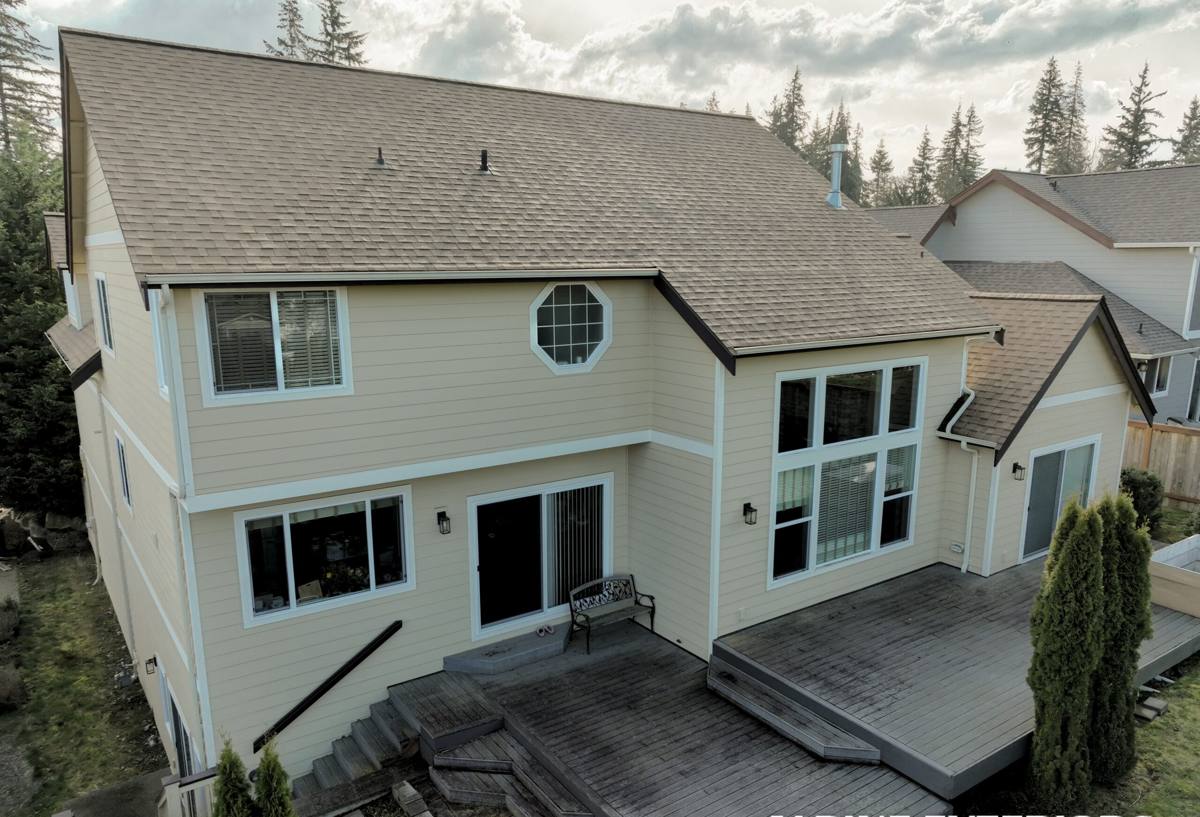
What Silver Beach Homes Are Up Against
Salt Air and Corrosion
Airborne salt accelerates corrosion on fasteners, flashing, and trim hardware. Over years, that means rust streaks, failing fastener heads, and metal components that give out well before the siding itself would. It also means the fastener and flashing specification matters more here than it does on a home set back from the water — cutting corners on hardware is one of the more common ways a siding job goes wrong in this area.
Driving Rain
Wind off the water doesn't just bring rain — it pushes it sideways and up under laps, trim, and penetrations that would stay dry in a calmer setting. Standard installation tolerances that pass inspection in a low-wind zone aren't always tight enough here. Every seam, corner, and penetration is a place water can be forced in if the assembly wasn't built with that wind load in mind.
Moss and Constant Dampness
Bellingham's long wet season already favors moss and mildew growth on north-facing and shaded walls. Close to the water, that season runs even longer, and homes with poor drainage behind the siding or tight ground clearance stay damp for extended stretches. Moss holds moisture against a wall and, on the wrong material, can trap it long enough to cause real damage underneath.
Why the Material Choice Matters Here
We install James Hardie fiber cement siding exclusively, and Silver Beach's exposure is a good illustration of why. Fiber cement doesn't absorb and swell the way wood-based products do, and it doesn't degrade under UV and salt exposure the way vinyl can — vinyl exposed to constant wind and salt air tends to become brittle and chalky faster than it would in a more sheltered location, and it can warp under direct afternoon sun reflected off the water. Hardie's ColorPlus factory finish is baked on and engineered to resist fading and moisture intrusion better than field-applied paint, which matters when a wall is getting hit with wind-driven rain on a regular basis. It's also non-combustible, which is a real consideration for anyone thinking about long-term risk exposure on their home, independent of what's happening at the coastline.
We don't install LP SmartSide, Cemplank, Allura, primed spruce, or cedar. Each of those has legitimate strengths, but none of them are what we'd choose to put on a Silver Beach wall knowing what this specific microclimate does to siding over a 20- or 30-year horizon. Hardie's HZ5 product line in particular is engineered for the kind of wet, coastal-influenced climate zones the Pacific Northwest falls into.
What a Correct Installation Actually Involves
The siding itself is only part of the job. In an exposure like Silver Beach's, the assembly behind and around the siding is where most long-term failures start or get prevented.
- Weather-resistive barrier installed and lapped correctly, with no shortcuts around windows or penetrations
- Rainscreen or drainage gap so any moisture that does get behind the siding has somewhere to go and dry out
- Flashing at every window, door, roofline, and deck ledger — the single most common point of failure on older installs
- Corrosion-resistant fasteners driven to Hardie's specified pattern and depth, not just "close enough"
- Proper clearance between the bottom of the siding and grade, decks, or roof lines to avoid wicking moisture
- Caulking and sealant used only where Hardie's install guide calls for it — over-caulking traps moisture just as badly as under-caulking lets it in
Skip any one of these and the siding can look fine for a few years while the real damage happens where you can't see it — sheathing rot, framing damage, and repairs that run far higher than the original installation would have cost.
Our Process for a Silver Beach Installation
1. On-Site Assessment
We walk the home and look specifically at wind exposure, drainage patterns, existing moisture damage, and how the current siding (if any) has held up. This tells us where extra attention is needed — usually the water-facing walls and any low-clearance areas.
2. Tear-Off and Sheathing Check
Old siding comes off and we inspect the sheathing underneath. In a wet-exposure area like this, it's not unusual to find soft spots or hidden rot behind old siding, especially around windows and at the base of walls. We address that before anything new goes on — covering over a compromised wall just resets the clock on the same problem.
3. Weather Barrier and Drainage Plane
We install the water-resistive barrier and drainage gap system sized for the exposure level of that specific wall. Water-facing elevations get the same careful detailing as more sheltered ones — this is not a place to treat every wall the same.
4. Flashing and Trim
Every window, door, and penetration gets flashed before the siding goes on around it. This step is tedious and easy to rush, which is exactly why it's the step that separates a durable installation from one that leaks in five years.
5. Hardie Panel or Lap Installation
Siding goes on to Hardie's fastening and clearance specifications, with corrosion-resistant hardware appropriate for the salt exposure in this area.
6. Final Walkthrough
We check seams, caulking, trim lines, and clearances before calling the job done, and walk the homeowner through what maintenance (if any) to expect going forward.
Material Comparison for Exposed Sites Like Silver Beach
| Material | Salt Air Resistance | Moisture Behavior | Long-Term Maintenance |
|---|---|---|---|
| James Hardie Fiber Cement | Strong — non-corroding, factory finish resists fade and chalking | Doesn't swell or rot; engineered for wet climate zones | Low — occasional wash, repaint interval is long |
| Vinyl | Weaker — can become brittle and discolor faster under salt/UV/wind | Doesn't rot itself, but seams and gaps allow water behind it | Low material upkeep, but early replacement risk is higher here |
| Cedar | Moderate — needs consistent sealing to hold up | Absorbs moisture; prone to moss, rot, and swelling if maintenance lapses | High — refinishing and inspection on a regular cycle |
| Primed Spruce / Engineered Wood | Weak to moderate — depends heavily on install and upkeep | Vulnerable to swelling and edge damage if moisture gets in | Moderate to high — moisture monitoring is important |
Why Hiring a Crew That Already Works Silver Beach Matters
Siding installation isn't uniform across Bellingham. A crew that mostly works inland neighborhoods with sheltered lots may not default to the drainage detailing, flashing rigor, or fastener spec that a water-exposed site like Silver Beach actually needs — not because they're careless, but because they haven't had to build that habit into every job. A crew that regularly works this stretch of Whatcom County treats the extra wind and moisture load as standard practice, not an afterthought.
That local familiarity also shows up in smaller, practical ways — knowing which elevations on a typical Silver Beach lot take the worst of the weather, recognizing early signs of moisture damage on older homes in the area, and not being surprised by drainage or grading conditions common near the shoreline.
What to Ask Before Hiring Anyone for This Job
- Will you install a drainage gap or rainscreen behind the siding, and why or why not?
- What fastener and flashing materials do you use, and are they rated for coastal or high-moisture exposure?
- How do you handle sheathing that turns out to be damaged once the old siding comes off?
- Are you a certified James Hardie installer, and do you follow Hardie's written installation instructions to the letter?
- What does your warranty actually cover — the product, the labor, or both?
A contractor who answers these questions clearly and specifically, without vague reassurance, is one who's actually thought through what a wet, wind-exposed job like this requires.
Get a Straight Answer for Your Home
Every Silver Beach property is a little different — some lots get hit harder by wind and rain than others, and existing siding can be hiding problems that aren't visible from the outside. If you're considering a siding replacement or want an honest read on how your current siding is holding up, we're happy to take a look and give you a straightforward assessment. Request a free, no-pressure estimate using the form below.