 Bellingham
 Why Siding Fails Faster in Sehome
Sehome sits close enough to Bellingham Bay that salt-laden air is a real factor on exterior materials, and the neighborhood's tree cover and hillside terrain mean a lot of homes stay shaded and damp long after a storm has passed. Combine that with the steady, driving rain that Whatcom County sees for much of the year, and you get siding that's under near-constant moisture pressure — not just occasional wetting, but weeks at a time where a wall assembly never fully dries out.
That matters because almost every siding failure we see starts the same way: water gets past the surface, finds a path behind the cladding, and sits there. On older homes in Sehome — many built well before current building codes addressed drainage planes and flashing details — that path is often a gap at a window trim, a failed caulk joint, or old nail penetrations that were never properly sealed. The siding itself may look fine from the sidewalk while the sheathing behind it is quietly rotting.
Add in the long moss season that comes with this much shade and moisture, and you get a second, slower problem: organic growth that holds water against the siding surface and accelerates whatever damage is already underway. A repair in Sehome isn't just about fixing what's visibly broken — it's about understanding why that spot failed before anything else does.
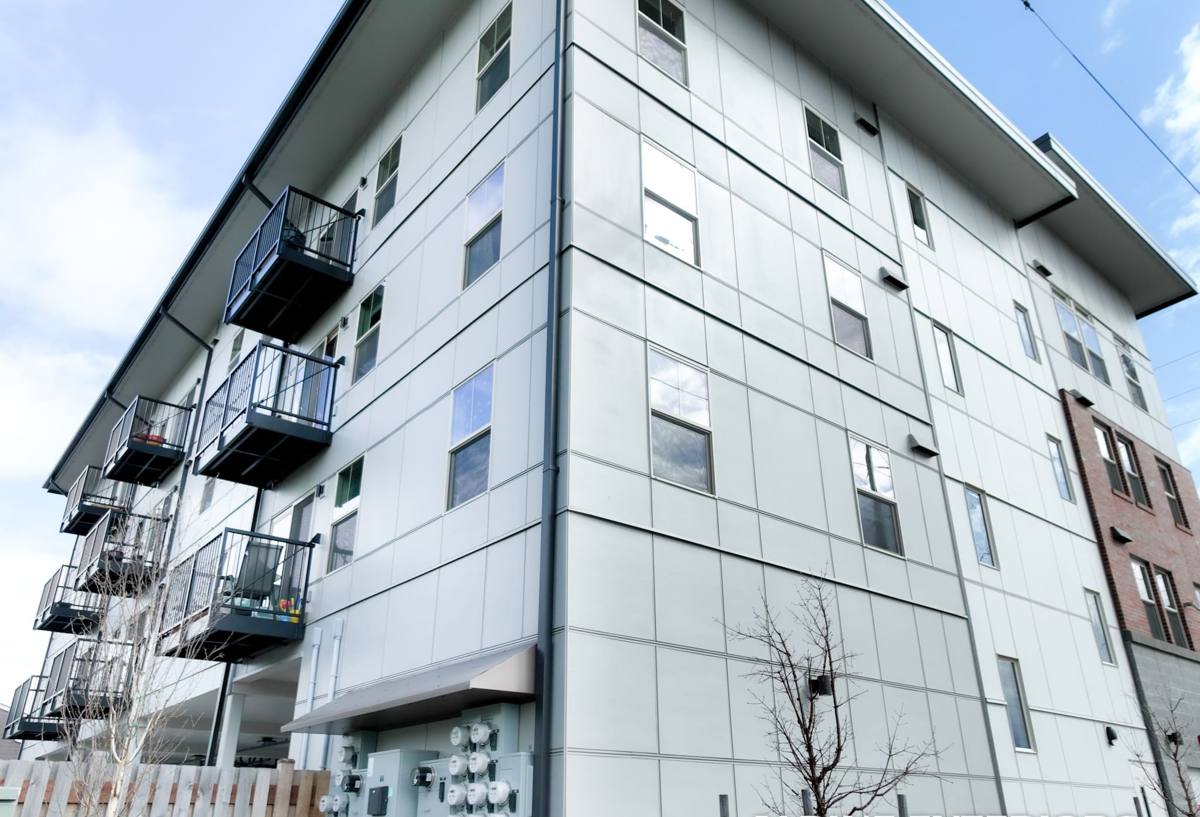
Signs Your Siding Needs Attention
Most homeowners call us after they've noticed something, but not everyone notices the same things. Here's what we tell Sehome homeowners to look for during a normal walk-around, ideally after a stretch of wet weather when problems are easiest to see:
- Soft or spongy spots when you press on siding near the bottom of walls, around window and door trim, or at deck ledger connections
- Dark streaking, green-black staining, or visible moss buildup, especially on north-facing or shaded walls
- Bubbling, peeling, or bulging paint that suggests moisture is trapped underneath
- Gaps or separation at butt joints, corner boards, or where siding meets trim
- Visible cracking or splitting, particularly after a hard freeze or wind event
- A musty smell near exterior walls inside the house, which often means moisture has already reached the sheathing
- Siding that flexes or feels hollow compared to surrounding sections
Any one of these on its own might be minor. Several of them together, or any sign paired with softness you can feel, usually means the damage has moved past the surface.
Why Small Problems Don't Stay Small Here
In a drier climate, a small crack or open joint might sit for a season without doing much harm. In Sehome's climate, that same opening is exposed to rain far more often than it dries, so damage compounds faster. We routinely find that a repair called in as "one bad board" turns out to involve sheathing damage a foot or two beyond the visible problem, simply because water had been tracking sideways and down behind the siding for longer than anyone realized.
What a Correct Repair Actually Involves
A repair done right is not just pulling off a damaged board and nailing up a new one. It's a sequence, and skipping steps is exactly how the same spot fails again in a few years:
- Remove enough surrounding material to see the actual extent of the damage, not just the piece that's obviously bad.
- Inspect the sheathing and framing behind the siding for rot, soft spots, or staining that indicates ongoing moisture intrusion.
- Address the water path — the flashing, caulk joint, or drainage detail that let water in to begin with. Replacing siding without fixing the entry point just resets the clock on the same failure.
- Replace or sister damaged framing and sheathing as needed before any new siding goes back on.
- Reinstall or replace siding with correct fastening, gapping, and flashing details — not just matched to look right, but installed to shed water properly.
- Match finish and color as closely as the existing material allows, understanding that some visible difference is often unavoidable on older siding that has weathered or faded unevenly.
Any contractor who quotes a repair without opening up the wall to look is guessing. We won't quote sight-unseen work on anything beyond the most obviously minor cosmetic fix.
Repair or Replace: How We Help You Decide
Not every damaged section needs a full re-side, and we're not going to tell you it does. But there's a point where patch-repairing an aging wall stops being the economical choice. Here's the general framework we use when walking a Sehome property:
| Factor | Repair Usually Makes Sense | Replacement Usually Makes More Sense |
|---|---|---|
| Extent of damage | Isolated to one or two areas | Present in multiple areas or spreading between walls |
| Underlying material | Sheathing and framing are sound | Rot has reached structural framing in more than one spot |
| Siding age and condition | Siding is otherwise in good shape, just locally damaged | Siding is near end of service life; paint failing broadly, material brittle or delaminating |
| Original product | Product still performs and is available to match | Original product (older hardboard, untreated wood, discontinued lines) is prone to repeat failure |
| Moss and moisture history | First occurrence, clear cause identified | Recurring problem across several seasons despite past repairs |
We'll always give you the repair option first when it's a legitimate long-term fix. When it isn't — when we're looking at a wall that's going to need this same conversation again in two years — we'll say so plainly, and explain why.
When Repair Isn't the Right Answer
Some of the older siding materials still on homes around Sehome — untreated wood, older composite hardboard products, and some vinyl installations original to the house — simply don't hold up well to repeated repair in this climate. Each patch is a new seam, a new joint, a new place for water to find a way in. On a wall that's already shown multiple failure points, that math stops working in the homeowner's favor.
When we reach that point with a customer, we're upfront that we install James Hardie fiber cement siding exclusively for full replacements — not because every other product is worthless, but because it's the product we're willing to stand behind long-term in this climate. Hardie's engineered HZ formulations are built specifically for wet, moderate climates like ours, its ColorPlus factory finish resists the fading and peeling that drives a lot of the repeat repair calls we get, and it's non-combustible, which matters to more homeowners every year. If a repair conversation turns into a replacement conversation, that's the direction we'll steer it — but we won't manufacture that conversation just to sell a bigger job.
Repairing Existing Siding That Isn't Hardie
Plenty of the repair calls we get in Sehome are on vinyl, cedar, or older fiber cement that someone else installed. We still do that work. A sound repair on existing siding — regardless of brand — is legitimate work, and we approach it with the same process: open it up, find the real cause, fix the water path, replace what's damaged, and match the finish as closely as the existing material allows. We're just honest that if you ever move to a full re-side, Hardie is what we'll put up, and we'll explain why when that conversation happens naturally — not before.
Our Process for a Sehome Repair Call
Here's what an actual visit looks like, start to finish:
- On-site inspection, including probing suspect areas and checking behind trim and at penetrations, not just a visual pass from the ground
- A written explanation of what we found, what caused it, and what it will take to fix properly — including if we think a section is beyond a sound repair
- A clear estimate that separates the repair scope from any recommended additional work, so you're never guessing what's optional
- Scheduling that accounts for weather — we don't open up a wall ahead of a multi-day rain system if it can be avoided
- Correct reinstallation with attention to flashing and drainage details, not just cosmetic matching
We're not going to upsell a full re-side onto a homeowner who called about one bad section of trim. We'll tell you what we actually find and let you make the call.
Why Local Experience in Sehome Matters
Siding failure patterns aren't identical from one Bellingham neighborhood to the next — orientation, tree cover, and proximity to the bay all change how a given wall behaves. A crew that's worked a number of homes in and around Sehome has already seen how the hillside shading and salt exposure here tend to concentrate damage on particular elevations, and knows which older construction details are common culprits for water intrusion in this specific area. That's the kind of pattern recognition that speeds up an accurate diagnosis and keeps you from paying for exploratory demo that a more familiar crew wouldn't have needed.
It also means fewer surprises on scheduling and permitting, since local crews already understand what the City of Bellingham typically expects for exterior repair work of this scope.
Get a Straightforward Look at Your Siding
If you're seeing soft spots, staining, moss buildup, or open joints on your Sehome home, it's worth having someone take an honest look before a small problem turns into a structural one. We'll give you a clear, no-pressure assessment of what's actually going on, what it will take to fix it correctly, and whether a repair or a full replacement makes more sense for your situation — with no obligation either way. Use the form below to request a free estimate.