 Bellingham
 Siding Repair Is a Different Job Than Replacement
Not every damaged wall in Sudden Valley needs a full re-side. Sometimes a section of siding has failed while the rest of the house is sound, and the right move is a repair that matches the existing material and gets the wall back to a properly sealed, weathertight condition. Sometimes what looks like a small patch job turns out to be the visible edge of a much bigger moisture problem once a board comes off. Knowing which situation you're actually in — and diagnosing it honestly before any work starts — is the whole job. Get that wrong and you either spend money patching a wall that needed to come off entirely, or you spend money re-siding a wall that only needed a section repaired.
Sudden Valley sits on the south shore of Lake Whatcom in Whatcom County, and its exterior surfaces deal with a specific combination: salt-laden air working its way inland off the Sound, driving rain that hits different walls of the same house with different force depending on elevation and tree cover, and a moss season that runs long under the area's heavy canopy. Siding repair here isn't a generic patch-and-paint job. It's diagnostic work first, and installation work second.
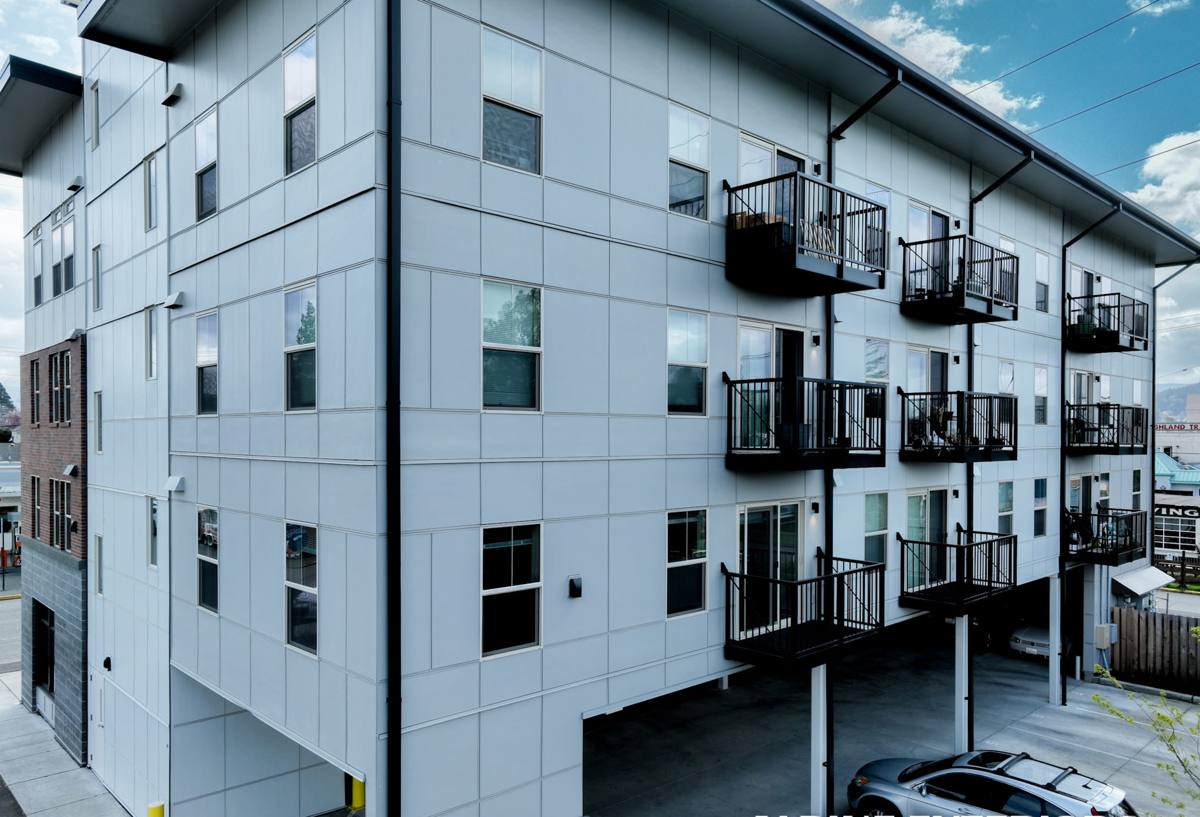
What Salt Air, Driving Rain, and a Long Moss Season Do to Siding Over Time
Salt Air and Fastener Corrosion
Air carrying salt from the Sound reaches well inland across Whatcom County, and over years it accelerates corrosion in fasteners, flashing, and any hardware that isn't rated for sustained exposure. A siding failure that looks like a cracked or loose board is sometimes actually a corroded fastener that let go first — the board just followed. A repair that replaces the visible damage but reuses the same grade of fastener is a repair that's going to fail again on the same schedule.
Wind-Driven Rain Finding the Weak Points
Rain around Lake Whatcom rarely falls straight down. Wind pushes it sideways into laps, trim joints, and any gap in the water-resistive barrier behind the siding, and Sudden Valley's hilly terrain means one wall of a house can take a much harder hit than the wall next to it. That's why damage often clusters on one or two elevations rather than spreading evenly around the house — and it's why a repair plan has to account for which walls are actually taking the weather, not just where the damage happens to be most visible from the road.
A Moss Season That Never Fully Lets Up
Shade, lake humidity, and mild temperatures keep moss and mildew active on exterior surfaces for most of the year in Sudden Valley. On siding, that shows up as dark staining, a slightly spongy feel to porous materials, and paint or finish that breaks down faster on shaded walls than on ones that see regular sun. Moss itself rarely causes structural damage directly, but it holds moisture against the surface longer, which speeds up whatever damage is already starting underneath.
Signs Your Sudden Valley Home Needs Siding Repair
Some of these are urgent, some aren't — but all of them are worth having looked at before the next wet season sets in.
- Cracked, split, or visibly warped siding boards, especially near corners, trim, or window and door openings
- Soft or spongy spots when you press on the siding, which usually means moisture has already gotten behind the surface
- Failed or missing caulk at joints and seams, particularly on walls that take direct wind-driven rain
- Persistent dark staining or moss growth that keeps returning shortly after cleaning
- Loose, buckling, or gapping panels that have pulled away from the wall
- Rust streaking below fasteners or flashing, a sign of corrosion working faster than it should
- Water stains, bubbling paint, or a musty smell on interior walls near an exterior wall — a strong signal that damage has already reached the framing
Repair or Replace? How We Make That Call
The honest answer depends on how far the damage has spread and what's behind it, not just how the wall looks from the driveway. We open up the affected area, check the condition of the sheathing and water-resistive barrier underneath, and look at how isolated or widespread the problem actually is before recommending either option.
| Factor | Points Toward Repair | Points Toward Replacement |
|---|---|---|
| Extent of damage | Limited to a section of one wall or a few boards | Spread across multiple elevations or the whole house |
| Condition behind the siding | Sheathing and barrier are dry and intact | Rot, staining, or soft sheathing found once boards come off |
| Age and material of existing siding | Newer, well-maintained material still under expected service life | Original material is old, discontinued, or already failing broadly |
| Color and profile match | Close match available for a clean, blended repair | No reasonable match exists without a visible patchwork look |
What a Correct Siding Repair Actually Involves
A repair that just swaps a damaged board for a new one without checking what's behind it isn't really a repair — it's a cosmetic fix on top of a problem that's still there. Done correctly, a siding repair in Sudden Valley includes:
- Removing the damaged section carefully enough to inspect the sheathing and water-resistive barrier underneath, not just the face of the siding
- Addressing anything found behind the siding — drying out, repairing, or replacing damaged sheathing before anything new goes back on the wall
- Matching the replacement material's profile, reveal, and thickness so the repaired section sits flush with the surrounding siding
- Fastening to the manufacturer's spec, with corrosion-resistant hardware suited to a salt-air, high-moisture environment
- Properly lapping and sealing flashing and joints so water sheds away from the repair rather than collecting at its edges
- Matching or refinishing the surface so the repair doesn't stand out as an obvious patch
Skipping the inspection step is the most common shortcut in siding repair, and it's the one that causes the same wall to fail again within a few years — because the moisture source that caused the original damage never actually got addressed.
The Color-Match and Material-Match Problem
If your home is already sided in James Hardie fiber cement, a repair usually means sourcing the matching profile and, where possible, a factory ColorPlus finish that's close enough to blend rather than stand out as a patch. Hardie's colors and profiles do change over time, so a repair on an older installation sometimes means the closest available match rather than an exact one — we'll always tell you honestly how close that match is before any work starts, rather than promising an invisible repair we can't actually deliver.
If your home has a different siding material and it's failing in a way that a patch can't reasonably fix, we'll say so directly. We only install James Hardie fiber cement, so when a repair isn't realistic — because the damage is too widespread, the material is discontinued, or a patch would leave an obvious mismatch — our honest recommendation is usually a full re-side rather than a repair that won't hold up or won't look right. That's not an upsell; it's the same standard we apply to every job, which is that we'd rather tell a homeowner the truth about what a wall needs than sell a repair that's going to disappoint them in a year or two.
Our Siding Repair Process for Sudden Valley Homes
We start with an on-site assessment that looks at every affected wall individually rather than assuming uniform damage around the house — given how much elevation, tree cover, and wind exposure varies from one side of a Sudden Valley property to another, that variation matters. We open up damaged areas to check what's happening behind the siding before quoting a scope, so the estimate reflects what the wall actually needs rather than a guess based on surface appearance. From there we put together a clear, written scope before any work begins, including whether we're recommending a targeted repair or a broader replacement and why. Because Sudden Valley is a private community with its own road network and homeowners association, we also plan access and scheduling around that up front rather than working it out on the day of the job.
Why a Local Crew That Already Works Sudden Valley Matters
A contractor who regularly works in Sudden Valley has already seen which walls tend to fail first in this specific setting — the shaded, north-facing sections that never fully dry out, the elevations that take the brunt of wind-driven rain off the lake, the fastener corrosion that shows up earlier here than it does on a drier, more open lot inland. That familiarity shortens the diagnostic part of the job and makes the repair-or-replace call more reliable, because it's based on a pattern of real experience in this exact climate rather than a generic assessment. It also means fewer surprises around HOA access and scheduling, which matters more in a private, gated community than it does on a standard city lot.
Questions Worth Asking Before You Hire for a Siding Repair
- Will they open up the damaged area to check the sheathing and barrier behind it, or just replace what's visible?
- Can they get a reasonable color and profile match for your existing siding, and will they tell you honestly if they can't?
- Do they carry current Washington contractor licensing and active liability insurance?
- Have they worked in Sudden Valley or similar HOA-governed communities before, and do they understand the access requirements?
- Will you get a written scope that states clearly whether the recommendation is a repair or a full replacement, and why?
If you're seeing damage, staining, or soft spots on your siding, we're happy to come take a direct look and give you an honest read on whether it's a repair or something bigger — no pressure either way. Reach out below for a free estimate.