 Bellingham
 Siding Replacement for Barkley Homes
Barkley is one of Bellingham's more established planned neighborhoods, with a mix of home styles built across different decades — which means the siding on these houses spans just as many eras and materials. Whether your home still has its original siding, a mid-life vinyl retrofit, or aging fiber cement that's starting to show its age, a siding replacement is a chance to fix the underlying problems for good, not just refresh the look. We work throughout Bellingham and Whatcom County, and Barkley's mix of tree cover, exposure, and older housing stock gives us a good read on what actually fails here versus what just looks tired.
This page is about one thing: doing a siding replacement correctly for a Barkley home, with James Hardie fiber cement, installed to the manufacturer's specifications for our climate. We don't install vinyl, LP SmartSide, cedar, or other fiber cement brands — more on why below — but first, let's talk about what your siding is actually up against here.
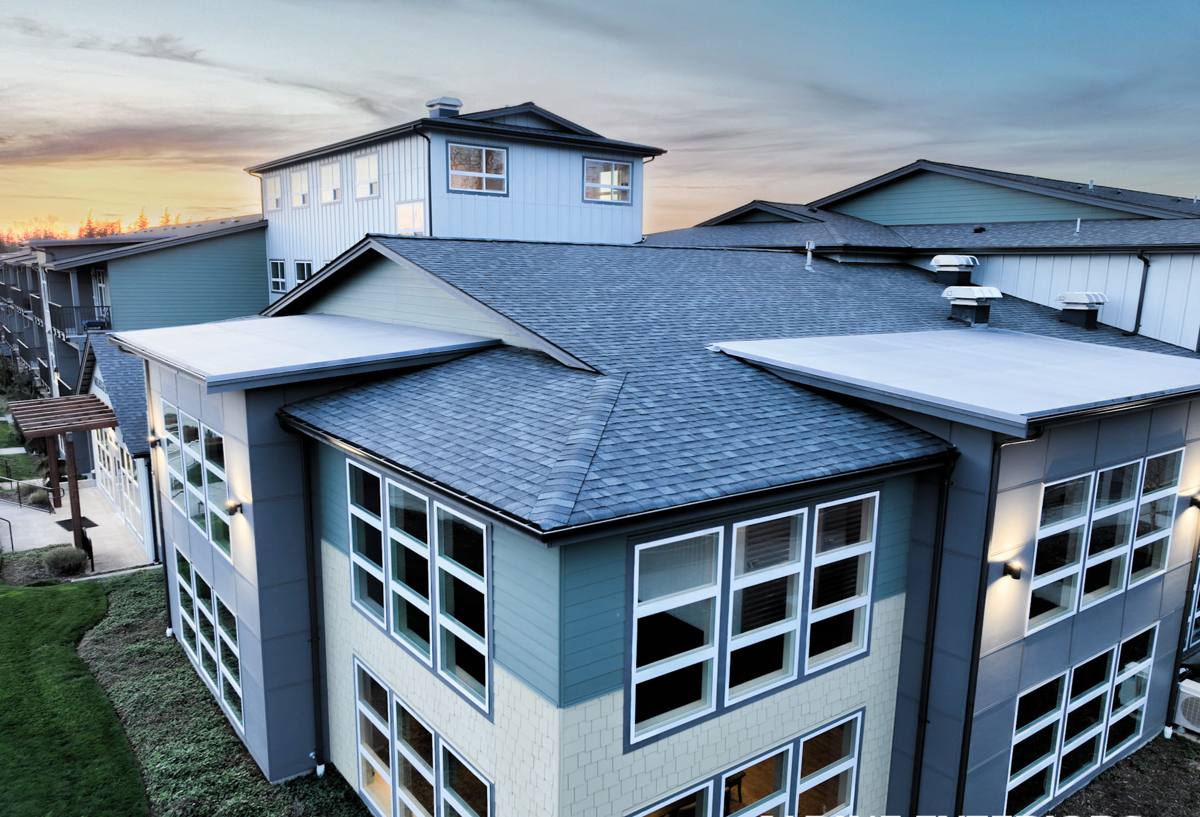
What Bellingham's Climate Does to Siding
Whatcom County sits close enough to the Salish Sea that salt-laden air is a real factor on siding, trim, and fasteners, even a few miles inland. Combine that with our long stretch of driving rain — wind-blown, not just falling straight down — and siding has to shed water sideways as well as vertically, especially at corners, window trim, and butt joints. Add a moss season that can run from early fall through late spring in shaded, tree-heavy neighborhoods like Barkley, and you've got a material stress test that plays out year after year.
Why This Matters for Material Choice
- Salt air accelerates corrosion of exposed fasteners and lower-quality metal flashing, and it degrades some paint and coating systems faster than manufacturers' published fade timelines assume.
- Driving rain exploits any gap in house wrap, flashing, or caulking — water finds the weak seam, not the wide-open face of the wall.
- Moss and algae thrive on siding that stays damp in shaded, low-airflow spots, which is common under mature trees found throughout Barkley's older lots.
- Temperature swings between wet winters and warm, dry summer stretches stress any siding material that expands and contracts more than fiber cement does.
None of this is unique to Barkley — it's Pacific Northwest coastal siding physics. But Barkley's particular combination of mature landscaping, varied home ages, and proximity to the water means we see the full range of these issues on a single street.
Signs a Barkley Home Needs Siding Replacement (Not Just Repair)
Not every siding problem calls for a full replacement. But there are signs that patching is just delaying the inevitable:
- Soft or spongy spots when you press on the siding, especially near the bottom courses or below windows
- Visible buckling, warping, or separation at seams
- Paint that won't hold — you repaint every 3-5 years and it still looks chalky or peeling within a year or two
- Moss or black algae staining that returns within months of cleaning
- Rot in the sheathing or framing discovered when siding is pulled back for repair
- Persistent moisture smell or staining on interior walls that back up to exterior siding
If you're seeing one or two of these in isolated spots, a repair may be reasonable. If you're seeing several, or the same one repeatedly across the house, the underlying material or installation has likely reached the end of its useful life — and that's a replacement conversation.
What a Correct Siding Replacement Actually Involves
A siding replacement done right is not just swapping old boards for new ones. The siding itself is only part of a water management system that includes the weather-resistive barrier, flashing, and fastening.
Tear-Off and Sheathing Inspection
Once the old siding is off, we inspect the sheathing underneath for rot, delamination, or moisture damage — this is often the first time anyone has seen the actual condition of the wall assembly since the home was built. Any damaged sheathing gets replaced before anything new goes up; covering rotten wood with new siding just hides the problem for a few more years.
Weather-Resistive Barrier and Flashing
A new, continuous house wrap gets installed with proper overlaps and taped seams. Flashing at windows, doors, and roof-to-wall transitions gets rebuilt to shed water outward and downward — this is where driving rain does the most damage if it's skipped or done loosely.
Fastening and Fastener Selection
Given the salt air exposure in this part of Whatcom County, fastener choice matters more than most homeowners realize. We use corrosion-resistant fasteners rated for the application and follow James Hardie's fastening schedule exactly — proper spacing, embedment, and blind-nailing where called for — because under-fastened or improperly placed nails are one of the most common causes of premature siding failure.
Installation to Manufacturer Spec
James Hardie siding has specific clearance requirements from grade, roof lines, and decks, along with joint treatment and caulking specifications. Following these to the letter is what makes the difference between siding that performs for decades and siding that fails at year eight because of a shortcut nobody can see once the job is finished.
Why We Install Only James Hardie Fiber Cement
We get asked, especially by homeowners comparing quotes, why we don't offer vinyl, LP SmartSide, cedar, or other fiber cement brands. The honest answer is that we standardized on James Hardie because it's the product we're confident performs correctly, over the long term, in exactly the conditions Barkley and the rest of Bellingham throw at it.
| Factor | James Hardie Fiber Cement | Common Alternatives |
|---|---|---|
| Moisture behavior | Non-combustible cement composite, engineered HZ formulations for wet climates, dimensionally stable when wet | Wood-based products (LP SmartSide, cedar) can absorb moisture at cut edges and fastener points if not sealed correctly |
| Fire resistance | Non-combustible material | Vinyl softens/melts under heat; wood-based products are combustible |
| Finish longevity | Factory-applied ColorPlus finish, baked on and warranted separately from the substrate | Field-painted or factory-coated wood products depend heavily on maintenance and re-coating schedules |
| Installation sensitivity | Well-documented spec, but performance depends on following it exactly | Each product has its own sensitivities — vinyl expands/contracts with temperature, wood needs consistent sealing at every cut |
| Warranty structure | Long, transferable manufacturer warranty on the substrate and finish | Varies widely by brand and product line |
None of the alternatives are bad products in every situation — vinyl is inexpensive and low-maintenance in mild climates, and wood-based siding has real curb appeal. But in a coastal Pacific Northwest climate with salt air, driving rain, and heavy moss pressure, we've found the long-term trade-offs on maintenance burden and moisture management aren't worth it. Hardie's non-combustible composition, factory-applied finish, and climate-engineered product lines are built for exactly this kind of exposure, and the warranty backs that up with a transferable term that matters if you sell the home.
James Hardie Product Lines for This Area
James Hardie makes HZ5 and HZ10 formulations engineered for regions with more moisture and freeze-thaw cycling, which fits western Washington. Depending on the home's style, we typically work with:
- HardiePlank lap siding — the most common choice, available in multiple textures and exposures
- HardiePanel vertical siding — often used as an accent or for modern/craftsman styles common in some Barkley homes
- HardieTrim boards — for corners, window trim, and fascia, matched to the siding profile
- ColorPlus finishes — factory-applied color options that carry their own finish warranty, reducing the repainting cycle homeowners are used to with wood siding
Our Process for a Barkley Siding Replacement
- On-site assessment — we walk the exterior, check for soft spots, moisture damage, and existing flashing conditions before quoting anything
- Written scope and estimate — what's being torn off, what sheathing repair is anticipated, product line and color, and a clear price
- Tear-off and inspection — old siding removed, sheathing inspected and repaired as needed
- Weather barrier and flashing — new house wrap and flashing installed before any new siding goes up
- Hardie installation to spec — fastening schedule, clearances, and joint treatment followed exactly
- Final walkthrough — we review the finished work with you and go over warranty documentation
Why Hiring a Crew That Already Works Barkley Matters
Siding installation quality comes down to details that are invisible once the job is done — fastener placement, flashing laps, caulking joints, clearance from grade. A crew that already works in Bellingham and Whatcom County has seen how these details play out over years, not just at the final walkthrough. We know what driving rain does to a poorly flashed window return, what salt air does to the wrong fastener over a decade, and what moss does to siding installed without enough clearance from overhanging trees. That local track record is worth more than a lower bid from a crew unfamiliar with how our specific climate treats a siding job over time.
What to Expect Cost-Wise
Siding replacement costs vary based on the size of the home, the amount of sheathing repair needed, trim complexity, and product selection. Rather than quote a number that won't reflect your specific home, we provide a detailed written estimate after an on-site assessment — that's the only way to give you an honest number instead of a guess.
If you're considering a siding replacement for a home in Barkley or anywhere else in Bellingham, we're happy to take a look and give you a straightforward, no-pressure estimate — just fill out the form below.