 Bellingham
 Building a Deck That Actually Holds Up in Silver Beach
Silver Beach sits along Lake Whatcom on the edge of Bellingham, and it's one of the more demanding spots in Whatcom County to build an outdoor structure correctly. Mature tree cover, sloped and wooded lots, and near-constant moisture from the lake and the region's marine climate mean a deck here works harder than one built on an open, flat lot across town. We've built and repaired decks throughout this neighborhood, and the pattern is consistent: decks that were built to a generic spec, without accounting for local shade, drainage, and moss pressure, start failing years before they should.
A deck in this part of Bellingham isn't just a weekend carpentry project. It's a structure that has to shed water fast, resist rot in shaded, low-airflow spots, and survive a moss season that can run more than half the year. Getting it right the first time costs less than fixing it twice.
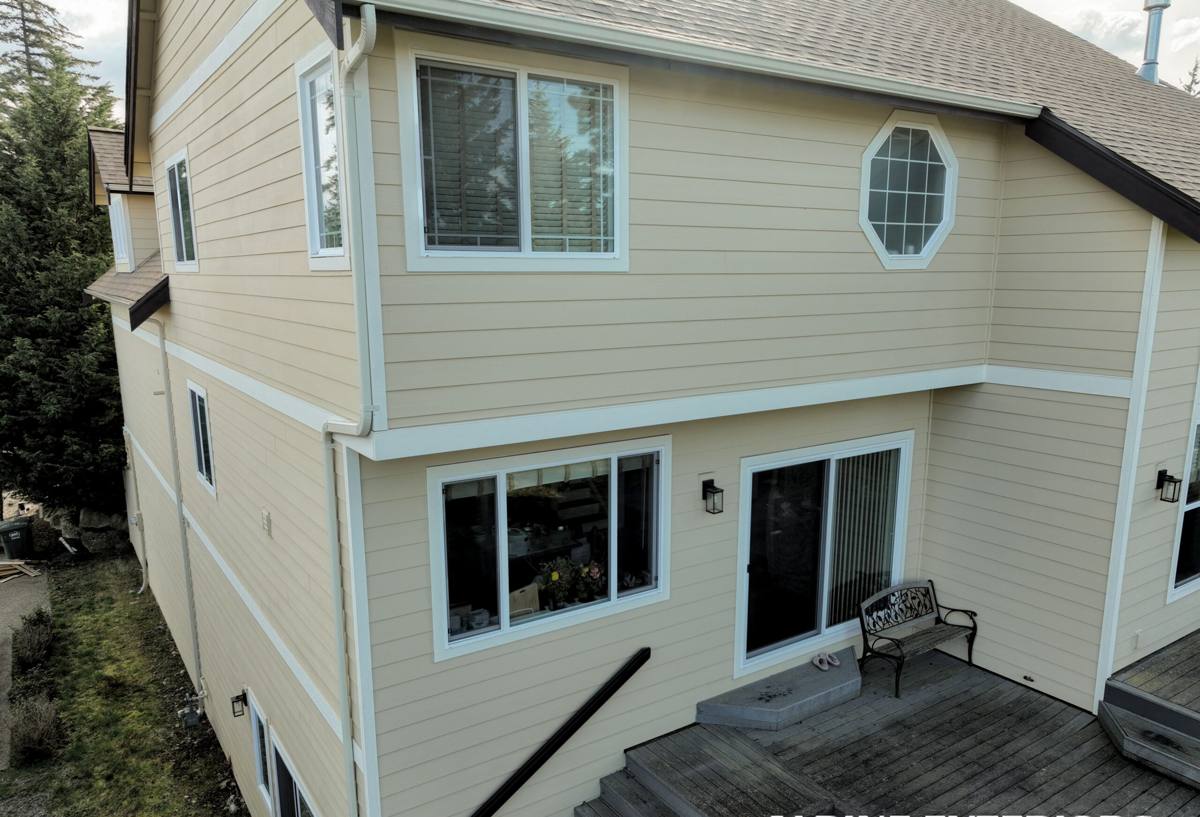
What Silver Beach's Climate Does to a Deck
Whatcom County's marine climate is the backdrop for every deck decision we make here — salt air drifting in off Bellingham Bay, long stretches of driving rain, and short summers that don't give lumber much time to fully dry out between wet spells. On lake-adjacent, tree-covered lots like many in Silver Beach, that moisture problem is worse than average because of three compounding factors:
Shade and Airflow
Mature trees are part of what makes this neighborhood attractive, but a deck tucked under a canopy loses the sun exposure that would normally dry it out between rains. Wood and even composite decking that stays damp for days at a stretch is exactly where moss, algae, and rot get a foothold.
Slope and Drainage
Hillside lots near the lake often mean a deck is stepped, cantilevered, or built over uneven grade. If the ground underneath doesn't drain, water sits against footings and framing long after the surface boards look dry.
Moss Season
In this climate, moss isn't a cosmetic nuisance — it's a moisture trap. Once it establishes on decking or in the gaps between boards, it holds water against the wood or capping material around the clock, accelerating rot and staining that a dry-climate deck would never experience.
What a Correctly Built Deck Needs Here
A deck built for Silver Beach conditions is not the same product as a stock deck kit. The details that matter most are almost all invisible once the project is finished, which is exactly why they get skipped by builders who aren't used to this environment.
Ledger Flashing and Attachment
The ledger board — where the deck attaches to the house — is the single most common failure point on Pacific Northwest decks. It needs proper flashing that directs water away from the house band board, not caulk alone. We treat this as non-negotiable on every attached deck we build.
Fastener and Hardware Grade
Standard galvanized hardware corrodes faster near salt air and in chronically damp, shaded conditions. We use hardware and fasteners rated for the moisture exposure of the specific site, not just whatever is cheapest at the yard.
Board Spacing and Airflow Underneath
Decking gaps and under-deck ventilation are sized to let the structure dry out between rain events. A deck built too tight, or too close to grade, stays wet longer and grows moss faster no matter what material sits on top.
Footings on Sloped or Wooded Ground
Footings need to reach stable, load-bearing soil below the frost line and account for root systems and drainage patterns on sloped lots — not just meet minimum depth on paper.
Choosing a Decking Material for This Climate
There's no single "best" decking material — there's a best fit for your site, budget, and how much upkeep you want to do. Here's how the common options actually perform under Silver Beach's shade-and-moisture combination:
| Material | Moss/Moisture Behavior | Maintenance | Typical Cost Range | Lifespan (this climate) |
|---|---|---|---|---|
| Pressure-treated lumber | Absorbs moisture; needs sealing to resist moss and rot | Annual cleaning, re-sealing every 1-2 years | Lowest upfront cost | 10-15 years with upkeep |
| Cedar | Naturally rot-resistant but still needs care in shaded spots | Regular cleaning and periodic oil/sealant | Moderate | 15-20 years with upkeep |
| Composite decking | Doesn't rot, but can still grow surface moss/algae in deep shade | Periodic washing; no sealing needed | Higher upfront cost | 25-30+ years |
| PVC/capped polymer | Fully moisture-resistant surface; best in constantly damp, shaded areas | Occasional washing | Highest upfront cost | 25-30+ years |
On heavily shaded, wooded Silver Beach lots, we often steer homeowners toward composite or capped polymer decking specifically because of how much moss pressure and sustained dampness the site sees. On more open, sun-exposed lots, cedar or well-maintained pressure-treated lumber can still be the right call, especially if budget is the priority. Either way, the honest trade-off is time: natural wood costs less to install but asks for more of your attention every year, while composite and PVC cost more upfront and ask for very little.
Railings, Stairs, and Code Requirements
Any deck built above a certain height needs a code-compliant guardrail — generally with baluster spacing tight enough that a small child can't pass through, and a rail height that meets current building code. Stairs need consistent rise and run, and proper handrails once they exceed a code-specified number of steps. Bellingham and Whatcom County permitting requirements apply based on deck height, size, and attachment method, and permits are typically required for decks above a certain height off grade or those attached to the home's structure. We handle permitting as part of the build so homeowners aren't left navigating that process alone.
Our Process, Start to Finish
1. On-Site Assessment
We walk the property, evaluate slope, shade, drainage, and existing structures if it's a rebuild, and talk through how the space will actually be used.
2. Design and Material Selection
Based on the site conditions, we recommend decking and hardware suited to the moisture and shade exposure — not a one-size-fits-all package.
3. Permitting
Where required, we handle the permit application and inspections so the project meets current Bellingham/Whatcom County code.
4. Framing and Build
Footings, ledger flashing, framing, and decking are installed to the standards outlined above, with attention to drainage and airflow underneath the structure.
5. Final Walkthrough
We walk the finished deck with the homeowner, cover basic maintenance expectations for the material chosen, and answer questions before we consider the job done.
Signs Your Current Deck Needs Attention
If you already have a deck in Silver Beach, here's what tells us — and should tell you — that it's time for a repair or rebuild rather than another season of patching:
- Soft or spongy spots when you walk across the boards
- Persistent moss or dark staining that returns within weeks of cleaning
- Visible gaps, cracking, or separation where the ledger meets the house
- Rust streaks around fasteners or hardware
- Railings or posts that feel loose or flex under pressure
- Standing water or slow drainage on the deck surface after rain
- Wood that's noticeably darker, swollen, or crumbling near ground contact
Any one of these on its own might just need attention. Several at once usually means the structure underneath has been compromised for a while.
Why It Matters to Hire a Crew That Already Works Silver Beach
A lot of deck problems in this neighborhood trace back to a build that was done to a generic spec — the kind that works fine in a drier, sunnier part of the state but wasn't built for a shaded, sloped, lake-adjacent lot in Whatcom County. A crew that already works this area knows to check for those conditions before the first footing goes in: how the specific lot drains, how much shade it holds through the year, and what hardware and material choices actually hold up here rather than just on paper. That familiarity shows up in fewer surprises during the build and a deck that's still solid well past the point a poorly matched one would be showing problems.
Ready for an Honest Look at Your Project
Whether you're planning a new deck, replacing one that's showing its age, or just want a straight answer on whether yours needs repair or a rebuild, we're happy to take a look. Reach out for a free, no-pressure estimate using the form below — we'll walk the site, talk through your options honestly, and give you a clear picture of what the job actually involves before you decide anything.