 Bellingham
 James Hardie Siding for Silver Beach Homes on Lake Whatcom
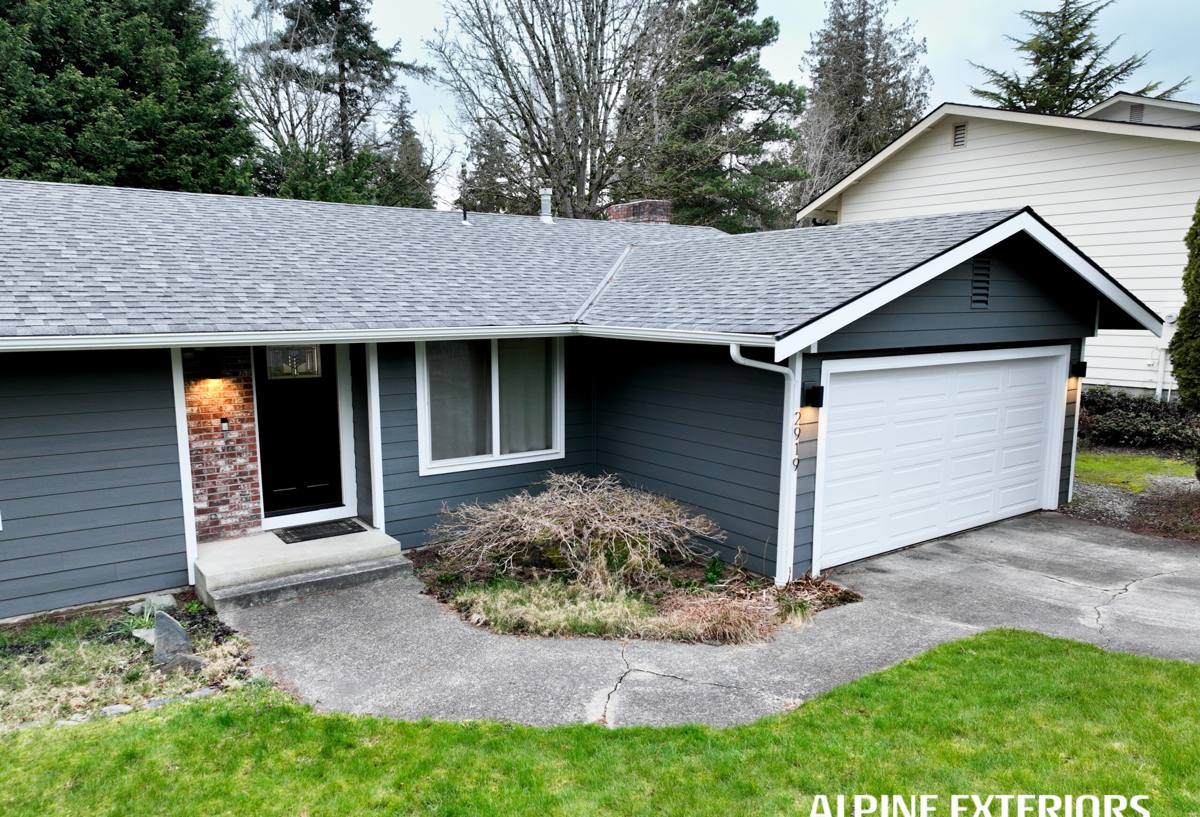
Silver Beach is one of the older lakeside neighborhoods on Lake Whatcom, and the housing stock reflects it — modest cottages built close to the water sitting a short walk from newer homes higher up the slope with a view over the lake. What almost every house here shares, regardless of age or elevation, is exposure to a damp, lake-influenced microclimate layered on top of Whatcom County's regular marine weather. That's a demanding environment for exterior siding, and it's part of why, when we install siding in Silver Beach, we install James Hardie fiber cement and nothing else.
This page is specifically about that siding decision: what Silver Beach's climate actually does to a wall over time, what James Hardie's product line is built to handle, what a correct installation involves on a lakeside property like this, and why the crew doing the work matters as much as the material itself.
What Silver Beach's Climate Does to Exterior Siding
Lake Humidity and Salt-Tinged Marine Air
Lake Whatcom keeps the air around Silver Beach damper, more often, than a home sitting further inland or up in drier terrain. That lake-driven humidity combines with the mild salt content that moves in off Bellingham Bay and the Salish Sea, which spreads across Whatcom County well beyond the immediate shoreline. Together they create a steady, low-grade moisture load on exterior walls that most siding materials weren't designed to sit in year after year without some kind of consequence — fading, chalking, swelling, or corrosion at the fastener line.
Driving Rain Off the Water
Wind moving across open lake water picks up speed before it hits a shoreline wall, and that means rain arrives at a lake-facing elevation with more force than the same storm delivers to a sheltered inland lot. Two homes a few doors apart in Silver Beach can have very different exposure — one with a full lake-facing wall taking direct wind-driven rain, another shaded and set back on the slope above. Siding, and the flashing and joint details around it, need to be built for the wettest wall on the house, not an average condition.
A Long Moss and Mildew Season
Between lake humidity, regular Pacific Northwest rainfall, and the tree cover common on Silver Beach lots, shaded and north-facing walls rarely get a long uninterrupted dry stretch for much of the year. That's the exact condition moss and mildew need to establish on a wall surface. A siding material that holds moisture at the surface rather than shedding it stays in that damp window longer, giving growth more time to take hold before the next dry spell.
Why James Hardie Fiber Cement Fits This Environment
We used to install a broader range of siding products. We narrowed that down after watching, repeatedly, which materials actually held up on lakeside and marine-exposed properties like the ones in Silver Beach, and which ones developed problems within a handful of years regardless of how well they were installed.
Climate-Engineered HZ5 Formulation
James Hardie makes different formulations of its fiber cement siding for different climate zones. The HZ5 line is engineered for regions with heavy moisture exposure and freeze-thaw cycling rather than hot, dry conditions — a close match for a lakeside, marine-influenced setting like Silver Beach. Using the correct HZ formulation for this climate zone is a baseline requirement for the product to perform the way it's designed to, not an upgrade.
Factory-Applied ColorPlus Finish
Hardie's ColorPlus finish is baked onto the board in a controlled factory process, rather than applied on site with paint or stain after installation. That factory cure holds up better against repeated wet-dry cycling and salt-tinged air than field-applied finishes, which is a real advantage on a wall that spends more of the year damp than dry. The only paint that touches ColorPlus siding in a correct installation is a matching primer on field-cut edges, not the board face.
Dimensional Stability
Fiber cement doesn't swell, cup, or warp the way wood-based siding products can after repeated wetting. On a lot with lake humidity working on the wall from one side and rain from the other, that stability is what keeps joints, laps, and fastener lines tight over years instead of opening up gaps that let moisture behind the siding.
Strong Transferable Warranty
Hardie backs correctly installed siding with one of the more substantial warranty structures in the industry, and it transfers to a new owner if the home is sold. That matters on a lake community like Silver Beach, where homes change hands and a documented, transferable warranty is something a buyer's inspector and lender will both notice.
James Hardie's Siding Lines: What Fits Silver Beach Best
James Hardie makes several siding profiles, and the right one for a given home depends on its style and, to some degree, its exposure. The table below covers the lines we install most often in this neighborhood.
| Product Line | Style | Best Fit For |
|---|---|---|
| HardiePlank lap siding | Horizontal overlapping boards, several texture and width options | Most Silver Beach homes; traditional and updated styles alike |
| HardiePanel vertical siding | Large-format vertical panels with battens | Modern builds and accent walls, including newer construction up the slope |
| HardieShingle siding | Staggered or straight-edge shingle profile | Cottage-style homes near the shoreline, a common look in older Silver Beach lots |
| HardieTrim boards | Trim and fascia to match or contrast the field siding | Window, corner, and roofline detailing on any of the above |
Color selection matters here too. Darker ColorPlus tones absorb more solar heat and show dust or pollen differently than lighter tones, but on a shaded, tree-covered lot, that's rarely the deciding factor — moisture performance and correct installation carry more weight in this climate than color choice does. We walk through Hardie's current color and texture options as part of every estimate.
What a Correct Installation Involves on a Lakeside Property
Fiber cement only performs the way it's engineered to when it's installed to Hardie's published specifications for this climate zone. On a lake-facing wall taking direct wind-driven rain, these details carry more weight than they would on a sheltered inland elevation:
- Weather-resistive barrier installed and correctly lapped, shingle-fashion, before any siding goes up
- A drainage gap or rainscreen behind the siding on walls with heavier moisture exposure, so any water that gets past the surface can dry out instead of sitting against the sheathing
- Correct fastener type, length, and spacing per Hardie's HZ5 installation instructions — not just "enough to hold the board up"
- Proper clearance from grade, decks, patios, and roof lines so siding isn't sitting in standing water or trapped runoff
- Joints and laps correctly overlapped and, where called for, flashed rather than caulked as the only line of defense
- Field-cut edges primed with a matching touch-up product before installation, preserving the factory finish's protection
Skip any one of these and the siding can still look correct for a season or two. The problems that show up when installation details are skipped — staining at laps, softening at the base of a wall, premature caulk failure — take a few wet seasons to surface, which is exactly why a hurried or corner-cutting install is easy to get away with until the homeowner is the one dealing with the consequences.
What Hardie's Warranty Actually Covers
Homeowners weighing siding often ask what "warranty" really means in practice, since the term gets used loosely across the industry. On a correctly installed James Hardie system, the manufacturer's warranty covers the fiber cement substrate against manufacturing defects for an extended term, and the ColorPlus finish carries its own separate coverage against fading and peeling. Both are voided by installation that doesn't follow Hardie's published requirements, which is one more reason installation quality and warranty coverage aren't really separate conversations — they're the same conversation. We keep documentation of the installation details for every job specifically so that warranty coverage is never in question if it's ever needed.
Our Process for a Silver Beach Siding Project
Walkthrough and Exposure Assessment
We start with an on-site walk of the exterior, paying close attention to how exposure varies wall by wall. A lake-facing elevation and a shaded, tree-covered wall on the same Silver Beach home can be dealing with genuinely different moisture loads, and that affects decisions on drainage detailing and, occasionally, product line.
Written Scope Before Any Work Begins
We put together a clear, written scope and timeline before demolition starts, so there's no ambiguity about what's included, what product and color have been selected, and what the schedule looks like.
Installation to Manufacturer Spec
Every fastener, gap, and flashing lap follows James Hardie's published installation requirements for this climate zone. That's what keeps the manufacturer's warranty valid and what actually determines whether the wall performs for decades rather than years.
Final Walkthrough
We walk the finished job with you, cover what little maintenance ColorPlus siding actually needs, and make sure you know what a healthy wall looks like if you ever want to check on it yourself down the road.
Why a Local Crew Matters in Silver Beach
Silver Beach is a neighborhood where exposure changes house to house and even wall to wall on the same house — lakefront lots taking direct wind-driven rain, uphill lots shaded by trees, older cottages with wall assemblies that weren't built to modern drainage standards. A crew that already works this shoreline has seen that variation across enough homes to adjust drainage detailing, fastener choice, and joint treatment by wall instead of applying one generic spec to the whole house. That judgment is what separates a siding job that looks fine on move-out day from one still performing the way it should twenty and thirty years later.
Before You Hire, Ask These Questions
- What siding material do they install, and why — and does it come with a written, transferable warranty?
- Do they install to the correct HZ formulation and installation spec for this climate zone, or a generic national standard?
- How do they handle a lake-facing wall taking direct wind-driven rain versus a shaded, sheltered elevation on the same house?
- Do they carry current Washington contractor licensing and active liability insurance?
- Will you get a clear, written scope of work and timeline before signing anything?
If you're weighing James Hardie siding for a home in Silver Beach, we're happy to walk the property, talk through what your specific walls need given their orientation and exposure, and give you a straightforward, no-pressure estimate. There's a form below — reach out and we'll set up a time to take a look.