 Bellingham
 Why Silver Beach Roofs Wear Differently Than Roofs Inland
Silver Beach sits in one of the wetter, greener pockets of Bellingham, and that combination is exactly what shortens the life of an ordinary roof. Whatcom County's marine climate means long stretches of low-intensity rain punctuated by wind-driven storms off the Pacific, plus moisture-laden air that moves inland from Bellingham Bay and the Salish Sea. That air carries a faint salt content that can accelerate corrosion on exposed fasteners, flashing, and metal roof accents faster than a dry-climate roof would ever experience. Add in the tree canopy that shades many lots near the water, and you get long stretches of shingle surface that never fully dries out between rains.
The result is a roof that's working harder, more often, than a roof in a drier region. Moss gets a foothold in shaded valleys and north-facing slopes, granule loss accelerates on shingles that stay damp, and fasteners that were fine for a decade start to weep rust stains or lose their grip. None of this means Silver Beach homes need exotic materials — it means the installation has to be done correctly for this climate, not just to a generic minimum standard.
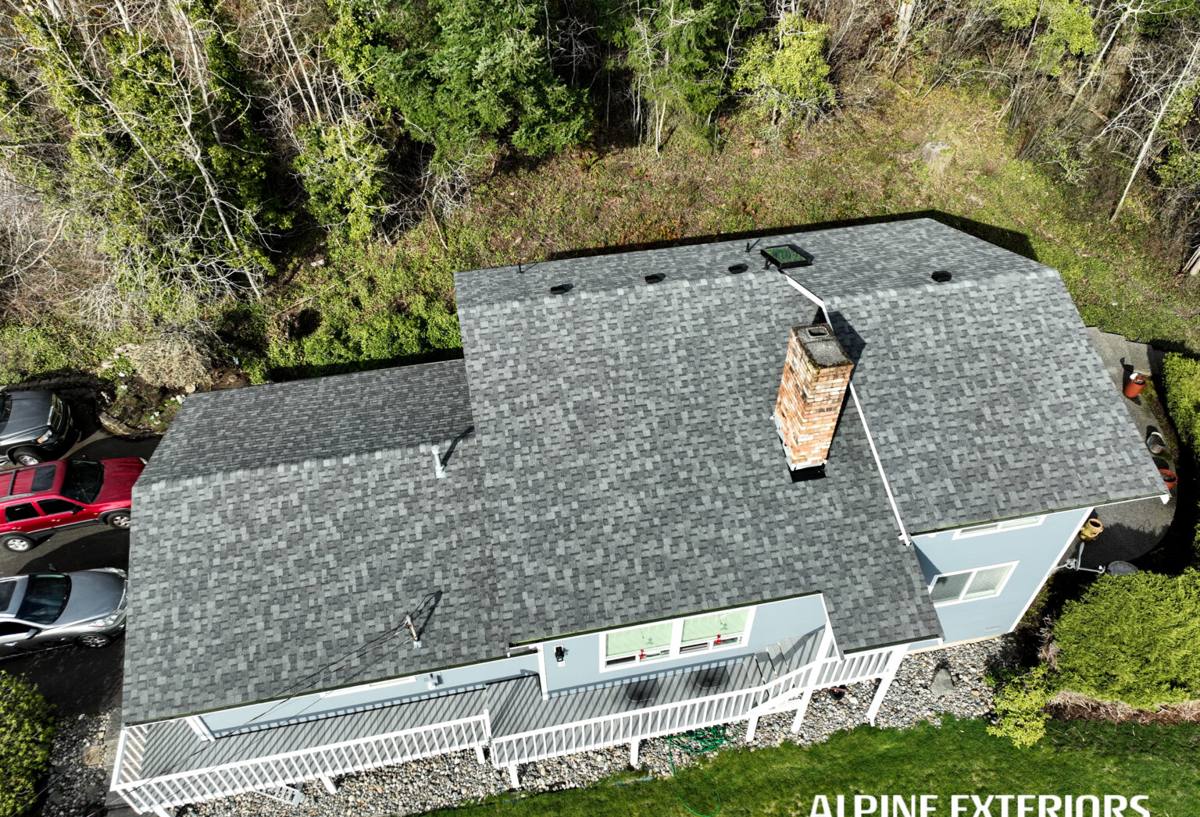
Signs a Silver Beach Roof Needs Replacement, Not Another Patch
Roof repair has its place, but there's a point where patching a roof costs more over time than replacing it. Homeowners in this neighborhood usually see a combination of these signs before we recommend a full tear-off:
- Moss mats thick enough to lift shingle edges, not just surface discoloration
- Granule buildup in gutters and downspouts, or shingles that look bald in patches
- Soft or spongy decking felt underfoot during an inspection, especially near valleys and eaves
- Daylight, water stains, or musty smell in the attic
- Curling, cracking, or missing shingles after a windstorm
- A roof at or past the manufacturer's rated lifespan, especially if it's had more than one repair in the last few years
If a roof is showing two or more of these at once, repair usually becomes a short-term fix on a system that's already failing underneath.
What a Correct New Roof Installation Actually Involves
A roof is a system, not a layer of shingles. Skipping any one part of that system is where premature failures start, especially in a climate that gives water every chance to find a way in.
Decking
Once the old roofing is stripped, the decking underneath gets inspected board by board. Any wood that's soft, delaminated, or water-stained gets replaced before anything new goes down. Installing new shingles over compromised decking is one of the most common shortcuts that leads to early failure — and it's invisible until the roof is already leaking.
Underlayment and Flashing
In a climate with this much sustained moisture, we don't treat underlayment as an afterthought. Ice-and-water shield goes at eaves, valleys, and around penetrations where wind-driven rain is most likely to work its way under the shingle line. New flashing goes around chimneys, skylights, and wall intersections rather than reusing old flashing that's already lost its seal. Drip edge gets installed at eaves and rakes to keep water off the fascia.
Ventilation
Proper intake and exhaust ventilation keeps the attic close to outdoor temperature and humidity, which does two things: it prevents condensation from forming on the underside of the decking, and it keeps the roof surface from warming unevenly in a way that can accelerate moss growth and ice formation in cold snaps. A new roof installed without addressing ventilation is set up to underperform its warranty.
Choosing a Roofing Material for Silver Beach's Climate
There's no single "best" roofing material — the right choice depends on budget, roofline, and how much moisture and shade a particular lot deals with. Here's how the common options compare for a home in this part of Bellingham:
| Material | Moss & moisture resistance | Typical lifespan | Maintenance |
|---|---|---|---|
| Architectural asphalt shingle | Good with proper ventilation and algae-resistant granules | 25–30 years | Periodic moss treatment and gutter cleaning |
| Standing seam metal | Excellent — sheds moss and moisture with almost no flat surface to hold water | 40–50+ years | Low; occasional fastener and seam check |
| Cedar shake | Poor in shaded, damp conditions without diligent upkeep | 20–25 years with upkeep | High; regular treatment needed to resist rot and moss |
| Composite/synthetic shake | Good — moisture-stable material with less organic surface for moss to grip | 30–50 years | Low to moderate |
For heavily shaded Silver Beach lots near mature trees, we generally steer homeowners away from natural cedar unless they're committed to ongoing maintenance — the moisture retention in shaded conditions works against it. Architectural asphalt with algae-resistant granules or metal roofing tends to hold up with far less intervention.
Our New Roof Installation Process
- Inspection and estimate — we walk the roof and attic, check decking condition, ventilation, and flashing points, and put the scope of work in writing.
- Material selection — we walk through the trade-offs above based on your roofline, budget, and how shaded the lot is.
- Permitting — we handle the permit application with the applicable local jurisdiction before work starts.
- Tear-off and disposal — full removal of old roofing material down to the decking, with debris hauled off site.
- Decking repair — any compromised sheathing is replaced and documented.
- Underlayment, flashing, and drip edge installation — installed to manufacturer spec, not a generic minimum.
- Roofing material installation — installed per manufacturer nailing and exposure requirements to keep the warranty valid.
- Ventilation check — intake and exhaust venting confirmed or upgraded.
- Cleanup and magnetic nail sweep — yard and driveway swept for stray fasteners.
- Final walkthrough and warranty paperwork — we go over the finished roof with you and hand over manufacturer and labor warranty documentation.
Moss, Shade, and Long-Term Roof Health
Moss isn't just cosmetic — its root structure holds moisture against the shingle surface and can lift edges over time, giving wind-driven rain a place to get underneath. In a neighborhood with as much tree cover as Silver Beach, moss prevention has to be part of the plan, not an afterthought after it's already established. A few things make a real difference over the life of a new roof:
- Zinc or copper strips installed near the ridge, which release trace metals that inhibit moss growth as rain washes over the roof
- Keeping gutters clear so water doesn't back up under the shingle edge
- Trimming back tree limbs that keep sections of the roof in permanent shade
- An annual visual check, especially heading into the wetter fall and winter months
None of this replaces a correctly installed roof, but paired with one, it meaningfully extends the time before moss becomes a problem again.
What Affects the Cost of a New Roof
We don't like quoting numbers before we've seen the roof — pitch, access, and existing damage change the math too much for a number to mean anything sight unseen. What we can tell you is what actually moves the price:
| Factor | Why it matters |
|---|---|
| Roof size and pitch | Steeper, more complex rooflines take longer and require more safety setup |
| Material choice | Asphalt, metal, and composite carry different material and labor costs |
| Number of existing layers | Tear-off of multiple old layers adds labor and disposal cost |
| Decking condition | Rot found during tear-off means added sheathing replacement |
| Access and tree cover | Tight lots or heavy overhead branches slow material staging and removal |
| Ventilation upgrades | Adding intake or exhaust venting where none existed adds a modest line item |
Most straightforward tear-and-replace jobs on an average Silver Beach home land in the mid five figures; extensive deck repair, steep or complex rooflines, or a move to metal roofing push that higher. An honest estimate walks through which of these factors apply to your roof specifically.
Why Hire a Crew That Already Works in Silver Beach
A roofer who already works this part of Bellingham knows how differently a shaded, moisture-heavy lot near Silver Beach behaves compared to a roof out on an open, sunnier property elsewhere in Whatcom County. That translates into practical decisions — where ventilation actually needs attention, which materials hold up against moss without high maintenance, and how to sequence a tear-off around the rain patterns typical to this area rather than guessing.
Before hiring anyone for a roof replacement in this neighborhood, it's worth confirming a few things:
- They carry a current Washington contractor registration and liability insurance, and can show proof without hesitation
- They inspect and price decking repair as a possibility, not just the shingle layer
- Ventilation is part of the written scope, not an upsell added later
- They provide manufacturer-backed warranty documentation, not just a verbal promise
- They give a detailed written estimate before any work starts, not a rough verbal number
A roof done right the first time, with the right materials for this climate, should outlast the mortgage on the house it's protecting. We'd rather spend an extra hour on the estimate getting the details right than come back in five years for a problem that should have been caught up front.
If your roof is showing its age or you're just planning ahead, we're happy to come out, walk the roof and attic, and give you a straightforward, no-pressure estimate — use the form below to get started.