 Bellingham
 Why Silver Beach Homes Wear Out Their Siding Faster
Homes in Silver Beach face a tougher combination of conditions than a lot of Whatcom County neighborhoods realize until their siding starts failing early. Moist air moving in off the water carries salt and fine mineral deposits that settle into siding surfaces, working into seams, fastener holes, and any spot where the factory finish has worn thin. Add Bellingham's driving, wind-pushed rain — the kind that hits siding sideways instead of running straight down — and you've got moisture finding its way behind panels that weren't installed with tight enough tolerances in the first place.
Then there's moss season, which in this part of Washington isn't really a season so much as most of the year. Shaded elevations, north-facing walls, and anywhere tree cover keeps siding from drying out fully between rains become long-term moss and algae habitat. Moss holds moisture against the siding surface for days at a time, and that sustained dampness is what actually damages siding — not the rain itself, but how long the material stays wet afterward.
Put those three things together — salt-laden air, sideways rain, and moss that won't let a wall dry — and you understand why siding replacement in Silver Beach is a different job than siding replacement in a drier inland town. The product matters. The installation details matter more.
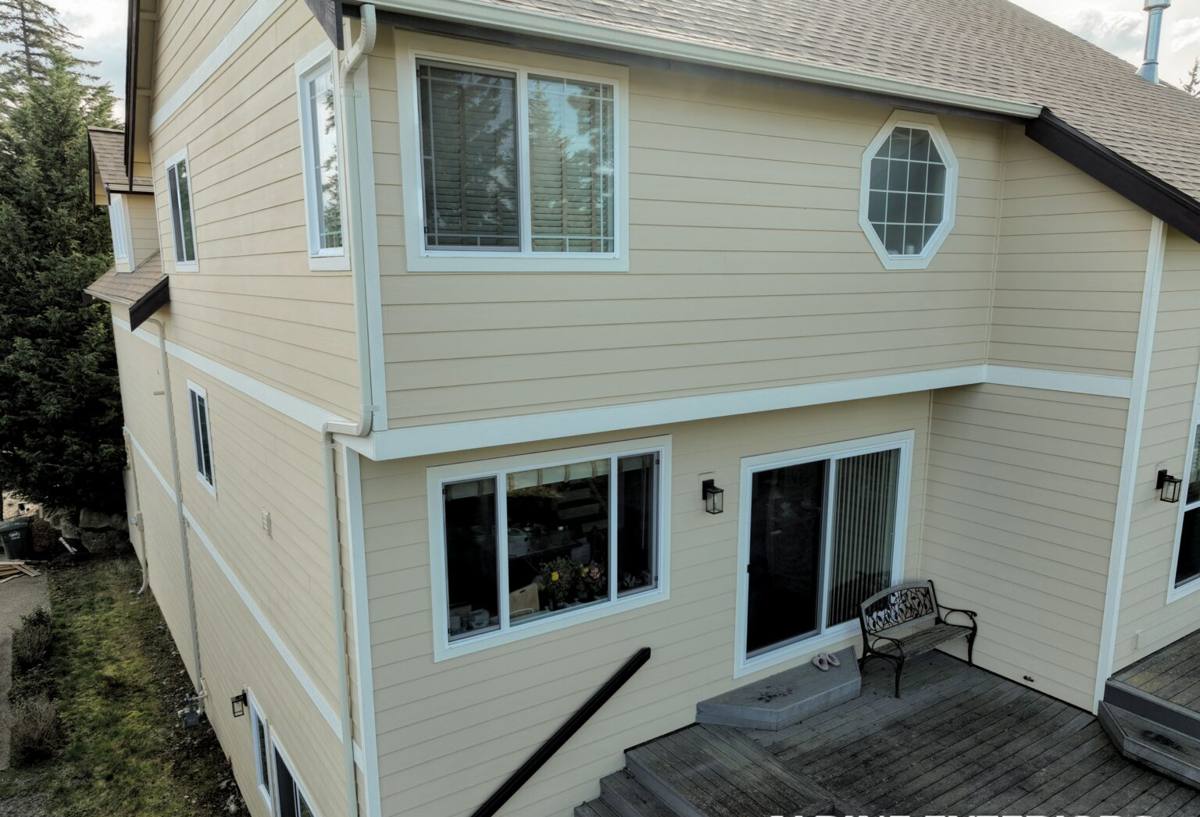
Signs Your Silver Beach Home's Siding Has Reached the End
Most homeowners wait too long to replace siding because the early warning signs look cosmetic rather than structural. By the time siding is visibly falling apart, there's often been moisture intrusion happening behind it for a while. Here's what we look for, and what you can check yourself before calling anyone out:
- Soft or spongy spots when you press on the siding, especially near the bottom courses and around window and door trim
- Persistent moss or algae growth that comes back within weeks of being cleaned off
- Paint that's bubbling, peeling, or chalking heavily rather than just fading evenly
- Visible warping, cupping, or separation at panel seams
- Rising energy bills that aren't explained by anything else — a sign the wall assembly behind the siding may be compromised
- Interior signs like musty smells near exterior walls, or staining on interior drywall near windows
- Siding that's more than 20-25 years old, particularly if it's a wood-based or engineered wood product not built for sustained wet-dry cycling
Any one of these on its own might just mean a repair. Several at once, especially on a wall that gets a lot of weather exposure, usually means the siding system has reached the point where replacement makes more sense than patching.
Why We Only Install James Hardie Fiber Cement
We made a decision a while back to stop installing vinyl, LP SmartSide, primed spruce, and cedar siding — not because those products can't work anywhere, but because we didn't want to keep replacing them early on homes exposed to conditions like Silver Beach sees. Wood-based products, even engineered ones, depend heavily on an intact factory coating and perfect field sealing to resist moisture. In a climate with this much sustained dampness and moss pressure, any gap in that protection becomes a problem years sooner than it would in a drier region.
James Hardie fiber cement is cement, sand, and cellulose fiber — it doesn't rot, it isn't a food source for moss and mildew the way wood-based products can be, and it's non-combustible. Hardie's HZ5 product line is specifically engineered for wetter, harsher climates like the Pacific Northwest, with moisture-resistant formulation built in rather than relying entirely on field-applied protection. The ColorPlus factory finish is baked on under controlled conditions, which holds up to UV and moisture exposure far longer than a field-applied paint job, and it carries a real, transferable finish warranty.
We're not going to tell you other products are junk — plenty of homes around the country wear them fine. Our position is narrower: for a coastal Whatcom County climate with salt air, driving rain, and heavy moss pressure, we don't think it's an honest recommendation to install anything else, and we've built our entire business around being able to say that with confidence.
What a Correct Siding Replacement Actually Involves
Siding replacement isn't just pulling off old panels and nailing up new ones. The parts nobody sees — the water-resistive barrier, the flashing details, the fastening pattern — are what actually determine whether a house stays dry for the next 30 years or starts showing moisture problems in five. On a job in Silver Beach, we pay particular attention to the following:
Sheathing and Moisture Barrier Inspection
Once old siding comes off, we inspect the sheathing underneath for rot, delamination, or existing moisture damage — this is often the first time anyone's actually seen the condition of the wall behind the siding in decades. Any compromised sheathing gets replaced before anything new goes up, because installing new siding over damaged sheathing just locks the problem in.
Flashing at Every Penetration
Windows, doors, hose bibs, vents, and any other wall penetration needs proper flashing that directs water outward and downward, never behind the barrier. This is one of the most commonly rushed details in siding work, and it's also the single most common source of hidden water damage we find when we tear into older installations.
Rainscreen and Ventilation Gap
Given how much moisture this area deals with, we install with a ventilation gap between the siding and the water-resistive barrier where it's called for. That gap lets any moisture that does get past the siding surface dry out instead of sitting against the wall — which matters a lot more here than it would in a dry climate.
Fastening to Hardie's Specifications
James Hardie's warranty depends on installation matching their published fastening and clearance specs — correct nail placement, proper gap at seams and trim, and the right ground clearance to keep the bottom edge of the siding away from splash-back moisture. Installers who don't follow these specs can void the manufacturer warranty even though the product itself is sound.
Our Silver Beach Siding Replacement Process
- On-site assessment — We walk the exterior with you, check exposure on each elevation, and look for existing moisture or rot issues before we ever talk product or price.
- Product and color selection — We walk through Hardie's plank profiles, panel options, and ColorPlus color palette so you land on something that fits the home and the neighborhood.
- Written estimate — A clear, itemized quote so you know what you're paying for, not a one-line number.
- Tear-off and sheathing inspection — Old siding comes off, sheathing gets inspected and repaired as needed before anything new is installed.
- Weather barrier and flashing installation — This is the step that actually protects the house long-term, and it's the one we won't rush regardless of schedule pressure.
- Hardie siding installation — Installed to manufacturer spec, including fastening pattern, clearances, and joint treatment.
- Final walkthrough — We go over the finished work with you and address anything before we call the job done.
Matching the Right Hardie Line to a Silver Beach Elevation
Not every wall on a house faces the same exposure, and part of doing this job right is matching product choice to what each elevation actually deals with — sun, wind-driven rain, or shade and moss pressure.
| Hardie Product | Best Suited For | Why It Fits Here |
|---|---|---|
| HardiePlank Lap Siding (HZ5) | Most wall areas, standard exposure | Engineered for wetter climates, most common choice for full-home replacement |
| HardiePanel Vertical Siding | Accent walls, gables, modern facades | Clean lines that pair well with plank on the rest of the home |
| HardieShingle Siding | Accent areas, dormers, feature sections | Traditional shingle look without the moisture vulnerability of wood shakes |
| HardieTrim Boards | Corners, window and door trim | Matches the fiber cement system so trim doesn't become the weak point |
On heavily shaded or moss-prone elevations, we'll sometimes talk through slightly wider reveal spacing or specific color choices that make ongoing moss cleaning easier, since no siding product is fully moss-proof — the goal is a surface that's easy to keep clean and doesn't hold moisture against itself.
What Affects the Cost of a Siding Replacement Here
Every home is different, and we're not going to throw out a number that doesn't mean anything without seeing your house. What we can tell you is what actually moves the price up or down on jobs in this area:
| Factor | Impact on Cost |
|---|---|
| Extent of hidden sheathing or rot damage | Higher — repair work found after tear-off adds cost, which is why older homes need a real inspection, not a guess from the ground |
| Home size and number of stories | Higher — more square footage and access complexity, especially with second-story or steep-roof sections |
| Product line and profile (plank vs. panel vs. shingle accents) | Moderate — mixing profiles for architectural detail adds labor and material cost |
| Number of trim details, windows, and penetrations | Moderate — more flashing and trim work per square foot |
| Existing siding type (removal complexity) | Moderate — some materials come off faster and cleaner than others |
| Color and finish selection | Lower — ColorPlus finishes are priced within the standard product line |
The only way to get an honest number is a real look at the house. We'd rather give you an accurate estimate after an inspection than a rough figure over the phone that doesn't hold up once we actually see the walls.
Why It Matters That We Already Work in Silver Beach
A crew that's replaced siding on homes in this specific area already understands which elevations tend to hold moss, how the local wind pattern drives rain into certain wall sections, and what kind of sheathing condition to expect on homes of a given age around here. That's not something you get from a general contractor who works all over Whatcom County and treats every job the same regardless of exposure.
It also means we're not guessing about permitting, disposal, or what inspectors around Bellingham typically want to see on a siding job. Local experience shows up in small decisions throughout the project — where we add extra flashing attention, which elevations we recommend a ventilation gap on, how we sequence work around the wetter months — and those small decisions are what separate a siding job that lasts three decades from one that needs attention again in eight years.
Maintaining Hardie Siding in a Moss-Heavy Climate
Fiber cement doesn't rot or feed moss the way wood-based siding can, but no exterior surface in this climate stays maintenance-free forever. A little routine care goes a long way toward protecting your investment:
- Rinse siding down once or twice a year, focusing on shaded and north-facing walls where moss and algae build up fastest
- Trim back vegetation and tree branches that keep walls shaded and slow to dry
- Check caulking at trim joints and penetrations annually, and recaulk if it's cracked or pulling away
- Keep gutters clear so overflow isn't running down the siding face during heavy rain
- Watch for any soft spots or discoloration after the wettest months and address them early rather than waiting
None of this is heavy work, but skipping it is how even a good siding system ends up looking tired well before it should.
If your Silver Beach home's siding is showing its age, or you just want an honest read on where it stands, we're happy to come take a look. The estimate is free, there's no pressure, and you'll get a straight answer about what your home actually needs — use the form below to get started.