 Bellingham
 Building Decks for South Hill's Particular Conditions
South Hill sits above downtown Bellingham with some of the best views in Whatcom County — Bellingham Bay, the San Juans, and Lummi Island on a clear day. Those same views come with real exposure: elevation and open sightlines mean more wind-driven rain hits these decks directly, and homes close enough to the water get a steady dose of salt air on top of it. Add in the mature tree canopy that gives many South Hill streets their character, and you get long stretches of shade that keep deck surfaces damp well after a storm has passed. A deck built without accounting for all three — salt air, driving rain, and moss — will show it within a few seasons, not a few decades.
We build and replace decks for homeowners in this neighborhood regularly, and the lessons carry from one project to the next: what fails first, what framing details actually matter here, and which materials are worth the extra cost on a hillside, view-lot property versus a flat inland yard.
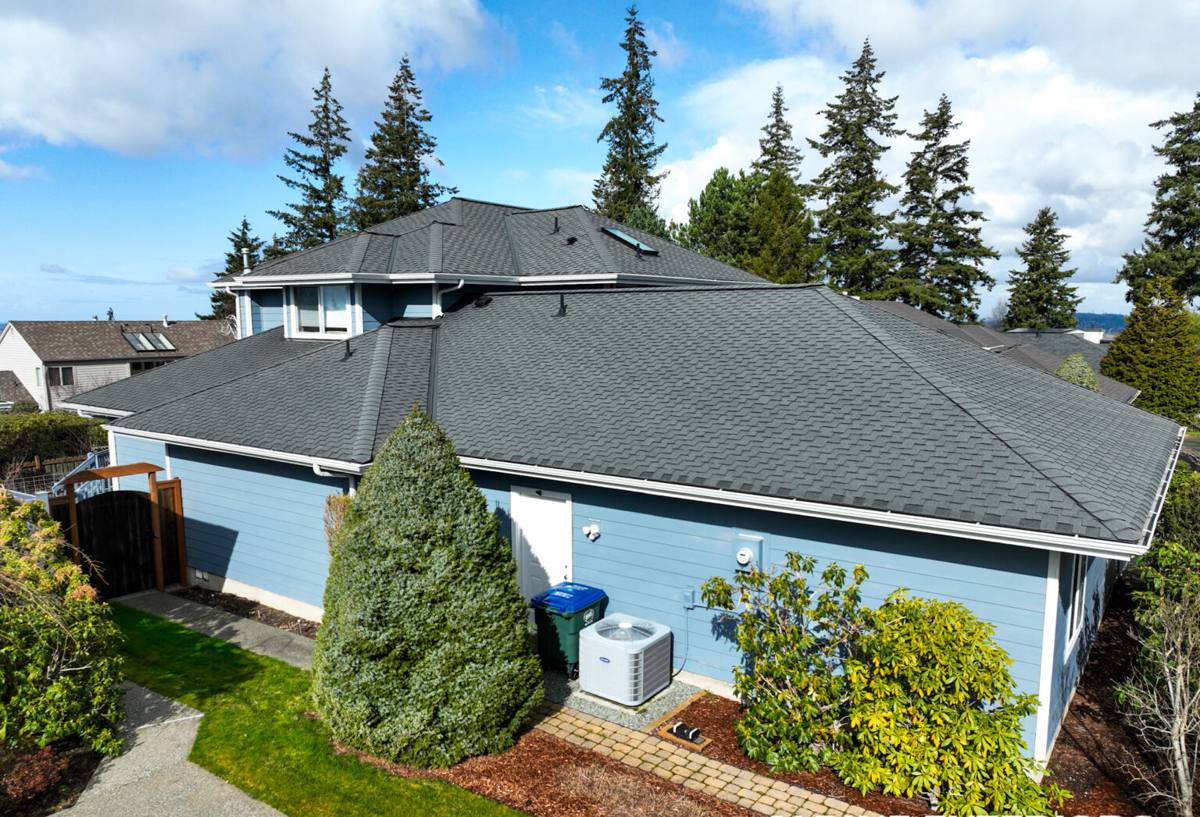
What Bellingham's Climate Does to a Deck
Salt Air and Corrosion
Bellingham's marine climate means airborne salt reaches homes farther from the shoreline than most people expect, and South Hill's elevation puts it right in that path. Salt accelerates corrosion in fasteners, joist hangers, and railing hardware. Standard interior-grade screws or hangers rated for basic exterior use will rust and stain the decking around them within a couple of years in this kind of exposure. It's one of the most common problems we find when we're called out to look at an older deck that's failing early — the wood itself is often fine, but the fasteners holding it together are not.
Driving Rain and Water Management
Rain that comes in sideways, which is common on an exposed hillside lot, gets forced into places a vertical rain never would: under ledger boards, behind fascia, into end grain at board cuts. A deck that isn't detailed for that kind of water intrusion will rot from the inside, often at the ledger connection to the house — the single most important, and most commonly under-built, part of any deck.
Moss and a Long Damp Season
Whatcom County's moss season runs long, and shaded South Hill lots with tree cover stay damp for extended stretches of fall, winter, and spring. Moss and algae aren't just a slip hazard — they hold moisture against the decking surface, which speeds up rot in wood and can dull or stain composite and PVC boards if they aren't kept clear. Deck orientation, gaps between boards, and airflow underneath all affect how fast moss takes hold.
Designing for South Hill's Terrain and Housing Stock
Sloped and Elevated Lots
Many South Hill properties sit on a grade, which changes how a deck needs to be engineered. Taller decks need properly sized footings, correctly braced posts, and guardrails that meet code height and spacing requirements — none of which is optional on a structure that might be eight or ten feet off the ground rather than sitting a foot above a flat yard. We design the substructure for the actual slope and soil conditions on site rather than reusing a generic flat-lot layout.
Matching an Established Neighborhood
South Hill has a good mix of older character homes alongside newer construction. On older homes, we pay attention to matching trim profiles, railing style, and proportions so a new deck looks like it belongs to the house rather than like an add-on. That's a design conversation as much as a construction one, and it's worth having before any lumber gets ordered.
Choosing Decking Materials That Hold Up Here
There's no single "best" decking material — the right choice depends on how much sun or shade the deck gets, how much upkeep the homeowner wants to do, and budget. Here's how the common options compare specifically against South Hill's conditions:
| Material | Moisture / Rot Resistance | Moss & Algae Resistance | Salt Air Performance | Maintenance |
|---|---|---|---|---|
| Pressure-treated lumber | Good if sealed regularly | Fair — needs periodic cleaning | Good with corrosion-resistant fasteners | Annual cleaning + re-sealing |
| Cedar | Naturally decent, fades if untreated | Fair — needs cleaning in shaded spots | Good | Regular sealing to hold color and resist checking |
| Composite decking | Very good, won't rot | Good — many capped boards resist staining | Very good | Occasional wash, no sealing |
| PVC decking | Excellent, fully synthetic | Very good | Excellent | Occasional wash, lowest upkeep |
On heavily shaded South Hill lots where moss is a constant fight, we lean toward capped composite or PVC because they don't feed moss growth the way bare wood can, and cleaning is a matter of a wash rather than a full re-sanding and re-sealing. On sunnier, more open lots, cedar or well-maintained pressure-treated lumber remains a solid, less expensive option — as long as the homeowner is realistic about the upkeep it needs.
What a Correctly Built Deck Actually Involves
Most deck problems we're called to fix trace back to a handful of framing and flashing details that got skipped or done wrong the first time. On a South Hill project, we treat these as non-negotiable:
- Ledger board properly flashed and sealed where it meets the house — the top water-entry point on any attached deck
- Footings sized and set below frost depth, and matched to the actual soil and slope conditions on site, not a standard flat-lot assumption
- Stainless steel or hot-dip galvanized fasteners and joist hangers rated for coastal exposure, not standard exterior-grade hardware
- Joist tape or equivalent protection on top of framing members to stop water from soaking into end grain and top faces
- Consistent board spacing that allows drainage and airflow underneath, which slows moss and mildew buildup
- Guardrails and stair rails built to current code height, baluster spacing, and load requirements
- Ventilation and drainage planning underneath the deck so the space beneath doesn't stay perpetually wet
Skip any one of these and the deck may look fine for a season or two before the underlying problem shows up as soft framing, rust streaks, or a railing that's gone spongy at the post base.
Our Process for a South Hill Deck Project
- Site visit and assessment — we look at slope, sun/shade exposure, existing structure (if it's a replacement), and how the deck ties into the house.
- Design and material selection — sized and detailed for the actual lot, with material options discussed against upkeep and budget honestly, not upsold.
- Permitting — most deck projects in the City of Bellingham require a permit; we handle that process so it's done correctly rather than skipped.
- Construction — footings, framing, flashing, and decking installed in that order, with the ledger and fastener details treated as the priority they are.
- Final walkthrough — we go over the finished deck with the homeowner, including basic care so the investment holds up.
Living With a Deck Through Moss Season
Even a well-built deck needs some seasonal attention in Whatcom County's climate. A simple annual routine goes a long way: clear leaves and debris before they trap moisture, sweep or wash off moss buildup before it stains the surface, check that gaps between boards haven't gotten clogged with debris that blocks drainage, and inspect railing hardware for early rust once a year. Wood decks need re-sealing on a regular cycle; composite and PVC decks mainly just need to be kept clean. None of this is complicated, but skipping it is exactly how a good deck becomes a problem deck ahead of schedule.
Why Hire a Crew That Already Works This Neighborhood
A deck built to a generic spec sheet can fail here in ways it wouldn't in a drier, calmer climate. Knowing that South Hill lots often need taller substructures for slope, that salt-rated hardware isn't optional this close to the bay, and that shaded lots need drainage and material choices that fight moss rather than feed it — that's the kind of judgment that comes from building decks in this specific neighborhood, not from following a one-size-fits-all checklist. We're a local crew, and South Hill's combination of hillside terrain, salt air, and heavy shade is exactly the kind of project we build for.
If you're planning a new deck or need to replace one that's showing its age, we're happy to come take a look and give you a straightforward, no-pressure estimate — just fill out the form below.