 Bellingham
 Building Decks for South Hill's Hillside Homes
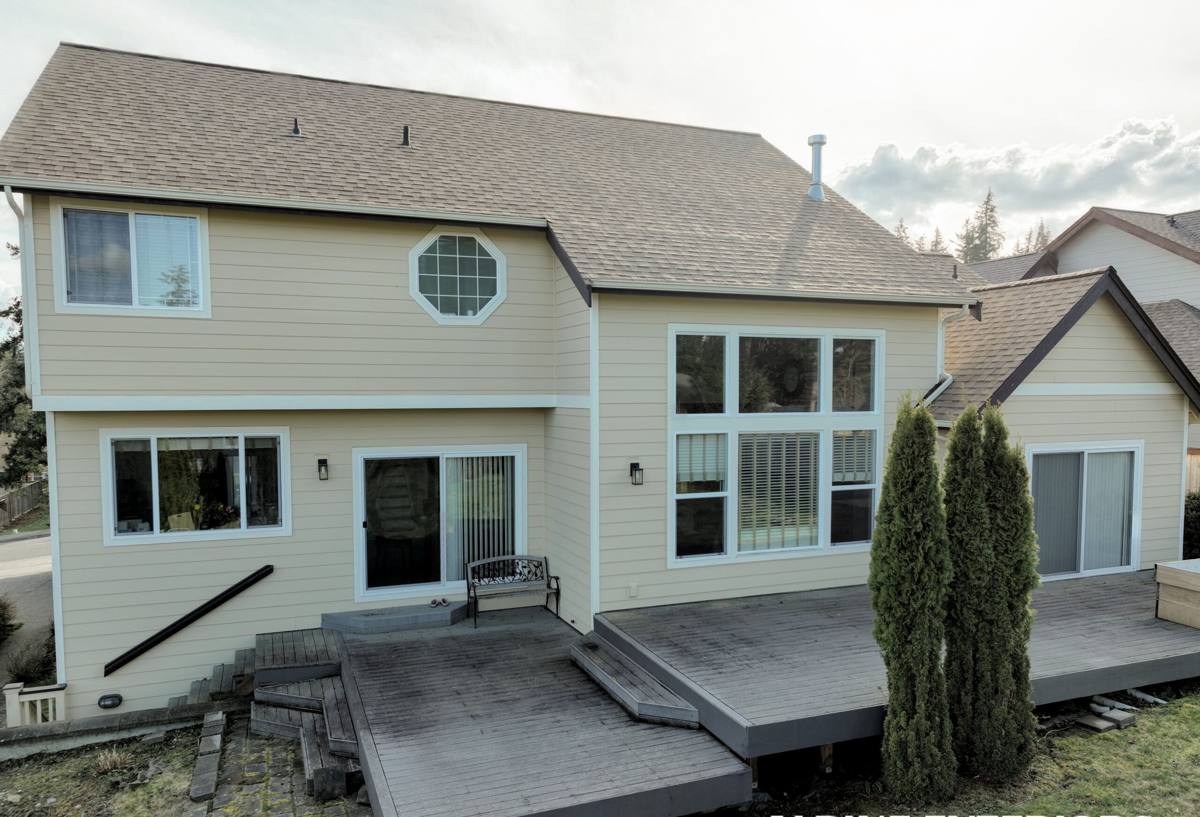
South Hill sits above downtown Bellingham on sloped, tree-covered lots that were built out over decades rather than all at once. That means a lot of variation from house to house — some decks are low and close to grade, others are perched well above a sloped backyard on tall posts, and quite a few are shaded most of the day by mature trees. Any of those conditions changes how a deck needs to be built. A deck that would hold up fine on a flat, sunny lot in a drier part of the state can fail early up here if it's built the same way.
We build and repair decks in this neighborhood regularly, and the pattern is consistent: the decks that last are the ones built around Whatcom County's actual weather, not around a generic set of plans. This page covers what that means in practice — for framing, materials, hardware, and permitting — so you know what a correct deck build looks like before you're comparing bids.
What Bellingham's Climate Does to an Unprotected Deck
Whatcom County's marine climate is mild, but it is relentless in specific ways that matter for outdoor structures:
- Driving rain: Storms off the water often push rain sideways, not straight down, which drives moisture into ledger connections, fastener heads, and any horizontal surface that isn't properly flashed or sloped.
- Salt air: Being close to Bellingham Bay means airborne salt accelerates corrosion on uncoated or lower-grade fasteners and hardware, especially on decks with any water or wind exposure.
- Long moss season: Wet, mild weather from fall through spring is ideal for moss and algae growth on decking boards, especially in shaded spots — which is most of South Hill given the tree canopy.
- Low sun angle and shade: Hillside lots with mature trees mean parts of a deck may never fully dry out between rains, which matters more than most homeowners expect.
None of this makes a deck impossible to build well here — it just means certain shortcuts that work in a drier climate don't work in Bellingham.
The South Hill Challenge: Slopes, Shade, and Older Lots
Sloped and Uneven Ground
Many South Hill backyards drop away from the house, sometimes steeply. That usually means a deck needs taller posts, deeper or engineered footings, and more attention to structural bracing than a deck on flat ground. It also changes how water sheds off and around the structure, which affects where we place drainage and how we detail the area underneath the deck.
Shade and Tree Cover
Established trees are one of the nicer things about this neighborhood, but they also drop debris, hold moisture in the air longer, and block the sun that would otherwise help a deck dry out. This is the single biggest reason decking material choice matters more here than in a full-sun yard.
Older Homes, Older Attachments
A lot of South Hill housing stock predates current deck-ledger flashing standards. When we tie a new or rebuilt deck into an older house, we treat the ledger connection as its own project — checking the wall sheathing and framing behind it, not just bolting into whatever is there.
Framing and Footings: Getting the Structure Right
The framing is the part of a deck nobody sees once it's finished, which is exactly why it's where corners get cut. For South Hill's terrain, we pay particular attention to:
- Footings set below the local frost depth and sized for the actual load and post height — taller decks on sloped lots carry more leverage and need more footing, not the same footing as a low deck.
- Post-to-footing and post-to-beam connections rated for wind and lateral load, since elevated decks on a slope see more sway than a deck sitting close to grade.
- Pressure-treated framing lumber rated for ground contact where posts or beams are near soil, with hardware matched to the treatment chemical so it doesn't corrode prematurely.
- Joist spacing and blocking set for the actual decking product being installed — composite and certain wood species have different span requirements than standard lumber tables assume.
Decking Material Choices for a Wet, Shaded Climate
There's no single "best" decking material — there's a best fit for how much sun a deck gets, how much upkeep the owner wants to do, and budget. Here's how the common options actually perform in a climate like ours:
| Material | Moss/Moisture Behavior | Maintenance | Typical Lifespan |
|---|---|---|---|
| Cedar | Naturally moisture- and insect-resistant, but still needs airflow underneath; can gray or spot in deep shade | Periodic cleaning and re-staining/sealing every few years | 15-25+ years with upkeep |
| Pressure-treated wood | Handles moisture well structurally, but surface can hold moss in shaded spots if not cleaned | Regular cleaning, occasional sealing | 15-20+ years with upkeep |
| Composite decking | Doesn't rot, but can still grow surface moss/algae in constant shade — needs periodic washing | Low — no staining or sealing, occasional wash-down | 25-30+ years, manufacturer-warrantied |
In practice, we see composite decking do well in the shadiest, most tree-covered South Hill yards simply because it removes rot as a variable — the tradeoff is a higher upfront material cost. Cedar remains a strong choice on lots with more sun exposure and for owners who want the natural look and don't mind the maintenance. We'll walk through the honest tradeoffs for your specific lot rather than push one product across the board.
Fasteners, Flashing, and the Details That Actually Matter
Most deck failures we get called out to inspect trace back to a handful of overlooked details, not the decking material itself:
- Ledger flashing: A proper ledger board needs continuous flashing that directs water out and away from the house wall, not just caulk at the seam. This is the single most common failure point when driving rain is involved.
- Fastener grade: Given the salt air off Bellingham Bay, we use stainless or heavy hot-dip galvanized fasteners and hardware rather than standard coated screws, which can rust and stain the decking within a few seasons this close to the water.
- Joist tape/protection: Covering the tops of joists and beams protects the wood from standing water and dramatically extends framing life in a climate that rarely gives lumber a long dry stretch.
- Gapping and airflow: Correct board spacing and under-deck ventilation let moisture escape instead of sitting under the decking, which is where moss and rot start.
Permits and Code in Bellingham and Whatcom County
Most attached decks above a certain height, or any deck involving structural changes to the house, require a building permit through the City of Bellingham or Whatcom County, depending on where the property sits. Permitted work typically covers footing depth, structural connections, guardrail height and spacing, and stair geometry. Skipping the permit on a deck that requires one can create real problems later — at resale, with insurance, or if there's ever a structural question. We handle the permit process as part of the job rather than leaving it to the homeowner to sort out.
Our Deck Building Process
- On-site assessment: We look at the slope, drainage, sun/shade exposure, and the condition of the house wall where the deck will attach.
- Design and material selection: We talk through decking material, railing style, and layout based on your yard, your maintenance preference, and budget.
- Permitting: We prepare and submit what's needed for the local jurisdiction before any work starts.
- Footings and framing: Footings, posts, beams, and joists go in to the structural spec for your specific deck height and load.
- Ledger, flashing, and waterproofing: This is done before decking goes down, not patched afterward.
- Decking, railing, and stairs: Installed to code for guardrail height, baluster spacing, and stair rise/run.
- Final walkthrough: We go over care and maintenance specific to the material installed, especially cleaning schedules for shaded areas.
Signs Your Current Deck Needs Attention
If you already have a deck on your South Hill property, a few warning signs are worth acting on before they become structural issues:
- Soft or spongy spots in the decking, especially near the house or in shaded corners
- Visible moss or dark staining that returns quickly after cleaning
- Rust streaks running from screw heads or hardware
- Gaps, cracks, or separation at the ledger board where the deck meets the house
- Railings or posts that feel loose or move under pressure
- Standing water that doesn't drain within a few hours after rain stops
Any of these can usually be addressed while they're still repairs rather than a full rebuild, if caught early.
Why Hire a Crew That Already Works South Hill
Building a deck that holds up in this neighborhood isn't about a special technique nobody else knows — it's about consistently applying the right details for this specific climate and terrain, on every job, instead of building to a generic spec sheet. A crew that regularly works South Hill's slopes already has a feel for which lots need extra footing depth, which yards will need a lower-maintenance decking material because of shade, and what the local permit office expects to see on an application. That familiarity shows up as fewer surprises during the build and a deck that's still solid a decade or two later.
If you're planning a new deck or need an honest look at one that's showing its age, we're happy to come take a look. There's a free, no-pressure estimate available through the form below — we'll walk the site, talk through your options, and give you a straight answer on what your South Hill property actually needs.