 Bellingham
 Metal Roofing on South Hill: What the Site Actually Demands
South Hill sits up above downtown Bellingham with open exposure toward Bellingham Bay, and that position matters more than most homeowners realize when it comes to roofing. Higher ground means more direct wind, more wind-driven rain hitting the roof at an angle instead of straight down, and more airborne salt moving in off the water than you'd get further inland in Whatcom County. Add in the shade and moisture from mature trees on many South Hill lots, and you've got a roof that has to handle three separate stresses at once: corrosion, water intrusion, and moss. A metal roof handles all three better than most other materials, but only if it's specified and installed correctly for this exact combination of conditions.
We're not going to pretend every metal roof is the same or that metal is automatically the right call for every house. This page is about what actually works on South Hill specifically, what a correct installation looks like, and what tends to go wrong when it isn't done right.
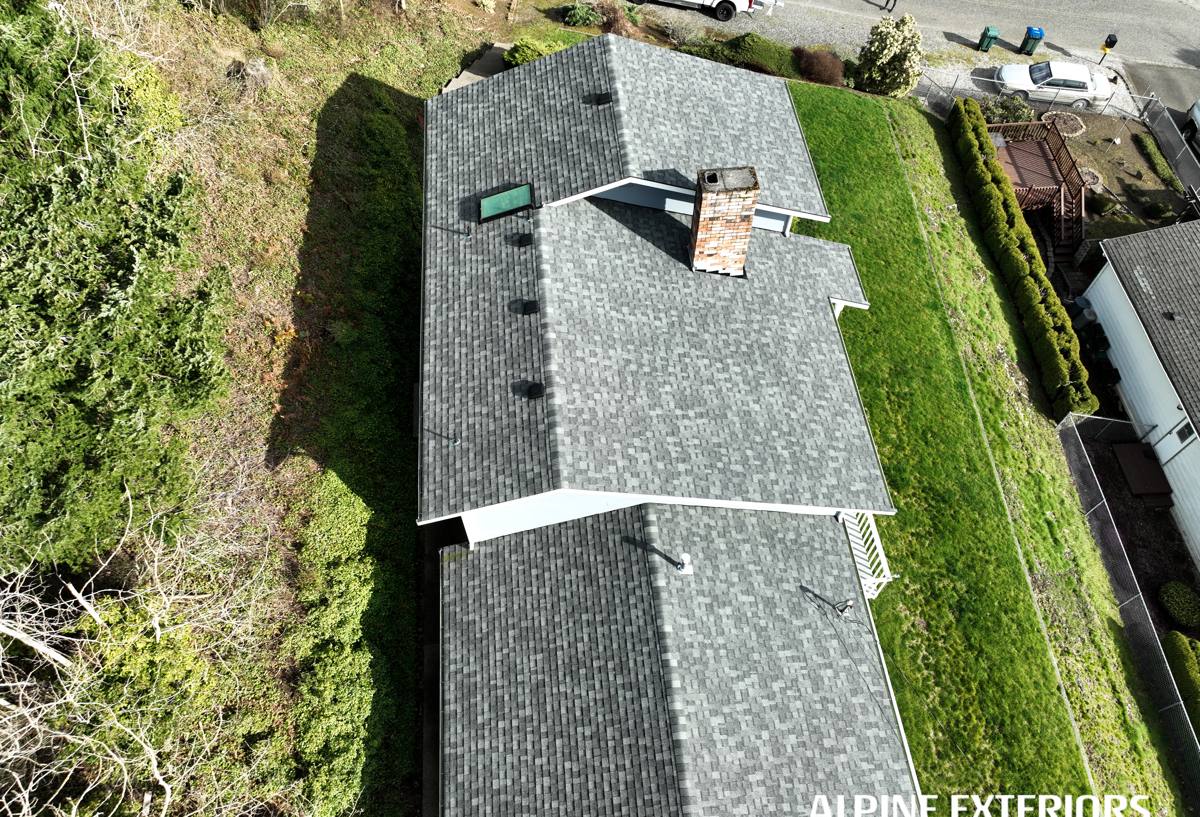
What Bellingham's Climate Does to a Roof Over Time
Whatcom County doesn't get extreme heat or brutal freezes very often, but it makes up for that with sheer persistence. A roof here deals with rain a large part of the year, long stretches of damp air that never fully dries out, and a moss season that can run from fall through spring. None of that is dramatic on any single day, but it adds up.
Driving Rain and Wind Exposure
On an elevated, more exposed lot like a lot of South Hill properties, rain doesn't just fall on a roof, it gets pushed sideways into laps, seams, and flashing details by wind coming off the bay. Roofing that relies on gravity alone to shed water — poorly lapped panels, undersized flashing, gaps at penetrations — will eventually let water in under those conditions, even if it looks fine on a calm day.
Salt Air and Corrosion
Homes with clear exposure toward the water pick up salt-laden air, and that air will corrode the wrong metal fasteners, cut edges, and coatings faster than people expect. It's not dramatic rust overnight — it's slow pitting and streaking that shows up years down the road, usually right where a contractor cut a corner on materials.
Moss and Trapped Moisture
Shaded, damp roof sections grow moss whether the material underneath is metal, shingle, or shake. On metal roofs specifically, moss holds moisture against the panel and fasteners longer than it would on a steeper, more exposed section, which is exactly the kind of prolonged wet contact that shortens the life of fasteners and coatings.
Why Metal Makes Sense for This Kind of Exposure
Done right, metal roofing handles all three of those stresses better than most alternatives. It sheds wind-driven rain effectively because of how panels interlock, it resists moss better than porous materials because there's no organic surface for it to root into, and modern coatings hold up well against salt air when the right alloy and finish are specified. The trade-off is that metal is far less forgiving of a sloppy install. Flashing details, fastener choice, and panel layout all have to be right the first time, because metal roofing isn't something you patch the way you might repair a shingle.
Standing Seam vs. Exposed Fastener Panels
| Feature | Standing Seam | Exposed Fastener Panel |
|---|---|---|
| How it sheds water | Concealed interlocking seams, no exposed penetrations | Screws penetrate the panel face, sealed with washers |
| Performance in driving rain | Excellent — built for wind-driven, angled rain | Good, but every fastener is a potential leak point over time |
| Long-term maintenance | Minimal — no fasteners to re-seat or reseal | Washers and screws should be checked periodically |
| Upfront cost | Higher | Lower |
| Best fit | Exposed, high-wind, or salt-air lots | Sheltered lots, outbuildings, budget-driven projects |
On a more exposed South Hill lot, we lean toward standing seam because it has no exposed fasteners for wind-driven rain or salt air to work on. On a sheltered, tree-covered lot with less direct wind, a quality exposed-fastener panel can still be a reasonable, lower-cost option — the honest answer depends on the specific site, not on defaulting to whichever product is easiest to sell.
What a Correct Installation Actually Involves
The panels themselves get all the attention, but most metal roof failures we get called out to fix trace back to what's underneath or around them, not the panel material itself.
- Underlayment: A high-temperature, self-adhered synthetic underlayment, not felt paper, especially at eaves and valleys where water sits longest.
- Flashing: Custom-formed flashing at every valley, wall intersection, chimney, and vent — not generic stock pieces caulked into place.
- Fasteners: Corrosion-resistant fasteners matched to the panel metal, since mismatched metals accelerate corrosion in salt-exposed air.
- Ventilation: Proper intake and exhaust airflow so condensation doesn't build up under the panels in our damp climate.
- Panel layout: Seams and laps run and lapped in the direction that sheds wind-driven rain given the specific slope and prevailing exposure of the roof.
Skip any one of those and the roof can still look fine for a few years before problems show up — which is exactly why so many metal roof complaints come from installs done fast and cheap rather than from the material itself.
Our Process for South Hill Metal Roofing Projects
1. On-Site Assessment
We walk the roof, check the deck condition, look at slope, tree cover, and exposure toward the bay, and identify existing moss or moisture damage before quoting anything. Every South Hill lot sits a little differently in terms of wind and shade, and that changes the recommendation.
2. Tear-Off or Overlay Decision
If the existing roof deck has moisture damage or rot — common under old moss growth — we tear off and replace the deck as needed rather than covering a problem up. Metal can sometimes go over an existing roof, but not when there's hidden damage underneath.
3. Installation
Underlayment, flashing, and panels go in following manufacturer specs and the details above, with attention to every penetration and transition point, since those are where leaks actually start.
4. Final Walkthrough
We review the finished roof with the homeowner, explain what maintenance (if any) it needs, and make sure everything sheds water the way it's supposed to before we consider the job done.
Cost Factors for a South Hill Metal Roof
| Factor | Why It Matters Here |
|---|---|
| Panel type and gauge | Standing seam and heavier-gauge panels cost more but hold up better to wind and salt exposure |
| Roof complexity | Valleys, dormers, and multiple roof planes mean more flashing labor |
| Deck condition | Moss-related rot found during tear-off adds repair cost, but skipping this leads to failure later |
| Coating and finish | Marine-grade coatings cost more upfront and pay off in reduced corrosion near the bay |
| Access and pitch | Steeper or harder-to-access roofs add labor time |
We won't quote a number here since every roof is different, but broadly, metal roofing runs higher upfront than asphalt shingles and pays that back over a much longer service life with less maintenance — which matters in a climate that's hard on roofs year-round.
Maintenance in a Moss-Prone, Salt-Air Climate
A correctly installed metal roof needs far less attention than shingles, but "far less" isn't "none," especially here.
- Clear overhanging branches and debris that trap moisture against shaded sections
- Rinse off accumulated moss or organic buildup rather than letting it sit through a wet winter
- Check gutters and downspouts each fall so water isn't backing up under eave flashing
- Have fasteners and sealant at penetrations inspected every few years, sooner if the roof faces the bay directly
- Never pressure-wash a metal roof — it can drive water under seams and damage coatings
Why a Crew That Already Works South Hill Matters
Metal roofing details that work fine in a dry, sheltered inland area don't always hold up on an exposed South Hill lot dealing with driving rain and salt air off Bellingham Bay. A crew that already works this neighborhood knows which lots need the extra flashing detail, which sections will hold moss longest, and how to sequence a tear-off around Whatcom County's wetter months so a deck isn't sitting exposed during a storm. That local knowledge shows up in the details — the ones that determine whether a metal roof lasts twenty years without issues or starts leaking in five.
If you're weighing metal roofing for a South Hill home, we're happy to take a look and give you a straight assessment of what your specific roof needs — no pressure, no upsell. Fill out the form below and we'll set up a free estimate.