 Bellingham
 Why South Hill Windows Wear Differently
South Hill sits up on the slope above downtown Bellingham, which means most homes here catch more open wind and driving rain than houses tucked into lower, more sheltered parts of the city. That elevation and exposure is part of what makes the neighborhood desirable, but it's also harder on windows. Wind-driven rain off Bellingham Bay finds its way into gaps that would stay dry on a calmer lot, and the tree cover common on many South Hill streets keeps siding and window trim damp and shaded for long stretches of the year — exactly the conditions that grow moss and mildew.
The neighborhood's housing stock is a mix, too. There are older character homes with original wood-frame windows that have been through decades of Whatcom County winters, along with newer construction where windows are younger but still take the same weather. Either way, a window replacement in this part of Bellingham needs to account for the local climate, not just swap in whatever's cheapest at the box store.
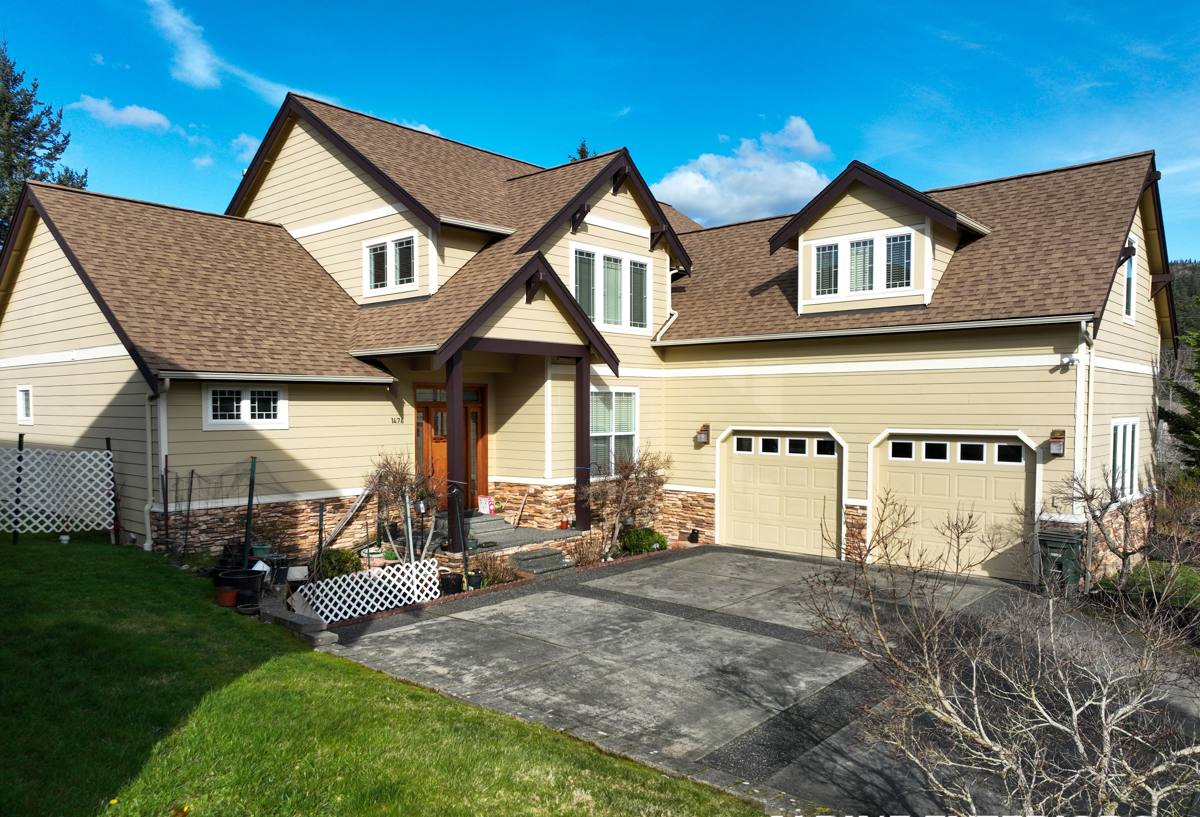
Signs Your Windows Are Due
Window failure is rarely dramatic — it shows up slowly, and a lot of homeowners live with it longer than they need to because nothing looks obviously broken. On South Hill specifically, watch for these:
- Fogging or a hazy film between panes — the seal on a double-pane unit has failed and moisture is trapped inside the glass
- Soft or discolored wood at the sill or bottom corners of the frame — a sign that driving rain has been getting past the exterior seal
- Visible moss or black-green staining on the frame, trim, or the siding just above and below the window
- Drafts you can feel with a hand near the frame on a windy day, even with the window fully latched
- Windows that are hard to open, close, or lock — frames can swell and warp after repeated wet-dry cycles
- A noticeable difference in comfort or heating bills in rooms with older windows versus newer ones in the same house
Any one of these on its own might just mean a repair or re-caulking. Several at once, especially on a west- or south-facing wall that takes the brunt of the weather, usually means it's time to talk about replacement.
What a Correct Window Replacement Actually Involves
A window replacement is not just "old window out, new window in." Done right, it's a moisture-management job first and a glass-and-frame upgrade second. That distinction matters more on a hillside lot exposed to driving rain than it does on a sheltered one.
Full-Frame vs. Insert Replacement
There are two basic approaches. An insert (or "pocket") replacement fits a new window unit inside the existing frame, which is faster and less disruptive but only works if the old frame is still sound. A full-frame replacement removes the old window down to the rough opening, which lets us inspect and repair the framing, sill, and flashing underneath — something we'd always recommend if there's any sign of past water intrusion, which is common enough on older South Hill homes given the exposure this neighborhood gets.
Flashing and Water Management
This is the part that separates a window that lasts from one that fails again in a few years. Proper flashing directs any water that gets behind the siding back out and away from the framing, rather than letting it pool at the sill. On a hillside home taking direct wind-driven rain, skipping or rushing this step is the single most common reason a "new" window ends up with rot problems again within five to ten years.
Sealing and Insulation
Once the new unit is set, the gap between the window frame and the rough opening needs to be properly insulated and air-sealed — not just caulked around the outside trim. A gap packed with the wrong material, or left too tight with no room to expand and contract, causes drafts and premature seal failure.
Material and Glass Options
There's no single "best" window for every South Hill house — it depends on the home's age, style, and how much exposure that particular wall gets. Here's how the common options compare for this climate:
| Material | Moisture Performance | Maintenance | Best Fit |
|---|---|---|---|
| Vinyl | Good — won't rot, handles wet cycles well | Low — occasional cleaning | Most homes; best value for wind/rain exposure |
| Fiberglass | Very good — stable in temperature and moisture swings | Low | Homes wanting a narrower frame profile or paintable finish |
| Wood | Requires diligent upkeep to resist moisture damage | High — regular painting/sealing | Character or historic-style homes where original wood look matters |
| Wood-clad (wood interior, aluminum or vinyl exterior) | Good — exterior shell protects the wood | Moderate | Homeowners wanting a wood interior without the exterior upkeep |
For the glass itself, double-pane with a low-E coating and argon fill is the standard baseline in this climate and covers most homes well. Homes with more exposed, weather-facing walls sometimes benefit from a triple-pane unit or an upgraded spacer system, mainly for comfort and condensation resistance rather than dramatic energy savings — we'll tell you honestly when that upgrade is worth the extra cost and when it isn't for your specific situation.
Our Process
We keep the process straightforward and try not to waste your time with a hard sell.
- On-site assessment. We look at the existing windows, the framing and sill condition, and how exposed each wall is to wind and rain — a west-facing window on an open hillside lot gets evaluated differently than a sheltered one on the same house.
- Honest recommendation. We tell you which windows genuinely need replacing now, which can wait, and which just need a repair or re-seal. Not every window on the house needs the same treatment.
- Accurate measurement and ordering. Windows are ordered to the actual opening, not a guess, which avoids delays and gaps that cause problems later.
- Removal and inspection. When we pull the old window, we check the framing and sill for hidden rot before anything new goes in. Any damage found gets repaired first — installing a new window over a compromised frame just hides the problem.
- Installation with proper flashing and sealing. This is where the job either holds up for decades or doesn't. We don't shortcut this step.
- Interior and exterior finish work. Trim, caulking, and paint or stain to match, so the finished job looks intentional, not patched.
- Walkthrough. We show you how the new windows operate and answer any questions before we call the job done.
What Affects the Cost
Window replacement pricing varies a lot from house to house, but the main cost drivers are consistent. Rather than quote a number that won't mean much without seeing your home, here's what actually moves the price:
| Factor | Why It Matters |
|---|---|
| Insert vs. full-frame replacement | Full-frame costs more but is often necessary if there's frame damage |
| Number and size of windows | Larger openings and specialty shapes (arched, bay) cost more than standard sizes |
| Material choice | Vinyl is typically the most budget-friendly; wood and wood-clad cost more |
| Hidden damage found during removal | Rotted framing or sill repair adds labor and material not visible in the initial quote |
| Access and site conditions | Hillside lots, second-story windows, and tight access can add labor time |
| Glass package | Standard double-pane low-E is the baseline; triple-pane or upgraded spacers cost more |
We'd rather walk your property and give you real numbers than throw out a broad range that doesn't reflect what your house actually needs.
Why Hire a Crew That Already Works This Neighborhood
South Hill's mix of hillside exposure, older housing stock, and heavy tree cover isn't unique to Bellingham, but it's specific enough that experience here matters. A crew that regularly works this part of Whatcom County knows what to expect when they pull a window off a home built decades ago on this slope — where moisture tends to collect, which framing details tend to have been done poorly the first time, and how much flashing and sealing a wall facing open wind actually needs versus one that's sheltered by trees or a neighboring structure. That's not something you get from a crew that mostly works flat, sheltered subdivisions elsewhere in the county.
There's also a practical side: a local crew can respond faster if something needs a follow-up look, and stands behind the work because they're not driving out from another region for a one-off job.
Keeping New Windows Performing Long-Term
A properly installed window should need very little from you, but a few habits go a long way in this climate:
- Rinse pollen, salt residue, and grime off exterior glass and frames a few times a year, especially after winter storms
- Keep gutters and downspouts clear so overflow doesn't run down onto window heads and sills
- Trim back tree branches or shrubs that keep a window shaded and damp for long periods, which encourages moss and mildew growth
- Check exterior caulking annually and have it touched up if it's cracking or pulling away — small gaps are easy to fix before they let water in
- Operate each window a few times a year, even ones you rarely open, to keep hardware and weatherstripping working properly
None of this is heavy maintenance — it's mostly just staying ahead of the moisture and moss that this climate produces year-round.
Get a Straight Answer About Your Windows
If you're not sure whether your South Hill home needs a full window replacement, a partial replacement, or just some repair and re-sealing, we're happy to take a look and tell you honestly. There's a form below to request a free, no-pressure estimate — we'll walk the exterior, check for the moisture and framing issues this climate tends to cause, and give you real options and real numbers before you decide anything.